


Most of our audience will already be familiar with the great Trevor Horn. If not, you’ll certainly be familiar with the multitudes of tracks he produced for a veritable who’s-who of 80s pop superstars. It's a list that includes ABC, Spandau Ballet, Grace Jones, Pet Shop Boys, Cher, Seal and countless others.
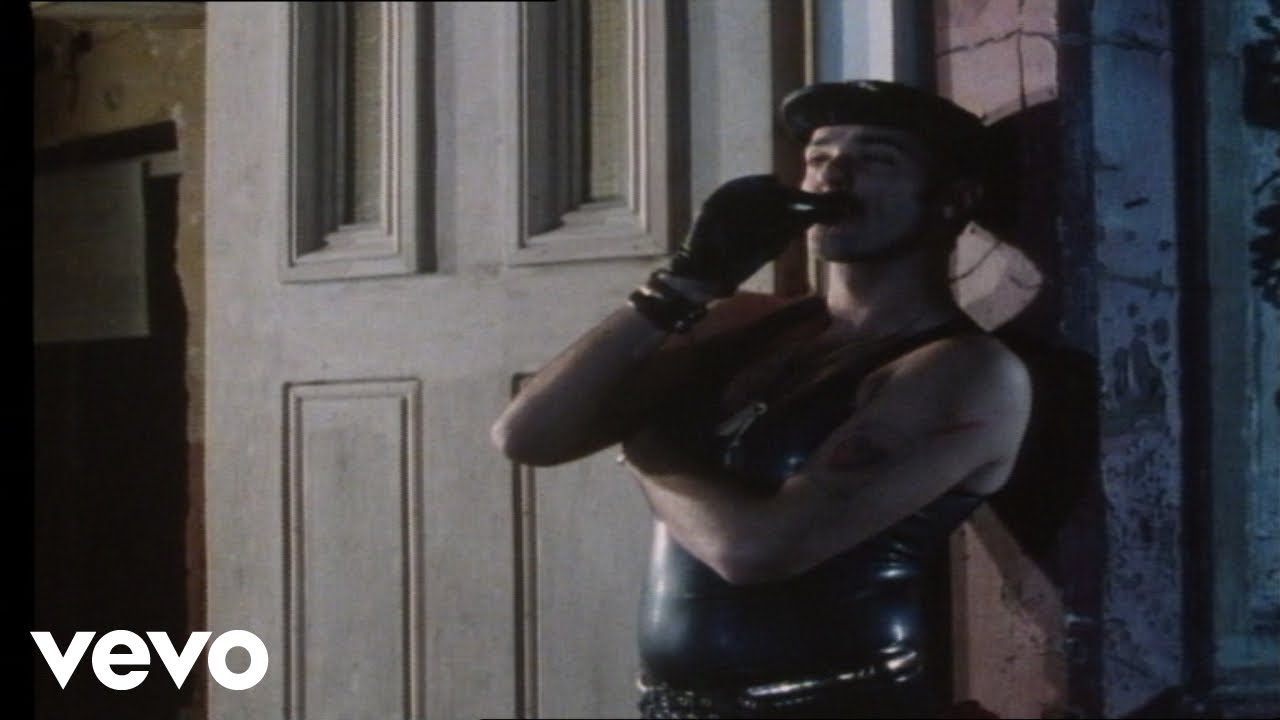
But for Horn, who of course first started out as one half of the Buggles (the music-video - and arguably internet - predicting architects of Video Killed the Radio Star), there’s one band he’s particularly proud to have worked with. The controversy-stoking Frankie Goes to Hollywood…
“The first time you heard them you had to hear them again, because there was a whole bunch of s**t in there that nobody had done before,” Horn explained to us in an interview back in 2020. “Relax was a really good record and Two Tribes still sounds great. What always impressed me is Steve Lipson’s engineering because, sonically, the mixes were perfect. When we came to mix [the album] Welcome to the Pleasuredome, Lippo mixed it in one afternoon, although I wanted to mix it for another week. He insisted and he was right.”
In our extensive interview, Trevor reflected on the very beginning of his fascination with music, and what lured him into experimenting with sound in the first place…
“I had a job as a trainee cost accountant, but was playing in a band five nights a week,” remembered Trevor. ”I was riding home on my scooter from seeing this girl, and suddenly thought the only thing I’m interested at working in is music. I said to my dad, ‘I think I’ll turn pro,’ and he said ‘You’re not good enough.’ One evening I just thought, f**k it, woke them up and said, ‘Sorry, I’ve made my mind up – I’m going to be a musician.’ I knew I’d be a failure at anything else.”
Horn then embarked on a career as a session musician in the 1970s, which led him to develop an interest in record production…
“I worked on LPs when they were made in one day – when studios still had a red light. I loved the sound of control rooms and tried being a songwriter, but gave up. When I was 25, I’d made quite a bit of money playing in Ray McVay’s Big Band, which was a nightmare gig but I got a load of recording equipment, went up to Leicester and bought a studio. Nobody came in, so we started organising sessions. Leicester City FC’s This is the Season for Leicester was the first record I officially made, then somebody told me I was a record producer and I thought, ‘Wow, I am, and it’s what I want to do.’”

It was the electronic sounds coming out of Germany - particularly those made by Kraftwerk - that would draw Trevor's attention to innovative, cutting edge techniques…
“I only ran the studio for a year, and then I bailed out and came back to London. I was working in another band doing cover albums – Brian Ferry stuff or whatever was in the charts, then I started producing demos for a music publisher. I did that for five years, but somewhere along the way I heard Kraftwerk and that completely changed my view about production. The Man Machine was the one for me, and my other favourite was Grace Jones’ Warm Leatherette. I was also into JG Ballard and novels like Crash. The Buggles was meant to be a fantasy group invented on a computer – then real life came crashing in.”
