Incredibly, it's been 45 years since Bucks Fizz won Eurovision for the UK with Making Your Mind Up. Now, the band are back, and, having been re-invented as The Fizz, their latest line-up is celebrating with a new single produced by studio legend Mike Stock.
Stock, of course, needs little introduction, having been part of the songwriting and production triumvirate that also included Matt Aitken and Pete Waterman and crafted over 100 hit UK chart singles, achieved 13 number ones and – in 1987 and 1988 – single-handedly generated an incredible 27% of all the cash in the UK record industry.
Not bad for three guys in a studio behind a tube station.
And with SAW fans also finally getting their hands on the trio’s final album – the previously unfinished, 33-years-in-the-making debut for US singer Suzette Charles – it’s certainly ‘Never Too Late’ to ‘Step Back In Time’ and catch up with Stock in the studio.
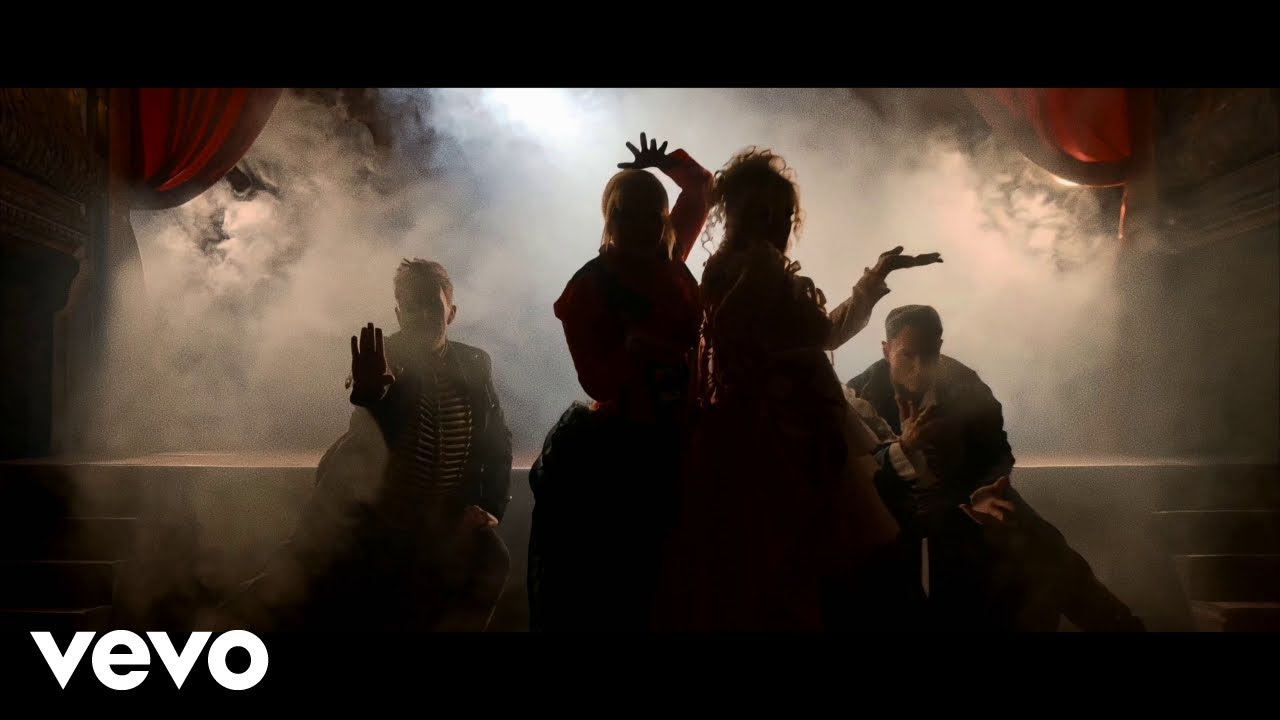
We're here to talk about The Fizz, 45 years after their Eurovision victory. The new single Crazy Shot In The Dark sounds like the perfect amalgam of their style and yours. For fans of the band and your productions, it feels like two halves coming together.
“I think whatever I'm going to do is obviously going to bear the hallmarks of what I’ve done over the years – I can't avoid that – but we definitely did try here in the studio to sort of cross it back to them when they were in their Camera Never Lies era. And we listened to Trevor Horn, what he did with Dollar, and a few other contemporaneous records around that period, and we realised they used certain equipment in a certain way, and those songs always had a ‘gimmick’. They weren't too personal or sentimental, and they had that little bit extra to them, so that’s what I tried to do here, and yeah, I think it turned out really well.”
And it's a doubly-interesting time for you, because we've also had the release of the long-awaited Suzette Charles album.
“Yeah, these things collided. That’s been 30 years-plus in the making, and of course, The Fizz have been around for 45 years, so it all came together.”
You’ve worked with so many artists on so many great songs over the years. What’s been the secret to crafting so many hits for so many people?
“When Matt Aiken and I wrote songs back in the SAW days we very often worked with new acts who hadn't had a record out, like Rick Astley, or Kylie or Sonia. So the first thing we always did was to talk around who the artist was, because you can do no better than make a suit of clothes, if you like, for that person.
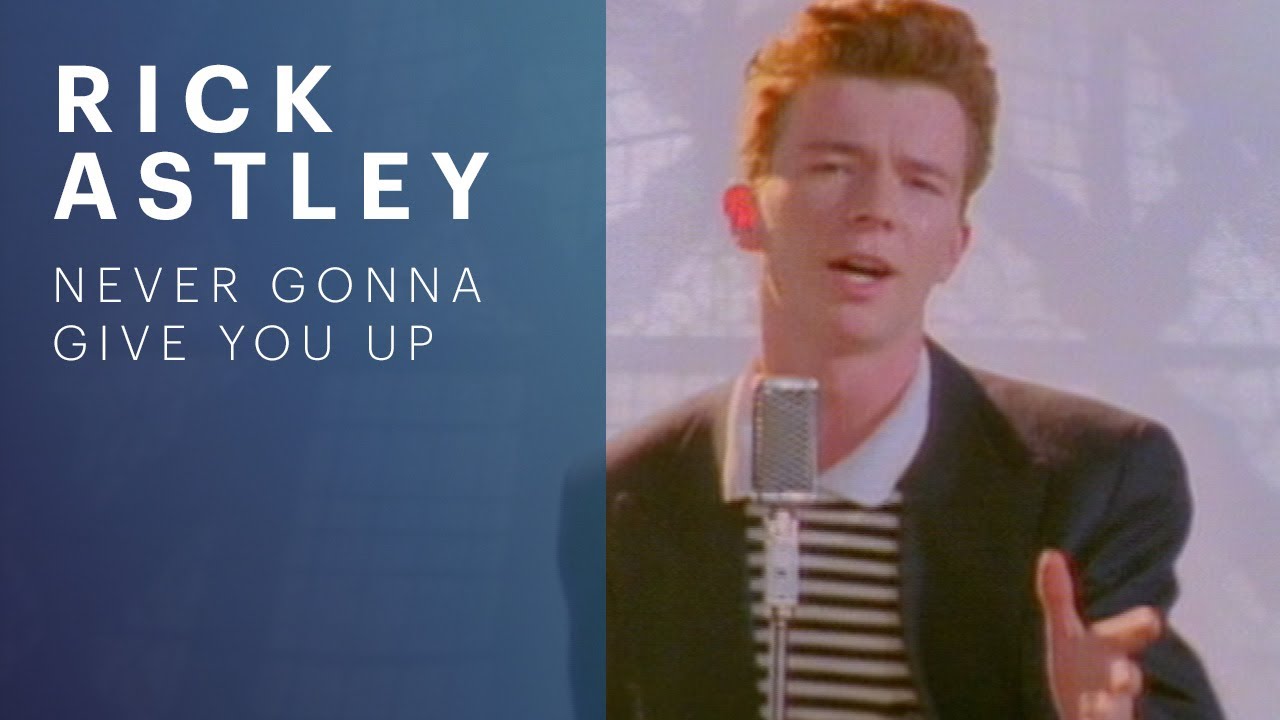
“That’s what we did with Kylie. We measured her and we tailored it. Just as we did with Rick and others. And it's the best way of doing it. When you've done that and you've launched the artist, and, hopefully, been successful, you can move around a bit and do other stuff. But to begin with, it's got to be fairly organic.”
You’re well known for finding ‘plot tracks’ to work with. Gaining inspiration from other hits to give each project a focus and a starting point.
“Well, we’d say, ‘Hey, this particular song over here is a big hit now. The DJs love it, or radio loves it,’ so our job was – if we took a dance ‘plot’ from some of the house music that was going on – to put a pop tune on it and cross it over onto the radio, and then have a hit. Maybe.
That’s what we did with Kylie. We measured her and we tailored it. Just as we did with Rick and others.
“But also there were other things that we did. We'd be looking at not just what the artists themselves were like, or what was going around at the time but, when I'm in songwriting mode, my radar is up, you know? I'm listening for anything that can help. Other stuff that's going around, or somebody might say something. You're always looking for a lyric.
“Often we would have a title and you’d put it on the wall and start aiming at it – see if we can bring that title home. Because the high point of the song is the title, that’s the chorus, and if you can design it so that it starts down here, it gradually builds up to here, and finally reaches that chorus, which is the title you put on the wall, then you've hit the bullseye.”
The perception always is that you and Matt Aitken were writing and producing the music, and Pete Waterman was there for those ideas. He was in charge of the titles and the ‘plot’. It's one of SAW’s eternal mysteries: What did Pete Waterman do?
“Well, he was the guy that had the time to go out and shout about us. And he did that really well. He had contacts in the music industry that Matt and I didn't. You couldn't produce the volume of work that we did, and do a radio show, and do a TV show, and do every interview under the sun… That's what he did. Matt and I spent our time in the studio and Pete did his thing. He’d occasionally come up with a title idea, perhaps. I can think of a couple of occasions when he did that, but we'd have to hone it down to something singable.
“Like at the very beginning, if Pete came in and said, ‘We need to make a song a bit like this one over here,’ and play us a Smalltown Boy by Bronski Beat or whatever, then we’d take some of the high energy aspects of that and pull our own song around it. Pete was always getting information from the industry of what’s going to storm the charts, so we got on the tail of that. But as we started to have bigger hits, we were setting our own trend, really, and other people were copying us.
“So there was a moment in time when Pete's input drove us, but once we were having the success – because you can only do that once or twice – we just kept branching out.
“For example, for Mel & Kim, I went down the Chicago house route because Pete Tong made me a tape. He was at London Records at time, and he was A&R for Bananarama. He gave me a tape of Chicago House and he wanted that sound for them. But I listened to it and thought that would be good for Mel & Kim, and so that plot came to us via a different source.
"Or the bassline on Never Going to Give You Up for Rick Astley. We were struggling with the record. We knew we had a song, but I came up with the trick – the Colonel Abrams approach – to take the syncopation of that bass sound [from Abrams’ Trapped] and program it into our song.
“All the notes are different, but the feel of it and the rhythm of it gives that track an extra little kick. It sits in the pocket at 114 beats a minute, whereas the Hi-NRG stuff we did was 120 beats a minute plus. So we felt the pace was a bit slow. We needed something to inject that, and that was the bass that did it.”
It’s interesting that you mention Hi-NRG because you were exclusively Hi-NRG producers for a while – using that tech and having hits with that sound. But then in 1985 you made Say I’m Your Number One for Princess – a complete switch in styles to R&B. Looking back, that seems such a risky move.
“I remember the occasion very clearly. Princess was in the studio with us, recording backing vocals for Brilliant. I liked the sound of the voice and Matt and I had Say I’m Your Number One, but we hadn't got that definitive version. And I thought to myself, ‘She could do that.’ So I asked if she'd stay behind.
"Pete was on holiday at the time, and I remember mixing it with Phil Harding. I was listening to Brooklyn, Bronx & Queens, you know, the BB&Q band, and they had a particular sound – that bell sound on there. And at that time there was Jam & Lewis too, so I sort of amalgamated those concepts, because up to then the song had been a bit more pacey than that. I wanted to slow it down to this R&B groove, and Princess delivered it beautifully.
“But prior to that, of course, we’d done Dead or Alive, we'd done Hazel Dean, we’d done Divine… So I was thinking this is a nice change! I left the cassette of it on Pete’s desk when he came back he went mental! He loved it so much. But we couldn't get arrested with it at a label, so Nick East, a colleague of ours, set up his label Supreme just to put it out.
“But you moved in those days. You kept moving – you were always on the hoof. Hoping that you catch a drift or a trend… And if the record label didn't like it, you could move again and get your record on your own little label. And you could promote it through the clubs because, if radio wasn't going to play you, you had club DJs who would, because Pete had connections to those. And although Princess wasn't too clubby I went round with her on a couple of evenings, touring little London venues, where she did a live performance, and you made a bit of a name for it. You did six weeks of build up, get some orders in the bag, and then release them all on the same day, and you’d get in the charts.”
And that modulation from verse to chorus on Say I’m Your Number One. That’s an absolute killer isn’t it?
“Yeah, that’s the bit where Pete Waterman hit the ceiling. Because it does sort of lift it. It is a strange modulation. Is it up a minor third? Hmm… I'll have to go back and listen.
“Y’see, this is true of any song I’ve done – I couldn't just sit on a piano and play it. I don't read music. I don't write music. It's all in my head, and I learn it as I'm writing it. It is a modulation, though, and it's an interesting one. It might be E to B flat, maybe? It may be more than a minor third. It is a strange one!
Did you ever feel like The Princess project could, and should, have gone further than one album?
“Yes, it should have done, really. But there's quite a number of those stories with Stock Aitken Waterman where we just did ‘the one off’ and then something went wrong somewhere! The problem here was that she was managed by her brother, and there were demands being made and we didn't really have a proper contract with her, and I think she went off and signed up with a major, and that was it, really. We couldn't really do any more. It's a shame, because we could have gone forward with her.”
On the subject of songwriting, it’s safe to say you’ve never been a fan of ‘the middle eight’… Speaking to your ‘mixmaster’ Phil Harding previously, he told us that often your songs had a hole in the middle and it was his job to fill it. What would you say to that?
“Look, if it's not a hit by the middle eight, it's not a hit! We were only interested in three-minute songs. Actually, I would have been quite happy with two minutes, and if you listen to some of the great Beatles songs, they're just two minutes long. So you don't have to have a middle eight.
Look, if it's not a hit by the middle eight, it's not a hit! We were only interested in three-minute songs.
“What Phil's really talking about there – and you know we love Phil – is that he always came up with ideas. Matt and I used to put six minutes down on anything that we knew was going to be a single. We would record six minutes, so you'd have a minute of build-up drums coming in, bits coming in, then do the song that you want, then break down in the middle, then do the final choruses, and then have a minute of drums tailing out, so the DJs can mix between the between songs. And what that did leave, in the middle – sometimes – was a gap, which you could fill with percussion. Or I’d put vocal samples in it, but Phil would sometimes come up with something else and that would get us over the middle bit.
“But doing a different melodic middle eight in a six-minute version? Where the tune has gone somewhere else? It breaks it up too much for the dance market, and that would feel a bit odd, I think. So we always kept it very direct.
“I appreciate what Phil's saying, though. We used to have three mixers, and Matt and I would be saying, before we finished, ‘This one's right for Phil’, because he can beat this up a bit. Or, ‘This one's better if Pete Hammond did it, because he's more melodic’. Or you’d give it to Dave Ford because he's slightly more orientated towards tunes. They were good in those areas for us, and so we’d pick and choose. I think we're probably lucky to have them all.:
It’s that kind of way of working that made PWL the ‘hit factory’. Was that label your invention? And your intention?
“I didn't coin the phrase 'hit factory'. That was between Pete Wateman and David Howells, PWL’s business manager. They thought it was an appropriate phrase, but I hated the name ‘hit factory’ for the reason you're saying. I thought it made us sound like a sausage factory – that we were just churning them out – and that couldn't be further from the truth, because we always put the time and the hours and the effort in.
“Matt and I made sure, for example, that Kylie Minogue's set of clothes wasn’t exactly the same as Jason Donovan's and we weren't terribly keen on doing another soap star after Jason. We thought that would be too much. People will start to think that this IS throwaway, or that we’re just repeating ourselves.
“So on Jason, on his first records, we always used guitars. Because we thought he's going to have that point of differentiation. We never used guitars, as you know. And so there was thought that went into it.
I can't get the big doors open for me because I'm not Taylor Swift or Ed Sheeran. I'm on my own. I'm independent of everything.
“But because we did so many, I can see how people might think we just churned them out. In fact, there was a criticism when we did You'll Never Stop Me Loving You for Sonia, which was a great little song which seemed to encapsulate youth, being a 16-year-old girl and teenage angst, and people said at the time, ‘Well, if you can make Sonia a hit, you can make anyone a hit’. We had such derisory comments. But when you slow that track down, and break it down as a slow ballad as we did it in the musical that we had out recently, it still has such strength. You can treat that differently, which is one of the tests of a decent song, isn't it?
“I resent the idea that anyone would think that we just churned them out, because even now it doesn't get any easier. I mean, the work that's gone into The Fizz and Suzette is the same as it’s ever been. It doesn't get any easier. It's hard blooming work, and at the end of it all, you don't sell many records nowadays anyway, so we’re doing it because we love it.
“You can get some publishing income perhaps, a bit of this and a bit of that, and The Fizz can sell a few more tickets to their live shows. But really, there's the love of the medium, the love of the style, and the love of the pop song. That’s why we’re doing it.
“Fortunately, I don't need the income but somebody should certainly recognise and give credit to The Fizz for having been around for 45 years.”
So is this the start of a resurgence of you writing and producing again? It feels like two Mike Stock buses have come along at once.
“Well, that's just a coincidence. I've done four albums with The Fizz over the last few years. I did a Shane Ward album, which sells well, but I can do all the writing and do all the making of the records but I can't promote it onto radio and onto TV. I can't get the big doors open for me because I'm not Taylor Swift or Ed Sheeran. I'm on my own. I'm independent of everything.”
Of the many artists you worked with and the songs you’ve written and produced, is there something or someone that, you feel, didn’t get a big enough bite of the cherry?
“Well, The Reynolds Girls should have been given a little bit more leeway. There’s nothing wrong with the record. We were having a little poke at the radio at the time. Radio One hated me. Simon Bates gave me a right roasting!
“Lonnie Gordon, maybe?… Donna Summer should have done a second album. And of course, Mel and Kim. We felt we had something brilliant there, something that could have been world conquering. We’d only just got started.
“And Suzette is a perfect example because she got caught in the crossfire. She got stuck in an argument between RCA America and RCA UK, and Pete Waterman and myself walking away from each other. So that was a shame. She was left stranded.
“But I've rectified that now. That’s all in the past.”
Crazy Shot In The Dark by The Fizz and the self-titled debut album from Suzette Charles are out now.