
It takes a brave guitarist to step into a role previously played by Ritchie Blackmore and Tony Iommi – but that’s exactly what Vivian Campbell did when he joined Dio in 1982.
At that time, he was just 20 years old.
Now, at 63, a member of Def Leppard since 1992, Campbell tells MusicRadar: “Dio was a great band, you know? It really was. And maybe I didn’t even realise it at the time.”
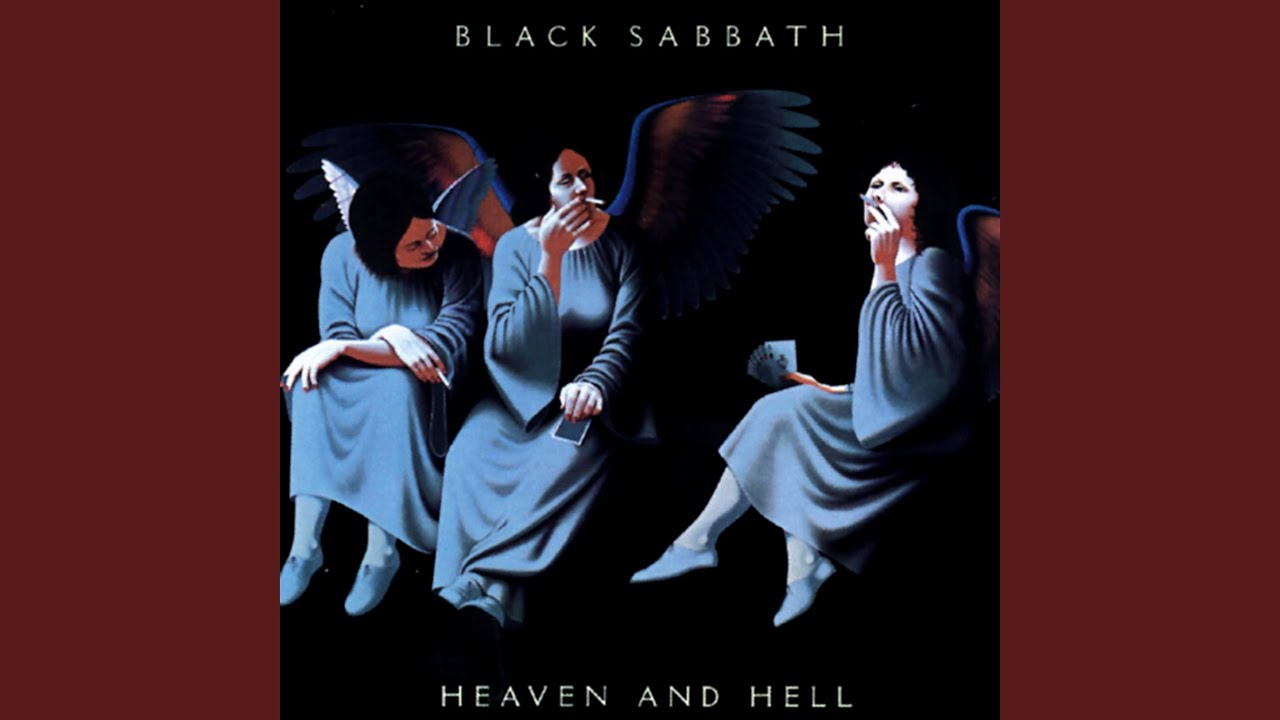
The leader of that band, Ronnie James Dio, had made his reputation as one of heavy metal’s greatest vocalists in the late ’70s alongside Ritchie Blackmore in Rainbow and in the early ’80s alongside Tony Iommi in Black Sabbath.
The original line-up of Dio featured two of the singer’s old bandmates, ex-Rainbow bassist Jimmy Bain and ex-Sabbath drummer Vinny Appice, plus guitarist Jake E. Lee. But after a short period of rehearsals Lee jumped ship to join Ozzy Osbourne’s band as the replacement for the recently deceased Randy Rhoads.
Lee’s defection heightened the sense of rivalry between Osbourne and Dio – a rivalry born when Dio replaced Osbourne in Sabbath.
But Dio’s frustration didn’t last for long. What he found in Vivian Campbell was a perfect foil.
Campbell had made a name for himself in the Belfast-based band Sweet Savage during the New Wave Of British Heavy Metal. Sweet Savage’s 1981 song Killing Time would later be covered by Metallica as the b-side for 1991 single The Unforgiven.
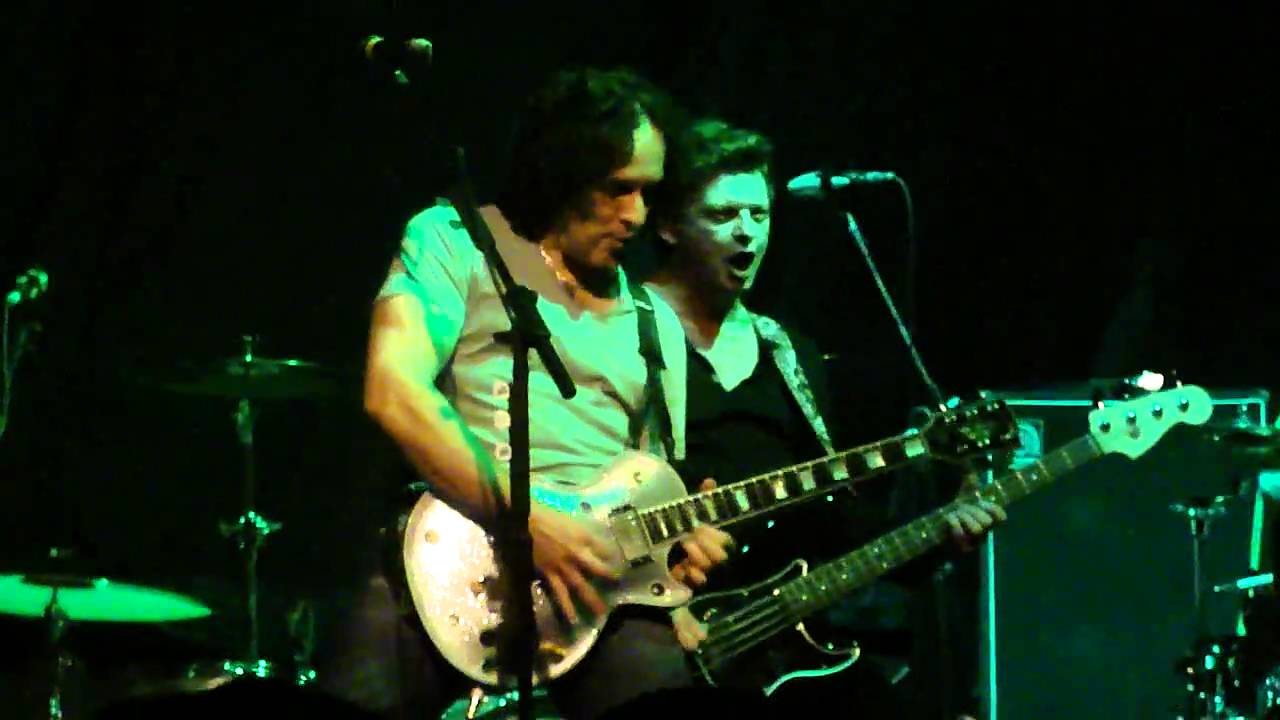
Campbell’s audition for Dio happened in London at the famed rehearsal studio John Henry’s. Jimmy Bain was absent, so Dio played bass as he and Appice jammed with Campbell. And the first piece of music they played together was a rough draft of a song that would be pivotal to the band’s career – the title track of the debut album Holy Diver.
Campbell recalls: “That night at John Henry’s, my audition, when I first met Ronnie and Vinny, that’s what we played – Holy Diver. Ronnie didn’t play guitar, but he played bass, and he picked up Jimmy’s bass and showed me the arrangement of it.
“It wasn’t a completed song at that point, but it was pretty much there, and that’s what we played. We just played it over and over a bunch of times.”
According to Campbell, it was immediately after this audition that Ronnie James Dio made a promise that he failed to keep.
“I didn’t smoke dope,” Campbell says, “but they all got stoned, and that’s when Ronnie talked about the band – how we were going to do three albums, and then we’d have equity after album three.
“Maybe I was the only one that remembers it, because I was the only sober man in the room, but that’s what I remembered from that night, and that’s what got me fired in the end.”
Campbell was dismissed by Dio after the band’s third album, 1985’s Sacred Heart.
Back in 1982, however, Campbell was thrilled to be working with such a famous and hugely talented singer.
Having passed his audition, he travelled to Los Angeles to work on material for the Holy Diver album.
“Ronnie had the Holy Diver song, and he had most of Don’t Talk To Strangers, he was finishing that. And then everything else we knocked together at Sound City rehearsal rooms.”
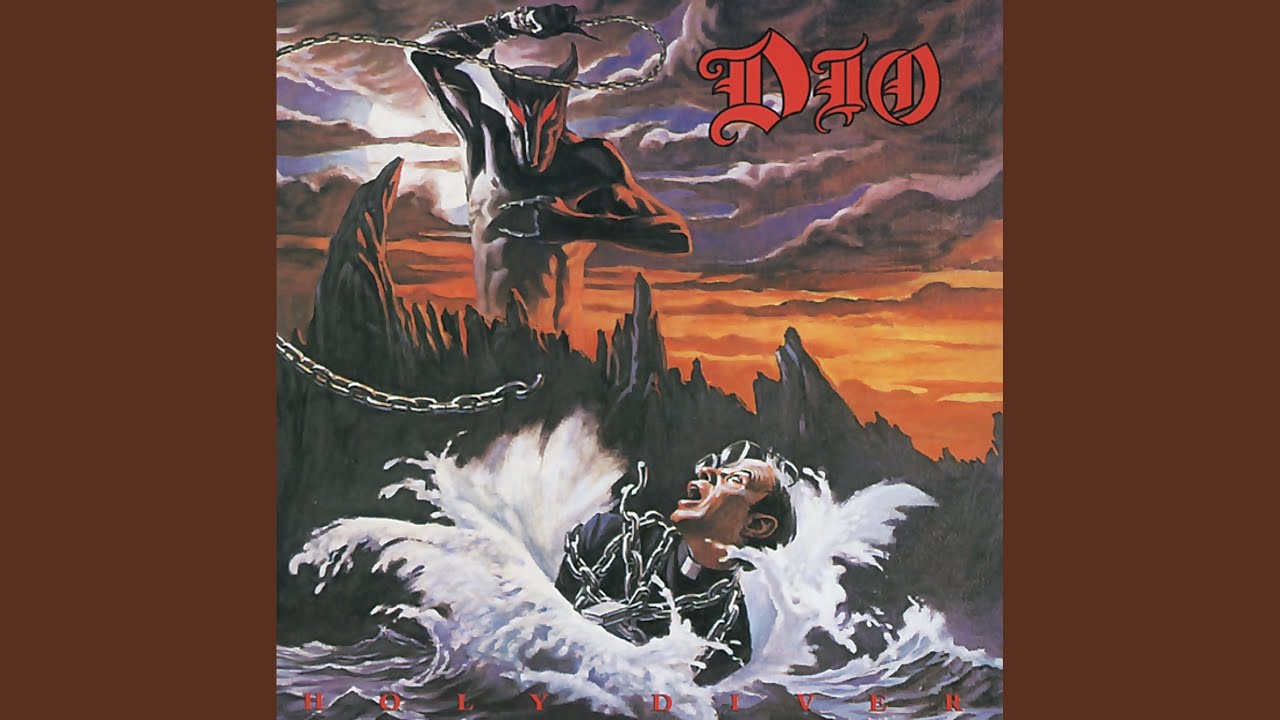
The album was recorded in early 1983 at Sound City studios in Van Nuys, California. It was produced by Ronnie James Dio and engineered by Angelo Arcuri.
Campbell co-wrote five of the nine tracks on the album – Gypsy, Caught In The Middle, Invisible, Shame On The Night and the anthem that would become Dio’s most celebrated song, Rainbow In The Dark.
Remarkably, his solo in Rainbow In The Dark was a first take.
“I’m a very, very nervous performer,” he says. “Or I was at that stage a very nervous performer. Certainly, I didn’t want people being in the room with me when I was doing it.
“And I didn’t plan out my solos then. So it’s not like I went into the studio knowing what I was going to play. I was leaning heavily on inspiration just coming at the right time, and it was weird, because Rainbow In The Dark was the very first solo we did, the solo that’s on the record is the very first take, and I had no idea what I was doing!
“I’d been playing all day, and I was going to record Rainbow In The Dark that night, and it’s in A minor, so I just I played in A minor all day. And I used to smoke Marlboros back then, so I was smoking, drinking coffee… I was so hyped up!
“Sometime in the evening Ronnie and Angelo [Arcuri] came in and we got a guitar sound and we spent an hour or so faffing around, getting a sound and mic placement and all that, and then it’s like, ‘Okay, let’s try one.’ And that’s what came out.
![Dio - Rainbow In The Dark (Official Music Video) [HD] - YouTube](https://img.youtube.com/vi/PrBUjXaRSUQ/maxresdefault.jpg)
“Ronnie immediately said, ‘Wow, said that’s brilliant! Do you want to try another?’ And my immediate thought was, ‘Fuck, what’s wrong with that one?’
“So when they roll for the second one I’m thinking, ‘Well, first time I started up there, I can’t do that.’ So then it becomes a mental thing, and I’m starting to think, ‘Okay, I got to do something completely different’ – and it was shit!
“I did the second one and it was shit, and Ronnie said, ‘Okay, we’ll just keep the first one, let’s move on to the next song.’
“Because I got the first one in the first take it was a false sense of security, because then, moving forward, it wasn’t always like that. I’d go in there and think, ‘Well, as long as I’m warmed up and I’m up to speed, I’ll hit something in the first two or three passes.’ And it didn’t always work.”
That said, Campbell nailed another great solo in the album’s title track.
“I’m pleased with it,” he says now. “I really like the structure of it, and I think Ronnie did too.
“The note that I end on is like the minor third. I’m sounding clever here, I think it’s a minor third, and it’s a bendy bit, like I’m bending into it. And Ronnie asked me, ‘Did you mean to end on that note?’ I said, ‘Why, don’t you like it? Is there something wrong?’ And he says, ‘No, no! That’s really interesting. I just didn't expect that.’
“So I felt very pleased about that – in terms of the structure of the solo. I’m never happy with the performance, but I’m happy with the structure of it. Like, I listen to it now and it sounds like a 20 year-old kid playing guitar, which it was.”
![Dio - Holy Diver (Official Music Video) [HD] - YouTube](https://img.youtube.com/vi/2lvs2FzF64o/maxresdefault.jpg)
Campbell admits that his nerves got the better of him during the recording of the second Dio album, The Last In Line, at Caribou Ranch studios in Colorado.
He recalls: “By the second album I was so feeling so much pressure about Ronnie and Angelo being in the room that I literally had them set me up so I could hit ‘play’ and ‘record’ – this was still on two-inch tape – and I would say, ‘You guys go play pinball, go have a drink, come back in like 30 or 45 minutes or something.’
“I mean, the smart thing would be to figure it out beforehand, but I was never accused of being smart! Nowadays, if somebody called me tomorrow and said, ‘Hey, can you come into recording studio and put a guitar solo on a song for blah blah’, I would absolutely map it out and go and prepare it and just try and capture the performance and not go into that situation expecting that inspiration is going to walk into the room with me.”
He explains: “A lot of it comes from experience. That’s how you know how you want to structure a solo. You can imagine where it’s going to go and how it’s going to flow and where it’s going to end.”
After his three-album run with Dio, Vivian Campbell went on to play with Whitesnake and with ex-Foreigner singer Lou Gramm in the band Shadow King before finally finding a permanent home in Def Leppard.
He never reconciled with Ronnie James Dio, who died in 2010. But in 2012 Campbell reunited with Jimmy Bain and Vinny Appice to perform classic Dio songs with singer Andrew Freeman under the name Last In Line. This band also went on to make three albums of original material.
![Dio - The Last in Line [Live at The Spectrum 1984] - YouTube](https://img.youtube.com/vi/9q5S10dCHaE/maxresdefault.jpg)
40 years since he was fired from Dio, Campbell is proud of what he achieved with the band.
He recalls: “I knew we we were strong, obviously, but I always felt like I was the weak link in the band. I always felt that my guitar playing was was too raw and too unpolished, so I always listened to it with that hyper critical ear.
“But it was great, you know? I feel very privileged to have been a part of that, even though in the moment I didn’t realise just how great it was.”
