
Alex Lifeson has been a paid-up member of the Rock & Roll Hall of Fame since 2013. He has sold over 40 million records over five decades with Rush. He’s been immortalised on South Park. And it’s not like he is a stranger to Best Guitarist of All Time lists.
And yet some people will tell you he is underrated. Rush’s bassist and frontman Geddy Lee is one of them. Joining MusicRadar in a London hotel ahead of Rush’s triumphant return to the stage on their Fifty Something Tour – a historic reunion that sees Anika Nilles assuming the late Neil Peart’s place on drums – Lee believes Lifeson doesn’t get his due, that some of the stuff he would come up with would blow his mind.
“I’m a big Alex fan,” says Lee. “I think he’s the most underrated guitarist in rock history. People don’t realise how inventive he was, because he refused to conform sonically, his chordal use.”
Paul Gilbert knows just what Lee is speaking of. When we caught up with Gilbert to talk about his latest studio album, WROC, Gilbert wasn’t so sure of where the critical consensus stood regarding Lifeson. “I don’t know about that,” he said, but he was sure of what made Lifeson stand out from his peers.
Like Lee, Gilbert remains in awe of Lifeson’s chord choices.
“Well, there are so many things,” said Gilbert. “But first of all, his chord work is so unique, and the chords themselves, and the way he arpeggiates them and the way he makes riffs out of them – there’s just so many cool rhythm parts. Clean ones, distorted ones, acoustic ones, there’s always something really creative with the rhythm stuff – it’s super-musical.”
Lifeson can tear up the fretboard if needs be but he’s never been a shredder. It did not fit with Rush’s sound. As expansive as the Canadian prog trio took their sound, that kind of individualism left unchecked might well have pulled focus from the grander concepts behind the music, like the dystopian sci-fi of 2112, the fever dreams of La Villa Strangiato.

Lee credits Lifeson with giving Rush a sound that was would have been beyond most power trios.
“I mean, we were three people, and he made it sound like there was more than one guitar player playing when there was one guitar player playing,” says Lee. “He invented chords.”
Lee says some of Lifeson’s best work came when he actively looked for alternatives to the traditional guitar solo.
“Listen to a song like Red Sector A, for example, to speak of Grace Under Pressure. I love the guitar work in that song,” says Lee. “He’s taken a song with this repetitive, sort of mind numbing arpeggiation coming from the pulsing of the keyboards, and he’s floating on top with these really interesting chord progressions – and that whole solo!”

That whole solo is audacious. Red Sector A needed that. It is a heavy song that speaks to the experiences of Lee’s parents as Holocaust survivors. Lee does not play any bass guitar on the track, just synth and vocals.
Lifeson’s lead playing on Red Sector A could be described as rhythm-lead, in how he used chord voicings, but it’s more experimental than the typical Hendrix/Stones sense of rhythm-lead. It is almost an abstraction of what lead guitar is supposed to do.
“You know, he was kind of anti-solo at that period,” says Lee. “And yet he created a solo that wasn't a solo that’s made up of sounds and chordal structures and emotion. That’s just one example [of this].”

Rush’s pop-cultural footprint is such that countless guitarists would fall under Lifeson’s spell. They, too, would reconsider the fretboard after falling into these immersive worlds created in tracks such as Cygnus X-1 – two-parters too epic for one album – and riffs that subverted the powerchord paradigm upon which rock was built.
One such guitarist is John Petrucci of Dream Theater.
“I love Alex’s choices,” Petrucci told MusicRadar in 2012, “the way he plays power chords with open strings on top. And when you combine that with the way he uses the chorus effect – to this day, I apply all of this information to my own style.”
Those open strings Petrucci speaks of transformed regular powerchords into something more exotic, as on the opening to Cygnus X-1 Book II: Hemispheres, where Lifeson plays a an F# powerchord with the high E and B strings left open, making it an F#11. He would move these shapes around, mining them for fresh harmonic intrigue.
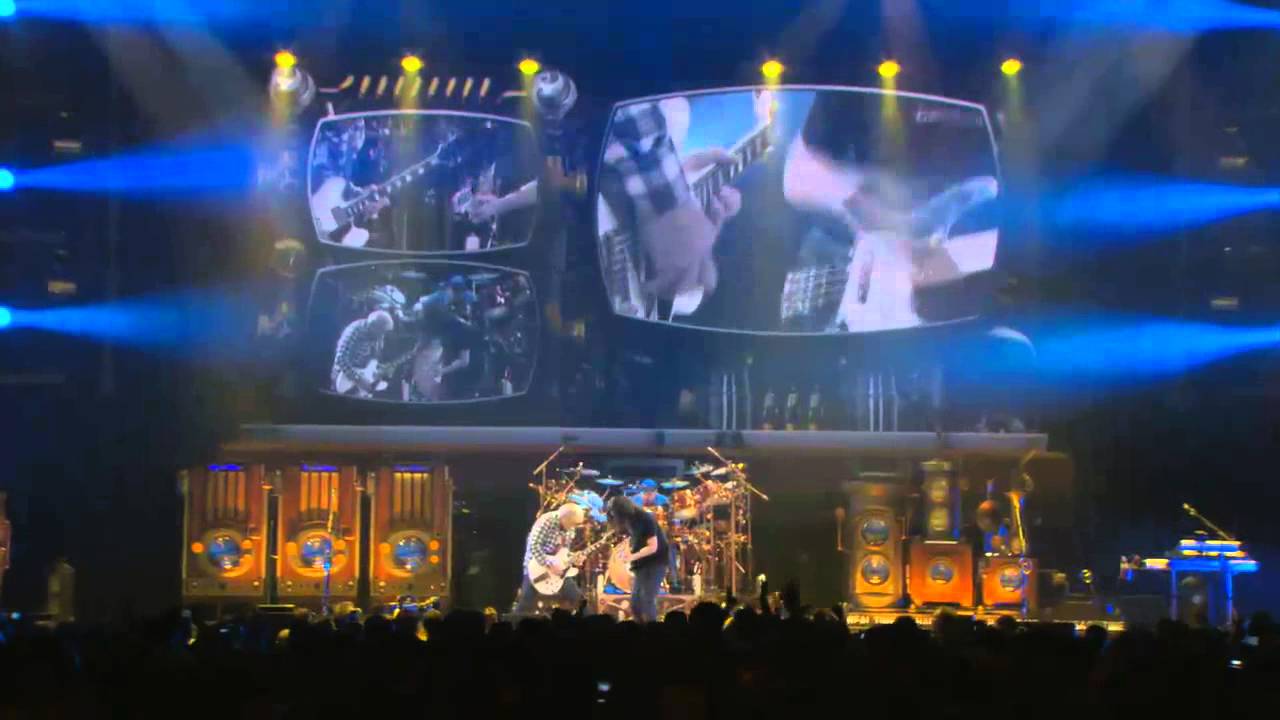
And then there was Lifeson’s electric guitar tone, which became an exemplar in how to deploy a dual amp setup, with chorus pedals, tape echo and various delay pedals to make one guitar occupy a wider bandwidth. He was no stranger to the wash of flanger or the Leslie rotating speaker.
But when you strip all that away, Lifeson was fundamentally a blues-rock player. That’s what he cut his teeth on. As Rush grew more adventurous, so too did Lifeson. But his foundational influences would still erupt when the occasion required it.
“You listen to the solo of Kid Gloves if you want to hear a blistering guitar solo,” says Lee. “La Villa Strangiato, his playing there is is true to his blues-rock roots – that’s borne out of it. He was a great blues guitarist at a very young age. And that is sort of reflected in La Villa.”
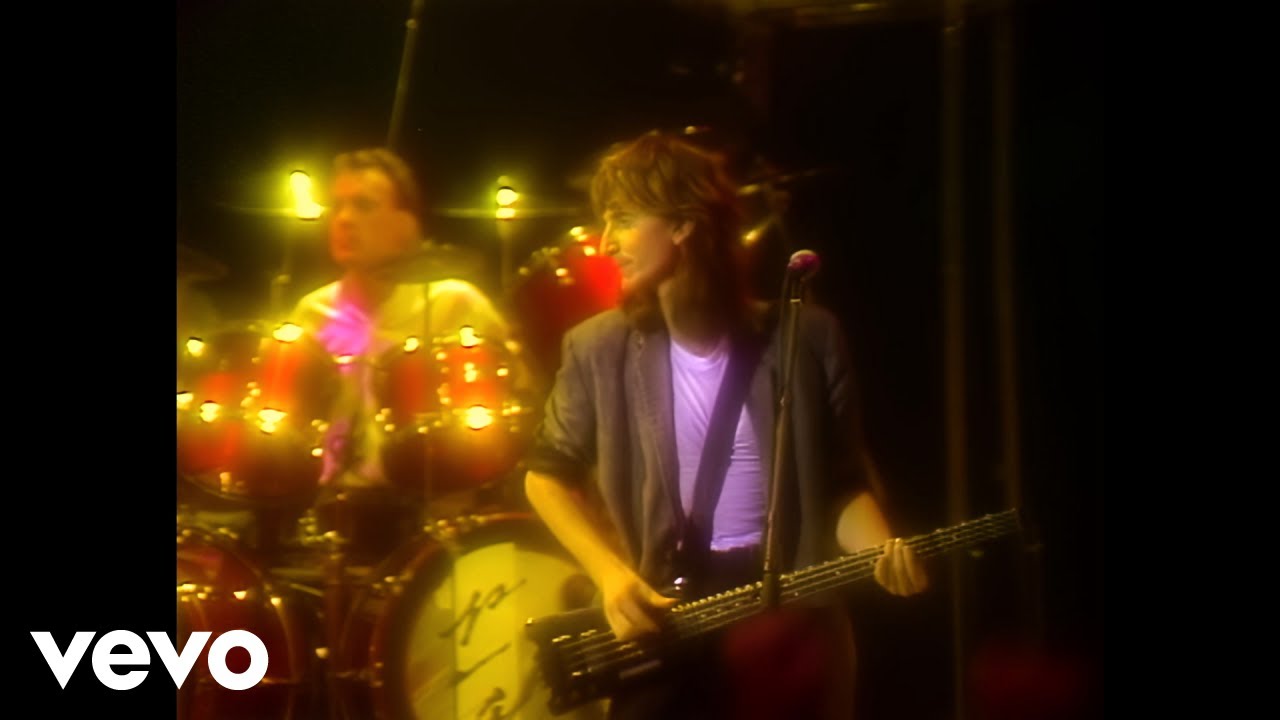
La Villa Strangiato came together out of Lifeson’s dreams. Each morning he would come down for breakfast and tell Peart and Lee about his dreams.
Once they had stopped groaning, wishing that Lifeson would lay off the cheese – or the pot – before bedtime, Rush realised they had enough ideas for an epic instrumental to be delivered in 12 acts (and subtitled “An Exercise In Self-Indulgence”).
It has long been one of Lifeson’s favourites to perform live. What he had to say about it tells us much of how Lifeson thought about his solos. It was always about complementing his bandmates.
“It’s quite emotive, and it's got a very bluesy, almost minor-ish feel to it,” Lifeson told MusicRadar in 2010. “Also, the music that surrounds the solo – everything Geddy and Neil are doing – is incredible. It feels great to play it on my [Gibson ES-] 355, which is the guitar I recorded it with. All in all, it’s a wonderful moment.”

For Gilbert, it was the phrasing and the note choice that elevated Lifeson’s lead playing. Lifeson was unconventional but not at the expense of the song.
His soloing, it’s just really memorable and unusual, and that is hard to do,
Paul Gilbert
His solos adhered to Rush’s credo, that this might be high-information music – arrangements stretched out to accommodate big ideas, cross-album narratives – and yet it would give the audience hooks, ear candy that made it digestible and human, maybe even accessible
“His soloing, it’s just really memorable and unusual, and that is hard to do,” says Gilbert. “I mean, on the first album, if you listen to the solo on Working Man, that’s like straight-ahead Zeppelin-style, ‘I got it cranked up through a Marshall stack, and I’m just playing my cool pentatonic licks, and I’m playing them great!’ That was a great way to come charging out of the box.
“But then, as time went on, [listen to] the solo on Limelight – it’s so unusual, and it has to be that, like, it is part of the song! It’s not one where you go, ‘Oh, it’s in G#, I’ll just improvise that.’ No. It has got to be that solo. It’s thematic.”

Limelight is a great example of Lifeson being Lifeson. He loves that solo. He loves playing it. He loves how it sounded on record. It’s one of the highlights on Moving Pictures, a record that is front-to-back highlights.
“I’ve always enjoyed the elasticity of that solo, particularly the way it sounds on the record,” Lifeson told MusicRadar in 2010. “It has a certain tonality I just love. I do like playing the solo live, but I think I prefer listening to it on the album. On record, it has a magical quality to it – it really conveys the pathos of the song and the lyrics.”
Lifeson admits that even he has struggled to perform the Limelight solo live just as it was recorded. Maybe it is that search for perfection that keeps things interesting.
“I’ve never been able to recreate that live,” he said. “I get pretty close, but it’s never exactly the way it is on record. I’ll keep trying, though.”
Lifeson will do just that as Rush continue on The 50 Something Tour. See the official Rush site for dates and ticket details.
