
Eric Clapton was on a mission from the start and there was no time to waste. He joined the Yardbirds in ’63, left in ’65 to join up with John Mayall and his Bluesbreakers, and within 12 months he had co-founded Cream to establish a new paradigm for blues-rock, the power trio.
He had reconfigured guitar in just three years. Little wonder it would go to his head. When some oik spray-painted “CLAPTON IS GOD” on a wall in North London the list of suspects was long but most definitely included Clapton himself. “I thought it was quite justified to be honest with you,” he told Guitarist in 1994. “I suppose I felt I deserved it for the amount of seriousness that I’d put into it.”
Clapton was serious.
His mission was to spread the gospel of blues guitar. He had been weaned on early rock ’n’ roll just as his peers were. That’s what made him aware of the electric guitar as an instrument, seeding its potential in his mind. He found his calling after hearing Freddie King for the first time.
“Listening to him had an effect on me similar to what I might feel if I were to meet an alien from outer space,” said Clapton, in his 2007 autobiography. “It simply blew my mind.”
The record in question was the 7” for Hideaway. The B-side, I Love The Woman, contained an “earth-shattering” moment, a guitar solo in which King demonstrated just how rich and wide and musically literate the blues could be. Clapton said it took his breath away.
“It was like listening to modern jazz, expressive and melodic, a unique kind of playing in which he bent the strings and produced sounds that gave me the shivers,” he said.
Eureka! The electric guitar could be the lead instrument, on an even keel with the vocals.
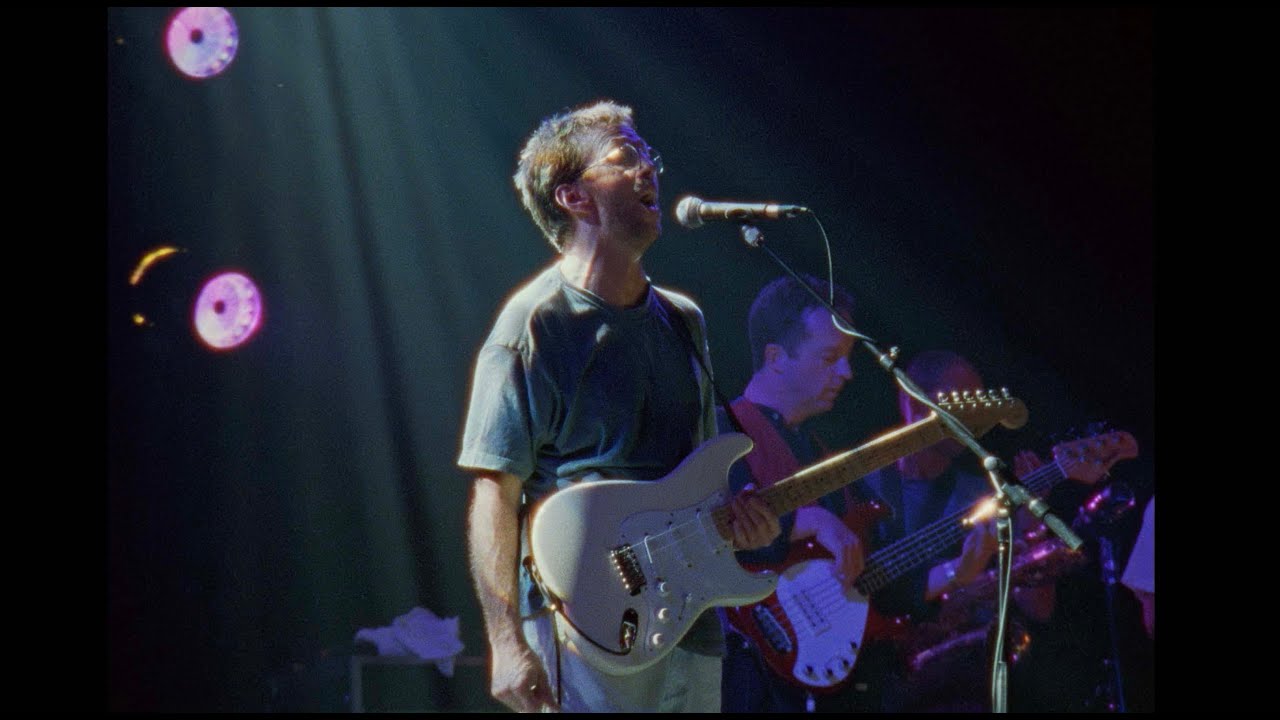
There were other formative influences. George Barnes’ playing on Connie Francis’ Lipstick On Your Collar made an impression. James Burton’s countrified styled jived with Clapton’s sensibility, too, and it fit in with this recognition that it was all interconnected, and the blues held it all together.
Not that the world was paying attention. A four-piece modern beat combo out of Liverpool was having much success. They were making the weather. Clapton thought this was “despicable”. Seeing all these young people succumbing to Beatlemania was a ‘hello, sheeple!’ moment. How could the music buying public at large confer godlike status upon them when Clapton’s heroes went to their graves unsung?
We shall allow ourselves a wry smile at Clapton taking umbrage at people deifying another artist then move on.
This pique played its part in refocusing a young teenaged Clapton when he got back in the rehearsal room with the Roosters, talking about the blues, honing his chops alongside fellow guitarist Tom McGuinness – who can take the credit for introducing Clapton to King.
“I was interested in the white rock ’n’ rollers until I heard Freddie King – and then I was over the moon,” Clapton told Guitarist. “I knew that was where I belonged – finally. That was serious, proper guitar playing and I haven’t changed my mind ever since. I still listen to it and I get the same boost now that I did then.”
Back then the gigs came easy. Clapton made his bones playing clubs, “his spiritual stomping ground”. They all did. There were not enough bands to go around. If you were good enough, you got a gig, and those who could really play could make a bit of money. As a student of the blues, Clapton operated as though he had secret knowledge, a deeper cultural wellspring to draw from.
He says it was the only education he got, falling down the rabbit hole, learning these cats’ names and their stories, and how blues and soul, R&B and jazz all fit together, knotted with the histories of those who created the sounds.
“I remember hearing Sonny Terry and Brownie McGhee, Big Bill Broonzy, Chuck Berry and Bo Diddley and not really knowing anything about the geography or the culture of the music,” Clapton told Guitarist. “But for some reason it did something to me – it resonated.
“Then I found out later that they were black and they were from the Deep South, and that started my education. In fact the only education I ever really had was finding out about blues. I took a kind of elementary fundamental education in art, but it didn’t rivet my attention in the same way blues did.”
As any teacher will tell you, a motivated student is a good student. Clapton applied himself. This education went hand in hand with learning to play the guitar, developing a musical vocabulary and playing style that would soon be turned lose on the Yardbirds, that great mid ‘60s petrie dish of percolating guitar genius from which Jeff Bech, Jimmy Page and Clapton all emerged.
![Eric Clapton - Crossroads (Live at The Royal Albert Hall 1991) [Official Video] - YouTube](https://img.youtube.com/vi/ewFiqngynNk/maxresdefault.jpg)
“I wanted to know everything,” Clapton continued. “I spent all of my mid to late teens and early twenties studying this music; studying the geography of it, the chronology of it, the roots, the different regional influences, how everybody inter-related, how long people lived, how quickly they learnt things, how many songs they had of their own and what songs were shared around…”
Clapton found a place to put this knowledge in the autumn of 1963. The Yardbirds would be the perfect vehicle for his obsession with Chicago blues. It was a band who took this stuff seriously. They would play Willie Dixon, Billy Boy Arnold and Sonny Boy Williamson tracks, Clapton taking over on lead vocals for Williamson’s Good Morning, School Girl. They would jam out Bo Diddley’s I’m A Man, “rave-ups” as they called it then.
![The Yardbirds on Ready, Steady, Go in 1964 [from left]: Paul Samwell-Smith, Chris Dreja, Keith Relf, Jim McCarty and Eric Clapton](https://cdn.mos.cms.futurecdn.net/TCHbnM7JtyLAgXxpfEUFuC-1200-80.jpg.webp)
This was when Clapton acquired the sobriquet Slowhand. He’d break a string onstage and change it right there and then, and the crowd would treat it like a tennis pro challenging a line call, a slow hand clap would ripple through the audience.
Unfazed, Clapton got straight back at it. But he had itchy feet. When people actually started to really like the Yardbirds (the Graham Gouldman-written For Your Love went Top Ten) it was time to leave. The self-styled “anarchist” wanted to back underground, there he would find John Mayall waiting for him.
And more often than not, wait for Clapton is what Mayall did.
“I was so unreliable, so irresponsible,” recalled Clapton. “I would sometimes just not show up at gigs and that’s how Peter Green was asked to play with John – because I wasn’t there.”
Clapton was just 20 years old when he joined the Bluesbreakers. His Gibson Les Paul and Marshall amp sound was making waves all the way over the Atlantic.
The similarly minded Billy Gibbons’ ears pricked up. The Texan was moved by ‘the Beano Album’, and this being the pre-internet era he did what everyone else did at the time and scanned the back of the album sleeve to for idea on how Clapton got this thrilling tone.
“The sound was just so fierce and so attractive,” said Gibbons, speaking to Guitarist in 2021. “The appeal drew everyone’s curiosity to attempt to suss out where this sound was coming from. The photograph of Eric on the back cover was a clue. We said, ‘Ah, look in the background, there’s a Marshall, but it’s not very big, and ah, look at that. They don’t make those any more – but it’s one of those Les Pauls!’”
The Beano ‘Burst Les Paul became infamous. It helped establish the sound that everyone was chasing. Clapton had been searching for something to compete with Freddie King’s tone and had eventually found it in a cranked Marshall 2x12.
It took a while to get a sound that everybody was happy with, especially Eric. But we were going into an unknown era
Mike Vernon
That alchemical combination was broken up after the Beano went AWOL, stolen from a church hall in ’66. Gibson only made these sunburst Les Pauls from 1958 to 1960.
There were not that many of them, making each and everyone precious in its own right. And yet this one, which had acquired mythical status in Clapton’s hands, was gone. That’s the thing when people think that you’re God, they all want a piece of you.
Speaking to Classic Rock, the Beano album’s producer, Mike Vernon, remembers Clapton as Clapton himself did; he was difficult. He was particularly uncompromising over how they would record. It had to be live, but at the volume he played at the guitar would bleed into mix.

“It took a while to get a sound that everybody was happy with, especially Eric,” said Vernon. “But everybody had to take on board that we were going into an unknown era, nobody had ever witnessed in the Decca studios somebody coming into the studio, set up their guitar and amp and play at that volume.
“People in the canteen behind the studio were complaining about the noise. Normally they would never hear it, but it was travelling round the studio complex. People were coming down to the studio to see what was going on.”
What was going on was a miracle. Mayall had called the tunes. He was the leader. Clapton applied is magic, heaving the blues into popular culture, inspiring generations of players. Nothing would be the same again. His successor in the Bluesbreakers, Peter Green, had a few ideas also how to take it further. The British blues boom had officially started.
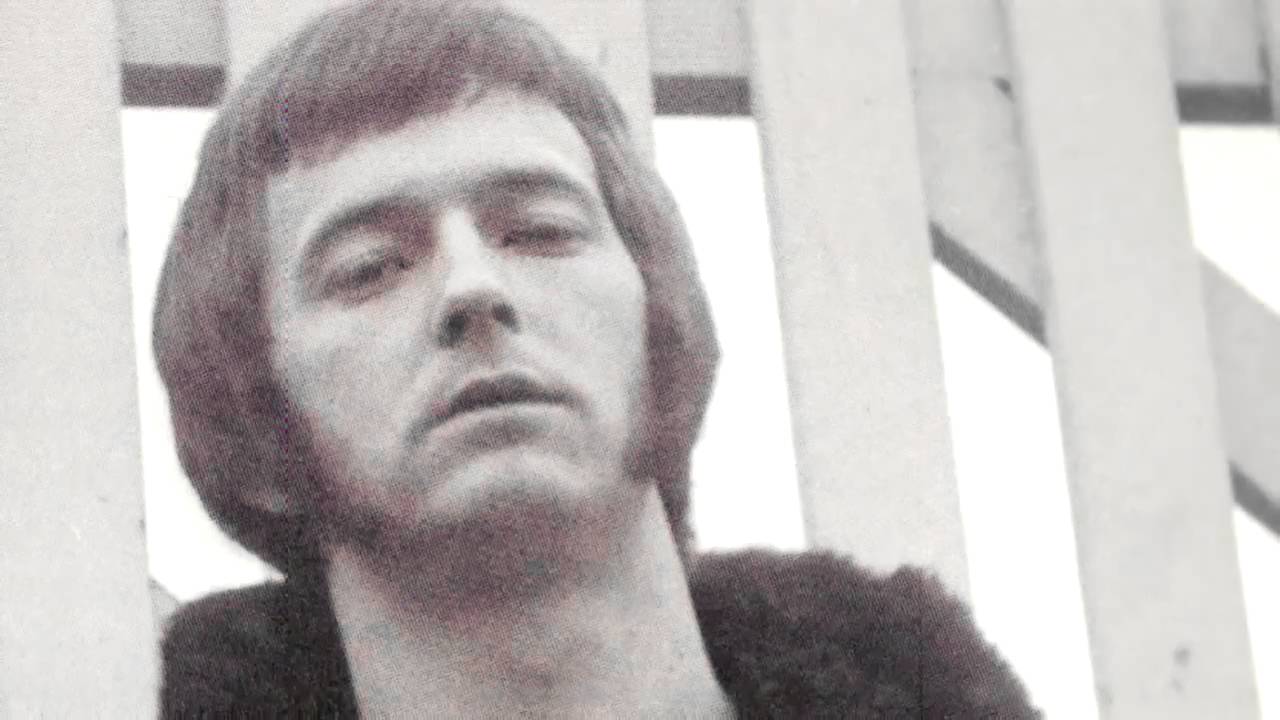
For the record, Vernon believes Lonely Years, the seven-inch that Clapton and Mayall cut in ’65 for he and his brother’s imprint, Purdah, was Slowhand’s definitive recording.
“Lonely Years was the finest effort Eric ever put on record,” he told Classic Rock. “It just sums up exactly what Eric was about at that time – that real down-home feel. That record was the closest I came to a real Chicago sound.”
That was exactly was what Clapton was chasing. And if that made him an elitist with a god complex, so be it. At least it was with the best intentions.
“I thought everyone else was either in it just to be on Top Of The Pops or Ready Steady Go, or to score girls or for some dodgy reason,” he said. “I was in it to save the world. I wanted to tell the world about blues and to get it right. Even then I thought that I was on some kind of mission, so in a way I thought, ‘Yes, I am God; quite right‘.
“My head was huge. I was unbearably arrogant and not a fun person to be around most of the time because I was so superior and very judgmental. I didn’t have time for anything that didn’t fit into my scheme of things.”
Keep in mind his next project saw him team up with Ginger Baker and Jack Bruce for a project he envisaged as a straight-up blues trio but was anything but.
Cream was another miracle, musically and existentially. How did they manage to hold it together for three long years?
The Lord works in mysterious ways.
