
“There really isn’t a whole lot to do around here other than pick up a guitar and make music,” said Billy Gibbons when asked about the place that ZZ Top call home.
Known all around the world as “that little ol’ band from Texas”, ZZ Top formed in Houston way back in 1969, with Gibbons on guitar and vocals, Dusty Hill on bass and vocals, and Frank Beard on drums.
Speaking to Classic Rock in 2014, Gibbons said of the Lone Star State: “It’s kind of challenging to try to nail it down and define what is so valuable about Texas as a place. There’s still a little of that gunslinger mentality in the air. There’s a competitive attitude: I can play a guitar better than you! But there’s also a real robust camaraderie between musicians in Texas.
“Musically, it’s very diverse. It makes for a great atmosphere to work in. There’s a freedom of exchange between musicians. We share knowledge. There’s something quite attractive in calling Texas a place to be from.”
Gibbons also spoke of the affinity between ZZ Top and Southern rock heroes Lynyrd Skynyrd and The Allman Brothers Band.
He recalled: “There was a good blend between those groups, an identifiable quality within their work. We definitely related to that.
“On an early tour we went out with the Allman Brothers and Lynyrd Skynyrd. You had Texans and Southerners – that was pretty interesting! But we all got on pretty good.
“There was a common thread between all of us – a blues styling, blues phrasing in our music. We all had an admiration for a peculiar art form called the blues. And that trace element was the key to an understanding between those bands.”
He said of the Allmans’ blues credentials: “They certainly were serious! And they also had the bonus of finding in Gregg Allman a great singing voice.”
Few rock bands have played blues as authentically and soulfully as ZZ Top, as illustrated by the classic songs Sure Got Cold After The Rain Fell (from 1972 album Rio Grande Mud), Jesus Just Left Chicago (from 1973’s Tres Hombres), Blue Jean Blues (from 1975’s Fandango!) and A Fool For Your Stockings (from 1979’s Degüello).
“In one sense, for a guitarist such as myself, it’s easy to play the blues,” Gibbons said. “You put your fingers in the right place on your guitar and the instrument does the rest. But when you can sing the blues and sing it with real honesty… that’s something special right there.”
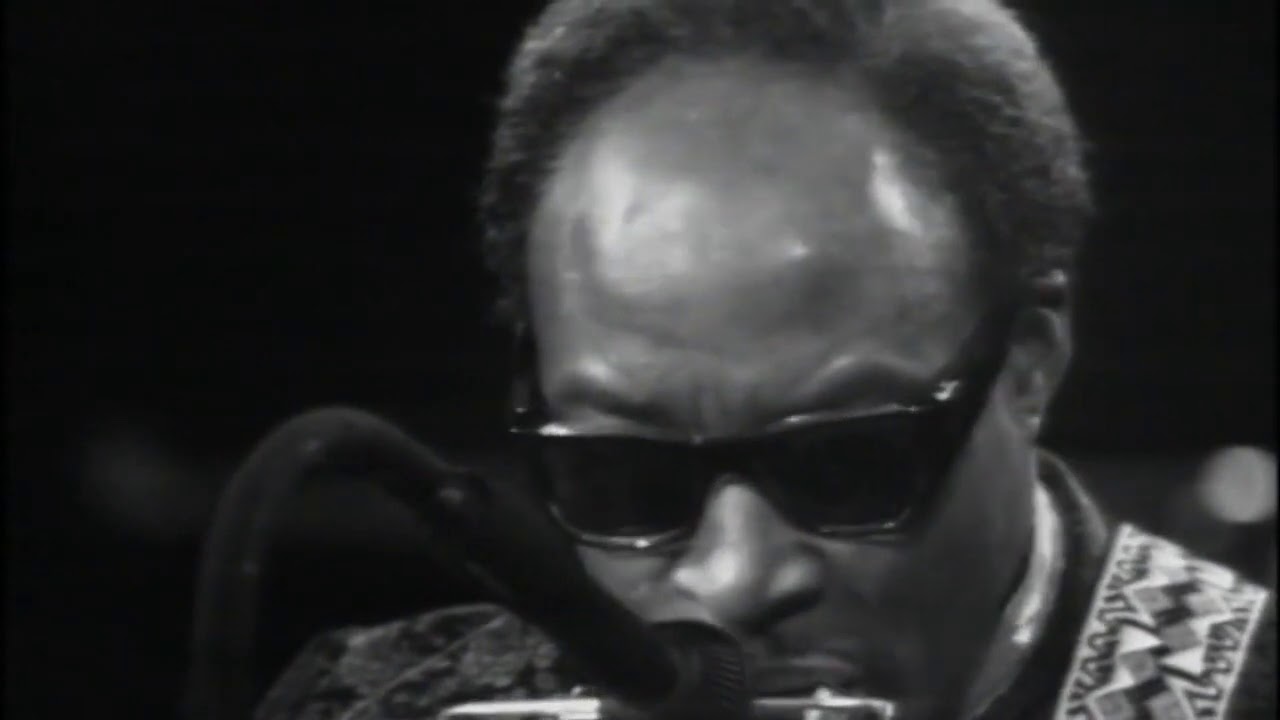
He added: “It’s important to understand that the blues is a very sophisticated form of expression. One of our favourite artists is [late Mississippi bluesman] Jimmy Reed. On the surface his music seems so easy, so simple. But on closer inspection, it’s very complex, in the things that Jimmy plays with his second guitarist Eddie Taylor. The notion that the blues is an overly simple kind of music is inaccurate to say the least.”
Gibbons also discussed the eccentricity in ZZ Top – the weirdness at the heart of songs such as Manic Mechanic, Ten Foot Pole and Heaven, Hell Or Houston.
He explained: “When ZZ Top got together we discovered pretty early on that we were not going to be able to succeed by trying to emulate the likes of Bob Dylan. We were different. There are some very strange things on ZZ Top records.”
Arguably the strangest of all is Heaven, Hell Or Houston, from 1980 album El Loco, in which Gibbons’ bizarre lead vocal is rendered as a long and rather sinister phone call.
“It’s certainly true that Heaven, Hell Or Houston comes out of a very strange place,” Gibbons said. “That element of ‘weird’ is a resonant theme within this band, and it’s one of the things that keeps this band together, that keeps us going after so many years.
“Maintaining somewhat of a sense of humour and a sense of ‘weird’ is one of the things we like the most. And Heaven, Hell Or Houston – as oddball as it is – is still one of the band’s favourites.”
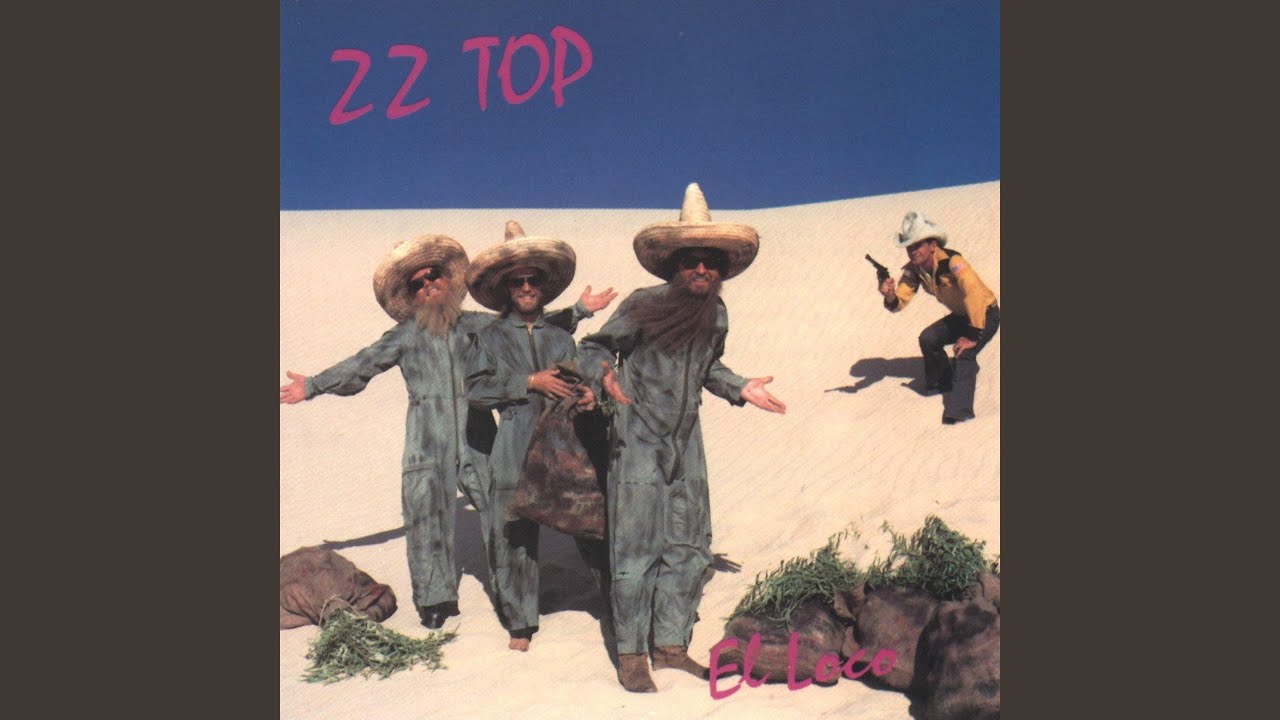
The song Ten Foot Pole – also from El Loco – is another strange one. The chorus – “I wouldn’t touch it with a ten foot pole!” – is intelligible, but what Gibbons sings in the verses is utterly incomprehensible.
He admitted: “I’m sort of mumbling on that one! We actually had the musical arrangement intact when we came to record it, but we had no words for this particular musical composition. We had a working title but nothing else.
“So the engineer told me, ‘Just go and mumble a few things until the words are ready’. But once the tape was rolling and I started mumbling, we all thought, ‘This is working!’ It was a message coming through the grass… it works. So we didn’t ignore it.”
It was after the madness of El Loco that ZZ Top had their greatest commercial success with the 1983 album Eliminator, on which the trio’s gritty sound was cleverly updated and enhanced with synthesizers and sequencers.
In addition, a series of comical videos for the hit singles Gimme All Your Lovin’, Sharp Dressed Man and Legs made ZZ Top famous and instantly recognisable as the band with the funny beards (sported by Gibbons and Hill, but not, of course, Beard himself) and the flashy red hot-rod as featured on the album’s cover.
![ZZ Top - Gimme All Your Lovin' (Official Music Video) [HD] - YouTube](https://img.youtube.com/vi/Ae829mFAGGE/maxresdefault.jpg)
As Billy Gibbons told Classic Rock, the success of Eliminator changed his life.
“Without a doubt!” he said. “That record was certainly a different kind of offering from our end. We decided to concentrate on good tempo, good timing. And the big thing was that we had all these exotic new gizmos to make music with.
“Of course, the saving grace of going in that direction was that we decided to throw the manual out the window. We just tried whatever sounded good – just to see what makes sense sonically.
“The essence of ZZ Top was maintained: that record was still created with a guitar band in mind, with elements of the blues form. But the major difference was that this was ZZ Top doing pop music.”
