
By 1997, the club had become the pinnacle of a typical night out. Gone were the days when all-night raves and the relentless pound of techno was the scary province of the speed-pumped weirdo. Now, the ordinary 18-25s of Generation X had adopted house, electronica and yes, even a bit of techno, as the new grown-up alternative to the increasingly child-angled pop charts.
Always keeping a finger to the air, Madonna - by now adept at pilfering from all corners of the music map - was taking note of electronic dance music's newfound respect.
As a recent mother, Madonna’s artistic concerns had shifted beyond catering to the ephemeral tastes of the mainstream. Looking increasingly inward, Madonna was not just pondering her place in the modern music industry, but as an entity in an unknowably vast universe.
The thematic drive behind the album that would become Ray of Light had been triggered by this quest for a higher truth. Embracing ideas derived from Buddhism and Hinduism and of course, her notable fascination with Kabbalah, Madonna’s fresh perspective on life, death, the cosmos and transcendence were imbued into new lyrical ideas.
Forget topping the charts, the ambition here was nothing short of raising the consciousness of her listeners. A lofty aim, but one she had the platform to achieve…
To express these new ideas, Madonna knew that a transition away from the more R&B and hip-hop-adjacent sounds of the oft-maligned 1994 album Bedtime Stories was needed. But, she’d need a guide before venturing into the realm of electronic dance music - a style she’d previously held a dim view of.
Having once described techno as a form of 'death', Spin Magazine took Madonna to task about her apparent volte-face…
“There was a type of techno I was listening to [that] had a real emotional void,” Madonna explained to Spin Magazine. “But I think it’s developed into something else and now there’s feeling and warmth to it. You can attach it to humanity and before I couldn’t. I couldn’t feel anything.”

Electronic mastermind William Orbit, who sadly passed away on the 23rd of July this year, proved to be the perfect helmsman for Madonna’s cruise into electronic waters.
As he recalled in a fascinating interview with Keyboard Magazine in 1998, the pair's paths first came together after Madonna heard a DAT of Orbit’s, given to her by Maverick talent head Guy Oseary. It contained a plethora of exciting new Orbit constructs - many of which perfectly matched the energy Madonna was searching for.
“I was talking to Guy Oseary, who runs Maverick, and he mentioned that Madonna was looking for material.” Orbit told Keyboard Magazine. “It just so happened I had a lot of tapes of half-formed ideas lying around, so when he asked me to send some stuff over I was happy to just knock off a DAT with miscellaneous bits on it. I sent it to her and she was back on the phone within five days. She'd already started writing to it. So we had a long chat, and I could tell straightaway that she was serious. I'm quite guarded about people who might take the tracks and miss the point, but I knew she got it. And so I went out there and we started working on the album.”
The new collaborators were besotted by each other, but Madonna and Orbit had emerged from very different backgrounds.
Born in Michigan in 1958, Madonna had ascended from New York street pixie to global phenomenon, scaling the heights of musical and pop cultural fame with era-defining hits such as Like a Virgin, Papa Don’t Preach and Holiday. It was the incendiary, Catholic Church-baiting Like a Prayer that really heralded a shift from peppy pop star to 'proper' artist, with her 1992 Erotica album (and complementary Sex book, of course) cementing her as one of pop's arch provocateurs.
Orbit, meanwhile had been born in Palmers Green in London in 1956. After a youth fascinated by music in all its forms, Orbit soon became a production polymath.
Starting with Bass-O-Matic’s 1989 club banger Fascinating Rhythm, Orbit fast became an in-demand producer, evolving into an electronic experimentalist of great repute. On the heels of his Strange Cargo series of albums came the astounding Pieces in a Modern Style, wherein he reworked various well-known classical staples in his own distinctive emotive flavour (the most famous of which being his take on Adagio for Strings, remixed by Ferrry Costen as an energised trance workout and becoming a massive hit). Orbit also had a gift for distilling others' music through his own prism, and became a renowned remixer.
Despite their different routes, on June 30th 1997, William and Madonna’s respective trajectories intersected, and the making of Ray of Light began.
“What I wanted was his sensibility, the textures, the really high-tech sounds,” Madonna reflected in her interview with Spin. “But William also works from a very melancholy place. I’ve been a big fan of his for years and I just knew our collaboration would be something beautiful.”
Orbit, an avid tech-head, relied on a range of top-notch keyboards when making the album. Many of the most iconic synths in history were in play, although at the time, their legend was yet to be firmly established…
“Most of it is pretty retro: a Korg MS-20, a [Roland] Juno-106, a [Roland] JD-800,” Orbit explained to Keyboard Magazine in 1998. “Much of the album was done on a Juno-106. You can get so much out of that synth. Also a significant amount of it was done on the MS-20 - the more spiky sounds. A few things that people think are guitar are actually the MS-20. And then there were a few more bits and pieces: a few modules, a Yamaha DX7, a Novation Bass Station, a [Roland] JP-8000, a lot of Roland stuff. I've always liked Roland stuff.”
For Orbit, the most memorable moment during the making of the album was watching Madonna handle a cheaper keyboard on which he had marked up which keys to play with a wax pencil, “The funniest memory was Madonna, who doesn't do a lot of keyboard playing, messing around on a keyboard marked up with grease pencils. I mean, picture Madonna, the biggest pop star in the world, playing with this retro gear that you could buy for $50 in The Recycler.”
Amongst the various gems of the album - which many would later consider Madonna’s finest ever - were the multi-sectioned drama of ambitious opener Drowned World/Substitute for Love, in which Madonna reflects on the ultimate lack of fulfilment that fame has brought, the bleakly cinematic Frozen and the emotive heft of the The Power of Good-Bye.
But, for our money, it’s the title track that fuses every element that makes the album such a masterpiece into one 5 minute supernova of sound.
![Madonna - Ray Of Light (Official Video) [HD] - YouTube](https://img.youtube.com/vi/x3ov9USxVxY/maxresdefault.jpg)
Among the ideas on Orbit’s original DAT that Madonna heard was the basic demo for Ray of Light. It had actually been a version of a 1971 folk song by Curtiss Maldoon, titled Sepheryn.
Apparently, during a previous project Orbit had overseen, Christine Leach (the niece of one of the original Curtiss Maldoon singers, Clive Maldoon) recorded her own version of her uncle’s song and was trying to nail a new version with a re-shaped melody co-conceived by herself and William.
However, Orbit hadn’t realised the track was based on an existing song, and included it on his DAT reel of strong new ideas. Once this was realised, of course, Leach (and Curtiss Maldoon) would receive a songwriting credit.
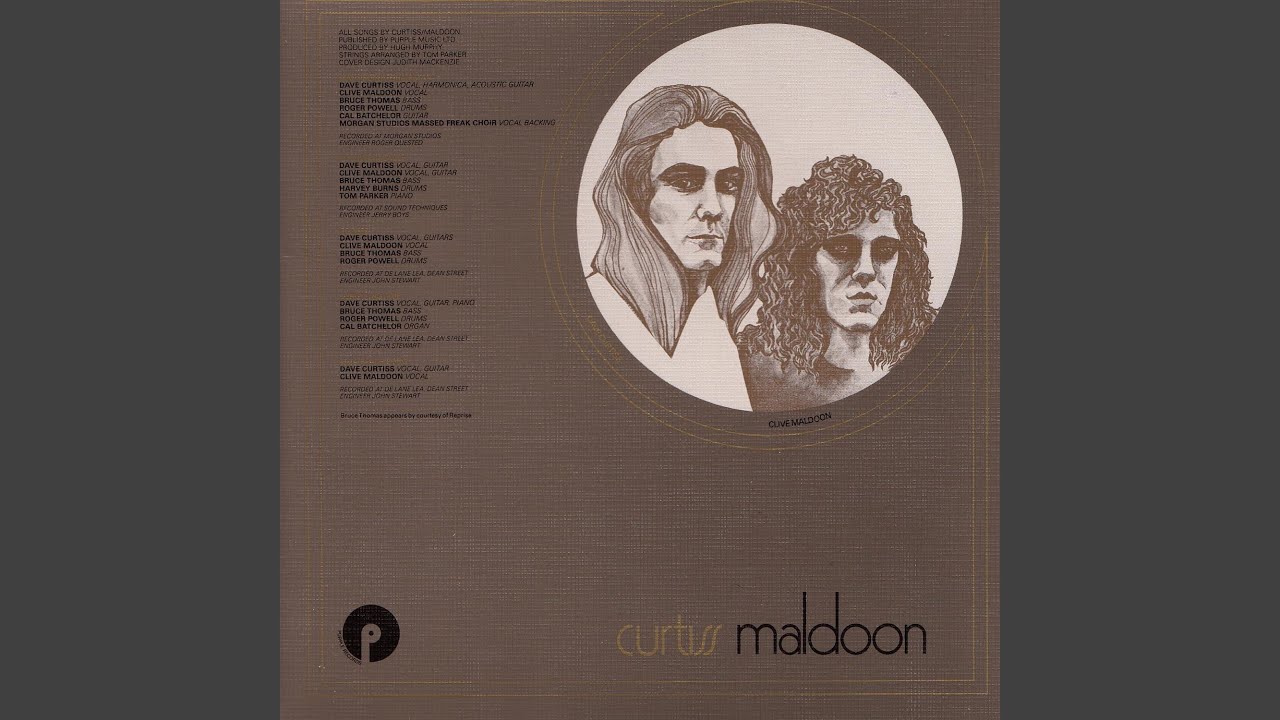
Fixated with the song’s lyrical themes, which coalesced with the search for truth and growth she herself was searching for, Madonna adjusted Sepheryn's lyric and worked with Orbit to create a propulsive new arrangement.
Orbit realised that the song worked best at a pitch that was a semitone higher than Madonna's usual vocal comfort zone, and forced her to push her voice over the threshold.
“She got frustrated when we were recording but you want that bit of edge with singers, that thing of reaching. You can't fake it, and you can hear it when she cracks it on the record,” Orbit was quoted as saying in Madonna: Like an Icon.
Led by an all-new rising guitar riff, Ray of Light’s swelling intro surged forward into a lightspeed-jump of intensity, with industrial-esque guitar harmonics and textured synth swells adorning the mix. This organic synth movement was carefully corralled by Orbit using the knobs of the Juno.
The first verse’s relatively stable bubbling electronica sprawls out into a cavalcade of frequency sweeps, energy dissipations and alarm-like throbs. “I’ve been into Junos since the Juno-6 back in about 1980,” Orbit told us in 2022. “Then I had the 60, then the 106. Ray Of Light, all the Strange Cargo records, half of it is the Juno-106.

“I've always liked Roland stuff and old analogue synthesizers,” Orbit continued. “Ones with the traditional controls. There are certain things to control and sculpt sound and you have to have easy access to them. You don't want to go through pages and pages of stuff.”
Although known primarily as a synthesist, Orbit’s little-known penchant for guitar was also allowed to flourish on the record, with William imbuing the title track with those aforementioned harmonics, the instantly recognisable central riff and the chunky distorted guitar chords that grind through the track; “I played all the guitars on that album, which was one of the first times I really showed that I knew how to get a guitar going,” Orbit told Official Charts.com. “It was great to get behind an amp for once because it’s not something I do all the time.”
Lyrically, Madonna kept the first verse identical to the Curtiss Muldoon original (with the titular ‘sepheryn’ changed to ‘zephyr in’) before re-working the rest of the song to more tightly adhere to her existential themes.
The song was a celebration of existence, and that simultaneous feeling of being both minuscule and paradoxically massive. In its second verse, Madonna reflected on her recent quest for spiritual truth;
Faster than the speeding light she's flying
Trying to remember where it all began
She's got herself a little piece of heaven
Waiting for the time when Earth shall be as one
Initial demo sessions for the album had begun at Madonna’s New York home, with vocals laid down at the city’s Hit Factory before the album sessions proper began in earnest at Larrabee North Studio in Hollywood.
Although the songs in contention were clearly strong, working with the often leisurely Orbit proved challenging for Madonna, then very used to a team frantically working to deadline. “When I work with people who seem uptight, I open them up. I try to get them to go off the beaten path, to improvise and throw the rules out the window,” Madonna reflected in Spin. “When I work with somebody who’s very chaotic and disorganised like William, then I have to opposite effect: I toe the line and become more focused. Crack the whip. William’s a genius, but he’s completely disorganised.”
It’s likely that Orbit's messiness was the result of various events that the producer was then struggling with in his personal life: “I was in a crisis with my family, which I put on hold,” Orbit remembered in an interview with The Guardian. “I remember getting very ill that winter; at the age of 43, I was done in physically.”
However, with Madonna, in her words ‘cracking the whip’, Orbit was snapped into alertness; “I flourish under that. She’s a fabulous producer. When it says ‘produced by Madonna and William Orbit’, people don’t always give her the credit for that. But she’s as responsible as me,” Orbit graciously concluded.

Although live drum tracks had been laid down for many of the album’s songs early in the production process, these were ultimately deemed unsatisfactory. And, in the main, it was the chopped-up samples of Orbit’s London drummer friend Fergus Gerrand that largely shaped the rhythm tracks of many of the album’s key cuts.
A software skeptic, Orbit ignored such innovations as the then-new ReCycle from the nascent Propellerhead (now Reason Studios) and instead leaned on an Akai Sampler to manually construct the track’s various break and patterns.
Beyond the beats, Orbit harnessed his Akai samplers as the hub of the mix when working…
“I use two [Akai] S3200s, and ultimately the whole soundscape of the track, apart from the vocals, is coming out of the Akai stereo outs and through a valve [tube] compressor,” Orbit told Keyboard Magazine. “I’m not used to working with automation, and this is the first time I'd fully used it; we used a J-series SSL. I haven't been north of the faders on an SSL ever until this, but I tried to use the stereo outs of my Akais whenever possible because I like the sound of all that material coming from the same outputs. That's when the magic starts happening.”
Orbit’s myriad textures were underpinned by a throbbing 808-style kick and pulsing bass. Racing through Orbit’s filter-sweeps and quasars of colour at breakneck speed.
Ray of Light was clearly a dazzling piece of work. Melding the relentless energy of the club, the life-affirming thrust of rock guitar, the kaleidoscopic spirit of prog (particularly during Orbit's wonky and delirious synth breakdowns), the wistful existentialism of folk (thanks in no small part to the lyrics of Curtiss Muldoon) and above all, the Queen of Pop and her earnest new partner in sound binding together genres with ease.

Ray of Light’s perfectly-fitting video, directed by Jonas Åkerlund, was built around a super-fast time-lapse of various scenes of bustling cities and nature, with Madonna performing in front of them. Intended to portray a ‘day in the life’ of the earth, it illustrated the increasingly breathless pace of modern life as the millennium loomed ever closer into view.
With similar urgency, Ray of Light bolted its way to number #5 on the US Billboard Top 100 following its release as a single on April 27th 1998, becoming Madonna’s highest-debuting single to date. It remained in the top 100 for 20 weeks.
In Orbit’s native UK, it climbed to an even higher number #2. But, for the album itself, the success was beyond what either had expected…
Yielding the highest first-week sales for a female artist ever with its number #2 debut on the US Billboard Chart, the Ray of Light album was not just a massive commercial success, but also astounded the critics, many of whom were amazed at the level of depth found on a Madonna record.
Sealing this new victory, and Madonna’s rise in critical stature, it scooped four Grammy Awards, including Best Pop Album.
A rich, thematically dense and still sonically fascinating listen, Ray of Light is rightly regarded, by many, as Madonna's finest moment. Its surfeit of ideas still resonate to this day, with many of today's current crop of electronic music stars citing it as an essential, formative influence.
“It's the perfect blend of pop sensibility and electronic innovation: it manages to deliver both, which is rare,” said electronic artist and DJ Kelly Lee Owens in an interview with the BBC last year. "[It feels like] something that was fated to be made. It was created at exactly the right time and place and has now become timeless.”
As Orbit reflected in his interview with Official Chart.com, “We got in the studio, broke all the rules and didn’t really think about the consequences.”

In the wake of the announcement of Orbit’s sad death at 69 last week, Madonna penned a heartfelt tribute to the man who had unlocked a universe within her;
“I had an epiphany when I met you and started working with you,” Madonna said in a statement posted on her social media channels. “I realised that music did not have to fit into categories or genres. So we created our own. You pressed a magic button inside of me and I fell into a galaxy of unrealised dreams. Your music gave me a magic carpet to fly on and I visited many places. Sad and Joyful”
