![Joe Bonamassa wears a blue suit and plays his signature Epiphone Les Paul [left]; the late great Albert Collins with his Telecaster.](https://cdn.mos.cms.futurecdn.net/q23LHytNUf5DEHSfGq3Qtn-1920-80.jpg.webp)
Albert Collins did not take any prisoners. The master of the Telecaster was blues guitar’s Iceman. Collins was also one of its great iconoclasts, tuning his guitar to open F minor and using a capo.
He would pick at the notes with his thumb and index finger and when he really went for it the audience would know all about it. Everyone would. Joe Bonamassa says there is no better example of a guitar player who knew how to wield his instrument “as a weapon” – and he learned at first hand just how powerful this was.
Appearing on the superlative No Cover Charge podcast, hosted by Jared James Nichols and Tyler Larson of Music Is Win, Bonamassa recalled a formative experience onstage with Collins. He was no older than 13 but Collins showed him no mercy.
“Guitars are great, ‘cos you can use them to coddle people, but you can also use them as a weapon – and I love using guitars as a weapon,” says Bonamassa. “You know who the best at that? Albert Collins. That was a weapon. They didn’t call him the Iceman for nothing. I mean, I was on the receiving end when I was a kid. I was, like, about 12 or 13 years old, and I got asked to sit in with Albert, at the Silver Lake New York Blues Festival and Hog Roast.
“The year prior, I met Danny Gatton, and so I got asked back to come sit in, and they convinced Albert Collins to let me sit in. And he taught me the greatest lessons I’ve ever learned onstage.”
The previous year’s festival had been one of the pivotal moments in Bonamassa’s career. He recalls playing half of the set with the Cold Shot Blues Band, and seeing this guy in a John Deere hat watching him. Bonamassa thinks nothing of it. It’s probably just the sound guy, is what he’s thinking. But it’s not. It was Danny Gatton. And Gatton liked what he saw.
He would become a mentor to the young Bonamassa – who was then just 11 years old, soon to 12. Bonamassa has credited Gatton with broadening his musical horizons.
Bonamassa would play onstage with Gatton at Silver Lake, and get invited out to play with him at clubs, learning how it all worked under the lights.
He would do so again with Collins. It didn’t get much better than this. Bonamassa’s choice of guitar for the show speaks to the influence of Eric Clapton.
“At the time, I worshipped all those records; the Showdown! record, Ice Pickin’, Frosty... All that,” says Bonamassa. “I got up on stage, and I had my little, USA Strat with Lace Sensors, and my Sunn Beta Lead solid-state 4x12 amp.”
Bonamassa puts the year at 1990 or ’91, “prime-time Albert Collins” when he was backed by the Icebreakers featuring Debbie Davies on guitar. He had his stagecraft down to a tee.
It was prime-time Albert Collins… he had that Tele and a Quad Reverb, and about a 150-foot cable, ‘cos he would go out into the crowd
“He had that Tele and a [Fender] Quad Reverb and about a 150-foot cable, ‘cos he would go out into the crowd,” recalls Bonamassa.
Collins did not just play a note and let it sit there. He worked it until it worked the crowd. And it also did its work on the young Joe Bonamassa. Who, let’s remember, has got all these prodigious chops but in terms of life experiences, he is up onstage with a real-life superhero in his pomp.
“He stung a note like [plays note]. He did all that Albert Collins shit, but he kept stinging the note,” says Bonamassa. “I mean, he pointed the Tele like this at me. Joe was like, I'm like this little kid in the cowboy hat. I'm like, you know, it was him going, Welcome to the big leagues, kid. Yeah. I don’t care how old you are. To be up here requires a certain amount of intestinal fortitude and I’m testing you to see if you had it.’”

Collins knew what he as doing. He knew Bonamassa would have it too. Over the years the blues greats have always relished bringing on the next generation. Collins did something similar to Australian blues-rocker Nathan Cavaleri when he jammed with him in ’92 at the San Francisco Blues Festival. Quinn Sullivan says jamming with Buddy Guy at the age of eight was a life-changing experience.
Sure they all felt some panic. Bonamassa did too.
“The only thing I could think of was [plays note] do my best Albert impression but his thing was awesome, because he tuned to open F, and had a really primitive capo, kind of gnarly, and I don’t know how he was able to the strings from moving. He would bend and not have the strings just move into another position. I don’t know how he did it.”
It wasn’t just the capo and the open tunings. Look at the pictures and the video footage of Collins playing guitar and he notably left the bridge cover on his Telecaster on. Most players take this cover – the “ashtray” on the ashtray-style bridge – off, so they could palm-mute the strings. Collins didn’t do that, and it meant he had to address the strings from a different angle.
Bonamassa says he conducted a “deep dive” experiment into this back during Covid, getting a Tele, an old Fender amp, leaving the cover on the Telecaster bridge and playing fingerstyle Albert Collins licks. It made audible difference to the tone.
“When you put the cover on it, it sounds more like there is some kind of resonance that gave it more... And it was also a lack of being able to palm-mute. It’s all about the gear that you choose, but most importantly, it’s the technique that you use with your hands, the tactility of it.”
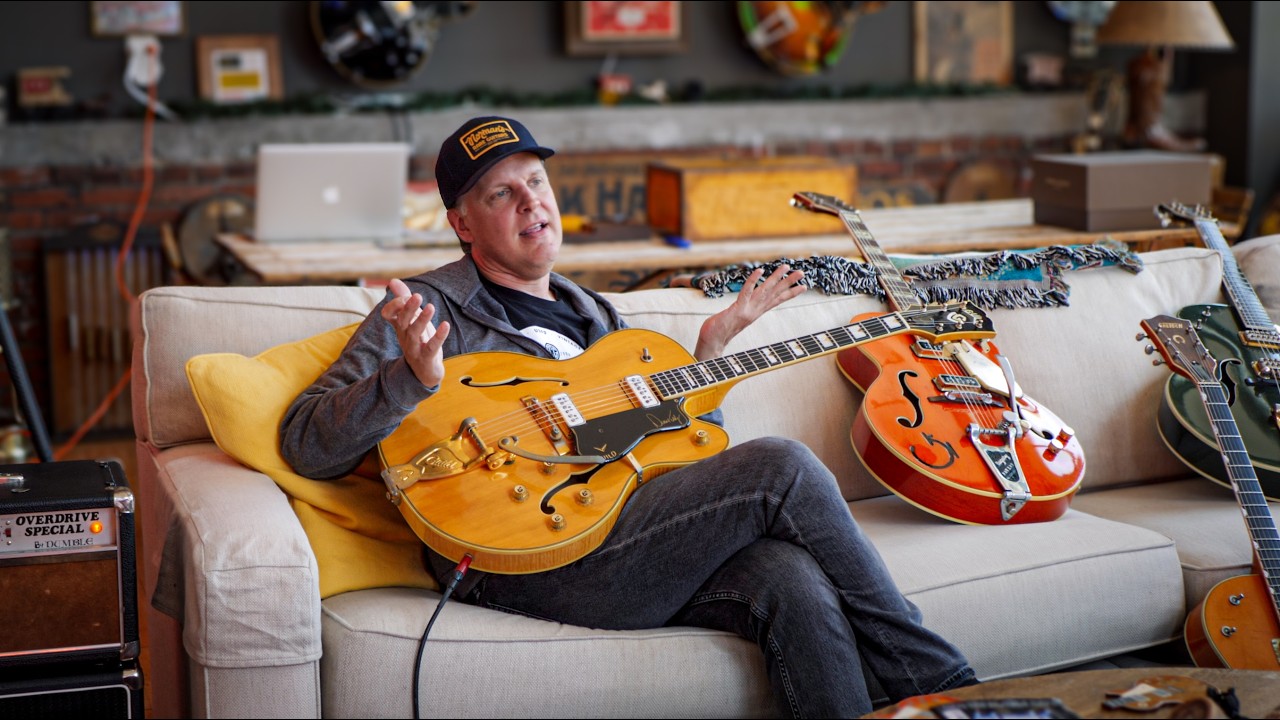
In other Bonamassa news, the blues superstar recently sat down with MusicRadar to discuss his Damascene conversion to the merits of digital guitar amps, with his live rig now featuring all-digital Fender Tone Master Twins alongside his battery of vintage and rare tube amps.
“When I first plugged into it, I realised this shit’s good,” he said. “I wanted to dislike it, I really wanted to dislike it! But I couldn’t. My production manager, my sound tech, even my other guitar player Josh Smith – they were all telling me it sounds better and feels right. And I was like, ‘I know!’”
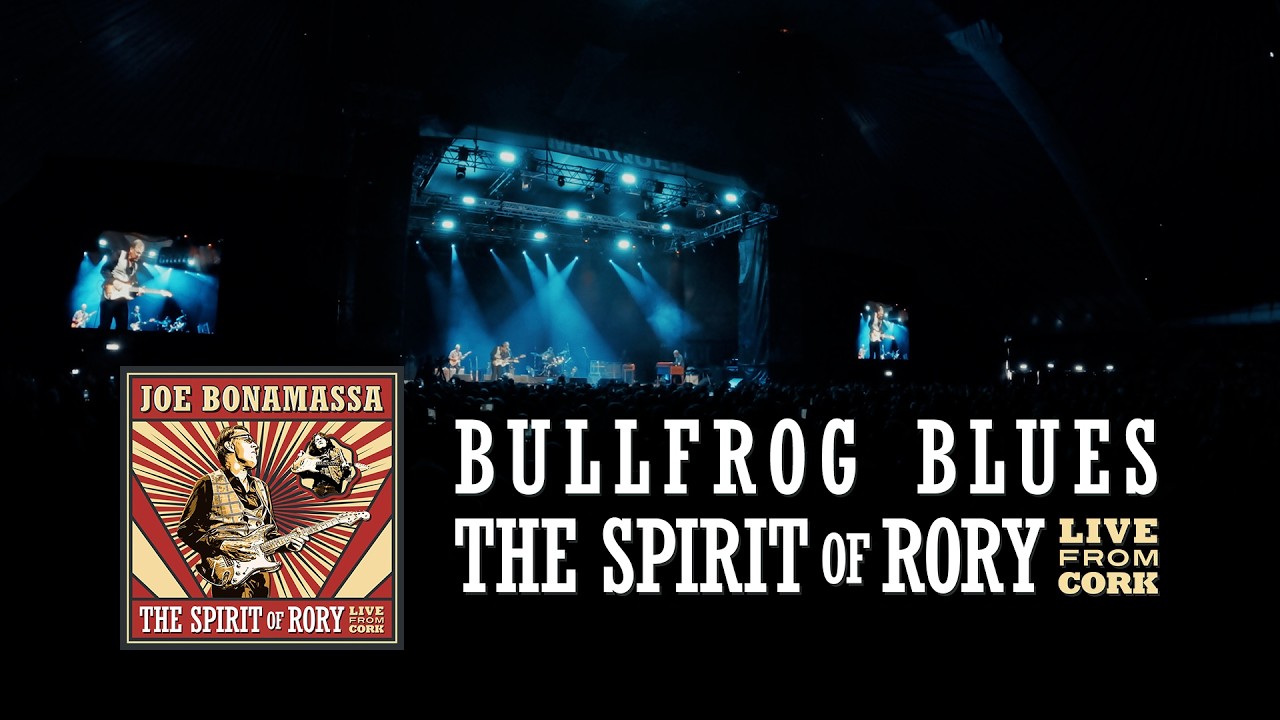
- Joe Bonamassa's new live album The Spirit of Rory Live From Cork is out now via J&R Adventures.
