
Jared James Nichols wasn’t looking for a new guitar amp but the amp found him anyway. A longtime endorsee of Blackstar, with whom he had worked on a range of signature amps, he had no complaints.
“The thing with the Blackstar stuff is there’s literally no – how do I say this right? There’s no drama,” says Nichols. “No, like, ‘Oh, I’m going to leave!’ I’ve had an amazing relationship with Blackstar for almost 15 years, which is crazy.
“It’s crazy to say! And those guys, before I was doing any touring, they were letting me play amps, and they were letting me borrow stuff, and then eventually giving me amps. So, like, my whole tone, truly, was built with these Blackstars.”
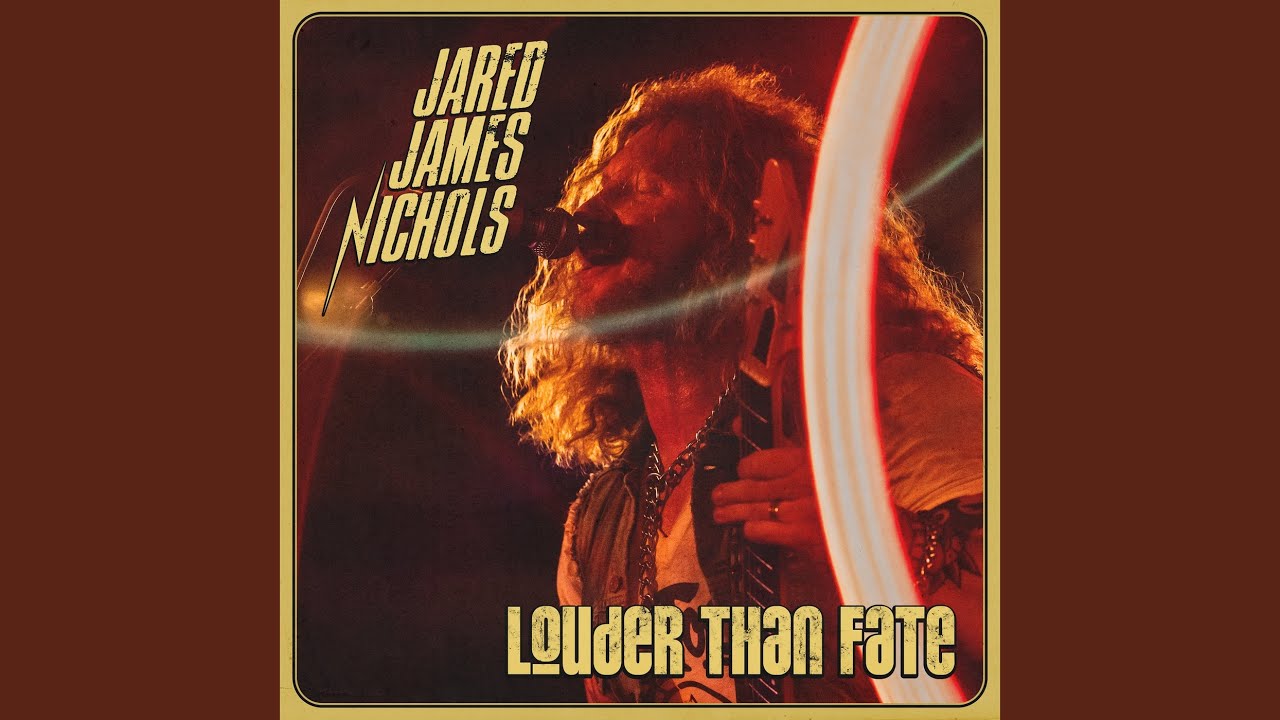
And yet, lately, Nichols had been curious. He had been curious about Marshall amps. He felt there was “a taboo” about even speaking about this with friends. Blackstar, after all, was founded by Marshall alumni. Maybe it felt like cheating. But he couldn’t escape the fact that when presented with a vintage Marshall tube amp – specifically a non-master volume (NMV) 100-watt 1959 Super Lead ‘Plexi’ that he used alongside its contemporary descendants to record his latest studio album, Louder Than Fate – it brought out something in this playing that he hadn’t fully heard before.
“I was trying other things, and in my heart, every time I would plug into a Plexi, I’d be like, ‘God, man, this is just that thing,’” he says. “Because, as a fingerstyle player, and as someone that plays this dynamic range, I could always hear my fingers with a Plexi. No matter if I put on a Tube Screamer, or a Klon, or a wah, or a fuzz, I could still hear my fingers under it.”
It also got him thinking about electric guitar tone in 2026, when there are so many options available to us, many of which are great, and this great agglomeration of stuff, transparent this, high-gain that, multi-channels with different modes, onboard cab sims and MIDI-controllable electric toothbrushes. It all gets a bit much.
“In my gut, I kept going back to these old, non-master volume Marshalls, because there’s just something so pure, and they’re so raw,” says Nichols.
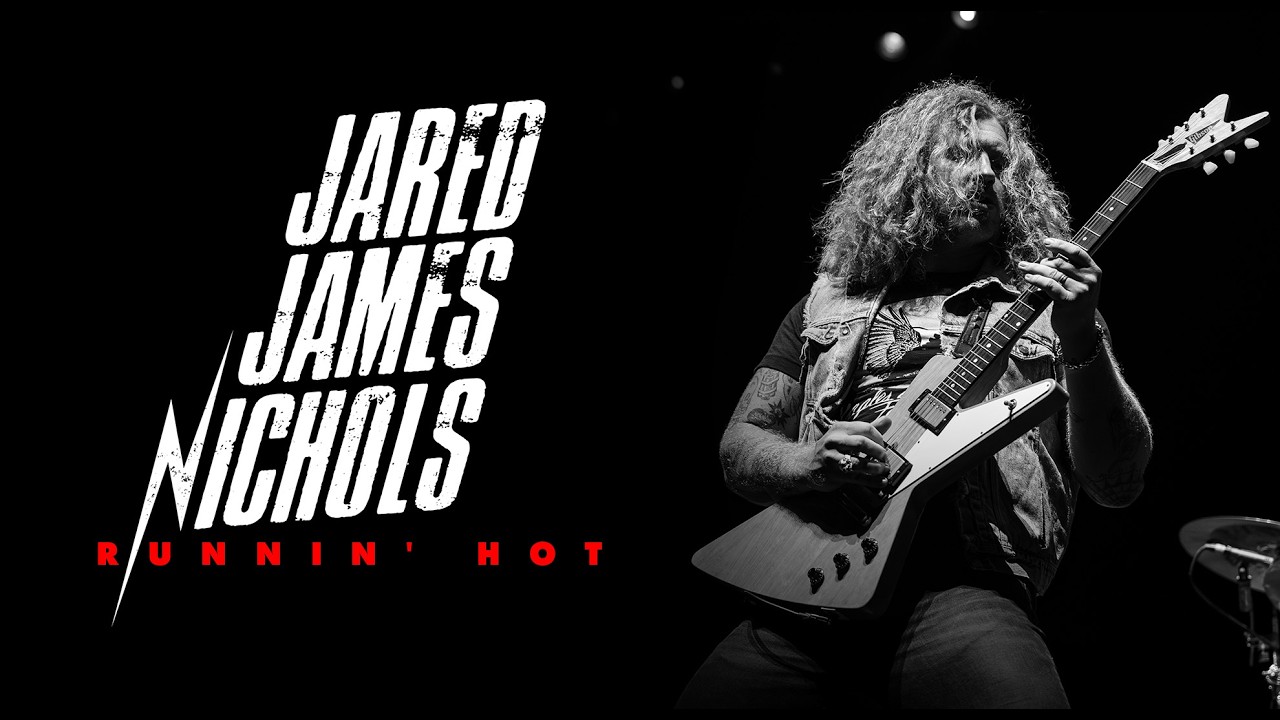
And they really are so raw and so gnarly. These amps were originally designed as public address systems. The volume is… Well, let’s just say, the vintage Plexi is not for everyone. They are a challenge.
It’s not an easy amp to just plug into and be like, ‘Oh yeah!’ It’s bone clean, and then it’s like you have to figure out how to almost be at one with the amp
“They’re almost scary in a way to a lot of players, because it’s like riding a fucking bronco, man! It’s like you really have to harness this amp,” says Nichols, who gets noticeably louder when talking about the Plexi. “It’s not an easy amp to just plug into and be like, ‘Oh yeah!’ It’s bone clean, and then it’s like you have to figure out how to almost be at one with the amp in order to make it really work.”
Amps like that are like an MRI scan. Nichols found the Plexi articulated every detail in his playing, good and bad.
“When I started to really dig into it – like I said, when I got that ’68 – I just noticed that something changed in me as a player,” he says. “Something was being a little more honest, something was not shying away from any note I was playing – it wasn’t shying away [from anything]. Even when I’d hit something wrong, I’d be like, ‘Oof!’
“Even when I’m simply hitting a single note line with the band, it’s just the physicality of it and the weight of the tone. It does something to me psychologically as a player where it puts me somewhere else. When I’m playing through these amps, I can’t lie, because I always have to deliver, because it’s not like I have this über-delay setting, or, there’s this built-in reverb.”
Such amps reward expert players and punish sloppiness. Not all are like that. There are some amps – and every experienced player will have a preference – that flatter your playing, with a natural compression and a feel that is forgiving. A little spring reverb can be the elixir you need, a way of letting a bit of air into your playing. There is nothing wrong with that.
I was playing with Bonamassa and he was playing a Dumble-modded Twin... it was almost like his amp was punching me in the face
It was only when Nichols went in for a session with Joe Bonamassa that he realised he might have been hiding behind his amp, and he was paying the price.
“With the Blackstars, man, I got so used to, playing with so much reverb and so much compression,” he says. “I remember, one time I was playing – and I was playing with Bonamassa – and he plugged in, and he was playing a Dumble-modded Twin, but he just plugged it in, and he hit a low E, he went ‘BONK!’ And he went, ‘WAH WAH WAH’. And then I hit something, and it was almost like his amp was punching me in the face, and it felt like mine was in the corner in the back.”
So, Nichols bit the bullet. He made the change. And when he rocked up to record Louder Than Fate under the watchful eye of producer Jay Ruston, he had the ’68 Plexi, and he got to work, and it was a learning curve.

There is a golden rule of recording guitars in the studio that small amps are worth their weight in gold. Turn them up, stick a good microphone in front of them and it can be the sound that unlocks the session. You will find a Fender Champ in every recording facility for this very reason.
Nichols was recording an album titled Louder Than Fate. He went in the other direction.
“Ooh, man! [Laughs] It’s funny. I’m smiling and I’m laughing because I’m thinking about the absolute domination of big amps I used,” he says. “It was so insane. Okay, so here’s the thing. I’m with you; a Champ, a Supro, a Deluxe, a little Tweed, whatever it is, you turn those things up, man! You put a good compressor on in the studio – even live, man – and there’s nothing you can’t do with them. They’re just incredible amps, right?
“But what I noticed, especially for this record, was I had this ’68 Marshall Plexi alongside these newer Marshall Modified Super Lead Plexis. Dude, those are my jam, man. Those are the amps. Out of all the new stuff that I was able to try – and Marshall’s been amazing letting me try all this different stuff, a lot of great stuff – what hit me right away was those modified Plexis. So a lot of this record, you hear a ’68 and these Modified Plexis.”
There are a few key differences between the original late ‘60s vintage tube head Nichols was plugging into and their modern counterparts. The new models ship from the the factory with Clip and Bright switches.
The biggest difference, however, is the addition of the master volume. Nichols’ ’68 belongs to a more innocent time, the NMV era, and it was a real grizzly bear in the studio. They had to take two of the power tubes out the back to run it at 50-watts and it was still, to use a technical term, “insanely loud”.
“I mean, all the amps I used were huge, 100-watters, man!” says Nichols. “We had to kick the ’68 down because it was so rowdy, bro. It was so rowdy! We had it in a room, like, in a booth, and it was shaking the walls so bad that you were able to hear it in the tracking, and I was like, ‘This amp is a monster.’”
This is the kind of anecdote that will have digital advocates showing up in the comments, reasoning – not unreasonably – that the amp modeller can put a choice of tube amp tones at your feet and it won’t take the paint off the walls. Nichols gets that. Totally.
The thing that I feel is the digital cannot produce in a certain way is that power of a tube amp absolutely screaming through a speaker, just hitting you and hitting your guitar
But he’s looking for a very particular experience. He’s like a storm chaser hauling ass in a pickup across an Oklahoma highway in pursuit of a twister.
He believes there’s something magical, quasi-epicurean from all this volume
“There’s something really, really beautiful that happens – especially when you’re using unpotted pickups, old-school stuff guitar-wise,” he says. “And I’m not saying just vintage guitars, but when you have volume, and you have these pickups that are reacting to what’s coming out of the speaker that’s hitting you.
“Obviously, we know there’s this whole debate of digital versus tubes. The thing that I feel is the digital cannot produce in a certain way is that power of a tube amp absolutely screaming through a speaker, just hitting you and hitting your guitar. And in turn, that’s making these guitars react and do different harmonic stuff that they wouldn’t do at a lower volume – or with a smaller amp. A lot of these tones I’m getting, and these overtones, did come from the amp.”

And that takes us back to why Nichols made the switch and nailed his colours to the Marshall mast.
When I hit these Marshalls, man, it just literally gets me closer to the sun, if that makes sense. It’s closer to the sounds that literally keep me up at night
“When I hit these Marshalls, man, it just literally gets me closer to the sun, if that makes sense,” he says. “It’s closer to the sounds that literally keep me up at night, which is, honestly, it’s exactly where I want to be.”
And even in this day and age, of sound limits onstage, in-ear monitors, all that pro audio stuff, Nichols argues that the old-school ways – an amp that turns 70 in a couple of years – still has a place in the modern rock player’s backline, and it still has the power to make guitar playing an act of transcendence.
“I played a Plexi onstage with the band. I’d already been playing it in the studio. I’d already had all of this knowledge of the way it was going to sound, so there was no surprises,” says Nichols. “And I’m telling you, man, I felt like I was levitating off the ground, because I was just going for stuff. I felt like I was in Cream in 1968. Like, the tone was so raw, and I just said, ‘This is exactly where I want to be. And sometimes, what’s the phrase? The heart wants what it wants. That’s what I wanted.”
Louder Than Fate is available to preorder, shipping 5 June via Frontiers. You can read more from Nichols coming soon to MusicRadar.
