
MusicRadar Verdict
While some money has been saved on the build, the Laney Prism-Mini boasts a range of capable effects and decent amp modelling considering the budget. However, the biggest win here is in the ease of use, thanks to the full colour, 1.77” LCD screen that makes editing and navigating presets a breeze, with or without the app. A rare treat in something that does so much, in such a small format.
Pros
- +
Easy to use.
- +
1.77” full colour LCD screen.
- +
A great selection of effects.
- +
Bluetooth connectivity.
Cons
- -
Build quality is lacking in some areas.
- -
Missing low-end compared to some other small practice amps.
MusicRadar's got your back Our team of expert musicians and producers spends hours testing products to help you choose the best music-making gear for you. Find out more about how we test.
What is it?
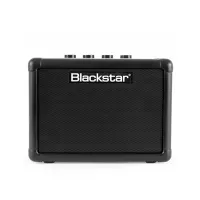
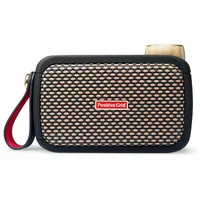
We all live busy lives, so finding some time to sit down and play guitar is often a little tricky. This makes convenience important, and when it comes to amplifiers, there is little more convenient than a tiny, portable practice amp that can happily and discreetly live on a desktop. The likes of the Blackstar Fly 3 and Positive Grid Spark Go have made some waves in this space, and now Laney is upping its game with the Laney Prism-Mini.
In short, it’s a tiny, lightweight, digital amp modelling practice amp with multi-effects in an eight-block, highly tweakable signal chain. It’s got the expected 1/4” instrument input, as well as an 1/8th” headphone out, Bluetooth connectivity, and a USB-C port for charging and operation as a recording interface.

Perhaps the highlight, and unusually for a small, affordable practice amp, is the 1.77”, full colour LCD screen. For making some noise, it sports two 1.5” speakers and kicks out six watts of power.
Everything has an app nowadays, and the Prism-Mini is no different, with its Tone-Wizard app allowing control of all the parameters from your preferred iOS or Android device, as well as the use of a drum machine.
And all of this comes in at a very affordable price point, potentially making the Prism-Mini a bargain for those looking for a convenient practice tool, as long as Laney hasn’t made too many compromises to fulfill this budget-friendly remit. So, let’s plug it in and find out.
Specs

- Launch price: $149|£99|€125
- Type: Desktop digital practice amp
- Origin: Designed and engineered in the UK, made in China
- Output: Six watts RMS
- Speaker: 2 x 1.5”
- Features: Digital amp and cab modelling, 50 user and 50 factory presets, multi effects, nine block signal chain, Tone-Wizard app
- Connectivity: 1/4” input, 1/8” headphone output, USB-C, and Bluetooth connectivity
- Weight: 1.1Lbs/0.5kgs
- Dimensions: 170x113x80mm/6.6”x4.4”x3.1”
- Contact: Laney
Build quality

Build quality rating: ★★★★☆
The Laney’s lightweight plastic construction does not scream of a premium build, but at this price point, it would be unreasonable to expect one.
A nice surprise is the full colour screen that is neatly set beneath that hard plastic on the top panel. It looks vibrant and is a bit of a treat considering the Prism-Mini’s budget credentials. It’s susceptible to a bit of glare if viewed directly under some lights and at the wrong angle, but outside of this specific circumstance, it is easy to read.
The full colour screen is a bit of a treat considering the Prism-Mini's budget credentials
Alongside the screen lies a Back button and a Global button for navigating through the menus, a Bluetooth pairing button, a Volume knob, and a multi-function Parameter knob for selecting and adjusting settings. Again, they all feel quite plastic-y, as you would expect for the price point.
When it comes to the aesthetic, I rather like the Prism-Mini. The front features that famous Laney logo with a black grill cloth, giving it a proper, mini-amp look, rather than the mini Bluetooth speaker vibes from the likes of the Positive Grid Spark Go.
Usability

Usability rating: ★★★★★
The stumbling block with mini devices, especially those that deal with multi-effects and therefore have a host of editable parameters, is often in cramming all the required controls into a miniature format whilst keeping it easy to use.
In the case of the Laney Prism-Mini, this is where it benefits from its LCD screen. It clearly displays the name of the preset I am on, and as I use the clickable Parameter knob to scroll through and edit blocks and parameters in the signal chain, the screen does a good job of displaying what I’m editing.
This is thanks to the easily-understandable icons, helpful abbreviated text, and brackets that keep track of what’s being edited by turning blue once a parameter/block is selected.

There are a few menu levels here, so I appreciate the Back button that makes navigating through them simple, as well as a separate button for accessing the Global settings. These are small things, but splitting controls and menus up like this helps separate operations into easily digestible chunks.
Holding down single buttons or pushing two in unison to get to certain tools and functions (in this case, the tuner and save function) is something that can often lead to confusion in units that try to achieve a lot with only a few controls. This pit fall that is avoided here by a simple text that concisely explains how to get to these functions on the top panel.
That tuner also makes great use of the screen, making it easy to read, and it is both responsive and accurate, which is all that is needed from a tuner.

All of these things can be done on the Tone-Wizard app too, but honestly, I don’t really feel the need to use it. The screen and controls are intuitive enough that I am happy doing everything from the hardware.
But the bigger screen of a separate device does have its advantages. The app is equally simple to use with identical icons to those displayed on the hardware, easily-understandable drop-down menus, and access to a straightforward drum machine to boot.
Connecting your device is as simple as holding down the Bluetooth button and selecting the Laney from your device’s menu, which makes streaming audio to the Prism-Mini seamless.
Sounds
Sounds rating: ★★★★☆
Getting plugged in and making some noise, I find that it is loud enough for solo home practice, but not much more than that. However, as home practice is the intent here, I don’t see this as a problem.
There are 50 uneditable factory presets to choose from, which are mirrored in a further 50 editable user presets and run the gamut from shimmering '80’s cleans to djenty distortions and everything in between.
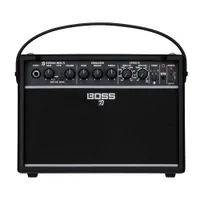
Playing through them and bearing in mind that I am not expecting bass that will shake the earth in this tiny format, the Laney still feels on the thin side compared to its competitors, like the Positive Grid Spark Go and Boss Katana Mini X. However, it avoids sounding too boxy (again, relatively speaking), which is quite the feat given the size.

A couple of highlights for me are the Ambient preset, which is a wonderfully full, delay-soaked tone, and the Solo AyIt preset, which is a tight distortion, perfect for those soaring leads.
At this level, I’m not expecting amp models that are super-reactive to dynamics, and this is indeed the case. And when it comes to medium-gain, some of the presets like the “Crunchy” struggle for note definition, but otherwise, it's a good selection of sounds to have fun with.
The eight-block signal chain has plenty to play with and consists of Pre, Drive, Amp, Cab, EQ, Mod, Delay, and Reverb. In a nice surprise at this price, some of these blocks are movable as the Pre, Mod, Delay, and Reverb blocks can be reordered and placed either before the Drive or after the EQ, which adds a fair amount of versatility.
It would be unreasonable to expect hundreds of options, but there is enough here to cover all the basic food groups. For example, the modulation boasts a Phaser, Vibrato, Tremolo, and two Choruses, and the Amp block provides 15 Laney-themed guitar amps and two Bass amps.
I’m not expecting the sophistication of pro-level products like the Quad Cortex, but the effects offer some great value and are surprisingly rewarding. For example, I am particularly enjoying the Secret Path reverb with its shimmery, shoegazey vibes, and the 808, although not quite as mid-forward as a real Tube Screamer, does a great job of some bluesy crunch.
The only effects that are on the avoid list are the Auto-Wah and the Octaver, as the former is a little unpleasant at the ends of its sweep, and the Octaver doesn't quite get the pitching correct.
This is a stereo amplifier, which leads to some nice space when playing around with effects like the Ping-Pong delay. However, I find that getting the benefit of this requires sitting quite close to the Prism-Mini, as the left and right sides begin to merge after a few feet of distance. Still, for a tiny amp on a budget, it’s impressive to have it there at all.

Verdict

When gear is this affordable, we can expect a bit of a trade-off on some aspects in order to keep the price down. Here, the biggest compromise is in the build. The amp has a plasticy feel, and on our test model, one corner of the top panel kept popping out slightly, and the Parameter button does not always register when it is being pressed.
Where it shines is in its full complement of capable effects, and a screen that makes editing them a delightfully straightforward experience
The amp modeling sounds good for the budget, if not quite as full as some of the Prism-Mini’s competitors. Where it begins to shine, however, is in its full complement of capable effects, and a screen that makes editing them a delightfully straightforward experience, with or without the app.
This ease of use is rare in such a small practice amp that covers so much tonal ground, and is the reason the Laney is worth considering as your desktop companion.
Music Radar verdict: While some money has been saved on the build, the Laney Prism-Mini boasts a host of capable effects and decent amp modeling considering the budget. However, the biggest win here is in the ease of use, thanks to the full colour, 1.77” LCD screen that makes editing these tones a breeze, with or without the app. A rare treat in something that does so much, in such a small format.
Test |
Results |
Score |
|---|---|---|
Build quality |
The Prism-Mini does not sport a premium feel, but is built well for the price |
★★★☆☆ |
Usability |
The 1.77" screen makes using the Prism-Mini a straightforward experience, with and without the app. |
★★★★½ |
Sounds |
Whilst the Prism-Mini lacks some low end compared to it's competition, it manages to avoid (relatively) the boxy sound that often accompanies small speakers |
★★★★☆ |
Overall |
There are a few compromises to reach it's low price point, but the Prism-Mini is a capable practice amp with a versatile and easy-to-use collection of sounds |
★★★★☆ |
Also try
Hands-on videos
Laney
