
Thin Lizzy frontman Phil Lynott was just 36 years old when he died in 1986 – and right to the very end, his bandmate Scott Gorham never gave up hope that Lynott could survive the ravages of his wild lifestyle.
Thin Lizzy broke up in 1983 after a farewell tour featuring the line-up of Lynott on bass and vocals, Gorham and John Sykes on guitars, Brian Downey on drums and Darren Wharton on keyboards.
In a previously unpublished interview from 2010, Gorham reflected upon that farewell tour, its aftermath and the final days of Lynott’s life.
Gorham had, like Lynott, been addicted to hard drugs in the early ’80s, and in 2010 he said of Thin Lizzy’s breakup: “I needed for this thing to end to get my life back.”
He reasoned: “In hindsight, what we should’ve done and what I should’ve said – and I carry this with me always – is, ‘Phil, let’s give it a rest for a year, let’s both knock it on the head for a year, 18 months. Let’s go into rehab, let’s get rid of this shit, and then let’s reconvene all fresh and clear-eyed and clear-headed. Let’s get together again and start at that point.’ But I wasn’t thinking clearly. All I could think about was getting out.”
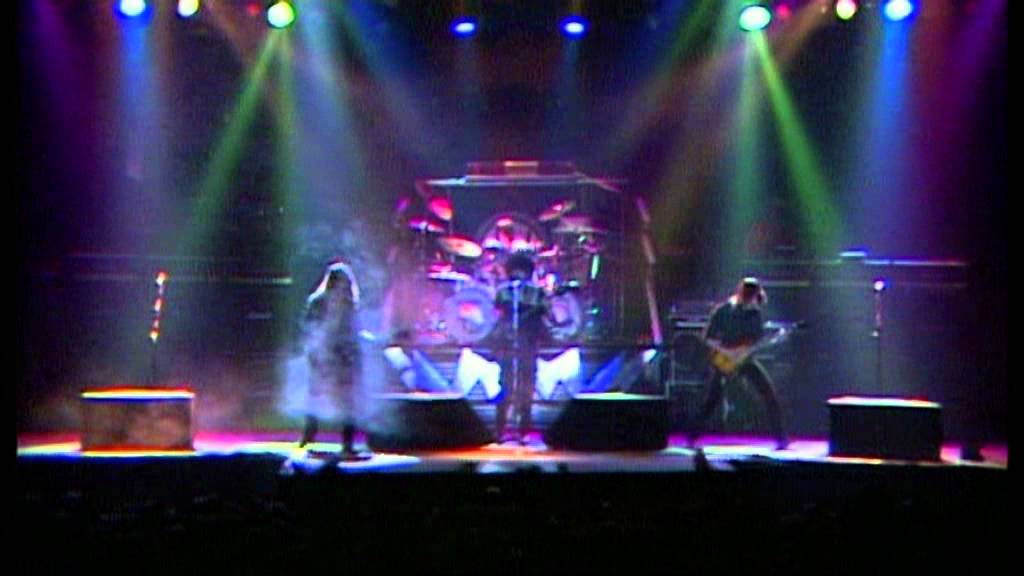
The band’s farewell tour followed the release of the album Thunder And Lightning. Gorham remembers that tour as an ordeal.
“Fuck, it went on forever,” he said. “It was the most painful thing I ever went through. It was like people didn’t want to let go. We knew the end was in sight, but I think it was Phil, probably who said, ‘No, no, let’s add on a few more shows.’
“It was really hard for me. That’s probably why I wasn’t thinking in the right direction – like, ‘Let’s take a rest.’ These days it’s the normal thing to do – whether you’re strung out on drugs or not. People do an album, do a tour and then take a year off. We never did.
“For so many years, we had it instilled into our DNA that if you ever come off the road, everybody’s gonna forget about you. Even for all the success we had, the gold and platinum albums and sold-out shows, we still had this fear that we were gonna be forgotten. That fear just permeated everything we ever did. That’s what drove us on.
“And maybe Phil was deluding himself a little bit all through those years – that next great song, that next great album, is right around the corner. But he wasn’t about to show any weakness, because I think he knew: ‘If I crumble, this whole fucking thing is gonna crumble, so I’m gonna show the strong front.’”
On the farewell tour, Lizzy headlined the Reading Festival on 28 August 1983.
The final show was on 4 September at a Monsters Of Rock festival in Nuremberg, Germany. By that time, Gorham couldn’t wait for it to be over.
He recalled: “That last show in Germany was a big fuck-off festival, and all the bands knew that it was the last show we were doing, so everybody who was on that show came out to the side of the stage to watch us play our last show.
“There were guys from other bands who were crying, big fucking tough roadies with tears streaming down their face. You looked in the audience and people were crying down there, and all I could think about was, ‘Man, I wonder if we could shorten up this fuckin’ set and get the hell offa here.’
“That’s how bad it was. I was numb – numb to any emotion that was going on. It was only later that I realised how emotional that scene was.”
At the tour’s end, Gorham had a plan in place to get clean of drugs and create a new niche for himself in the music industry.
“It took me another good year to stop taking drugs,” he admitted. “And then it took another year of rehabilitation – my own rehabilitation – to actually feel better, to feel like I could maybe pick up a guitar.”
He also believed that to move forward, he had to put distance between himself and Lynott.
“I had to get away,” he said. “That’s the first rule. To get better, you gotta lose the friends, the association, or you’re not gonna get better. That’s one of the reasons Phil never got better. He had all those people that kept hanging out with him, scoring him drugs and doing the drugs with him, staying high with him. I went the other way. I lost them all. I called Phil, but I certainly wouldn’t go over to his house.”
Gorham worked for a time in LA on a band project named The Western Front.

Returning to the UK, Gorham visited Lynott in December 1985 at Lynott’s home in Kew, on the outskirts of London.
“That was the last time,” Gorham recalled. “It was three weeks before he died. I’d just done some recording in Los Angeles and I really wanted his opinion on it. And more than anything I wanted to go see him again, and that was the excuse. Like, ‘Whaddaya think? Go ahead and hate it if you must.’
“Phil opened up the door, we went into the kitchen and he got a glass, filled it up with vodka and knocked it straight back and filled it up again. He said, ‘Oh, did you want a glass?’ ‘Uh, no thanks, Phil.’
“I think for Phil looking at me, being as healthy as I was, probably shocked him. He came straight out with, ‘Yeah, I’m getting my shit together, I’m gonna stop doing all this crap and get healthy again.’
“Then he said, ‘We should really think about getting back together and writing songs and getting the band back together.’ But I’m looking at him, knowing how tough it is out on the road anyway when you’re healthy. There’s no way that he could have made it out on the road the way he was.
“I said, ‘Yeah, that sounds like a great idea.’ I don’t know how convincing I was. I liked the idea. I wanted us to get back together again. But he had to get better. He had to.”
Gorham remembered how he felt when he left Lynott’s home that day.
“I thought he had a chance. I felt he actually meant what he was talking about. There was something in the way he said it that convinced me that he wanted out, he really did. So I actually walked out feeling quite upbeat about it. It’s gonna work out – he sounds like he wants to get better, this could be a very cool fucking thing.”
It was not to be.
As Gorham sadly recalled: “He wasn’t better. I think it had gone too far that point. Even if he had stopped taking drugs right there on the spot, I think it had still gone too far. He would have died anyway. There were too many things wrong with him.”
Phil Lynott died on 4 January 1986. It was only ten years earlier than his most celebrated song, The Boys Are Back In Town, had made Thin Lizzy famous.
