


![Kirk Hammett plays a Jackson Rhoads [left]; Peter Green with the Les Paul that Hammett would eventually own.](https://cdn.mos.cms.futurecdn.net/qsoK48Bsg4aG2JX4jHeZhR-1920-80.jpg.webp)
There are all kinds of things that make a song heavy but it’s never just about high-gain electric guitar, tuning down and turning up. If it was then it would be easy. And heavy music doesn’t come easy.
Kirk Hammett knows this. Metallica has had their share of heavy tracks. The Thing That Should Not Be and Harvester Of Sorrow are front-to-back heavy. Sad But True perfects the art of heaviness in box-office stadium metal.
As an album, the impenetrably dense …And Justice For All has something to it that is undeniably heavy – this great wall of guitars, James Hetfield’s stentorian bark delivering über-bleak verse, while Lars Ulrich’s biscuit-tin snare hammers through a cold and hostile mix almost wholly absent of Jason Newsted’s bass guitar.
And then there are those moments; the bridge in The Four Horseman, ditto Creeping Death, the shock and awe as For Whom The Bell Tolls heaves itself into a groove. It says something that here the tempo is dialled back. Heaviness can prove elusive when the tempo is frantic. Aggression takes over.
So yes, Metallica have had their moments, but when Total Guitar caught up with Hammett in 2020, he said that he was still trying to write the perfect heavy song, to summon the very quintessence of heavy in a riff. And he had just spoken to a man who did just that way back in 1969.
Hammett was on the phone to pay tribute to the late Fleetwood Mac co-founder Peter Green, whose famous Les Paul Standard, Greeny, is now in his possession. Some months before Green died, Hammett visited him, Greeny in tow, to pay his dues to one of blues-rock’s founding fathers.
The visit is a story for another day but the conversation with Hammett moved to a Fleetwood Mac classic that he was scheduled to play with Billy Gibbons at the Peter Green Tribute Concert at the London Palladium – and it is a song that has possessed him ever since he first heard it.
When we sift Green’s discography for inspiration, we can hear what is being done, but how? That’s the question. Green’s writing would seesaw between light and darkness, between the briny calm of Albatross and the urgent fury of Oh Well, the invigorating electric slide on the Elmore James cover Shake Your Moneymaker, the crestfallen Man Of The World. Towards Green’s final days in Fleetwood Mac, the darkness was winning.
That’s when fame, among other things, was warping everyone’s perspective. LSD enters the picture, ultimately overwhelming Green, but not before he had written The Green Manalishi (With The Two Prong Crown) – the song that captured Hammett in its spell, and, he argues, showed metal what heaviness sounded like.
That song sounds so incredibly dark, and so incredibly heavy, and it is atmospheric
Kirk Hammett
The Green Manalishi was written in 1969, supposedly inspired by a lysergic nightmare about an undead dog that kept barking, and the song came to Green in the immediate moments after waking up. It’s quite the story; there are shades of Son of Sam to it. Green later revealed the themes were more about the corrupting influence of money, the root of all evil.
The backstory only goes some way to explaining the darkness in Green’s arrangements, in his haunted poetry and a riff that teaches us many lessons, chief among them that heaviness is not contingent on a Peavey 6505 head and tuning down to C. That it is about atmosphere and feel, a morbid sensibility.
“You’re so spot on with that song,” said Hammett. “To me, that song is so incredibly heavy. High-gain amps, high-output pickups, none of that stuff existed. That song sounds so incredibly dark, and so incredibly heavy, and it is atmospheric and it gets straight to the darkest parts of one’s psyche. That’s what happened to me.”

Hammett sounds like he’s getting goosebumps just talking about it.
It sounded like it was written under a full moon, in a circle with candles... just him and the guitar
Kirk Hammett
“It just goes so deep in me,” he said. “And that song has so much voodoo in it. It sounded like it was written under a full moon, in a circle with candles, with him and the candles lit all around him, just him and the guitar…”
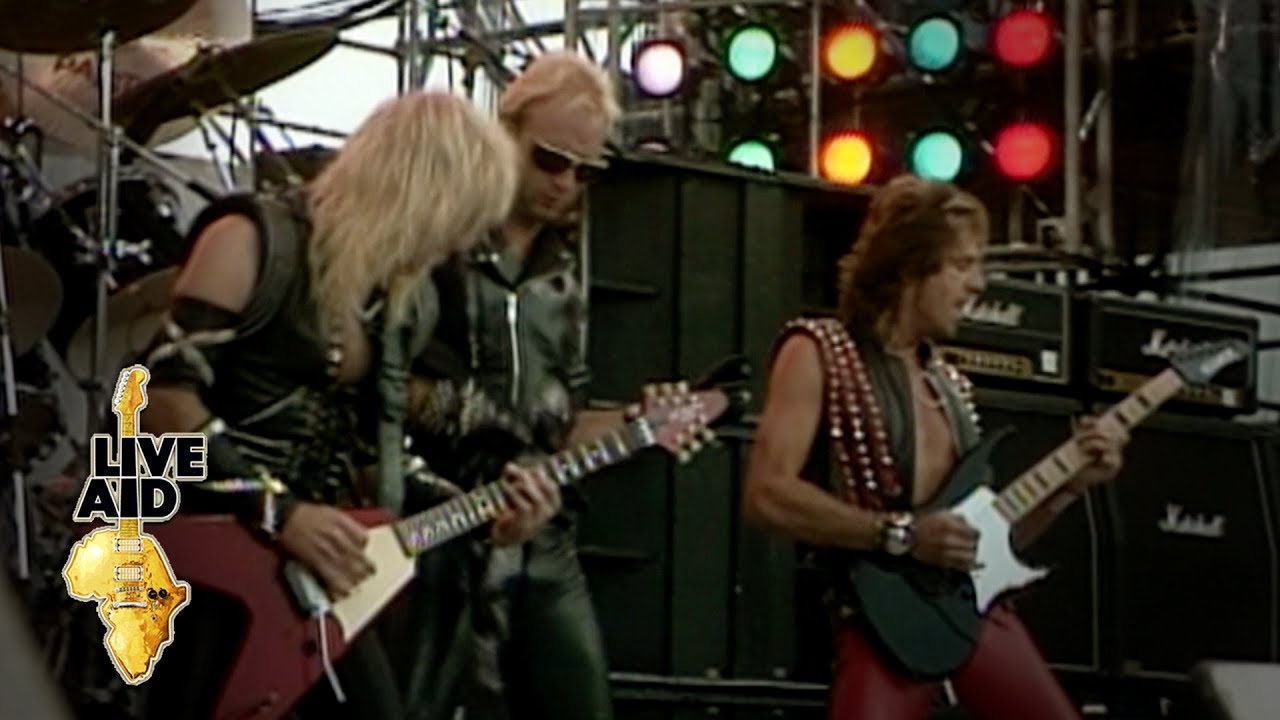
Hammett discovered the song as many metalheads did, through Judas Priest, who covered it on 1979’s Killing Machine (released as Hell Bent For Leather in the US), and most famously on the Metal Gods’ essential live album, Unleashed In The East, which was released later that year.
KK Downing and Glenn Tipton’s twin-guitar treatment transform it. If Green’s was nightmarish and psychedelic, rooted in the blues mythos, Judas Priest reinvented The Green Manalishi with a polished-steel production, dialling up the tempo and placing Rob Halford’s peerless vocals front and centre. It would become a staple of their live show.
In the punishing heat and humidity of the 1985 Philadelphia summer, Chevy Chase introducing them to the stage at Live Aid as Judas Priest performed it in a three-song set. The darkness cooked that day.
![The Green Manalishi (With the Two Prong Crown) [2013 Remaster] - YouTube](https://img.youtube.com/vi/EKRfCkx8KCM/maxresdefault.jpg)
Priest superfans Corrosion Of Conformity covered it as a secret track on their 1984 debut LP, Eye For An Eye. Pantera used to play it during soundcheck.
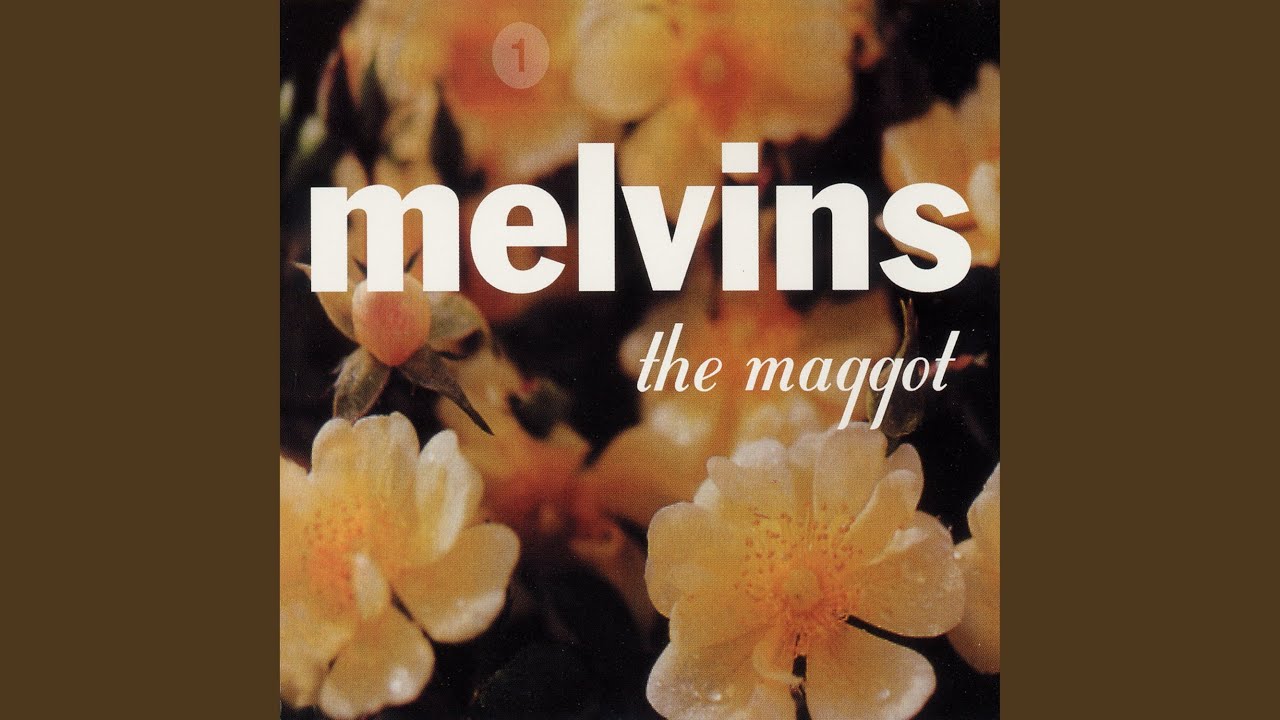
The Melvins covered it, too, lacing it with a knowing venom as they stretched it out to nearly seven minutes, performed lower and slower but more in the spirit of the original.
It finds Buzz Osborne going full nocturnal vampire (was King Buzzo channelling the dog that visited Green in the night?), the Washington state alt-rock institution leaning into the uncanny vibe and latent avant-gardism of the original, reimagining Green’s ghostly vocals as a squall of noise to conclude the track.
Great songs endure reinterpretation. In Judas Priest’s hands, The Green Manalishi is chromium-plated, total metal. The Melvins drew out its weirdness and the weight of the riff.
For Hammett, the fact The Green Manalishi could be performed in a Fleetwood Mac set alongside blues standards and not be out of place just demonstrates how short the distance is between blues and metal.
“That song should have been the soundtrack to Robert Johnson selling his soul to the devil,” said Hammett. “Green Manalishi reminds me of the darkest Robert Johnson songs. It is right up there with Hellhounds On My Trail, Me And The Devil Blues. It’s just right there and it is so heavy and it contributed to the blueprint that so many people jumped on.”
The Green Manalishi came together as the original Fleetwood Mac were coming apart. Green was regularly taking LSD. He was checking out. They were playing it live before they got around to tracking the single. Guitarist Jeremy Spencer sat out the sessions; he didn’t appreciate Green’s didactic manner in the studio, though later admitting to Classic Rock that he should have been “more accommodating”.
“Peter would invite me to the studio with parts mapped out for me,” said Spencer. “But I thought he should just go ahead and do them himself.”
Danny Kirwan was the opposite. He relished working on Green’s compositions. The Green Manalishi was not an easy song to record but Kirwan went the distance. It took 28 takes. Martin Birch, who produced it, was similarly inspired by the material, engineering the intro guitar tone by placing speakers in an underground car park and miking it up for the natural reverb to swallow it, the ambience a proxy for the dream logic that inspired Green in the first place.
The Green Manalishi was Green’s last hurrah with Fleetwood Mac. The song, and everything that had gone into it – everything that had inspired it – had left him drained and spent. “It took me at least two years to recover from that song,” Green said in Martin Celmins’ 1995 biography. “When I listened to it afterwards there was so much power there – it exhausted me.”
When I listened to it afterwards there was so much power there – it exhausted me
Peter Green
The ‘60s came to a chaotic and bloody end. By ’69 the Summer of Love felt like a lifetime ago. The war in Vietnam was ongoing, with no end in sight. There was the Manson Family murders, the carnage at Altamont. The hippie dream was dead and heavy metal was looming on the horizon.
The Beatles’ Helter Skelter and the acid-rock freakouts of Blue Cheer foreshadowed what was to come, before Black Sabbath officially inaugurated it in 1970, just a few months before Fleetwood Mac released The Green Manalishi as a single. Of all the proto-metal of the era, Hammett sees The Green Manalishi as being without equal.
“There wasn’t really much of a precedent for a song like Green Manalishi,” said Hammett. “There was dark stuff that Jimi Hendrix was writing. For sure, Sabbath. But nothing quite like Green Manalishi. Green Manalishi, Oh Well, Black Magic Woman – all blues-rock that later on contributed to hard rock and heavy metal.”
That is where Hammett really jives with Peter Green as a player – a virtuoso who knew the value in economy, in expressing a mood and letting the audience fill in the gaps. As a horror movie obsessive, Hammett can’t get enough darkness, and that is what he hears in Green’s best work.
“You think about those three songs, the subject matter, the content, the arrangements, the atmosphere, how things just switch on a dime, the heaviness and the change of moods, it’s all there,” says Hammett. “It’s all there for heavy metal to eat up and turn into a completely different plate of jello, and thank god, thank fucking God for Peter Green because, for me, his contribution to heavy metal, to the music I play, is so huge, so huge.
“It just took years and a couple of generations for it to filter into heavy metal as we know it today. But still, he put out the blueprint. I can only hope to compose a song like Green Manalishi. I can only hope to. I aspire to do that.”
