
That triumphant moment when The Beatles disembarked from their Pan Am jet at New York’s JFK airport on February 7th 1964, to be met by the rapturous screams of an assembled mob of freshly minted (but already diehard) American fans, is often pointed at as the beginning of the British Invasion.
Although this whirlwind trip - punctuated by three momentous appearances on the televised Ed Sullivan Show - would expose the Fab Four to innumerable households around America, the first US visit was riding the crest of a wave, triggered by the release of their first American chart-topper.
Let’s rewind a little. By late 1963, John Lennon, Paul McCartney, George Harrison and Ringo Starr had already achieved dizzying fame on home soil. Ever since the band’s first number one hit, a momentum had been building that only seemed to be accelerating further.
Every show, the crowds of besotted girls were getting bigger, the volume of the screaming during the shows was getting louder, and, having earned their stripes across years of live graft, the Beatles' ambitions were getting grander.
After endless touring up and down the country, they were ready to go global.
“When The Beatles were depressed, we had this thing that I would chant, and they would answer,” John Lennon was quoted as saying in David Sheff's All We Are Saying, “[I would] say to the others when we were all depressed, thinking that the group was going nowhere, this is a s****ty deal, we’re in a s****ty dressing room - I would say, ‘Where are we going, fellas?’ [They’d say] ‘To the top, Johnny’, in pseudo-American voices. And I would say, ‘Where is that, fellas?’ And they would say, ‘To the toppermost of the poppermost.’ I would say, ‘Right!’ And we would all cheer up.”
The poppermost had been first successfully scaled by Please Please Me back in January 1963. It was no one-off, but just the start of a salvo of releases which all followed suit.
A few months on from Please Please Me, and the non-album single From Me To You leapt into the top spot, (it was, interestingly, the first chart-topper of the UK’s then brand new official singles chart).
By summer, the sprightly She Loves You not only scored the band a hat-trick of chart victories, but smashed all existing sales records and established a new precedent for top-performing singles.
It seemed that everybody in Britain - from the besotted, tear-soaked teen fans to more discerning record collectors - picked up a copy.

Although this momentum was reflective of the unstoppable growth of Beatlemania - the obsessive craze for Liverpool’s finest that was tantamount (in some people’s eyes) to a kind of collective mass hysteria - it helped that the band’s songs were, for their day, exceptionally well-written. Even at this early stage, innovation was a driving force.
The urgent She Loves You was particularly potent; its 'reported conversation' narrative structure bent the conventional love song mould - and made the detached Beatles all the more alluring.
It wasn't just the overblown press then, the Beatles' well of fresh ideas (not least, the very notion of writing their own songs) were certainly part of the Beatlemania equation.
The infection soon spread across Europe. She Loves You dominated various other country’s sales charts as 1963 rolled on, but, for a number of reasons, the US were nonplussed.
The main reason, really, is that the US market just had no idea about them.
The Beatles’ British label EMI’s US affiliate Capitol Records was stubborn in its view that the Beatles just would not do well with the US market.
With little hope of penetration then, the group’s early singles were licensed to much smaller labels. Vee-Jay Records issued the group’s original single, Love Me Do, with zero promotion.
What of the single that broke the band through in the UK? Surely that would do better…
Please Please Me was handed to Swan Records, who fulfilled their contractual agreement with a shrug, quietly sprinkling it on US shelves as quietly as possible.
Unaware of these label difficulties, the Beatles themselves were simply hearing that their singles were 'flopping' in the US. Evidence as to why was soon gathered first-hand.
George Harrison was the only Beatle to visit America prior to 1964, visiting his sister Louise in Benton, Illinois. He told the group upon his return that when he asked in record shops if they had the new Beatles’ single, he’d be met by blank expressions. It was clear that even record shops were completely oblivious to the band that were storming Europe.
The Beatles’ producer George Martin was incensed at the situation…
“I would send them to my friends in America at Capitol Records, and say ’This group is fantastic, you’ve got to issue them and sell them in the States’”, Martin said in The Beatles Anthology (2025 Edition), “Each time the head of Capitol Records would turn it down and deny it, and say ‘Sorry, we know our market better than you do. We don’t think they’re any good’”
Frustrated, it was George Martin who first initiated these smaller-scale relationships with Vee-Jay and Swan. “They were very tiny labels in the States,” Martin continued, “Being small labels they didn’t make a great deal of success.”

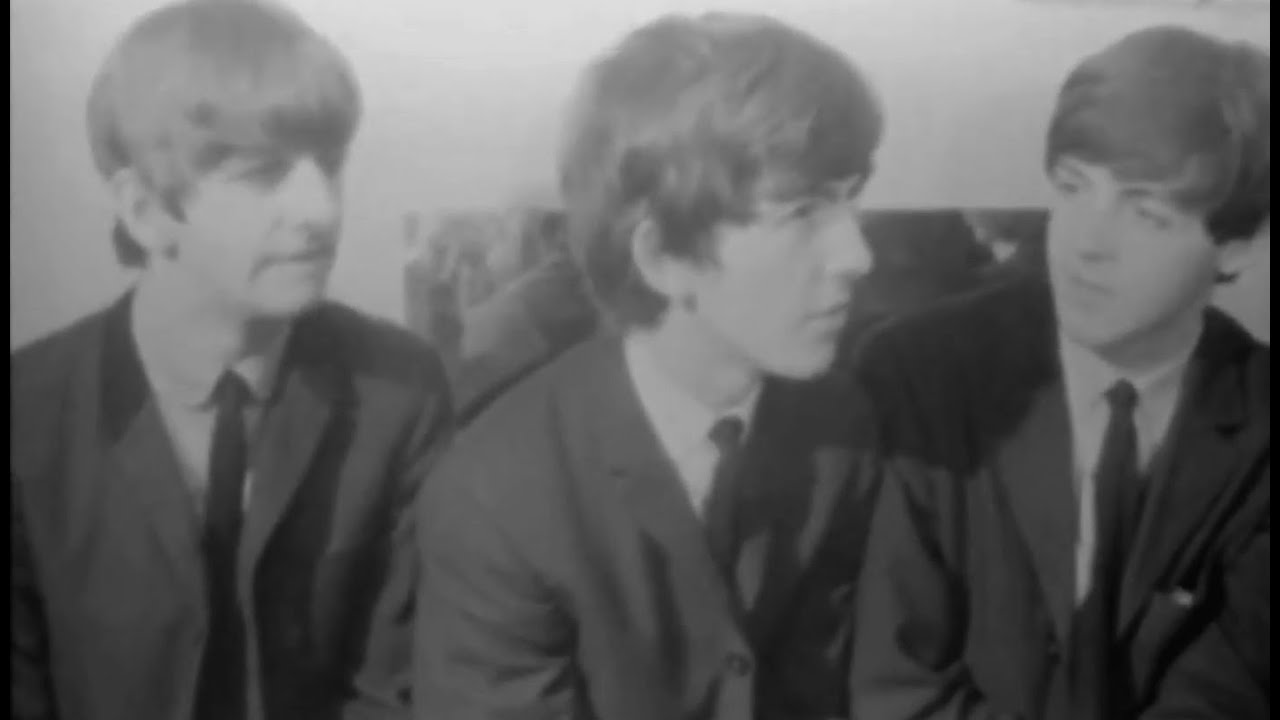
It wasn’t until seemingly bizarre scenes of British teens losing their marbles were shown as part of a feature on the CBS Morning News that US interest began to grow.
“Wherever the Beatles go they are pursued by hordes of screaming, swinging juveniles,” the reporter's narrator delivered, inadvertently creating something of a proto-video press kit for the band.
“Thousands of teenagers in every city and town stand in line all night to get tickets for their touring show. Girls faint when the tickets run out.”
Despite these greenshoots of positive attention, for the Beatles themselves, going for gold on American soil couldn’t be countenanced until they’d fired a ground-softening volley from afar…
“I’d said to Brian [Epstein, the band’s manager], ‘We don’t want to go to America until we have a No. 1 record.’” Paul McCartney recalled in an interview with Billboard in 2015. “A lot of British artists went there and came back with the audience having been slightly underwhelmed by them. I said, ‘We don’t want to be like that. If we go, we want to go on top.’”
They needed the single then, the one that - should George Martin manage to finally twist Capitol's arm - would do the job of thrusting them into the hearts and minds of a much, much bigger country.
Although recollections would later vary in the Beatle-camp as to whether I Want to Hold Your Hand was designed specifically for that market, it’s clear that the core songwriting team of Lennon and McCartney were considering the tastes of a far wider audience.
It was penned by John and Paul in the basement of Paul’s then-girlfriend Jane Asher’s house. Unlike the more individual attitudes to songwriting the pair would later adopt, at this early point in the band’s creative career, the Lennon/McCartney songwriting was a fully collaborative affair.
“We wrote a lot of stuff together, one-on-one, eyeball to eyeball,” Lennon relayed to David Sheff in his 1980 Playboy interview. “Like in I Want to Hold Your Hand, I remember when we got the chord that made the song. We were in Jane Asher’s house, downstairs in the cellar playing on the piano at the same time. And we had, ‘Oh you-u-u… got that something…’ And Paul hits this chord and I turn to him and say, ‘That’s it!’ I said, ‘Do that again!’ In those days, we really used to absolutely write like that - both playing into each other’s nose.”

As to what chord McCartney hit on to elicit such a response from Lennon is a mystery, although it has been speculated that it was the Em, which completes the verse’s smooth i-v7-vi progression (G, D7 and Em), whilst others have surmised that it was the neat B7 that presages the chorus’s purposefully sweet C, D, G, Em sequence.
The variance between Lennon and McCartney’s personalities and songwriting styles were key to penning hits that had such broad appeal;
“The thing about me and John is that we were different, but we weren’t that different,” McCartney told Uncut in 2004. “I think Linda put her finger on it when she said me and John were like mirror images of each other. Even down to how we started writing together, facing each other, eyeball to eyeball, exactly like looking in the mirror. That’s how songs like I Want to Hold Your Hand were written.”
With an introductory stop/start motif (a barre-chorded C to D major) that sounds almost like the band clattering down a staircase, this new idea snapped into a steady shuffle rooted in G major before leading into its bright, major chord-dominated chorus section.
Lyrically, Lennon and McCartney chose a gentler route than its more passion-driven predecessors. The child-like, almost nursery rhyme-quality of the song celebrated that titular longing for basic connection, the furtive beginnings of that most central Beatle-theme; love.
Oh yeah, I'll tell you something,
I think you'll understand,
Then I'll say that something,
I wanna hold your hand
It wasn’t the risqué double-meaning of Please Please Me, or the distant, burning, 'lips that long to kiss you' desire of From Me To You, nor is it the frantic sprint of She Loves You. I Want to Hold Your Hand was love at its most basic. Framing a simple gesture laden with promise, and hope for a happier tomorrow.
On a broader level, it was a beautiful ode to making a connection.
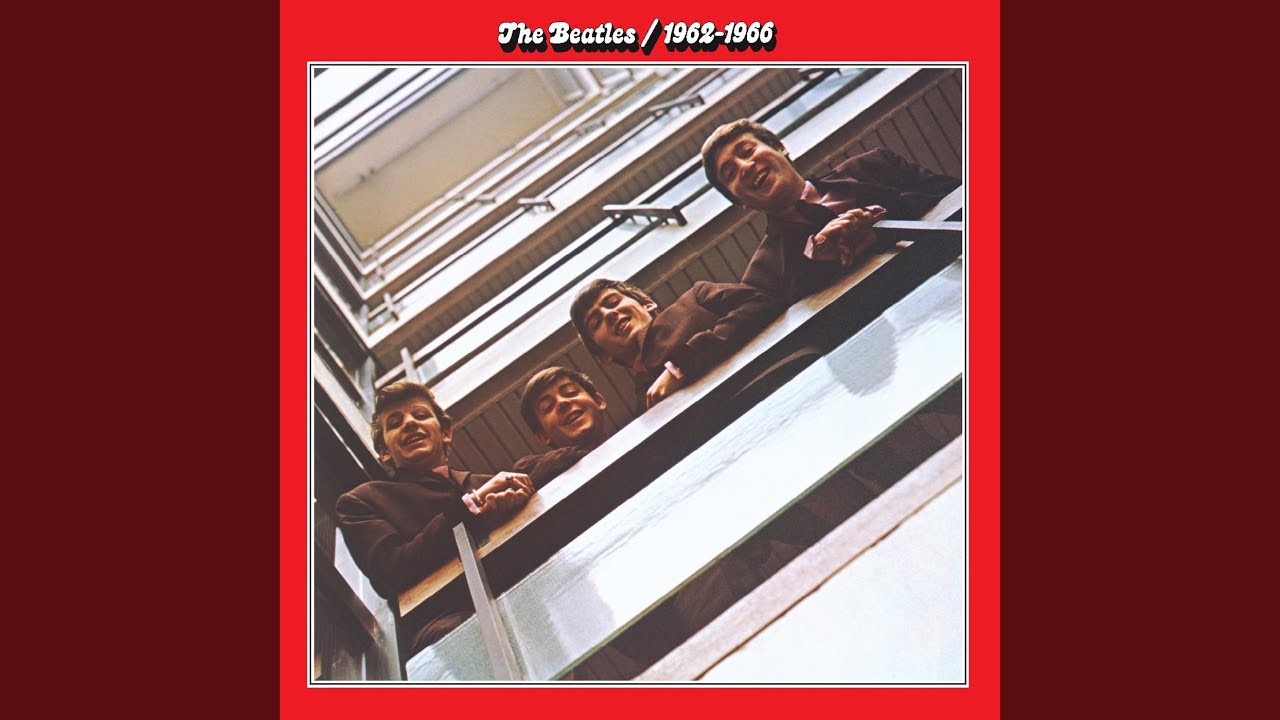
"There was an eroticism behind it all," revealed McCartney in his 2021 book, The Lyrics. "If I'd heard myself use that word back when I was seventeen, there would have been a guffaw. But eroticism was very much a driving force behind everything I did. It's a very strong thing. And, you know, that was what lay behind a lot of these love songs. 'I want to hold your hand' (and probably do a lot more!)
“I Want to Hold Your Hand is not about Jane [Asher], but it was certainly written when I was with her. To tell you the truth, I think we were writing more to a general audience. I may have been drawing on my experience with a person I was in love with at the time - and sometimes it was very specific - but mostly we were writing to the world."
And the world was more than ready to take the Beatles’ collective hand.
Beyond the ever-accelerating Beatlemania hype-train, I Want to Hold Your Hand was - by structural design or pure spontaneous serendipity - the right song for the US market at that time.
Since Elvis Presley had vanished off into the Hollywood system, and the tragic death of Buddy Holly, Ritchie Valens and The Big Bopper, rock n' roll was seemingly a waning force. But what would follow it?
This was also, a country in mourning. On November 22nd 1963, President John F. Kennedy was brutally assassinated in Dallas, Texas. The party, for now at least, was seemingly over. America needed a lift…
Recorded at Abbey Road (then EMI Recording Studios) in a one-day session on October 17th 1963, I Want to Hold Your Hand was the first Beatle song to utilise what was then rather expansive new four-track recording technology (prior Beatle recordings had all been on just two tracks), via a new bank of Studer J-37 tape machines that had been freshly installed.
Both it and its B-side (the melancholic, three-part harmony-built gem This Boy) were tracked in 17 takes each.
The session also marked the studio debut of McCartney’s brand new 1963 Hofner bass, replacing his 1961 original which had, even at this early point, seen far better days. It was that original 1961 bass that would later become lost, embarking on a quite remarkable second life, before finding its way back into Paul's hands. But that’s another story…
In the interim between She Loves You’s August release and the upcoming scheduled November drop of I Want to Hold Your Hand, the former single had galloped its way back to the top of the chart, fuelled by increasingly irrepressible press attention and the recognition of Beatlemania as a bona-fide societal moment.
With all this excitement, advance orders for She Loves You’s follow-up had exceeded a million copies. But, once it was finally issued in the UK on November 29th 1963, the Beatles’ took a full two weeks to dislodge themselves (as it were) and supplant their previous single from its resumed position at the top.
But, once I Want to Hold Your Hand had ascended to the summit, it was there to stay.
It would remain the UK’s biggest selling single for five weeks, sailing comfortably into the Christmas number one position the following month, and hanging around the top 50 for an impressive 21 weeks. Both it and its predecessor would later stand as the country’s biggest selling singles of the entire decade.
But, doing well in their native Britain was at this point something of a given. The real question was whether the single could pass the real test. Breaking the US.
George Martin’s efforts with the Beatle-skeptic Capitol finally paid off, His (and Brian Epstein’s) constant pressure was now backed by some frankly ridiculous sales stats, alongside Beatlemania footage that was reminiscent of Elvis Presley’s heyday.
“By this time the news from England and Europe was overwhelming, that they were a hit group”, Martin said in The Beatles Anthology. “Also, the Swan and Vee-Jay labels were making inroads - they were selling by this time. So Capitol were forced to release I Want to Hold Your Hand.”

Putting out the single was one thing, getting it heard by more than just the already Beatle-curious was another.
In a pivotal phone call, Brian Epstein personally convinced Capitol’s president Alan Livingston to go even further - demanding they go all-out for the Beatles’ first major stab at US success with a substantial marketing campaign, almost by way of recompense for their earlier reluctance. The promotional spend budget for I Want to Hold Your Hand was allegedly $40,000 (although George Harrison seemed to think it was upwards of $70,000 in The Beatles Anthology).
“I liked Brian just then on the telephone,” Livingston said a BBC interview published in 2000. “He was a gentleman, and he was persuasive.”
With five million ‘The Beatles Are Coming!’ stickers put into circulation, and a salvo of tie-in promotional material ready-to-go, Capitol laid the groundwork for I Want to Hold Your Hand’s slated release in the US in mid-January 1964.
This was planned to be just ahead of an already-scheduled trip to appear on New York’s Ed Sullivan Show that Epstein had personally secured during a hectic week over in NYC that he'd dubbed 'Operation U.S.A'.
However, fate - and the strength of growing grassroots demand - accelerated these plans…
It all started with Marsha Albert, a 14-year-old Maryland-based fan who’d been absolutely entranced by the Fab Four whenever she’d caught sight (or sound) of them on television and radio. "It wasn't so much what I had seen, it's what I had heard," Albert recalled in an interview with CBS. "They had a scene where they played a clip of She Loves You and I thought that was a great song."
Albert penned a letter to Washington’s WWDC DJ Carroll James, urging him to give the Beatles more airtime. Touched by the message (and keen to be ahead of the curve) James was able to obtain one of the already available UK pressings of the single (allegedly this had been secreted over by a BOA flight attendant… the international file sharers of their day!) and planned to begin playing it on his station.
But James was so affected by Marsha’s raw passion that he invited her into the studio on December 10th 1963. Marsha was asked be the first to introduce the song to US listeners, many of whom had never previously heard of the Beatles.
Marsha’s earnest devotion had paid off, and she would go down in history as one of the unlikely instigators of Stateside Beatlemania.

Once listeners had heard the new single, infatuation soon followed.
Who were these four lads? Where was Liverpool anyway? What was going on with their hair? Which one was married? And, most importantly, when are they coming to the US? Other DJs across the nation grabbed their own copies and began spinning it too.
The tell-tale signs of US Beatlemania were manifesting far in advance of Capitol’s carefully-planned launch campaign. They scrambled to seize the hour.
Although they’d initially threatened WWDC with a court order for daring to play the song ahead of its official US release, they eventually realised that the positive reaction was, in actual fact, a very good thing for their fortunes.
Seemingly always three steps behind - and receiving colossal demand for the single - Capitol rushed I Want to Hold Your Hand out ahead of schedule, launching it on Boxing Day 1964.
What once seemed like a pipe-dream for the Fab Four was now seemingly inevitable, and the single flew off US shelves.
It was reported that 10,000 copies were sold in New York every hour during its initial week on-sale.
After just three days the single had shifted 750,000 copies. Sweet irony then that, overwhelmed by the demand, the once dubious Capitol had to beg RCA and Columbia Records to help them press more copies.
When all was said and done, I Want to Hold Your Hand would sell close to 7 million copies (around 12 million including later digital certifications), becoming the Beatles biggest selling single globally.
For the Beatles themselves - performing in Paris ahead of their fated US trip - the news that I Want to Hold Your Hand had reached the top of the US Cashbox chart on January 25th (it would top the US Billboard Chart on February 1st 1964) was mind-blowing.
“One night we arrived back at the hotel from the Olympia when a telegram came through to Brian from Capitol Records of America. He came running in to the room saying, ‘Hey, look. You are number one in America! I Want to Hold Your Hand had gone to number one,” McCartney stated in The Beatles Anthology book. “Well, I can’t describe our response. We all tried to climb onto [road manager] Big Mal’s back to go round the hotel suite: ‘Wey-hey!’ And that was it, we didn’t come down for a week.”
The subsequent US visit would stand as one of the most significant pop cultural events of the entire decade, if not the century. Their record-breaking appearances on The Ed Sullivan Show broadcast the Beatles into the homes of millions.
America gladly took their hand.
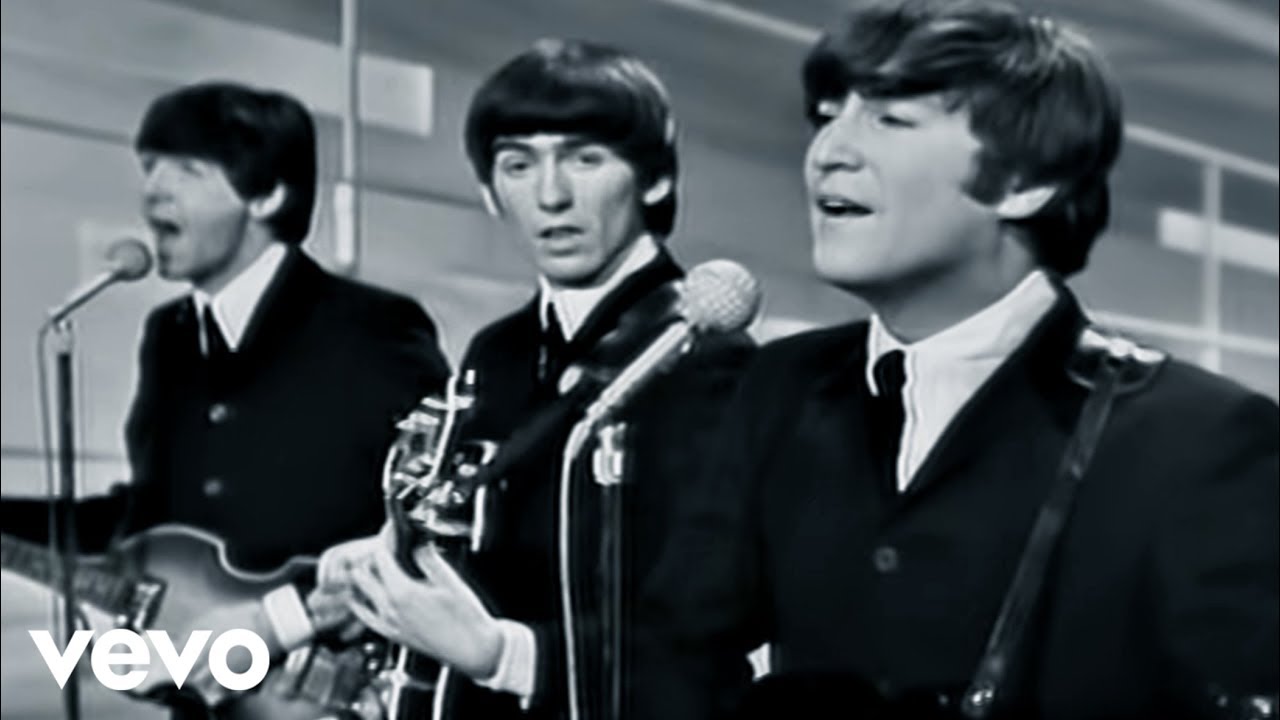
Beyond its role in finally switching-on America to the group’s imminent arrival, the song also fired a particularly loud starting gun on something of a transatlantic innovation-off in musical terms. Many of the '60s' chief creatives suddenly sat up and took note of these four Liverpool lads who played, wrote and sang their own stuff, and boy was it good…
The Beach Boys’ Brian Wilson - then a few years off from casting an influence on the Beatles himself with Pet Sounds - was blown away;
“I flipped. It was like a shock went through my system ... I immediately knew that everything had changed,” he told Mojo in 2002.
Meanwhile, Bob Dylan famously misheard the bridge part’s ‘I can’t hide, I can’t hide’ as ‘I get high, I get high’ - and naturally assumed the Beatles were subversively smuggling a marijuana reference into the charts. Respect was due to these British disruptors, thought Dylan.
Earlier this month, McCartney resurrected this most important of Beatle songs live for the first time in 60 years, playing it at the wedding of Taylor Swift and Travis Kelce during the celebrity-attended reception at Madison Square Garden.
And, back in the winter of 1980, shortly before his untimely death, the now New York-resident John Lennon was apparently keen on revisiting I Want to Hold Your Hand, and other early Beatle-songs, when making what would be, sadly, his final album, Double Fantasy.
“I remember we were editing something and Lennon was bored so he went out into the studio, grabbed the Fender Telecaster B-bender guitar that Rick Nielsen (from Cheap Trick) gave him, plugged it in, and sat on the amp all day playing Beatles songs,” said engineer Lee DeCario to Record Collector in 2008.
“It was great, you’d walk by and you’d hear him singing and playing I Want to Hold Your Hand.”
