
In July 1994, Stone Temple Pilots’ second album Purple entered the Billboard 200 chart at No 1 – and the scale of that success had a dizzying effect on the four band members.
“Everything happened so fast,” said singer Scott Weiland. “Our lives had completely changed. Even our families treated us differently. It was like going to sleep here on Earth and waking up on another planet.”
But it wasn’t just fame and money that was messing with Scott Weiland’s head back then. The singer was an alcoholic and drug addict whose taste for excess would eventually lead to his death at the age of 48 on 3 December 2015.
The fact that Stone Temple Pilots were one of the most successful rock bands of the ’90s, with record sales of 40 million, is all the more remarkable given Weiland’s misadventures throughout that decade and beyond.
In a 2001 interview with Kingsize magazine, Weiland discussed those misadventures and the music the band created in those turbulent times.
He said that he first went off the rails when Stone Temple Pilots toured with debauched Texan rock group Butthole Surfers in 1993, a year after the release of STP’s hit debut album Core.

“I’d already been drinking alcoholically since the age of 16,” Weiland recalled. “But on that tour with the Butthole Surfers there was more sex, drugs and liquor than we’ve ever seen since. The Flaming Lips were on that tour too, and their music really expanded my horizons and inspired Purple.”
Weiland also stated that it was in 1993 that he tried heroin for the first time after Stone Temple Pilots played a gig at New York’s Roseland Ballroom, at which they performed in full Kiss make-up.
The Purple album was recorded inside three weeks and released on 25 June 1994.
“We didn’t tour Purple very long,” Weiland said. “I was strung out on heroin. I had detoxed for the first time and we went straight out on the road, selling out 20,000 arenas all over the States. We just got fried, man.
“Our nerves and sanity were really frayed and there was a lot of drug taking going on. We were just at the end of our emotional rope, trying to find something to get out of that feeling by ingesting more drugs.
“Physically, emotionally, mentally, spiritually, we couldn’t do it anymore. We released two singles from Purple – Vaseline and Interstate Love Song. The label wanted to do five singles but we needed some time off.
“I got home, found myself completely bored, and I dove headfirst into the spoon.”
Weiland was arrested for the first time in May 1995, charged with possession of heroin and cocaine.
“The first time I got busted was in Pasadena,” he said. “I was bailed out by my ex-wife. I told her she had to drive me to my dealer’s because I was dope sick. She said, ‘I’m taking you home’, and I said, ‘I guess I’m not coming home’. So I jumped out of the car, a convertible, called up a cab, got a room at a hotel and lived there for a month.”
Stone Temple Pilots’ third album Tiny Music… Songs From The Vatican Gift Shop was released in March 1996, and reached No 4 in the US.
Weiland admitted: “There are people that were really into what we did on Core and Purple who didn’t find enough of that on Tiny Music. That record is pretty lo-fi. It’s kind of a beautiful mistake. There’s a vulnerability on that record, it’s honest. You can pretty much get a feeling for what was going on.”

In the wake of that album’s release, Weiland returned to rehab. The other three band members – guitarist Dean DeLeo, bassist Robert DeLeo and drummer Eric Kretz – formed a side-project group named Talk Show, fronted by ex-10 Inch Men singer Dave Coutts.
Talk Show’s self-titled album was issued by Atlantic in 1997 but sold poorly. The following year saw the release of Weiland’s debut solo album 12 Bar Blues, fuelling rumours that Stone Temple Pilots had split.
Weiland told Kingsize: “I don’t think any of us ever thought the band was over. It just wasn’t safe or healthy for us to be together when we couldn’t stand each other.
“That’s why we did our separate records. If we’d forced ourselves back into a room to make music as Stone Temple Pilots, that would have been the end.
“We’re not the kind of people to go on six month private yachting cruises through the Caribbean. The band’s not working, but music has to go on, so that’s what we did.”
In January 1999 Scott Weiland was again arrested for possession of heroin. He was placed on probation for three years, subject to random drug testing.
He then reunited with Stone Temple Pilots to begin work on a fourth album, titled simply No.4. He also contributed to Limp Bizkit’s album Significant Other as writer, producer and vocal coach to Bizkit frontman Fred Durst. One track from that album, Nobody Like You, featured Weiland and Korn singer Jonathan Davis sharing lead vocals with Durst.

When Weiland overdosed and missed an appointment with his probation officer while in hospital, he received a one year jail sentence which began before No.4 was released in September 1999.
“I could not seem to put more than 30 days of abstinence together,” he confessed. “We were nearing the completion of No.4 and I got in trouble again and the judge told me if I did it again I’d get a year guaranteed.
“Fred Durst called me when we were working on No.4 to work on Significant Other. It was nice. My bank account expanded back to the level I was used to.
“I had spent a sickening amount of money on drug-related things like hospital bills and legal fees. It’s not the drugs that cost money.
“At my highest points I was doing maybe three or four grams of heroin a day and maybe two or three grams of cocaine. At the most that’s five or six hundred dollars a day, and if you make good money it’s easy.”
Weiland was jailed in late 1999.
“I ended up overdosing and going into hospital,” he said. “I cleaned up and went in [jail] to take my lumps.
“At first I was placed in solitary confinement. They put people with notoriety in solitary. They think they’re protecting you, but it’s better to be around people even if they’re murderers rather than being locked in a room the size of a bathroom.
“The head of the Los Angeles chapter of the Mexican mafia was in cell next to me. He passed me a note and asked for an autograph for his daughter who’s a huge STP fan. He said, ‘If you want any heroin or speed I can can get it to you’. But I was never a fan of speed.
“I just didn’t know if I could face a year in that cell. It wasn’t certain I was going to get transferred to the rehab facility. I thought I might take my chances with God and just end it. I could get enough drugs to overdose or I could hang myself with the telephone wire, which they have to provide for collect calls.
“I always believed in God, and I felt I needed help from God to get through it, but if I expected any help, accepting drugs in that cell would be like putting my middle finger up. So I decided not to do it. Two days later my attorney visited me and told me I’d been accepted into the in-jail drug programme.”
Weiland was released from LA County jail on 30 December 1999.
2000 was a good year for him. He married model Mary Forsberg in May, and their son Noah was born in November.
Weiland also continued his partnership with Fred Durst on Limp Bizkit’s 2000 album Chocolate Starfish And The Hot Dog Flavored Water.
“It was a rewarding experience,” he said. “At the time I had only produced my own solo album, so it was interesting to do it for another artist, especially someone who I could tell was on the verge of being extremely successful.”
He added: “I don’t agree with a lot of Fred’s politics, but I don’t have to. There’s nothing that makes me sicker than mediocrity, and there’s nothing mediocre about that band.
“Fred’s one of the most sensitive and insecure people I’ve ever dealt with. You create this exterior image of bravado. I can see it in him and I can see it in myself.”
Following a tour with Red Hot Chili Peppers in Sepember 2000, Stone Temple Pilots recorded the album Shangri La Dee Da, which featured A Song For Sleeping, an open letter from Scott Weiland to his son.
He told Kingsize: “Having a child, you look at everything differently. I get tempted to do the wrong thing, but it’s not just about whether I can weather the storm of a week-long argument with my wife. I have my son who I’m so in love with, and I can’t jeopardise my relationship with him, it’s too frightening for me.”
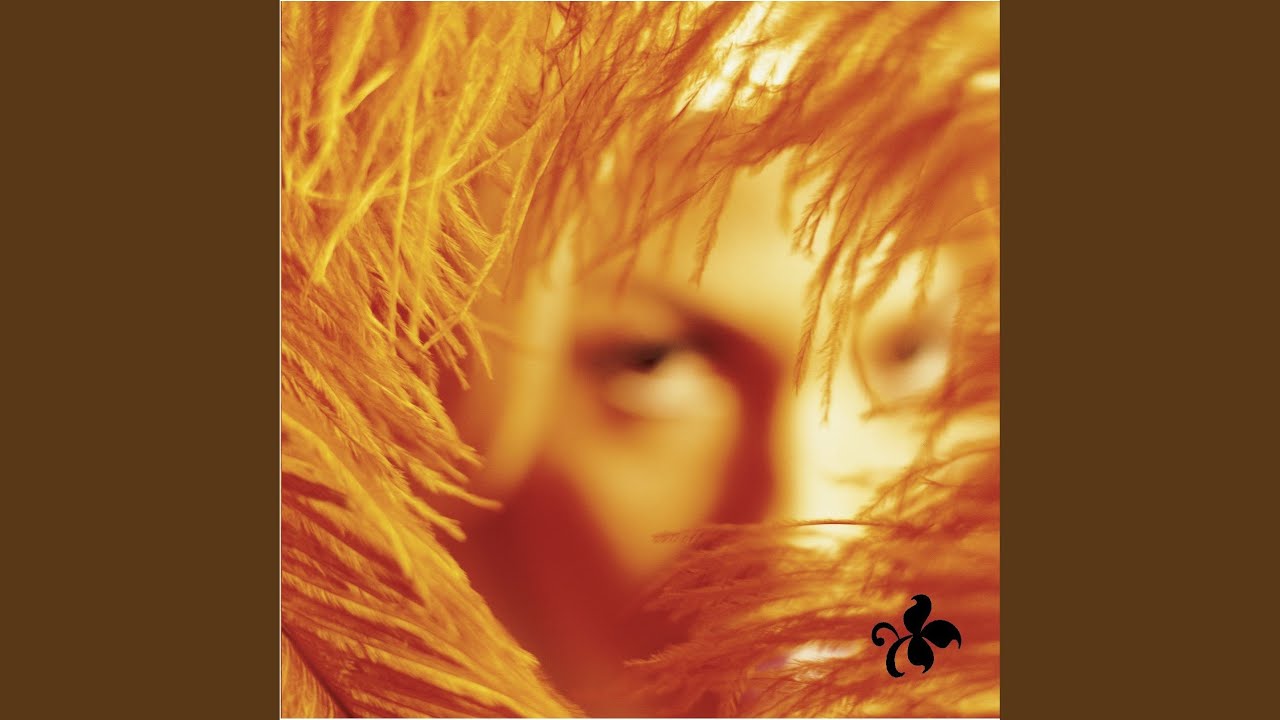
He continued: “Emotionally, Shangri La Dee Da is a pretty heavy record. When we toured America after I got out of jail, we reached a whole new pinnacle as a band. We always had that belief, but to actually see it happen was great.
“If I hadn’t gone through my public crucifixion, people wouldn’t have heard of us in a while. It kind of kept the intrigue going. It worked for the Stones.”
Weiland also appeared on another major album from 2000, Deftones’ White Pony – on which he provided additional vocals for the track Rx Queen.
“You need to feel valid, so it’s great when younger bands say what an inspiration we’ve been to them. It happened with a lot of the nu-metal bands: Staind, Godsmack, Deftones.
“Chino [Moreno, Deftones singer] called me to work on the White Pony record. For them to put us up on a pedestal, it’s a great thing. Everyone needs affirmation, and it reaffirms that we’ve affected people positively.”
Stone Temple Pilots broke up after disappointing sales of the Shangri La Dee Da album. Weiland then joined the supergroup Velvet Revolver alongside former Guns N’ Roses stars Slash, Duff McKagan and Matt Sorum. But after two albums with Velvet Revolver, Weiland rejoined STP.
A second Weiland solo album, ‘Happy’ In Galoshes, was released in 2008, before a self-titled Stone Temple Pilots comeback album in 2010.

However, in 2013 Weiland was fired from the band after tensions between them came to a head.
In Weiland’s absence, Stone Temple Pilots hooked up with Linkin Park frontman Chester Bennington. They recorded just one EP together, titled High Rise, before Bennington exited in November 2015 to focus on Linkin Park.
Less than a month later, Scott Weiland was dead.
He had been on tour with a new band, The Wildabouts, when he died in Bloomington, Minnesota from an accidental overdose of alcohol, pills and cocaine.
In the wake of this tragedy, Weiland’s last words from his interview with Kingsize had an added poignancy.
He had said of Stone Temple Pilots: “We want to leave an indelible mark. We want to give something back to music instead of just taking. When you’re young you’re a taker. When you get a little older, you want to leave a legacy.”
