


One morning in late 1985, session singer and aspiring songwriter Marc Cohn left his apartment in New York City to embark on a trip to Memphis, Tennessee.
His aim was to try and overcome his deep writer’s block and self-doubt, by changing his environment and injecting fresh creative inspiration into his life.
Cohn had been plugging away for years as a singer-songwriter trying in vain to land a record deal. He realised he needed a complete rethink.
“One night while listening to all of my demos, I came to the realisation that I shouldn’t be signed, because I didn’t have any great songs yet,” Cohn told Keyboard Magazine in 2014. “I was 28 years old and not in love with my songs.
“James Taylor had written Fire And Rain when he was 18, and Jackson Browne wrote These Days when he was only 17. I thought: ‘I’m already ten years older than these geniuses. It’s never going to happen for me.’

“So it was a pretty desperate time,” he admitted, “and I went to Memphis with that struggle at the forefront of my mind.”
The trip inspired the song Walking In Memphis, a soulful and heartfelt piano-driven composition that captures Cohn’s deeply spiritual journey through that city’s rich musical legacy.
Released as the lead single from his 1991 self-titled debut album, the song earned Cohn a Grammy for Best New Artist.
Four decades on from its creation, Walking In Memphis remains a unique and abiding classic.
The idea of visiting a new location for creative purposes was inspired by an interview Cohn had read with James Taylor, who said he sometimes overcame writers’ block by going somewhere he had never been. Taylor reportedly said he hoped a new location would enable him to find an idea he wouldn't get just by sitting at home.
Cohn chose Memphis because, as he told writer Tom Eames of the Calgary Herald in 2019, “I always knew it was a place I had to visit because so much of my favourite music came from there.”
Cohn’s visit to Memphis began with tourist-type activities, such as visiting Elvis Presley’s home Graceland and his tomb.
But the real purpose of his trip to Memphis was shaped by a friend, who told Cohn there were two things he must do in Memphis that would change him forever.
“The first thing was [to] go to the Full Gospel Tabernacle Church on a Sunday morning to hear the Reverend Al Green preach,” Cohn recalled to Keyboard magazine. “I [soon] had chills running up and down my spine. The service was so deeply moving that I found myself with sweat running down my face and tears in my eyes, totally enveloped by everything I was seeing and hearing. There was something incredibly powerful about Al Green’s voice in that context.”
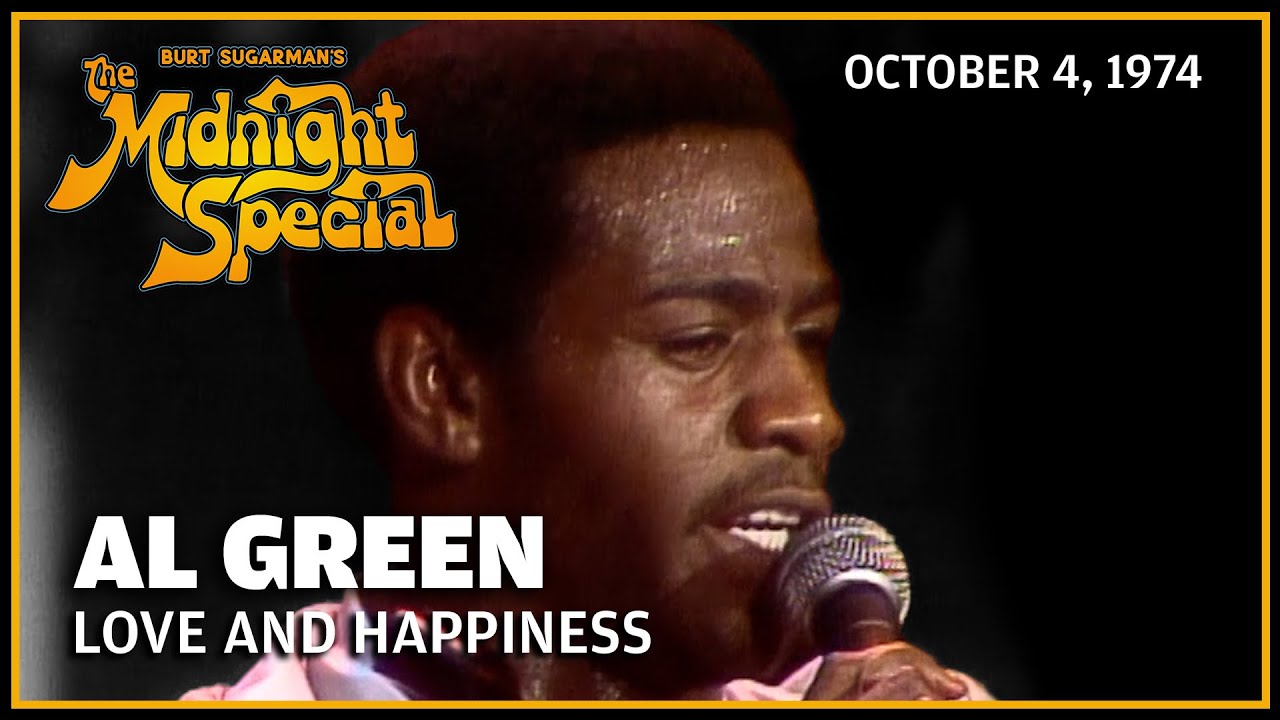
Cohn said that even after three hours of continuous singing, Green’s voice only got stronger and his band only got better. For Cohn, blending his Jewish heritage with Gospel soul was the first major step towards finding his songwriting voice,
“I sat there crying in the church… Al Green’s service was one of the great experiences of my life.”
Spirituality also informed the second piece of advice from his friend. 30 miles due south-west of Memphis is Robinsonville, Mississippi, which had been a pivotal meeting place for major delta blues musicians such as Son House, Willie Brown, Charley Patton and Robert Johnson.
On the advice of his friend, Cohn sought out gospel singer and pianist Muriel Wilkins at Robinsonville’s legendary Hollywood Cafe. Cohn performed Amazing Grace at the venue with Wilkins, which inspired him to write the iconic line: “Tell me are you a Christian, child?/And I said ‘Ma’am, I am tonight.’”
“Even in the moment I wrote it down, I knew I was getting closer to finding my songwriting voice,” Cohn told Keyboard magazine. “To this day, people still ask me if I am a Christian. While I have to admit that I enjoy the confusion the lyric brings, the thing that makes that line work is the fact that I’m a Jew… I’m proud of the fact that I could come right out and practically announce my religion on the first song I ever released.”
The performance that night had a profound impact on Cohn.
“After we finished [Amazing Grace] and people were applauding, Muriel leaned over and whispered in my ear: ‘Child, you can let go now.’ It was an incredibly maternal thing for her to say to me. Just like sitting in Reverend Al Green’s church, I was again transformed. It was almost as if my [late] mother was whispering in my ear.”
On one level, Walking In Memphis is a whirling, life-affirming travelogue, referencing evocative highlights along the way. But ultimately it is a spiritual and personal song about how music can heal and change us.
When he left Memphis, Cohn knew he had hit a rich vein of inspiration. “From the time I left Memphis and went back home to New York City,” he told Keyboard magazine, “I knew I had a song in me about my experience there.”
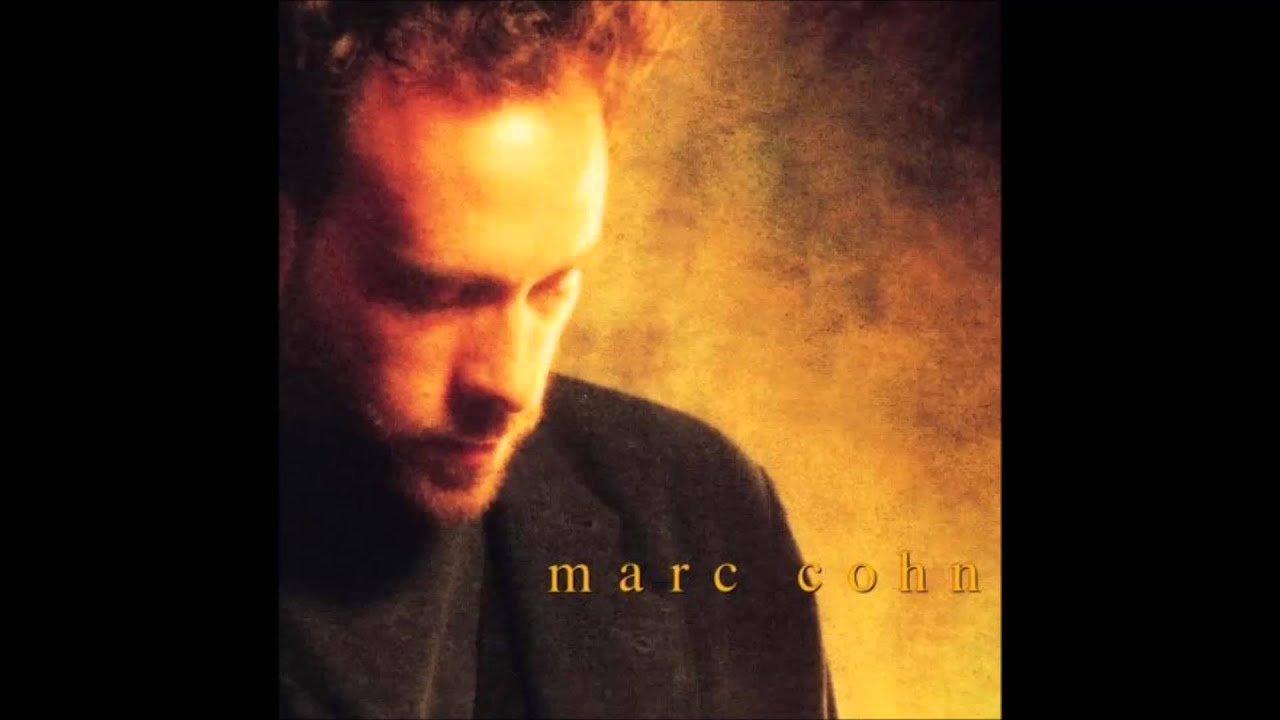
Back in New York, Cohn began constructing the melody and arrangement for the song on his guitar.
“The music for Walking In Memphis, except for the bridge, is really just the same thing over and over again,” Cohn told Keyboard magazine. “It’s an attempt to keep things simple so that the narrative is what the listener focuses on.
“The story keeps changing; it goes from one scenario to another, all following the thread of my elation. What’s being expressed is my love of music and the spiritual transformation I’ve always felt through it.”
Despite his progress Cohn felt the song wasn’t working on guitar so he switched to piano. Things immediately started to flow from that point – as he told Songwriting magazine in 2022.
“Me and the piano, that’s all I cared about. I knew that I had turned a corner as a songwriter when I wrote that song because it worked so well without any adornment. It begins with me alone. Slowly it builds, the rhythm comes and goes, and towards the end of the song there’s no band again.”
But for all his progress, achieving the perfect take in the studio took some time, as John Leventhal – guitarist, arranger and multi-instrumentalist on the song – recalled in an interview with Mason Marangella of Vertex Effects. Leventhal said that Cohn had already tried to record a definitive version of Walking In Memphis, to no avail, despite using two of the best drummers in the business, Steve Gadd and Manu Katché.
Cohn reportedly approached Leventhal after being impressed by some drum programming that Leventhal had done.
“He said, ’Can you come up, I’m gonna try some of your drum programming with these tunes.’ I said, ‘Yeah, but you know, man, I really play guitar and bass. That’s, like, really what my thing is.’ And he said, ‘Well, okay, bring the guitar and bass.’ So I took over, basically – and that's how that happened.
Leventhal brought in his friend, drummer Denny McDermott.
“I said [to Cohn], ‘Look, the drums just need to be really simple. We just need to get out of your way.’ And we cut it with Denny, and we got it.”
Leventhal said his own biggest contribution to the song was probably suggesting a quarter-note cross stick. “And my bass part,” he continued, “because I put a slight syncopation into the bass part, and also there’s a [minor sixth] in the chorus that Marc, to this day, doesn't play!”
The song’s co-producer Ben Wisch played a major role in helping Cohn shape demos and get attention from labels. Their persistence paid off. By the close of 1989, Cohn had signed a deal with Atlantic Records.
Leventhal says he knew from the outset that Walking In Memphis was a winner.
“You know, it was the only time in my entire recording history where I knew the song was a hit,” Leventhal told Mason Marangella of Vertex Effects. “My basic feeling was like there was a kind of unspoken energy in the air, even from Atlantic [Records], that it was a hit. Like, ‘Don't, don't screw this up!’”
Cohn had no such feeling.
“What I knew was that it was a better song than I’d written up to that point,” he told Leventhal and Marangella. “I sort of turned a corner as a songwriter. But in terms of thinking it was a hit, no, I had no idea.”

Walking In Memphis was released as a single in March 1991. The song reached No 13 in the Billboard Hot 100 and achieved its highest position in Canada, where it peaked at No 3.
Cohn’s rich, gritty vocals and warm, flowing piano combined to create a wonderfully evocative song, an emotive ode to the city that is the crucible of rock ‘n’ roll and one of the birthplaces of Southern soul.
Reviews of Walking In Memphis were largely positive, with most critics recognising the sincerity behind Cohn’s song. Writing in NME, Bobby Surf quipped that the song is “the Tennessee Tourist Board's wettest dream come true”, before going on to acknowledge that Cohn had “a fine, grown up voice and a manner at the piano that mercifully skirts the morbid pomposity composing at that instrument so often engenders.”
Four years later, in October 1995, Cher released a rousing version of the track, which reached No 11 in the UK charts. Jim Farber from Entertainment Weekly concluded that Cher’s version “must be heard to be believed”.
![Cher - Walking In Memphis [Director's Cut] (Official HD Video) - YouTube](https://img.youtube.com/vi/gOJTKpzqk6M/maxresdefault.jpg)
Then in 2003, country band Lonestar released a version which reached No 8 in the US Billboard Hot Country Songs chart.
Sadly, Muriel Wilkins died in 1990 and never got to hear Marc Cohn’s recorded version of Walking In Memphis, which included the line: “Now, Muriel plays piano/Every Friday at the Hollywood.”
But in 1986, one year after writing the song, Marc Cohn did return to the Hollywood Cafe in Robinsonville, Mississippi – to play a set of the songs that would make up his self-titled debut album.
In an interview with Geoff Gehman of Allentown, Pennsylvania newspaper The Morning Call in 2007, Cohn revealed Muriel Wilkins’ reaction to his set.
“You know the one where you mention me at the end?” Wilkins said to Cohn after he had finished his performance. “That's the best one you got!”
