


Sadler Vaden is one of these players who can play anything. Anyone who has watched him perform live with Jason Isbell and the 400 Unit knows the score; just hand him the electric guitar and turn him loose. Something good is going to come out – especially when he’s got a slide on his ring finger.
Vaden has a lot in his trick bag but his slide work is really unimpeachable, especially when you consider he – and Isbell for that matter – are playing slide in standard tunings.
There is a lot we can tell from watching him. He prefers a glass slide. He sometimes uses a guitar pick, sometimes not.
But speaking to MusicRadar, Vaden says the approach to slide is as much mental as it is technique, and as far as gear goes, because he isn’t swapping his guitar each track (he could do most of his set on his Gibson SG Standard) he isn’t setting his action high as some other slide players.
“Being that I play slide in standard tuning, the action has to work for both, so I tend to lean on lower action,” he says. “I need chords to ring out, and things like that. It’s a balance. I would say I set my action probably lower than you would think for slide guitar – but I’m putting things on the floor, pedal-wise, in front, so I can have that light touch.”
Here’s where a little oomph from the pedalboard can make a difference, and Vaden isn’t the first – nor the last – slide player to find a little help from a compressor pedal can really make a slide part sing.
“For certain things I will have a compressor on, like Lowell George, to grab it, maybe a [Analog Man] King Of Tone boost, like the clean boost side, or like a good drive pedal that has mid-range cut, and things like that,” he says.
But, he stresses, playing slide is not a question of gear; it is all about your attitude. How you think about it is everything.
“With slide, you know, it’s almost like you want to be in this fluid free thinker, free wheeling, almost reckless mindset [laughs]. I don’t want to work too hard,” he says. “I want to be able to have that light touch and play dynamically.”

Vaden could make it easier on himself and set the action on his guitar higher. But as long as his touch is light, he can keep it glissando. The key is not to let the slide fret bump against the frets, or to slide it too far out of pitch. The best slide players have that ear for intonation. Vaden likes to picture his fingerboard as being unusable, ruined even, that he has to do anything to keep his fingers, the strings and the slide from touching it.

“Sometimes I try to pretend that someone threw mud on the fretboard of my guitar, and I’m trying to play with all this mud [laughs], or thick syrup or something,” he says “It’s kind of a funny thing to imagine – but it changes change the way you play!”
Thereafter it is up to you how you choose to phrase the notes. Microtonal guitar is getting a lot of attention now thanks to the Québécois instrumental oddballs Angine de Poitrine. But all that microtonality there to explore with slide as well.
Some players use slide as a surrogate for the human voice. Others use it to phrase pedal or lap steel licks. However you use it it can be a great way of playing a melody, or of introducing tension and suspense into a solo.
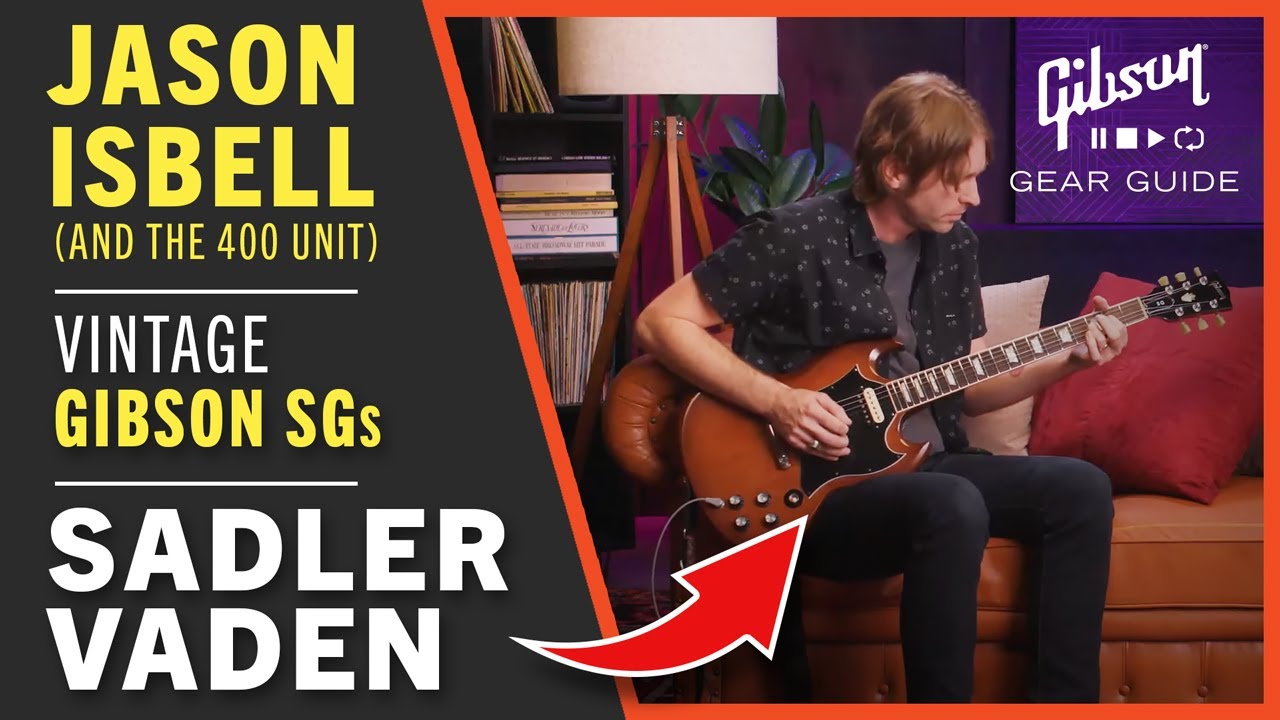
“Definitely, by default, it has that human voice thing because it’s so expressive, or it can be,” says Vaden. “Because there are all those little microtones and things happening when you’re sliding into a note. I almost like to think of about it like a trapeze artist or something, where they’re coming off the – I don’t know all the terms for trapeze! [Laughs]
“But when they let go and they do a flip, then you’re looking at them, like, ‘Are they gonna make it?’ And then they make it! I really like to take these big, long, sort of over-annunciated, over-pronounced slides. Is it gonna resolve that note? And then it does! I love that kind of stuff.”
But then he would, because Vaden, invariably, resolves the note. For the rest of us, well, maybe trapeze would be less daunting. There are so many pitfalls. It's just like Ry Cooder told MusicRadar in 2023, too many people push too hard, too soon.
"They turn up too loud and it sounds to me, a lot of times, like the emergency entrance to a veterinary hospital," said Cooder. And nobody wants to hear that
