Sponsored by

Classic keyboard sounds explained with the Roland V-Stage: Everything you ever wanted to know about organs, EPs and synth sounds
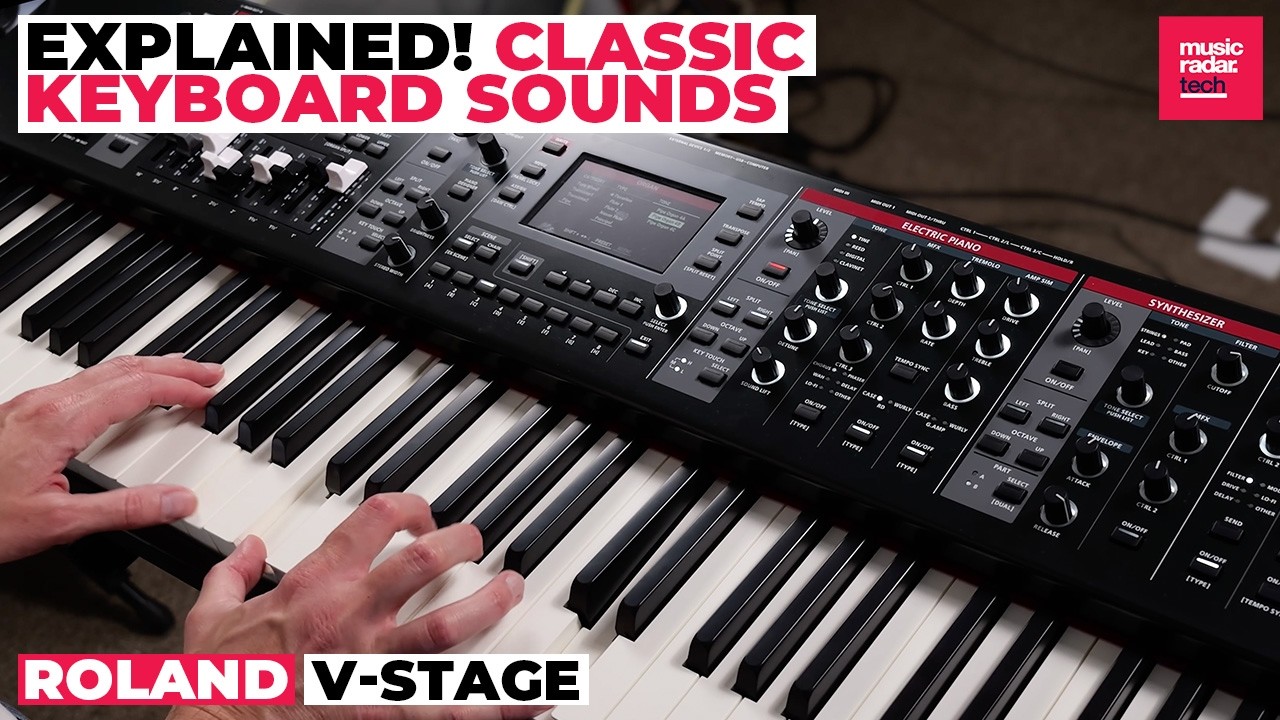
Most keys players know the difference between pianos, organs and synths, but even within these categories there can be a multitude of variations in style and sound.
We’ve teamed up with Roland to take a deep dive in the differences you need to know between different keyboard sounds, and explore how we can shape and control each.
In the video above, we put each of these sounds in context and you can hear more in our playlist of the music mentioned.
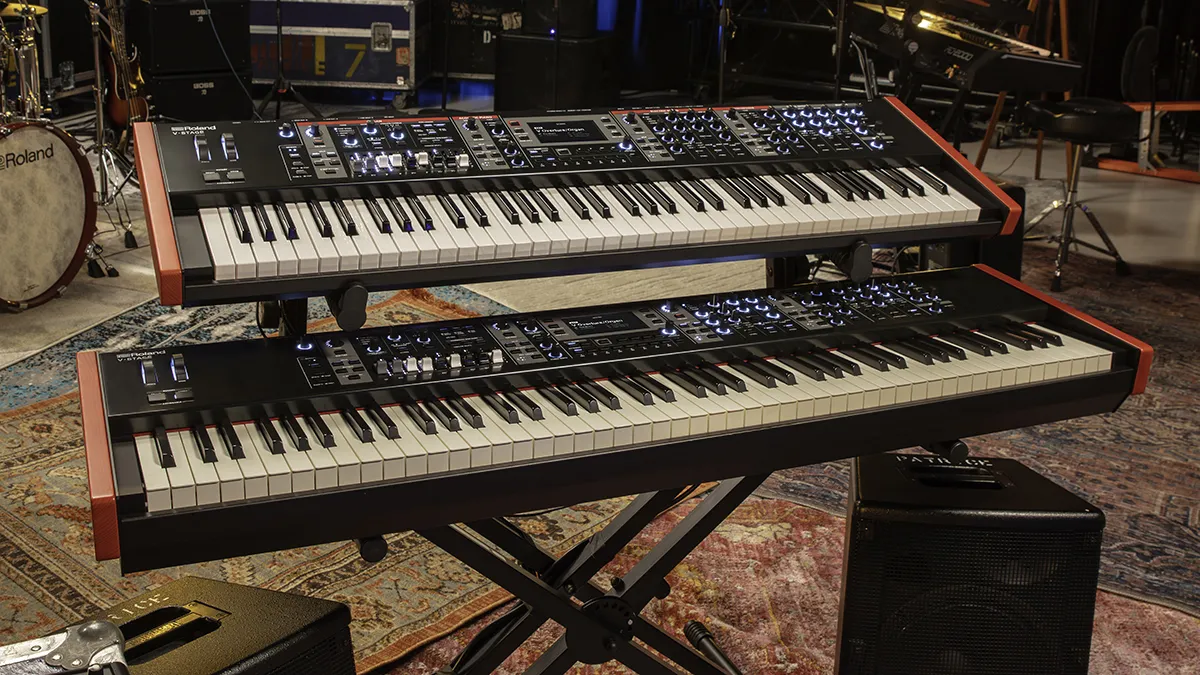
Roland’s V-Stage is designed as an all-in-one keyboard for use on-stage, in the studio or at home. We’re using the 88-note model with a hammer action keyboard, but Roland also has a 76-note semi-weighted version. Its multiple engines pack in a host of different sounds, including pianos, organs and synth sounds.
Acoustic pianos: Uprights, grands and felts
You probably know what a piano is and what one sounds like, but even within the realm of such a recognisable instrument, there are a few important variations.
Acoustic pianos come in two main forms – grands and uprights. Realistically, the difference in sound between these isn’t hugely drastic. The difference is more about dynamic range and the playing action than the tone itself.
Grand pianos are bigger and more expressive. They are also more responsive and can be played faster, because the hammer that hits the strings relies purely on gravity.
Upright pianos are smaller and cheaper, which makes them far more accessible, but the upright position of the strings means that the action is slower and a little less expressive. Broadly speaking, uprights give a more intimate sound suited to pop or jazz.

One more variation worth knowing about is the felt piano. These have a strip of felt placed between the hammer and the strings to give a softer, muted sound. Felt pianos are popular with contemporary artists like Nils Frahm and Olafur Arnalds.
The piano sounds on Roland’s V-Stage are created using Roland’s V-Piano tech, which is fully modelled, rather than relying on samples, meaning it’s more customisable and doesn’t have limits on polyphony.
Electric pianos: Tines, reeds and clavs
Unlike acoustic pianos that produce sound purely through the resonance of their strings and body, electric pianos – of EPs – use different methods of electronic sound creation and amplification.
Tine EPs use physical tines – small tone bars, like those on a tuning fork – that resonate when struck, and use magnetic pickups to amplify the sound. It’s a little like a cross between a traditional piano and electric guitar.
Reed pianos, meanwhile, use a similar manner to tine EPs, but use metal reeds instead, which are flat strips of metal that produce a slightly punchier tone than tines. Wurlitzers are the best-known example of Reed EPs.

Finally, the Clavinet is modelled on the Clavichord, which was a renaissance-era instrument. Although based on a classical instrument, the modern Clav is a favourite of funk and soul musicians, often run through amps and guitar pedals.
Alongside these classic EP designs, there are more modern digital pianos that offer a more realistic emulation of the piano sound. You can hear digital EPs throughout ‘80s and ‘90s pop music.
The electric piano section on the V Stage has models of each of these EP types. The amp sim replicates the sound and feel of playing through a vintage amplifier. The Case setting is modelled on sounds we’d associate with a Fender Rhodes, while Wurli emulates the amp and tremolo of a ‘60s Wurlitzer setup.
Organs: Tonewheel, transistors and pipes
Organs come in a variety of shapes and sizes, but each produces a sound distinct from a typical piano or EP. The main types of organ you need to know are Tonewheel, Transistor and Pipe. These names come from the different methods traditional organs have used to produce sound.
Pipe organs are the oldest form of organ design and use air blown through different sized pipes to produce sound. These are the kind of organ you will often find in churches, and are associated with traditional religious music.
Tonewheel organs like the classic Hammond B3 make use of rotating wheels and electro-magnetic pickups in order to produce sound. They’re known for their percussive sound and tend to use drawbars in order to shape the tonality. Hammond organs were beloved by jazz players and prog rock bands.

Transistor organs are fully electronic designs, and generally produce a brighter tone. Classic transistor organs include the Vox Continental and Farfisa.
The organ section in the V-Stage can recreate each of these varieties, and uses Roland’s Virtual Tonewheel tech, which replicates distinctive characteristics of those electro-mechanical instruments.
The controls in the organ section can change the character of the sound and replicate specific features of tonewheel, transistor or pipe organs. The faders act as drawbars, replicating those found on classic tonewheel organs like the Hammonds. As we pull any one of these down, it introduces that frequency, making the sound brighter, whereas pushing the fader up reduces its volume.
The Rotary section emulates the effect of a vintage rotary speaker, or Leslie speaker, which is a vintage speaker design often associated with Hammond organs, known for its distinctive fluctuations in pitch and volume.
Synthesizers: Polys, monosynths and more
Synthesizers are the broadest category of keyboard sounds. Synthesizers generate and shape sounds electronically, but the way this is done can vary wildly.
This spans a broad spectrum of sounds from classic analogue synths like the Moog Model D, through digital synths such as the Yamaha DX7, to drum synths, modular synths and modern plugins like Xfer Serum or Arturia Pigments.
Roland is responsible for releasing some of the most iconic synths of all time, including the TB-303, which was responsible for creating acid house music, and the Juno and Jupiter lines, which are beloved by musicians throughout pop and dance music.
Different styles of synthesis include subtractive, FM, wavetable, granular and PCM, each of which has its own characteristics.
At a really basic level, the most important difference to be aware of is that of monosynths – which play only one note at a time, and a great for bass and leads – and polysynths, which can play chords.
The V-Stage’s synth section is based on Roland’s powerful Zen-Core engine, which uses a combination of PCM samples and analogue modelling to replicate a wide variety of sounds.

The menu lets users browse through more than 400 sounds across a variety of synth styles, from lead parts and a selection of basses, to pad, synth keys and more.
The synth section is dual layer, meaning we can load and edit two sounds together. In dual mode – accessed by holding shift – we can use the controls to edit these as one.
A particularly cool thing about the synth engine is that, because it’s based on the Zen Core system, we can expand it with models of classic synths using Roland Cloud. The V-Stage comes with free downloads of several models including Roland classics like the Jupiter-8, SH-101 and Juno-106.