
Hysteria is one of Def Leppard’s signature songs – the title track from their bestselling 1987 album, and a top 10 hit in the US.
But in the recording of the song, neither of the band’s two guitarists, Phil Collen and Steve Clark, could nail the jangly main riff. Instead, it was bassist Rick Savage who played it.
In a new interview with MusicRadar, Savage explains why he became Def Leppard’s go-to guy for jangle.
He admits, right off the bat: “Phil and Steve were far superior guitar players to me. I could never play lead guitar to save my life. I’m pretty rubbish at it!”
He explains, however, that both he and the band’s singer Joe Elliott have a looser style of playing that is, on occasion, better suited to certain songs.
“One thing that me and Joe actually are quite good at is being able to play with a certain feel that doesn’t go out of time,” Savage says. “And in fairness, it’s not that I get lumbered with all the jangle stuff – it’s just that 80% of the jangle stuff in Def Leppard comes from me anyway.”
Recalling the Hysteria album recording sessions, he says it was producer Mutt Lange who chose Savage over Collen and Clark for the title track’s riff.
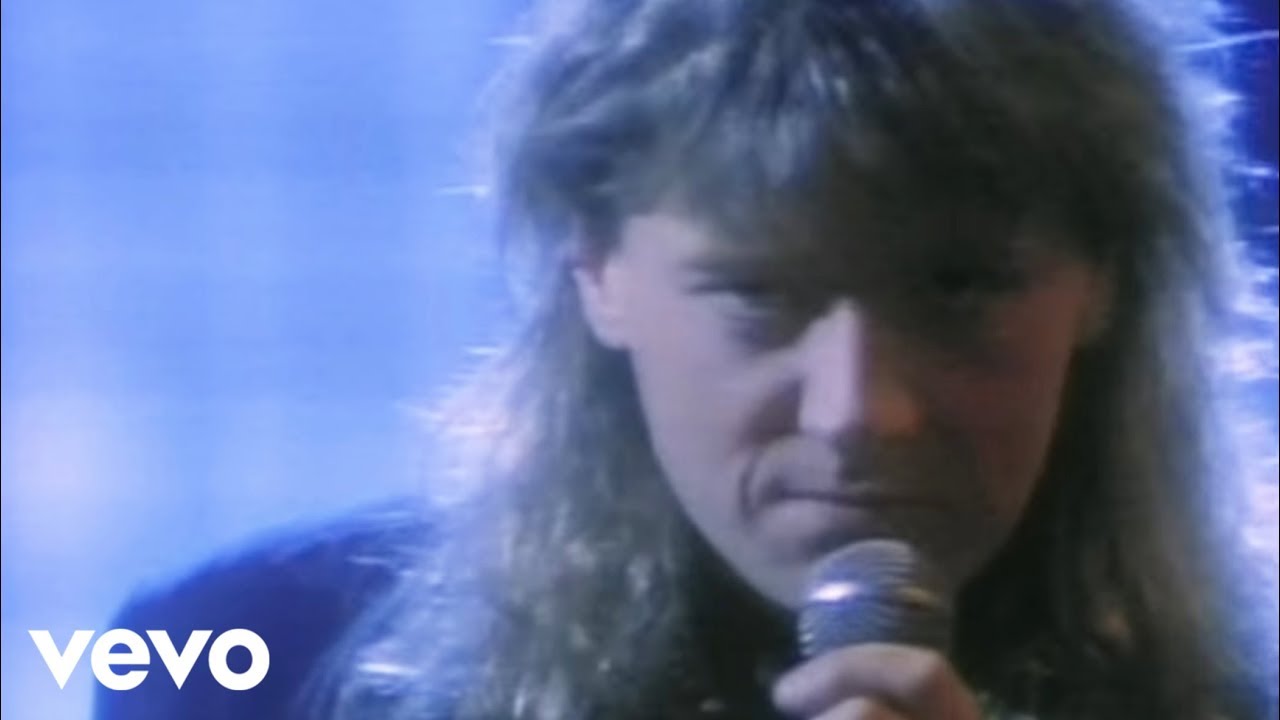
“The other lads had a go at it,” he shrugs, “but Mutt said, ‘Look, it just sounds more natural when you play it.’ Which makes sense because it was me that actually came up with the idea, so you’re already a little bit in front of the ‘real’ guitar players.
“So really, that’s all it is. It’s not necessarily better, it’s just the guy that comes up with the idea, if he’s half decent at playing guitar, normally has a head start – even if he’s sat next to Eddie Van Halen! You’ve just got it in your head: ‘This is how it should sound.’”
He adds: “I love doing it, you know? It’s as simple as that. And I’d rather me do it and go, ‘That needs to be better.’ It’s easier for me to do that than for Phil do it and then have me trying to say to Phil, ‘That needs to be better.’”
As for the gear utilised for this famous riff, Savage recalls: “It was a black maple-necked Telecaster, and I’m pretty sure it was Phil’s. It just had that sound to it, and it was used quite a lot on the Hysteria album, just to add that sort of thin, bright sound, if we ever needed it.
“So it was that guitar through… not the [Tom Scholz] Rockman but the [JHS] Rock-Box. It looked like a cigarette packet, black with a gold emblem on it.
“The Rockman was huge in those days, but alongside it there was this thing called the Rock-Box, and it was fucking great. The reason we used the Rock-Box is because it had two buttons to have reverb in it, and the chorus, so you could actually have both on or both off, whereas with the Rockman, it was a slider, and you had no choice – if you did one, you had to have the other.
“I’m sure Phil will still have that Telecaster somewhere because he’s got hundreds of guitars and he never gets rid of them. It was that Tele through the Rock-Box, and then through the effects – and only Mutt Lange and [engineer] Nigel Green ever knew what effects they were!”
Savage says that this flexible approach to recording applied to various songs from the album, including the monster hit Pour Some Sugar On Me and the funk-rock banger Excitable.
“The riff for Sugar is not a complicated riff,” Savage says, “but it’s the way Phil played it. Only Phil could make it sound like that. I could try playing it, and it would sound like an amateur guitar player – playing the same notes, and kind of in time, but it just wouldn’t sound the same.
“Another great example is the way Phil plays the intro of Women. That lead lick at the very beginning, it’s so Phil. Millions of guitar players could do it, and it would sound slightly different, even though it’s the same notes and stuff.”
Excitable, meanwhile, was another case of Rick Savage multi-tasking.
“The rhythm guitar on Excitable was an idea of mine,” he says. “I played it because I was the closest to how we felt the final thing should be.”

He says that this track is symbolic of how the band aimed high with this groundbreaking album.
“Excitable was a little off the wall,” he says, “with the Fairlight effects on it, and that sort of funk feel to it, whereas everything else on the album is absolutely rock ’n’ roll.
“But that’s what we wanted, you know? We were trying to push the boundaries a little bit with every song.”
