
Looking back across the decades it’s not difficult to find examples of songs and albums that have been heavily criticised by journalists on their release, only to be widely acclaimed years later. Time, it seems, can be a great healer when it comes to critical appraisal.
Such was the case with The Rain Song, a gloriously emotive and sprawling ballad that appeared on Houses Of The Holy, the fifth album from Led Zeppelin, which was released in March 1973.
In a review at the time, writer Gordon Fletcher of Rolling Stone concluded that The Rain Song and another track on the album called No Quarter were “nothing more than drawn-out vehicles for the further display of [bassist John Paul] Jones’ unknowledgeable use of Mellotron and synthesiser”.
30 years later, in the same publication, writer Gavin Edwards wrote a retrospective review praising The Rain Song, concluding that Led Zeppelin had created “seven minutes of exquisite heartache”.
This latter view is how The Rain Song is now largely perceived, a track whose rich, graceful textures and gentleness brought fresh diversity to the heavy rock canon of Led Zeppelin.
The Rain Song is quite unlike anything else the band created. And it is one of Led Zeppelin’s finest recorded moments.

By 1973, Zeppelin were arguably the biggest live rock band in the world. Their first four albums had been massive sellers, and on the live circuit only The Rolling Stones could really compete with their live drawing power.
Zeppelin’s 1972 North American tour broke attendance and box-office records and they regularly sold out arenas and large stadiums.
By the time they recorded the fifth album Houses Of The Holy, Led Zeppelin had little left to prove as a hard rock band. They had entered what Tom Ewing of Pitchfork described as their “imperial phase”.
Houses Of The Holy drew on the most powerful elements of Led Zeppelin IV and accentuated them. The result was a much lighter and looser album, with a cleaner, more expansive rock sound.
The Rain Song epitomises the eclectic flavour of Houses Of The Holy. But the song as we know it might have never existed had it not been for a lighthearted, offhand comment from a former Beatle, George Harrison.
In the 2012 book Light And Shade: Conversations With Jimmy Page, by Brad Tolinski, Page explained how a chance conversation between George Harrison and Zeppelin drummer John Bonham inspired Page to write The Rain Song.
“George was talking to Bonzo one evening and said, ‘The problem with you guys is that you never do ballads’,” recalled Page.
When Bonham told Page what Harrison had said, Page was galvanised into action.
“I said, ‘I’ll give him a ballad’,” Page said, “and I wrote The Rain Song.”
What’s more, he began The Rain Song with a subtle reference to Harrison’s own famous ballad Something, from The Beatles’ Abbey Road.
![The Beatles - The Beatles - Something (Official Music Video) [Remastered 2015] - YouTube](https://img.youtube.com/vi/UelDrZ1aFeY/maxresdefault.jpg)
“In fact,” Page said, “you’ll notice I even quote Something in the song’s first two chords.”
The Rain Song does make the same opening chordal shift from major to major 7 and follows a similar descending progression.
When it came to selecting the studio to record Houses Of The Holy, Led Zeppelin chose Stargroves, Mick Jagger’s country manor house and estate in the heart of Hampshire. The band used the Rolling Stones Mobile Studio, which had proved so productive when they recorded Led Zeppelin IV at Headley Grange.
Jimmy Page had written the music and the melody for The Rain Song in 1971 and demoed the piece at his home studio in the village of Plumpton, in East Sussex.
In March 2023, on the 50th anniversary of the release of the Houses Of The Holy album, Page released this 1971 demo and explained its conception on his website.
“My original idea for the opening tracks for Houses Of The Holy was that a short overture would be a rousing instrumental introduction with layered electric guitars that would segue into The Seasons, later to be titled The Rain Song. Again there would be a contrasting acoustic guitar instrumental movement with Mellotron that could lead to the first vocal of the album and the first verse of the song.”
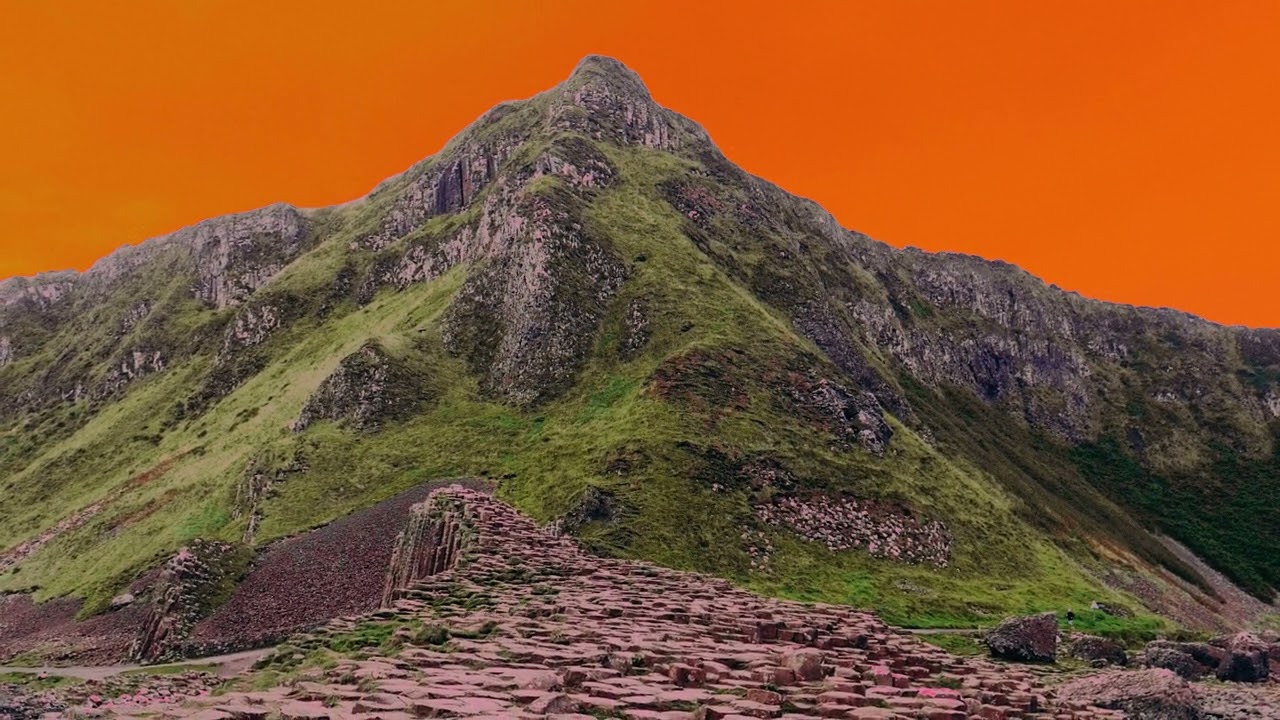
Page used the unorthodox tuning of DGCGCD to create the rich voicings of the acoustic and electric guitars.
He demoed the string orchestration himself using a Mellotron, before handing the arrangement over to John Paul Jones to perfect in the studio.
The initial backing tracks were reportedly recorded at Olympic Studios in London, with further recording then done at Stargroves.
Once the arrangement of Page’s instrumental had been developed, Robert Plant set about writing the lyrics, which paralleled the various stages of a love affair with the changing of the four seasons.
“It is the springtime of my loving,” sings Plant on the first verse. “The second season I am to know/You are the sunlight in my growing/So little warmth I've felt before.”
In a 2005 interview with Rolling Stone, Plant cited The Rain Song as the track on which he felt he delivered his absolute best vocal performance.
“I’d say that on Rain Song, I sounded best,” he said. “I’d reached a point where I knew that to get good, I couldn’t repeat myself. The high falsetto screams had become quite a kind of calling card. Nowadays, I learn new techniques on my trips to Mali and southern Morocco. I know about restraint and power and using my voice to insinuate.”
There is a wonderfully languorous feel to The Rain Song. It is a beautiful, sprawling composition and remains one of Jimmy Page’s most sophisticated arrangements.
There is also a real grit and tenderness in Plant’s vocal performance. As writer Kristofer Lenz of Consequence Of Sound wrote in 2014: “The Rain Song is one of the most sentimental tracks in Led Zeppelin’s catalogue, but it is also patient and beautifully arranged… Plant’s lyrics and vocals infuse a sense of humanity, loss, and transcendence — a touch of emotional maturity.”
The Rain Song has a natural fluidity to it and feels unimpeded by any restrictions of structure. Unsurprisingly, there are some beautiful judged guitar phrases from Page, such as the high-end sliding motif 29 seconds in, just before Plant’s opening vocal line on the first verse, and again, 41 seconds in, just before the third vocal line.
The song is notable for Page’s intricate layering of acoustic and electric guitars.
At 1:08, Page introduces a circular pattern on an electric, possibly his Danelectro 3021/DC-59 which was reportedly used on this song and is notable for its bright, chiming and slightly hollow sound.
By the closing line of the first verse – “I watched the fire that grew so low” – Plant’s voice is sounding wonderfully gravelly and ragged – as if he has already stretched his vocal on numerous vocal takes.
At 1:36, John Paul Jones’ beautiful, soaring string arrangement glides in, bringing a warm, grandiose feel to the song, underpinned by delicate finger-picked guitars and flowing piano trills.
Strings, piano, Mellotron, fingerpicked guitar and bass all weave gracefully around each other and space abounds within the arrangement and the mix.
Drummer John Bonham’s performance on the song was an absolute masterclass in restraint. Bonham doesn’t even play in the first three minutes of the song and he initially uses brushes, creating a softer more jazz-influenced tone.
The first skittering of Bonham’s nimble brushwork can be heard at 3:37 and by the four-minute mark Plant is back in with the second verse.
As the song progresses, there are tinges of jazz, before Bonham’s drums really kick in.
And so it goes on, with sonic ebbs and flows across its epic running time. The song drops down to a gentle, intimate feel as it nears its close, with some inspired chord work from Page, resolving with a plaintive and powerful climax.
Bonham drops out along with the piano, bass, and Mellotron for this closing section of the song, as Page’s guitars sparkle and chime.
Speaking to Classic Rock in 2014, Page said of The Rain Song: “As a guitar piece it was really good, but it came to life with Bonzo playing really sensitively on the brushes.”
One of the great strengths of The Rain Song is that everything feels organic and perfectly placed, yet with no sense of pre-thought or contrivance.
The Rain Song appeared as the second track on Houses Of The Holy, when the album was released in March 1973. From 1972 through to 1975, Led Zeppelin played The Rain Song in their live set, positioning it, as on the album, immediately after The Song Remains The Same.
They ordered the setlist this way so that Jimmy Page could use his iconic twin-necked Gibson EDS-1275 on both songs: using the top 12-string neck for The Song Remains the Same and then switching to the bottom 6-string neck for The Rain Song.
“On live shows, it became a work-out feature for the double neck,” said Page in Light And Shade: Conversations With Jimmy Page.
The Rain Song was dropped from the band’s 1977 US tour but reinstated for their two warm-up concerts in Copenhagen in 1979, before the Knebworth Festival of the same year. The song also featured on their 1980 European tour.
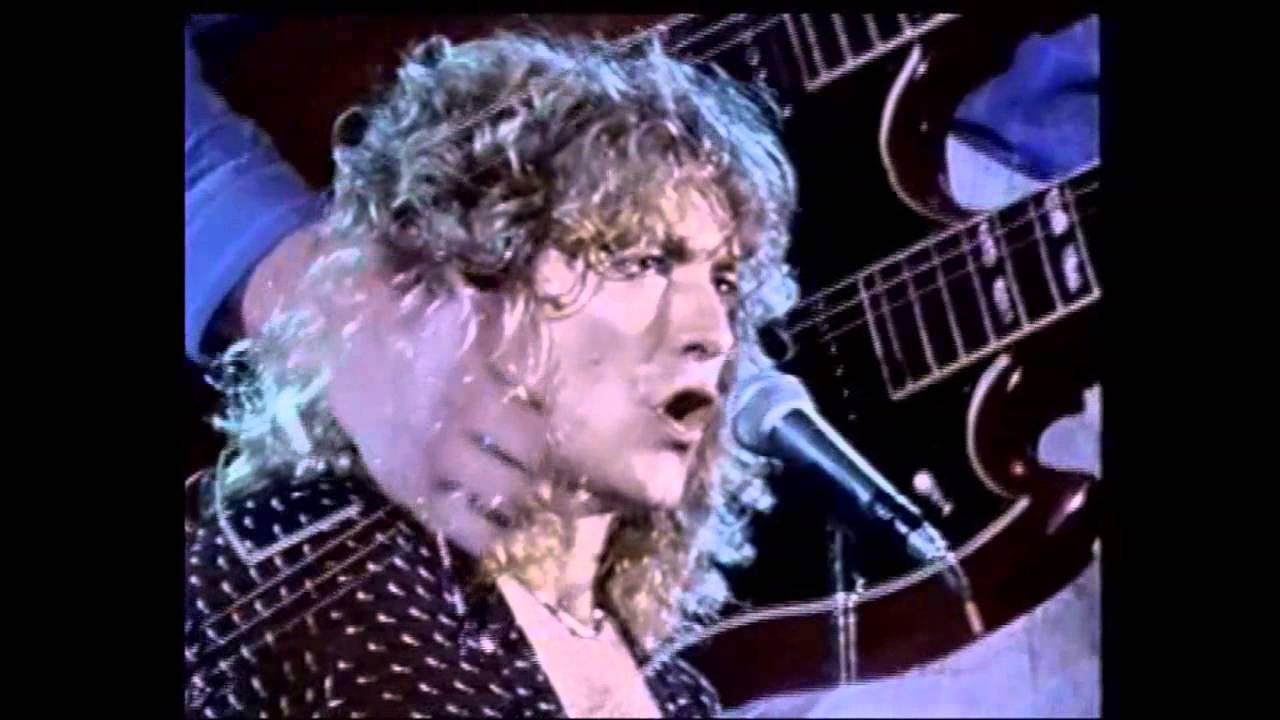
Over five decades on from its release, The Rain Song remains one of Led Zeppelin’s most beloved songs among fans and critics. Admittedly, it does not rank quite as highly as giants such as Stairway To Heaven, Kashmir and When The Levee Breaks. But it is a song that is widely admired for its beauty, sophistication and emotional impact.
In a retrospective review in AllMusic, Stephen Thomas Erlewine concluded that The Rain Song “is one of Zep’s finest moments, featuring a soaring string arrangement and a gentle, aching melody”.
Producer Rick Rubin was equally effusive, as reported in American Songwriter magazine in 2024.
“I don't even know what kind of music this is,” said Rubin of The Rain Song. “It defies classification. There’s such tasteful, beautiful detail in the guitar, and a triumphant feel when the drums come in – it’s sad and moody and strong, all at the same time. I could listen to this song all day. That would be a good day.”
