


There is plenty that is remarkable about New Order’s Blue Monday. It’s the biggest-selling 12-inch single in history. Its notorious Peter Saville-designed floppy disc-shaped sleeve. Its length: at over seven minutes long it was habitually cut down when it was played on daytime radio.
Its chart run was extraordinary too. Released in March 1983, it originally peaked at Number 12 in the UK charts the following month. Hanging around the lower ends of the chart all summer, it then started rising once again, reaching Number 9 in mid-October.
At a time when most chart hits were in and out in a month or so, Blue Monday spent 38 weeks in the Top 75. And that’s before you take into account all the many remixes and re-entries there have been over the years.
The band too often seem at a loss to account for its extraordinary popularity. “It’s just one of those things,” Bernard Sumner said in a 2021 interview about the song. “We just wrote it and it sounded good and people liked it and bought it without any promotion or radio airplay.” But even that’s more complimentary to how they’ve sometimes viewed it – in one 1988 interview, they were heard to comment that “it’s our Birdie Song”.
Infamously, the original idea for the song was for it to play itself. At the time, New Order were a strict ‘no encores’ band. Writing in his 2020 memoir Fast Forward, Stephen Morris confirms that this was their original intention: “Just imagine, if we connected them all together. Walk on. Press a button. Leave the gear to play a song all on its own. While we piss off back to the booze in the dressing room and chortle to ourselves. An invisible band. It’d be a laugh, and we liked nothing better than a good laugh. We’d be doing an encore and not doing one at the same time.”
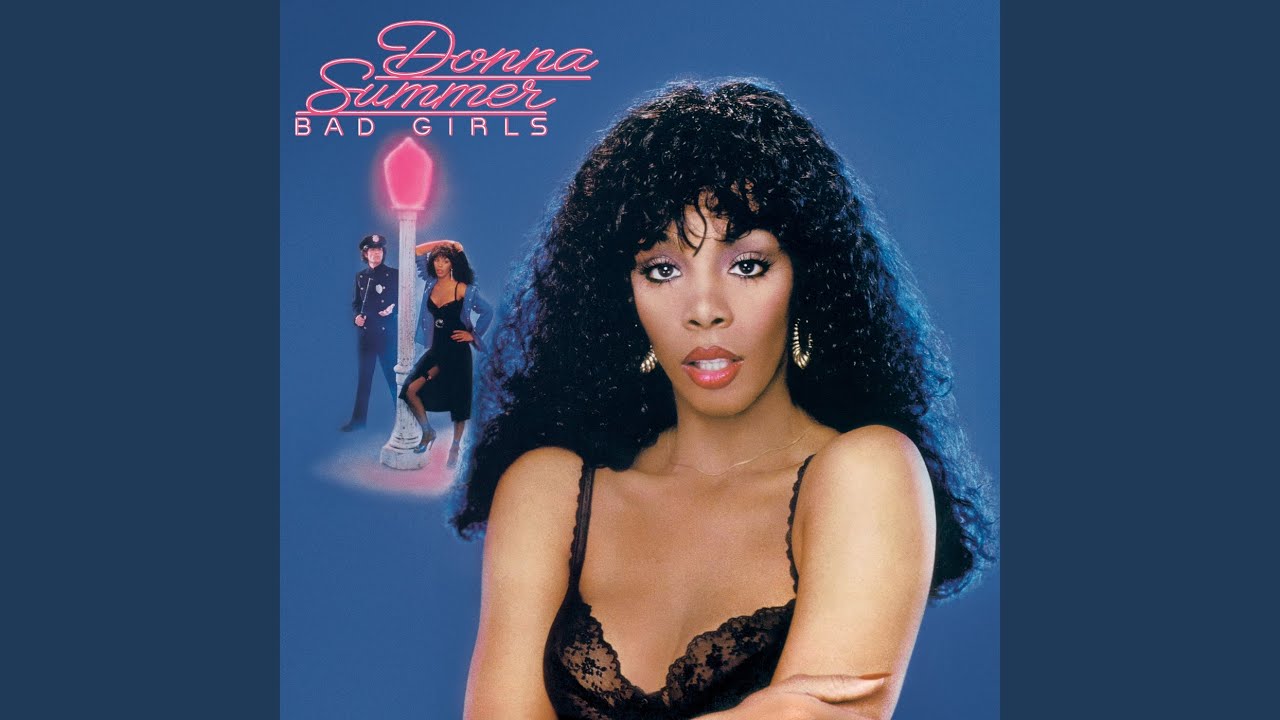
The construction of the track was a combination of deliberate ploys and happy accidents. The band were still fairly new to working with synths and drum machines – their 1981 single Everything’s Gone Green was the first to feature them prominently. Using an Oberheim DMX drum machine, they decided base the intro – the familiar juddering drum pattern – on a similar one used by Giorgio Moroder on Our Love, a track on Donna Summer’s 1979 album, Bad Girls.
But the main synth melody is missing a note, which as Gillian Gilbert explained to the Guardian in 2013 is a mistake. “The synthesiser melody is slightly out of sync with the rhythm,” she said. “It was my job to programme the entire song from beginning to end, which had to be done manually, by inputting every note.
"I had the sequence all written down on loads of A4 paper Sellotaped together the length of the recording studio, like a huge knitting pattern. But I accidentally left a note out, which skewed the melody.”
Another error was the robotic voice – which of course was the initial idea. Michael Johnson, the engineer who worked on the track explained in a Music Week interview in 2023. “Steve (Morris) was working on a speech synthesiser on an Apple II computer to try and get it to stutter, ‘How does it f-f-f-feel?’ We didn't have MIDI Timecode in those days, so we only had 22 tracks to work with - two of the tracks were being used for sync pulses. So we had to put lots of different things on the same track.
"I inadvertently wiped the speech synthesiser while we were recording something else. He wasn't very happy about it but couldn’t be arsed to start again. I don’t know if he’s ever forgiven me.”
Another new gadget was the E-Mu Emulator 1. This was one of the earliest samplers and could sample up to four seconds of sound – state of the art tech in 1983. Needless to say, the lads in the group put it to good use: “Within a few minutes, we’d sampled our first fart,” wrote Morris in Fast Forward. “Gillian was not too impressed.” Nevertheless, it was the Emulator that was used for the thunder sample and the Gregorian choir that’s lifted from Uranium, a track on Kraftwerk’s 1975 album Radioactivity.
Another more deliberate element was Peter Hook’s bass. According to Michael Johnson, it was he who suggested that Hook add one of New Order’s signature sounds to the mix. “Hooky’s book credits me - I don't remember this - with suggesting that he play bass on it. Originally, they weren’t meant to be playing on it themselves.
"It was an idea for a piece to play as an encore at gigs - press a button, the music would start and then they could go to the bar or get in the car and clear off. But when I suggested putting the bass on, that changed it completely. So it became a group song.” Hook’s bassline was apparently influenced by a similar line on Ennio Morricone’s soundtrack to A Few Dollars More, which he’d seen on TV recently.
With its vague, inscrutable lyrics, fans have long conjectured about what Blue Monday actually means, whether the reference to ‘I see a ship in a harbour’ was a nod to the then-recent Falklands War.
According to Gillian Gilbert in 2013: “He (Sumner) says the lyric came about because he was fed up with journalists asking him how he felt. The lines about the beach and the harbour were the start of his many nautical references – he loves sailing.”
And the title? Well, Blue Monday was originally the name of a Fats Domino song from 1956, but both Gilbert and Morris have claimed that it comes from the Kurt Vonnegut book Breakfast Of Champions: “One of its illustrations reads: ‘Goodbye Blue Monday.’” said Gilbert. “It's a reference to the invention of the washing machine, which improved housewives' lives.
The sleeve, inspired by the floppy discs that the band were using to sample sound on the Emulator, supposedly ensured that the band lost 10p on every copy, except that’s not the whole story. The truth is that, yes, the first pressing of Blue Monday, with the costly holes, lost money. But subsequent pressings were hole-less and very lucrative for New Order and Factory.
It’s worth noting that Blue Monday wasn’t one of those tracks that was instantly acclaimed as a classic. Not a bit of it. Though it was received warmly on BBC Radio 1’s Roundtable show, the music press largely turned their noses up.
Writing in Smash Hits, David Hepworth dismissed it thus: “It had to happen. New Order have dumped moody, repetitive guitars in favour of moody, repetitive synths and a drum kit with a pronounced stutter. After the first twenty minutes or so, it starts to cause a tense, nervous headache”. Julie Burchill in the NME was evidently confused by Factory’s habit of not labelling A and B sides and reviewed the flip, The Beach, by mistake, whilst Record Mirror ignored it completely.
And its cause probably wasn’t helped by the chaotic Top Of The Pops performance on March 31. Performing everything live (which was largely unheard of at the time) the band were out of tune, static and visibly nervous.
Stephen Morris plays the wrong sample at one point and Bernard Sumner has to stop himself laughing at how ludicrous it all sounds. If you want to know why the BBC’s flagship music show preferred its performers to mime, have a look at the footage above.
Remarkably, it carried on climbing the charts after that disaster. But then Blue Monday wasn’t meant to be viewed passively on TV or listened to on the radio, it’s a dance track par excellence, meant for the clubs.
Its effect was immediate. The more astute artists on the alternative scene started investigating the possibilities opened up by synths and sequencers – a track like The Walk by The Cure released in the summer of 1983 owes an obvious debt to Blue Monday. Later ahead lay Madchester and the whole indie dance phenomenon. Back in 1983 though it caused the gnashing of teeth at one particular desk in the Smash Hits office.
“Chris (Lowe) wrote this song once called I’m Keeping My Fingers Crossed,” said Neil Tennant in the 1993 South Bank Show special New Order Story. “And the bassline went ‘oom-pah oom-pah oom-pah oom-pah’ and about a week later this fabulously packaged New Order record in its computer software cover came in. I put it on and I nearly burst into tears because this was so much what Chris and I were trying to do. I remember phoning up Chris and saying ‘We might as well give up now.’”
That such a huge record came about via a combination of a few fortunate mistakes and some judicious choices, is comforting. More than 40 years on, in an age of pop conformity, when vocals are Auto-tuned to perfection and a 2 minute plus intro is suicidal to a track’s streaming chances, the rather wonky, beautifully human Blue Monday is still a guaranteed floorfiller.
