
From the DJ booth of Berlin’s Panorama Bar to the whimsical dream-pop of the Charm, Avalon Emerson is embracing the freedom of a borderless musical landscape where the concept of genre has become irrelevant.
“I love all types of music, all kinds have been with me throughout my life,” she says of her various creative identities. “And I want to try and make different sounds. Why don’t more artists approach music like this? It’s very fun.”
Perhaps not many have the musical depth or studio expertise that’s showcased by Written Into Changes, her new album as Avalon Emerson & the Charm. Forming a self-assured piece of Balearic synth-pop, its ten tracks feature production from Nathan ‘Bullion’ Jenkins and former Vampire Weekend songwriter turned leftfield producer Rostam.
Meanwhile, Avalon’s decade-long DJ career is thriving, a creative outlet she continues to pursue alongside her songwriting. When we speak, she is fresh from playing the Skyline Festival in LA alongside Ben UFO, the Blessed Madonna and Richie Hawtin.
“The production was great, the crowd at my stage was really tuned in,” Avalon says of her Skyline set. “Now, I’m in this place where people know who I am as a DJ, but they’re also listening to my other style of music too.”
“People are heterogeneous with how they consume music now; everyone listens to things on the same device whether it’s an album or DJ mix. It means the options are very wide, and that’s very exciting for me.”
Avalon’s debut record as the Charm emerged in 2023, recorded with Jenkins during the breaks in her schedule as a touring DJ. Until this release, she was known for the trance-infused IDM of One More Fluorescent Rush or the Perpetual Emotion Machine project, described as "a conduit for human connection on the dance floor". But Avalon’s recent work with the Charm has found her shifting her creative outlook beyond the club.

“I loved making the first album, and, after the whirlwind of the first tour in 2023, I knew I wanted to pursue this sound, I felt like I had more to do and say,” she says.
“I started very quickly on the second record, just Nathan and I, we got an early demo of Eden done. It was very encouraging to feel like I could continue doing this, I had a lot of energy to keep making this type of music.”
Avalon’s friendship with Jenkins goes back to 2018; she was a fan of his song, Blue Pedro, and his work on the Westerman record Your Hero is Not Dead, alongside his cover compilations on his DEEK Recordings label. When Nathan lived in Lisbon, Avalon had a DJ gig in the city and used the visit as a means to connect.
“I’ve found a kindred spirit in Nathan and how he thinks about music; it feels fun and safe, not too serious or too focused,” she says. “You hear about the pop music world, it can feel impenetrable to make different types of music. But with him, it felt easy. As well as coming from a lot of similar places in terms of taste and process, it was effortless, and I wanted to work with him on the new record too.”
Written Into Changes endeavours to be more ambitious across both songwriting and production. “I wanted it to sound bigger,” Avalon explains. “Some people think writing songs is like drawing from a well or picking apples off a tree and the lower branches are easier. I think it is more like a muscle you work out and develop.”
“I’ve had a DJ career for a decade but not been making this kind of music for very long – there’s lots of excitement in trying something new,” she continues. “I think there’s tons of creative firepower in that headspace where you’re suddenly working with a process that feels so different and exciting.”
Bass was a priority for Avalon with this album, underlining the connection between her songwriting and her experiences in the DJ booth that have given her an innate awareness of the sonic capacity offered by a club sound system.
“I’ve found a kindred spirit in Nathan and how he thinks about music; it feels fun and safe, not too serious or too focused”
“Working with writing basslines, I often do it on a computer, but I’m not a bass player, so there are some examples on both records where the bass has come through software but is hard to actually play,” she says. “But we made it work and the mixing was done by Nathan Boddy. One of the first things that struck me when we did a test mix of Eden was that the low-end felt exactly where it needed to be, it felt powerful.”
A deep interest in vintage hardware was also part of the process surrounding the album’s creation. Creative vocal processing features on various tracks within the record, a texture that came via a Digitech Vocalist VHM5, an “intelligent harmonizer” from the early nineties that was one of the first pieces of gear to give musicians the ability to pitch-shift vocals in real-time in response to MIDI input.
“I’ve played with so many other vocoder plugins and harmonizers but there’s something really nice about something that is old and offers an approximation,” she states. “It has these physical touch buttons to interact with, you can put guitars, vocals or synths through it, it comes up with these interesting melodic things. It’s old, it was like $400 on Reverb and it sounds very cool.”
Elsewhere, the guitars went through Thermionic Culture’s Culture Vulture, a valve distortion unit which is across most of the tracks on the record.
“There’s also a lot of wavetable synthesis that I’m a fan of,” she says. “We also used the Prophet-6; the internal sequencers are interesting and fun. And the Roland SH-2000 is on everything too.”
Much of the record was made in a converted barn in Braintree, rather than a conventional studio. This meant that Avalon was forced to bring in a limited amount of equipment to build the tracks.
“It was a bit echoey, you can’t bring all the gear, so we had to choose what to use and work with a relatively limited palette,” she says. “We obviously brought some gear but working with this chosen selection in a non-studio environment was a big influence on the record’s sound.”
“It forces you to focus on the songwriting, and you’re levelling the playing field too, as it’s different to me coming into Nathan’s studio and using his gear. One thing I like about Nathan is how he has a rotating cast of synths and kit. There’s some power in keeping things changing while simultaneously leaning into the limitations.”

Written Into Changes features plenty of musical highlights for Avalon. God Damn (Finito) started off as a loop she came up with Nathan before the first record was released. It was born out of an experimental phase, then shelved when the debut album was being put together.
“On tour, we didn’t have that many songs so we made a little instrumental passage, then brought that into the studio and created this kind of weird dancefloor experiment,” says Avalon. “I wasn’t sure about that song until the end, but now I love it – it’s such a totally different thing to some of the other tracks on the album, but it still makes sense in the story of the record.”
“A good album to me is something that sounds different from song to song, but there are threads of continuity by virtue of the same voice, lyrical style or other production things that subconsciously come out and tie everything together.”
Rostam was another key figure in the production of the record. Best known for his work with Vampire Weekend, he’s since struck out as a producer and artist in his own right, working with the likes of HAIM, Charli XCX and Frank Ocean.
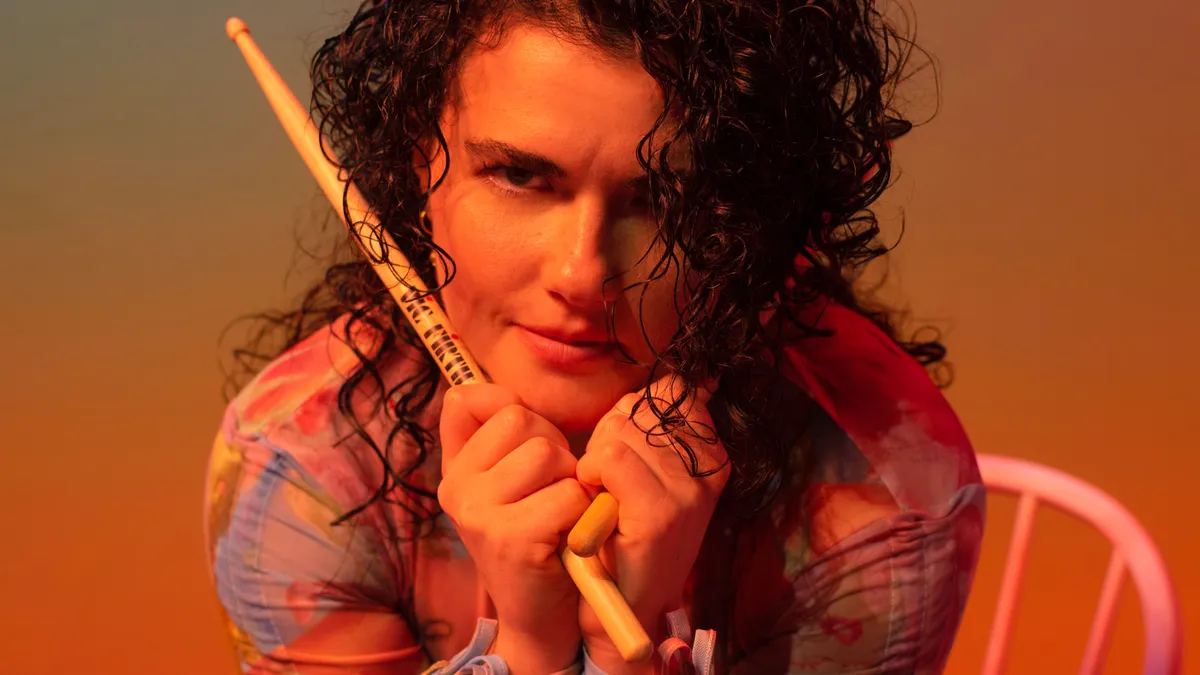
Georgia: “You can do so much with a computer, but I still love the aesthetic of my vintage gear”
“I haven’t known him for very long, but I have been a fan for a long time,” says Avalon. “I think we started following each other on Instagram; I told him I could come out to LA and see what we could make. It worked, we both have strong opinions about music and we spent a lot of time talking about different songs or albums, just constantly going back and forth.”
While Avalon has only worked with a handful of collaborators, in Nathan and Rostam, she’s discovered two open and generous co-creatives skilled in building spaces where every participant can get the most out of each other’s talents.
“It’s a bit like a blind date, you try to find some common ground,” Avalon says. “I don’t really get set up with a producer to work - I would rather just make music with people who I love or I’m fans of, then if the click happens, that’s amazing. Rostam is so talented and a fantastic collaborator, it felt like it was very fun and easy.”
As a DJ and dance music aficionado, Avalon’s career behind the decks has seen her affiliated with many of the world’s coolest clubs, including Nowadays in New York and Panorama Bar in Berlin. Originally working in the Bay Area, she moved to Berlin to pursue her love of music and is now a sought-after festival headliner - as her recent Skyline set and last year’s Dekmantel appearances testify, she knows where the heart of the dancefloor beats.

“In electronic music, there’s so much sound design; so much of it is me and Ableton or me and the DJ booth,” Avalon says. “I might be flying in for a DJ set and I’ll have an idea for a song or an edit, then play out the first version on the dancefloor, then realise some elements need to be updated, and I’ll work it up for the next show - it’s an iterative process.”
“When approaching sets at clubs like Panorama Bar, or Nowaways, the spirit will find me and I’ll end up making an edit right before I’m about to play,” Avalon says. “It always happens as I want something new and fresh to bring to the table.”
Nowadays is one of New York’s most unique spaces, a club run by co-founders Eamon Harkin and Justin Carter who are also behind the Mister Saturday Night parties. Avalon has a special relationship with the space and evolved as a DJ by playing there.
“They have done so much in educating the public in terms of what they do, they are not a club that tries to cater for everybody or pays big DJs to fill it,” she says. “Instead, they want to nurture their DJs and their crowd.”
“I also became a good DJ because I played in Panorama Bar a lot, for a crowd that is open-minded – they are down to go and see someone they have not heard before. Both clubs’ systems are really good, so you can play a broad array of music from different eras.”
For now, it’s the music of Written Into Changes that’s Avalon’s primary focus, and she cites having the confidence to enter into new collaborations as key to maintaining her creative longevity in the numerous musical worlds that she now inhabits.
“Collaborating has been a great way of moving through any blocks,” she states. “If I’m banging my head against a track, then just working with new people can help me move forward and into a new place. I’m a great believer in doing things outside of your comfort zone – that’s where the magic happens.”
