It might have been Coachella’s second weekend that delivered the biggest guests – Madonna, for example – but there were plenty of cameos during weekend one, too.
One of these came from Vanessa Carlton, who was invited on stage by Teddy Swims during his set – which also featured David Lee Roth – to duet on her much-loved 2002 hit, A Thousand Miles.

We’re guessing that a decent percentage of the Coachella crowd wasn’t even born when the song came out, but its enduring appeal was confirmed by the huge roar that greeted the opening bars, which feature that iconic piano riff. Speaking to People, though, Carlton revealed that she feared that the performance was about to be derailed by the weather.
“Right before his set, [Teddy Swims’] manager came up to me and was like, ‘I just want you to know there's 35-mile winds right now,” she confirmed.
As Carlton points out, there was no risk of her piano being blown away – it was actually a Nord piano in an upright case – but she was wary of the wind creating another problem for her.
“I just remember thinking, ‘OK, but what direction is the wind blowing?’” she says. “Because my hair was down. I was like, ‘Is this going to be a Beyoncé moment or is this going to be the end?’ And of course, the wind is blowing in the wrong direction for me. So there are two ways that you cannot sing — if you're crying or if there's hair in your mouth.”
Carlton goes on to say that she warned Swims [real name Jaten Dimsdale] before the show that, if she yelled ‘Hair’, he should go behind her and hold her hair out of her face.
“I'm like, ‘That will look so bad.’ But Jaten was like, ‘Sure, I'm down.’ So the first 30 seconds of that performance, I was having a crisis about the wind, but then everything was fine.”
Indeed it was, and the audience loved it, but Carlton also told People that she hasn’t always had such a good relationship A Thousand Miles, almost certainly the song that she’ll be most closely associated with for the rest of her life.
"I went through a really bad period with it," she says. "Maybe it's interactions with certain people and how they would ask me to play. For a certain period there, it was like a burden to bear because it was my own burden that I created."
Explaining further, Carlton adds: “We live in this schadenfreude type of society where it's like, 'Oh, you're [at the top]. I'm going to take you down now.' So to a certain extent, it feels like a burden."
Happily, she’s now made peace with A Thousand Miles, appreciating the freedom that it’s given her to do whatever she wants.
"I'm like, 'This is the people's song,'” she says. “I just got lucky with this music. So that's how I look at it."
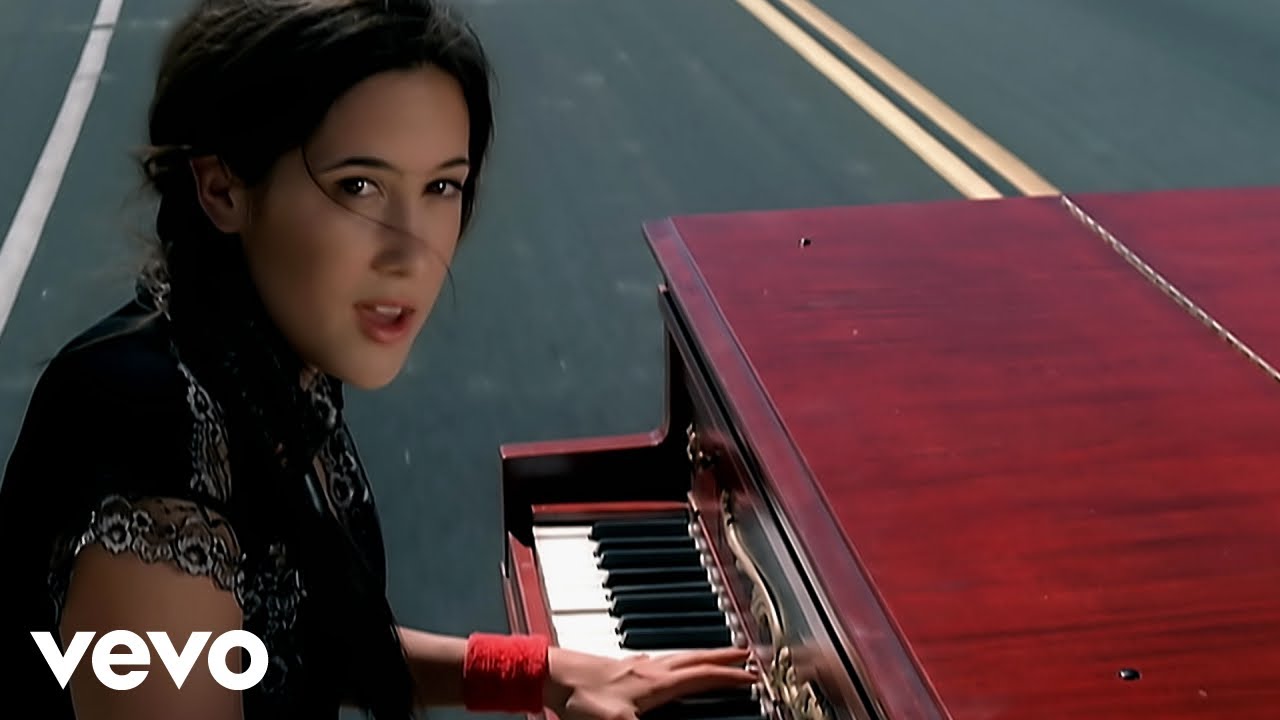
Carlton came up with A Thousand Miles’ piano riff in 1998, at her parents’ house. Despite her mother insisting that she had a hit on her hands, she couldn’t finish it, only making progress months later when a producer told her that the riff was so good that she had to persevere.
A Thousand Miles was originally called Interlude, but was changed at the insistence of producer Ron Fair, who argued that the word ‘interlude’ didn’t feature in the song and so using that as the title could put it at a disadvantage.
We’ll never know if changing the name made a difference, but what we can say for sure is that A Thousand Miles became a massive chart and radio hit and, by the end of 2025, had passed a billion streams on Spotify.
Vanessa Carlton released new new album, Veils, last week.