
There's no denying that the piano has seen a resurgence in popularity in recent years - and we can't help but wonder if that has something to do with just how accessible the instrument has become. As we see vast improvements in technology, both in the instrument itself and online lessons, the barrier to entry is now much lower, with affordable and cost-effective options readily available in every piano category. Below, we've listed what we believe are the best pianos out there right now, featuring both acoustic and digital pianos, as well as stage and slimline options from the world's best piano brands.
Now, this is just a small section of the pianos we’ve reviewed and demoed over the years. If you know exactly what style of piano you are looking for, you may want to check out our dedicated guides. For example, if you’re looking for a low-maintenance option that sounds and plays exactly like an acoustic piano, just without the fuss, then skip straight to our pick of the best digital pianos. Complete newbie? Well, we have a guide to the best digital pianos for beginners. Gigging musician on the move? Look no further than this superb collection of the best stage pianos. Finally, we have a selection of the best acoustic pianos that we believe are the best around for the traditionalist among you.
Not sure which model is right for you? Well, our comprehensive buying advice section will give you all the information you need to make an informed decision on what style of instrument is right for you, as well as cover whether you should buy online and even what to expect when your piano arrives. We’ve also answered a load of frequently asked questions, and even included a jargon-busting glossary to make sure you know exactly what all the terms around pianos mean.

My name is Daryl, and I'm a Senior Deals Writer at MusicRadar. I'm responsible for writing and maintaining buyer's guides on the site as well as testing out products for reviews. Before writing for MusicRadar, I worked for many years in music retail, helping musicians of all ages find the best gear for them. Whether it was a beginner's first keyboard or a top-of-the-range digital piano for the pros, I was there to help steer players in the right direction.
Best digital piano

✅ Buy if you are seeking an authentic feeling piano: Not only does this Yamaha piano look the part, but it feels it too, with a stunning key action.
❌ Avoid if you don't like a heavy action: While authentic to their acoustic instruments, Yamaha piano tends to have a fairly heavy action, and that can put some players off.
The term Clavinova is synonymous with digital pianos, to the point where some people use it as a blanket term to describe all digital pianos. Well, in fact, it's a series of Yamaha instruments. It is still one of their most popular lines of digital pianos since it debuted in 1983 - although the technology has changed significantly since then!
The 800 series might just be the most technologically advanced, best-sounding, and best-playing pianos Yamaha has ever put out, and that's why it tops our list of digital uprights. The Yamaha GrandTouch key action with Linear Graded Hammer emulation - modelled after the CFX grand piano - offers a truly authentic feel and a gratifying playing experience - and one we absolutely love.
Yamaha has also made marked improvements to the audio quality as well as the keys. Now sporting a redesigned speaker system for added resonance, it comes loaded with newly re-recorded samples of the CFX grand, resulting in, frankly, the best-sounding digital piano Yamaha has ever released and easily one of the best pianos on the market.

"The CLP-885 sets a new standard for digital pianos, delivering a truly realistic playing experience, impressive acoustic sound, and premium craftsmanship, all packed into an authentic upright-like cabinet. It’s a high-end choice but worth every note!"
Read our full Yamaha Clavinova CLP-885 review
Best on a budget

✅ Buy if you are on a tight budget: This Casio is super affordable and delivers stellar performance.
❌ Avoid if you have a larger budget: If budget is not a concern, then you'll get more features if you go slightly higher up the range.
The Casio PX-S1100 is a cracking choice for anyone after a modern, compact digital piano that doesn’t break the bank. Building on the much-loved PX-S1000, this newer model keeps things lightweight and sleek, making it perfect for home practice or moving about for gigs. One of the standout upgrades is the punchy 8W speaker system, which delivers surprisingly rich and clear sound for such a slim instrument.
Casio’s revamped grand piano tone feels expressive and dynamic, making practice sessions genuinely enjoyable. Bluetooth audio and MIDI are now built in via the included USB adapter, so you can easily connect to your favourite devices for lessons or jamming along to tunes. Recording is a breeze too, just pop in a USB stick and capture your playing, no faff with cables or software needed.
The fully weighted, graded hammer action keyboard feels fairly light to us, but still pretty natural, offering a realistic playing experience, especially for beginners. The overall design has had a tidy-up too, with a glossy finish, fewer buttons, and a subtle red felt accent, giving it a premium vibe. All in all, the PX-S1100 is a solid bet for new and progressing pianists alike.
"The Casio PX-S1100 builds on the previous model and brings it into the modern-day with smart features including Bluetooth audio and MIDI, as well as a fantastic new speaker system that delivers stellar sound at an accessible price point."
Read more: Casio PX-S1100 review
Best beginner piano

✅ Buy if you are a complete beginner: New to piano? Well, this Yamaha offers superb value and is ideal for beginners.
❌ Avoid if you want more features: While this piano is great for younger players, some may find it lacking features.
We all know pianos aren't exactly small, and the sheer size of the instrument can be a stumbling block for many new players. However, if you find yourself longing to play the piano but don't have space for a full-sized upright, then the YPD range is for you.
In our opinion, the Yamaha Arius YDP-S55 is one of the best digital pianos for beginners and offers the most bang for your buck in the Arius range. Designed to fit in almost any home, this stylish instrument offers the full piano experience in a far more compact size. Boasting all 88 notes, weighted keys and three pedals, there is no need to compromise functionality.
The Arius may not have as many sounds as the larger pianos on this list, but the ten it does have are all very usable. There isn't a sound on board that feels like it was just added to make up the numbers. So if you’re looking for a good-looking piano with a great sound and satisfying touch-sensitive key action, then the Yamaha YDP-S55 is for you.

"The S55 is a brilliant choice for space-strapped beginners or more advanced pianists who don't need loads of extra bells and whistles, although Smart Pianist compatibility does up the ante somewhat in terms of extra features and ease of use."
Read our full Yamaha Arius YDP-S55 review
Best stage piano

✅ Buy if you want a professional stage piano: Looking for a road-worthy piano? Well, the Nord Piano 6 is the best on the market.
❌ Avoid if you are a beginner: This is a professional-level instrument and not ideal for beginners.
The Nord Piano 6 is a top pick for anyone after a stage piano that feels every bit as good as it sounds. It’s not a total overhaul from previous models, but the upgrades are smart and genuinely useful. The big highlight is the improved dual-layer workflow: you can now easily stack or split two pianos, two synths, or a mix of both—handy for live sets. The new slider-style volume controls make it a breeze to manage your sounds on the fly, and the interface overhaul means tweaking during a gig is clearer and faster than ever.
Build-wise, the Piano 6 is solid as a rock—definitely not flimsy! It’s designed to take a beating on stage or in the studio, and the premium triple-sensor keybed feels just fantastic under your fingers, giving a realistic, acoustic-like response. Nord’s subtle tweaks mean you’ll notice a quicker response and better connection to your playing.
Where this instrument really shines is in its sound: from the powerful Grand piano tones to the lush Stockholm Rhodes samples, the depth and detail are bang on. Each layer gets its own effects, so you can get creative and sculpt your sound. All in all, it’s a brilliant choice for serious pianists and gigging pros alike.

"We are absolutely in love with this keyboard, thanks to the unbelievable playability and quality of its makeup. If you’re a pianist who yearns for a better electric playing experience, your new piano may have just arrived!"
Read our full Nord Piano 6 review
Best portable

✅ Buy if you are a beginner on the move: This affordable option is ideal for beginners and is even light enough to carry to school or lessons.
❌ Avoid if you're a more experienced player: More advanced players might find the key action lacking the responsiveness of more premium stage pianos.
Roland’s GO 88PX is a refreshingly compact digital piano that punches well above its weight, both literally and figuratively. Building on the original GO:Piano 88, this updated model is even lighter and sleeker, making it brilliant for anyone tight on space or needing something truly portable. It’s easy to lug around at just 5.8 kg and can run for up to 6 hours on AA batteries, ideal for buskers or spontaneous jam sessions anywhere.
The design is neat and unfussy, with just the right amount of controls: volume, Bluetooth, and metronome. The top-mounted speakers deliver surprisingly clear, punchy sound, though it’s a bit boxy compared to pricier models. Where the GO 88PX really shines is its variety of voices, 40 in total, ranging from classic pianos and organs to quirky lo-fi and vintage sounds. It’s a great way to keep things interesting, whether you’re practising or just mucking about.
The full-size, touch-sensitive keys have a nice textured feel, though they aren’t weighted or hammer-action, so don’t expect a grand piano vibe. Still, for beginners or synth fans, the playability is spot on. All in all, the GO 88PX is a top pick for casual players who want quality and portability without the faff.
"Roland's new GO:PIANO 88PX is one of the most compact and lightweight 88-key digital pianos on the market. Despite its size, it delivers impressive audio quality and premium functions as well as featuring a good selection of inspired sounds. Yet, its key action may feel awkward for most, making the playing experience challenging for both experienced players and beginners - but it's still worth trying if portability is your priority."
Read more: Roland GO:Piano 88PX review
Best acoustic piano

✅ Buy if you are seeking an affordable acoustic piano: Okay, the b1 isn't exactly cheap, but it is relatively affordable when compared to others on the market.
❌ Avoid if you don't want the hassle of an acoustic piano: Acoustic instruments require regular maintenance to ensure they play and sound their best.
It's no surprise that acoustic pianos are expensive. A lot of hard work goes into making one of these beautiful instruments - not to mention a lot of time! Unfortunately, this can see prices exceed the $/£10,000 mark, and frankly, this is just too much for many. Well, luckily, Yamaha has you covered with the B series.
The Yamaha b1 comes in under £3,000 - depending on the finish option - and might just be the best piano if you’re looking for a reliable, well-built acoustic upright that you won't have to re-mortgage the house to purchase. This stellar instrument is made at Yamaha's factory in Indonesia, from a scale design developed in Japan. This means Yamaha can bring the same quality that makes them one of the best piano brands, but at a more affordable price.
The B Series features a few pianos in the range, each with its own characteristics. However, we recommend the b1 or b2 models for smaller spaces, as these have a slimmer cabinet compared to the larger b3.
“Although considered in some quarters to be something of a basic instrument, the b1 is a fantastic choice for beginners who are restricted in terms of space and budget but accept no compromise when it comes to enjoying the authentic sound and touch of a real piano. Distilling all of Yamaha’s considerable expertise in acoustic piano design into a compact and durable format, the b1 would make a fine musical centrepiece for any home, studio or practice room, with the silent version qualifying as possibly the ultimate affordable upright piano.”
Read our full Yamaha b1 Acoustic Piano review
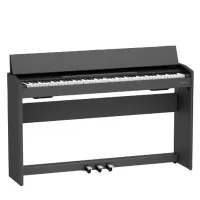
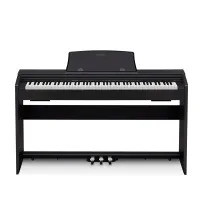
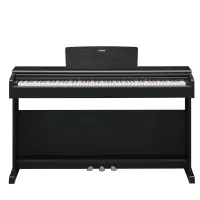
Also tested
How to choose

Price is often a deciding factor for many when trying to select the best piano for their needs, but it's not the only consideration you need to take into account.
Once you've set your budget - remembering you may also need to cover the cost of additional accessories, such as a piano bench or a pair of headphones, at the same time - you need to establish where the piano is mostly going to be used, and whether you want a real acoustic upright piano or a digital piano.
Acoustic pianos: what you need to know
MusicRadar's got your back Our team of expert musicians and producers spends hours testing products to help you choose the best music-making gear for you. Find out more about how we test.
It sounds pretty obvious to state that a piano is heavy, but it is a genuine concern and something you need to consider if you’re thinking of purchasing an acoustic upright piano. Although most retailers will offer some kind of delivery service, this can be very expensive, so remember to factor it into the cost of the piano. Also, this really does need to be carried out by professional piano movers, so please don't attempt this yourself. Not only can you hurt yourself, but you’re likely to damage the piano as well.
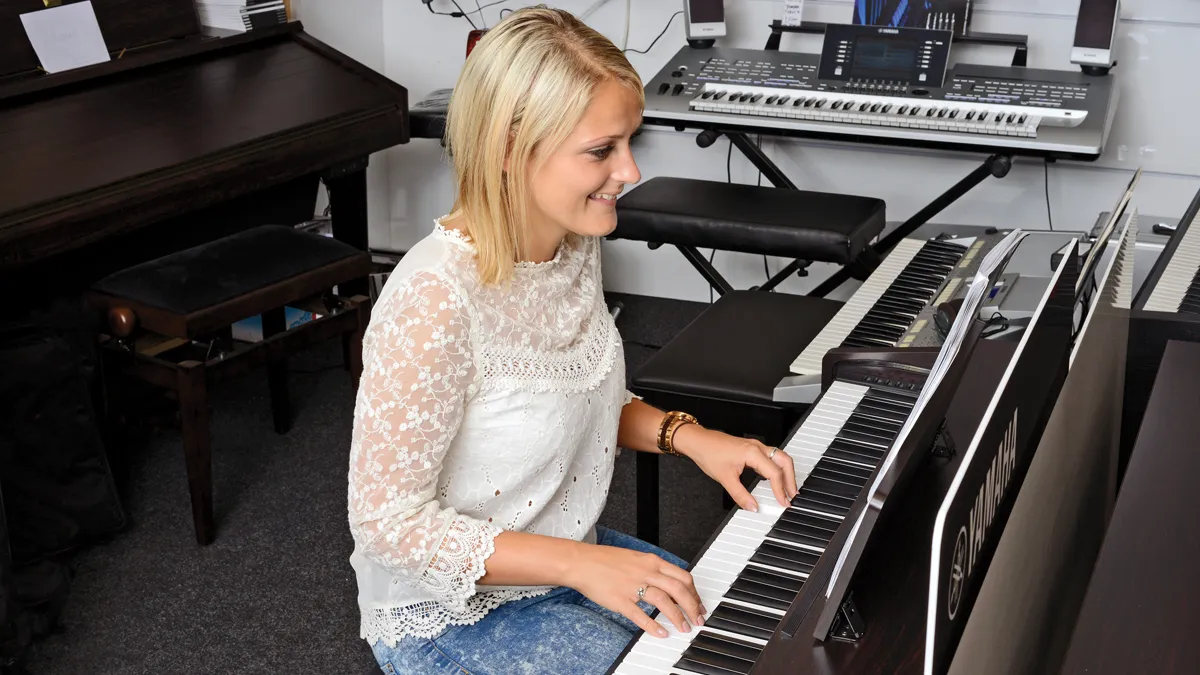
Next, you need to bear in mind the cost of regular tuning - and the availability of such a service in your area - and whether or not the atmosphere in your home might adversely affect the tuning. Moisture and damp or rapid changes in temperature can negatively affect your piano's strings and other components. You can have the best piano in the world, but if it isn't maintained and housed correctly, it won't perform to its full potential. Finally, once your piano is in, the lack of a headphone socket means that you'll need a tolerant audience/neighbours for all those hours of playing and practice you have planned!
These concerns aside, if you can afford it and have space, there really is no substitute for a good-quality acoustic upright or grand piano, either sonically or feel-wise.
Digital pianos: what you need to know
Thanks to advances and refinements in sampling and software emulation technology, digital pianos generally sound and feel fantastic these days and come in different shapes and sizes:
Digital upright
The digital upright is for the player seeking the feel, sound and looks of an acoustic piano without the drawbacks of weight and regular tuning. We are currently living in the golden age of digital pianos. The products on offer right now are the best they have ever been, and there are digital pianos out there that behave exactly like the real deal.
Slimline digital pianos
Most manufacturers offer a slimline option. These are perfect if space is an issue, but they typically have a lighter key action and are also ideal for beginners.
Stage pianos
As the name suggests, these are generally designed for the performing professional pianist. Most professional-grade stage pianos don't offer built-in speakers, as they're designed to be connected to one of the best PA speakers or mixing desks. While the likes of the Nord Piano 4 and Roland RD-88 are aimed squarely at that market, the likes of the Yamaha P-45 or Casio CDP S-100, with their built-in speakers and low cost, are more geared toward the beginner student on the go.
To help you choose the best piano for you, our useful Digital Piano Basics series could help. Here we cover everything from explaining what a digital piano is, to key features and sounds, to setting up your new piano and connecting it to a computer. We also look at useful accessories any budding pianist should consider, such as digital piano headphones, a piano stool, foot pedals and more.

Glossary
- Hammer Action: Refers to the mechanism in acoustic pianos where pressing a key causes a hammer to strike a string or sensor. It contributes to the weighted feel of keys, creating natural resistance and rebound that high-end digital pianos emulate.
- Key Action: The mechanism controlling the feel and response of digital piano keys during play, including weight, resistance, and return speed. It's crucial for achieving an organic feel and responsiveness for expressive playing.
- Modelling Technology: An advanced technique used by digital piano manufacturers to simulate acoustic piano sounds, focusing on recreating resonance, string vibration, and harmonics to enrich the instrument’s tone.
- Polyphony: The number of notes a digital piano can play simultaneously. A higher polyphony count (e.g., 192) allows for more notes to be sustained without dropping, enhancing musical realism.
- Sampled Sound: The recording method used to create various sounds on digital pianos. It involves carefully capturing each note to provide an immersive playing experience.
- Touch Sensitivity: Often used interchangeably with dynamic sensitivity, this term describes how a piano responds to the speed and force of key presses, impacting volume and tone.
- Velocity: A term in music production describing the data of how a key is pressed and for how long, affecting the loudness and brightness of a note. Velocity curves allow customisation of how keys respond to touch.
- Weighted Keys: Refers to keys designed to replicate the resistance found in acoustic pianos, with lower keys feeling heavier. Opposite to "lightweight keyboards," which have little resistance for ease of play.
FAQs

Should I buy a piano online?
Buying something this expensive online can feel a little daunting, but really it's not that different from purchasing anything else.
Like we said before, a piano can be expensive to deliver. Like other big purchases - such as a sofa, bed, or other furniture - it typically takes a group of trained professionals to bring your new purchase into your home safely. Remember to let the retailer know if you require the piano upstairs, as there may be an extra cost.
With digital pianos, you will most likely get the option to have it delivered and assembled for an extra charge or delivered boxed for you to build yourself. The thought of building a piano can send some people into a mild panic attack, but don't worry, it's really not that difficult.
Digital pianos typically arrive in one box - usually, these take two people to lift. Now, the only part you actually need to put together is the stand for the piano section to sit on, and if you have ever put together flat-packed furniture, you'll be fine with this. However, we recommend having a second person help you, as lifting the top onto the stand can be awkward.
Most music retailers are aware of how customers’ spending habits have changed over the years and that most like to shop online. So if you have any questions, contact the retailer directly, and they will be happy to help you.
We've gone into greater depth about ordering a piano online with this guide.
How much does a piano cost?
It's no secret that pianos are expensive items, with some costing tens of thousands of pounds, but don't worry, there are affordable options out there.
For budding pianists looking to get to grips with the keys, there are plenty of digital instruments on the market that come in well under the $/£500 mark. This means you can test the water and see if this is the instrument for you without shelling out thousands. We would, however, stick to big-name brands at this price point, as this will ensure you get a piano of a certain quality. Yamaha, Casio, Roland and Kawai, all make exceptional entry-level pianos at this price.
For those who are a little more advanced, want a furniture style instrument, and would prefer the convenience of digital, you are looking at $/£1,500+. At this price point, pianos typically come with incredibly authentic key actions, very sophisticated speaker systems, and even look just like the real thing.
Now, that leads us on to acoustic pianos. Unfortunately, this is where the prices can get out of hand, with some pianos costing as much as a brand new Ford Focus. That said, it doesn't have to cost that much. Although it does depend on spec, pianos such as the Yamaha B1 will set you back around $5,000/£3,000. On average, if you are looking for a reasonable spec acoustic piano, you'll be looking around $/£10,000, with high-end models from the likes of C. Bechstein costing upwards of $/£30,000.
What are the best piano brands?
As an instrument, the humble piano is in a rather unique situation, with most of the industry's heavy-hitters remaining the same for over a century. As a result, there's a rich history to delve into with certain brands covering every aspect of the piano from acoustic to digital, uprights to grand pianos. Of course, the piano brand you gravitate towards really depends on what sound and feel you are looking for, with every manufacturer offering its own characteristics. So, with that said, what are some of the names to look out for?
Yamaha
Let's start with Yamaha. This Japanese musical instrument titan is well known for far more than just pianos, with high-quality guitars, studio equipment and even motorcycles among their incredibly varied catalogue. The first Yamaha piano can be traced as far back as 1900 and was built by Torakusu Yamaha, and they are still producing top-quality pianos today. Yamaha are assembling both digital and acoustic pianos right now, with a variety of shapes and sizes available.
Kawai
From one Japanese builder to the next, Kawai started producing pianos around 1927 and went on to be very respected in their field. Like Yamaha, Kawai are producers of both acoustic and digital instruments, with their Shigeru Kawai concert grand being one of the best sounding pianos on the market. Kawai may not be a household name like Yamaha, but they are most certainly worth your time.
Roland
If you are looking for a purely digital option, then one of the world leaders of hi-tech pianos - and synths for that matter - are Roland. They may be a relative newcomer in the world of piano - although that said, they did take on the seemingly impossible task of creating a digital piano way back in 1972! Roland has used the lessons learned from decades of creating some of the best electronic instruments in history, such as the Juno-106 and iconic TB-303 and TR-808, to fully load their prized digital pianos with user-friendly features.
Casio
You’d be forgiven for thinking Casio is mainly a manufacturer of beginner keyboards - and calculator watches - but in fact, they actually make some of the most playable digital pianos on the market. The technologically advanced GP-310 is actually a collaboration between the tech-savvy Casio and the historically significant C Bechstein.
C Bechstein
When it comes to acoustic piano brands, they don't come much grander than C Bechstein. This historic company's journey started in 1853 and they are still highly regarded today - and better yet, they are still made in Germany. Bechstein uses the finest materials available to create exceptional instruments that are of the highest quality in the world.
Steinway & Sons
No, this isn't a local accounting firm, Steinway & Sons are another producer of top-tier acoustic pianos. Like C Bechstein, Steinway & Son also started making pianos back in 1853 and although the founder was indeed German, like their contemporaries, they manufactured their exquisite instruments in Manhattan. We feature the very popular Steinway & Sons K-52 model in our guide to the best acoustic pianos, which was introduced way back in 1903, and houses a larger soundboard than many grand pianos, resulting in a more resonant voice.
How we test pianos

There are too many pianos on the market to count, but you can rest easy, knowing that we only feature instruments that we highly rate. For us to wholeheartedly recommend a piano - or any instrument for that matter - we need to put them through a series of tests.
A natural place for us to start is playability. Now, how a piano feels to play is a combination of the key action as well as the feel of the physical key, so it's vital that we take note of both. When testing the key action, we'll first play the piano at varying dynamics - and styles - to see how responsive the instrument is. A good piano - digital or acoustic - should be inviting to play, with a responsive action that allows you to express yourself with a wide range of dynamics.
Next, we'll test the sound. If it's a digital piano, we'll carefully go through the list of inbuilt voices while paying close attention to the speakers' frequency range. For acoustic pianos, we'll listen to the projection of the instrument and, again, the range of frequencies produced.
Lastly, we will go through any extras included with the piano. The pedals, audio outputs, MIDI compatibility and any accompanying app, are all tested to see how they compare to the rest on the market at the respective price points.
Read more about how we test music-making gear and services at MusicRadar.
Why trust us?

✔️More than 9,500 reviews on-site
✔️Over 17 years of product testing
✔️ 2.9 million monthly users globally
With more than 17 years of experience, MusicRadar is the premier music-making website in the world. Run by musicians for musicians, we offer expertly written gear round-ups and high-quality, authoritative reviews by an extensive team of highly experienced industry professionals.
We also interview world-renowned musicians and stars about their creative processes and the nuts and bolts of their gear and technique. This gives fans an insight into the actual craft of music-making that no other music website can.
But that's not all. We also provide excellent tuition, from bite-sized tips to advanced techniques and guidance from recognised musicians.
As well as delivering high-quality written reviews and features, we also produce a wealth of video content on YouTube. MusicRadarTV is where you'll find all of our access-all-areas interviews, hot gear demos and exclusive video lessons.
Related buyer's guides
- Best music notation and composition software
- These are the best piano VSTs
- Don't forget about these essential piano accessories
- Explore our pick of the best Casio keyboards
- How to clean you piano keys, step-by-step
