Sometimes, all it takes is one big song to thrust an artist firmly into the spotlight, and that’s certainly the case with British singer-songwriter Sienna Spiro. Die On This Hill, her 2025 global hit, has received so much airplay that you probably knew its name before you knew Spiro’s, but with comparisons to Adele being made, it seems unlikely that the 20-year-old Londoner will be able to maintain her relative anonymity for too much longer.
With its big ballad energy and powerful vocal, Die On This Hill does indeed sound like it could have been sung by Adele, but as Spiro revealed to Capitol Radio last year, it has its roots in a surprising yet equally famous place.
“Weirdly enough, [because it] sounds absolutely nothing like it, but the song that inspired Die On This Hill was Bohemian Rhapsody,” she explained. “I saw someone playing Bohemian Rhapsody and I was trying to learn it, and I don't know how to play piano very well and so I just kind of like learn and then rearrange. And so I was trying to learn it and then I fucked up a little bit. And then I just like wrote half the song accidentally from that. Sounds nothing like it but yeah - thanks Queen.”
We definitely wouldn’t have spotted that without being told – some broken chords are pretty much all Bohemian Rhapsody and Die On This Hill have in common – but what’s equally surprising is that Spiro’s song wasn’t always going to be the ballad that it ended up as.
In a new interview with the LA Times, she jokes that she recorded “900 different versions” before the one we know was released, having previously said a similar thing to Billboard.
“It was in another key, and it was fast, it had trumpets,” Spiro says. “Then it was a stripped-back, Lauryn Hill kind of thing. Then it was a Silk Sonic kind of thing. It was a Teddy Pendergrass thing at one point.”
In the end, it was co-writer/producer Omer Fedi who convinced Spiro to try Die On This Hill as a ballad, with a simple piano accompaniment provided by Michael Pollack, also a co-writer and co-producer on the song.
She wasn’t happy about it, though, and Spiro now thinks that this might have helped her. “I [had] so much resentment and anger, which honestly kind of helped the performance … And then I remember we just sat there, and we listened, and we all were quiet.”
Spiro ended up recording four vocal takes, one of which formed the basis of the record. Explaining the production process to the LA Times, Fedi calls it “Very old-school, very human… Maybe I’m corny but with Sienna, less is really more. Her voice is so special, so big and upfront, that you just want to put a giant flashlight on it and let it shine.”
He certainly managed that, and Spiro has gone on to enhance her reputation with a series of spellbinding live performances of Die On This Hill, including this one from The Tonight Show starring Jimmy Fallon, which has so far racked up more than two million views.
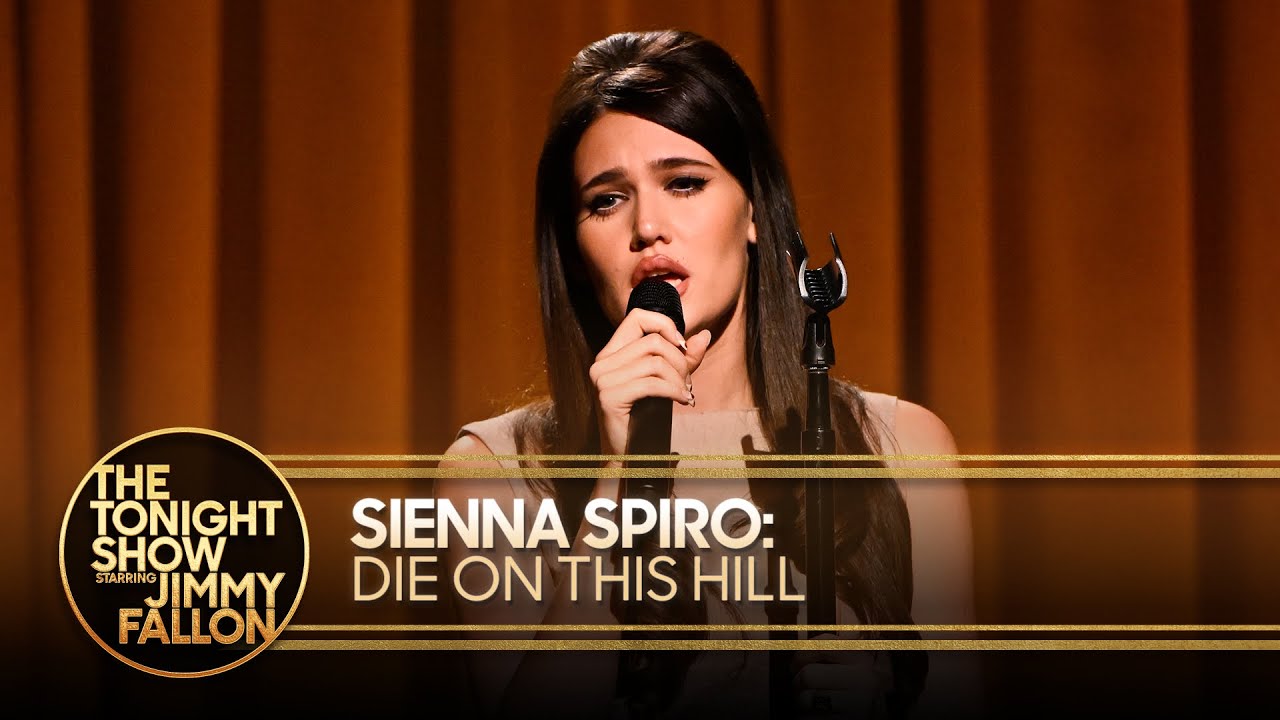
Not bad for an arrangement that Spiro originally thought sounded “shit”.
She seems happy enough with how Die On This Hill turned out now, though, and enjoys the challenge of performing it live. “It’s really hard to sing, but it feels great,” she told Billboard. “Like a rage room for the soul.”
Sienna Spiro is currently on tour in the US, with dates in Europe set to follow.