


By the time Stevie Wonder released Superstition at the end of 1972, the former child prodigy had solidified himself as a songwriter and performer of significant importance.
Right before the release, a string of other notable songs which included the invigorating Signed, Sealed, Delivered (I’m Yours) and the sparkling My Cherie Amour were blazing new ground for the former Motown star.
In Wonder’s growing canon, traditional soul arrangement tropes were giving way to fresh approaches and more expansive instrumentation. Namely, this was offered by the Rhodes electric piano, Hohner Clavinet and of course, the hi-tech sounds of synthesizers.
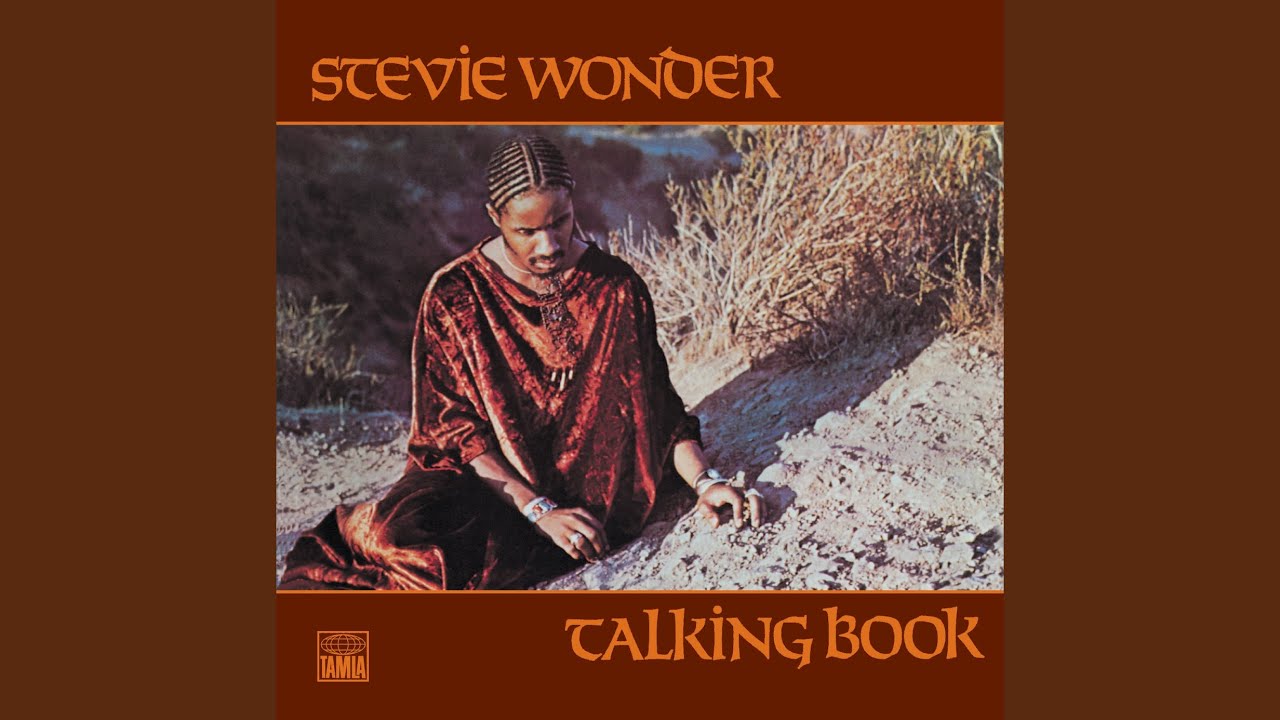
Superstition is taken from the album Talking Book - one of many classic albums by Stevie. In a recent poll conducted by the BBC, Superstition was voted the most popular Stevie tune, quite an accolade for a song that rubs shoulders with so many other classics, scattered across the decades.
Despite being signed to Motown, it was around this period that Stevie began to assert more artistic control over his work. He was the driving force, but had the help of a couple of key industry figures.
Bob Margouleff and Malcolm Cecil became Stevie’s production team. Both were technically adept and highly capable recording engineers.
Malcolm was the more musically-inclined, while Bob was an exceptionally talented sound designer and programmer, which was just as well, as the fourth member of the team wasn’t so much a musician… more a synthetic entity!
TONTO was an acronym for The Original New Timbral Orchestra - a massive, custom-built multi-timbral and polyphonic synthesizer system, which integrated elements and instruments from Moog, ARP, Oberheim and EMS, along with many others.
It was a unique, one-of-a-kind system which was extensively used on much of Stevie’s output from this era, under the guidance of Bob and Malcolm.
“Stevie came in and we showed him the instrument [TONTO] and he put his hands all over it,” Bob recalled in a lengthy interview with Anthony Marinelli. “And then he started trying to play chords on it and he said ‘Malcolm! Bob! What’s wrong with this instrument? It only plays one note at a time!’"
After explaining that the version of TONTO that Wonder was playing was monophonic, Margouleff says, “Stevie got it in a second. We started recording that weekend - we recorded like 15 or 16 songs. We went completely bonkers.”

The sessions for Superstition took place at Electric Lady studios in New York. Formerly a facility co-curated by Jimi Hendrix (before his death in 1970), Electric Lady was designed to be an artist-led environment; the perfect space for unfettered musical creativity.
Also in town was guitar legend Jeff Beck, who was keen to make good on a deal with his label CBS.
“I said I loved Stevie's stuff, so they [CBS] quietly broke it to him that I was interested in doing something together, and he was really receptive. The original agreement was that he'd write me a song, and in return, I'd play on his album, and that's where Superstition came in,” Beck was quoted as saying in The Guitar Greats by Stuart Grundy and John Tobler.
“They met each other face-to-face in the studio,” recalled Margouleff. “Stevie said ‘if you play on my [new] record [Beck would end up playing guitar on Lookin' for Another Pure Love] I’ll give you a song.’ And first off he was going to give him Superstition, which had already been recorded.”

Contrary to Margouleff’s recollection that the song had already been recorded, Jeff Beck remembered that he himself was present during the song’s initial creation, and was in fact pivotal to its birth;
"One day I was sitting at the drum kit, which I love to play when nobody's around, doing this beat," Beck was quoted as saying in Jeff Beck: Crazy Fingers. "Stevie came kinda boogieing into the studio: 'Don't stop.' 'Ah, c'mon, Stevie,' I can't play the drums.' Then the lick came out: Superstition. That was my song, in return for Talking Book. I thought, 'He's given me the riff of the century.'"
Recording the studio take of Superstition relied on a setup that included the aforementioned TONTO, a Rhodes, a Clavinet and drum kit in the live room, along with an open ‘hot-mic’, so that multi-instrumentalist Stevie could quickly and easily go from one instrument to another, which was conducive to speedy multi-tracking.
The beat went down first - and relatively quickly. Stevie's drumming style could be described as a little freer than contemporary studio drummers, but even so, his sense of time and rhythm allowed him to record without the use of a click track. Once complete, the bass part was added, supplied by a Moog synthesizer.
This raises an interesting question, from the perspective of instrumental performance. As any bass player who has to regularly play Stevie Wonder tunes will attest, many of his classics are recorded in keys which are less helpful to guitarists and bass players. There are a couple of reasons for this. In the case of Superstition, Stevie worked in the key of Eb minor - one semitone below the lowest note on a standard 4-string bass.
This may have been partly to do with the range of Stevie's voice, which was capable of producing effortlessly high vocal lines. However, as we all know, Stevie is visually impaired, and his ability to feel the black notes on a keyboard also influenced his choice of key.
Another classic example is I Wish which, much like Superstition, adopts a keyboard/Rhodes riff which is also centred completely around Eb minor.
If you wanted to choose a demonstration track for the Hohner Clavinet, you would be hard-pushed to find a better example than Superstition.
Apart from the drum intro, and the repeated Eb bass, the opening Clavinet line introduces an infamous and highly identifiable riff. It's no coincidence that it is wholly reliant upon the black notes on the keyboard, being based around the Eb pentatonic minor scale.
However, once the main riff is heard for the first time, Stevie introduces further Clavinet lines, which work to compliment the main riff.
There has always been some debate about exactly how many Clavinet lines are being used at one time - but it's at least three (possibly more!) If you listen closely to the recording, you can hear the Clav’s spacing in the stereo spectrum, along with the use of effects. There’s extensive use of wah pedal, alongside delays and reverberation.
Analysing Superstition in conventional song form prevents challenges, as it’s open to interpretation.
Given that the opening lyric of the song is “Very superstitious…’, do we consider this the chorus?
Our inclination is to think of it more as a series of verses. There are plenty of hooks, but anything we might call a conventional chorus is missing. This unlikely form is perhaps something that many a casual listener hasn't noted before, as it takes absolutely nothing away from the overall makeup and impact of the song.
During the first eight bars of each verse, the instrumentation and arrangement remains fairly static, but once we reach the second eight bars of each verse, things get a little more enthusiastic and involved on the playing front.
The bassline changes, moving away from its sedentary and repeated Eb, to a full-on classic line which is echoed, to a large degree, by the horn section consisting of trumpet and tenor saxophone.
The horns are bright and exuberant, complete with flourishes and trills at high-points of phrases.
Under normal circumstances, doubling between horns and bass might not be such a great idea, but thanks to the extended interplay between the Clavinets, the bass and horn combo provides amazing spirit, in the way that a horn line can so often lift a song.

After four repetitions of the horn/bass riff (8 bars) the song finally switches chords, but beware, because this short bridge section is often played incorrectly.
The first chord we hear moves up to the dominant chord of Bb7, but it is the next chord that is often misheard, being a chord of B7 flat5, not the more obvious and mistaken B7.
The sequence returns to Bb7, before dropping to A7 and Ab7, before finishing the section with a chord of Bb alt - this is another popular Stevie chordal device, where he plays a straight major chord, but raises the fifth by one semitone, hence this chord includes the notes Bb, D and F# (also known as an augmented chord.
Returning to the main Clavinet riff, the song settles back into its groove, before commencing the second verse, but not before the horns have provided another classic linking riff line, which moves downward in pitch, and employs the technique known as a ‘fall’.
This is where a horn player might play a note, and then fall off the note either quickly or slowly. In this instance, the falls are quick and sharply accentuated, punctuating through the Clavinet-based backdrop.
Later in the song, we do hear an instrumental bridge, which is based upon previous bridge content from the song, but with a slight change in the groove, as Stevie leaps over to a ride cymbal.
Whichever way we dice this up, Superstition is one of Stevie's ultimate classics. As the production team wanted to push the boundaries, they not only produced a stereo mix, but also produced a quad-mix! Apparently it sounded fantastic.

Despite its obvious brilliance, at the time Stevie didn’t quite realise he’d created such an outright classic, evidenced by the fact he was prepared to gift the song to Jeff Beck.
Whether Beck was intrinsic to its creation or not, one thing was clear - everyone around Stevie told him that he should under no circumstances let go of the song.
“The powers that be, including me and Malcolm, said, ‘Steve, you have to do this song. You cannot give this song to anybody’, Margouleff recalled. “But, in the meantime, before that happened, they did a demo of it where Jeff Beck played the drums. And when Berry Gordy heard about that, from what we hear, he said ‘Steve, don’t do that. You need to keep that song for yourself.’”
Motown pushed Wonder to release it as a single, but - as a man of principle - he still allowed Jeff Beck and his new trio, Beck, Bogert & Appice to record a version of the song and release that as the priority. Stevie would release his version as a single too, but, as he later shared, assumed that Beck would get the first shot at success with the song.
"Motown decided they wanted to release Superstition. I said Jeff wanted it, and they told me I needed a strong single in order for [Talking Book] to be successful,” Wonder said in an interview with Ben Fong-Torres. “My understanding was that Jeff would be releasing [his version of] Superstition long before I was going to finish my album. I was late giving them Talking Book. Jeff recorded Superstition in July, so I thought it would be out."
But a series of delays in the Beck camp meant that Stevie’s sublime version of his song would be the one to land on shelves first, on October 24, 1972. As lead single from Talking Book, it was well ahead of Beck's take (belatedly released in March the following year).
"He played it to Motown, and they said, 'No way is Beck getting this song, it's too good'", an understandably frosty Jeff was quoted as saying in The Guitar Greats. "They had the right to say what Stevie released at that time, I lost the song as an original."
Although a degree of bitterness ensued, Beck and Wonder would later reconcile and even duet on the song at the 25th anniversary of The Rock and Roll Hall of Fame in 2010.
