
The term 'best electronic keyboard' is so broad that it can cover anything from professional workstations and arranger keyboards to consumer home and education models. Consequently, this buyer’s guide includes a wide range of electronic keyboards, from beginner-friendly keys that are easy on the wallet to more sophisticated models perfect for gigging and studio musicians.
Finding the perfect electronic keyboard can be a daunting task, but fear not, I've done the hard work for you, researching and reviewing the best keys out there from the leading brands. I've sorted this guide into three sections: beginner, intermediate, and pro. This makes it easier to find exactly what you are looking for.
I've also included some deeper buying advice at the end of the article if you need a little more guidance, with a glossary of common terms to help you decode the language around keyboards, as well as commonly asked questions. So, without further ado, let's dive in.
Beginner keyboards
Below, you'll find a small cross-section of what we believe are the greatest beginner keyboards on the market. If you want more options, be sure to head over to our dedicated best beginner keyboards guide, where we go into even more detail.
Best beginner overall

✅ Buy if you are looking for great sounds: The AiX Sound Source produces great sounds, setting this keyboard apart from the previous entry.
❌ Avoid if you need more audio outputs: Unfortunately, this keyboard doesn't come with 1/4-inch audio outputs, so it isn't great for playing concerts.
Drawing on the original '80s model as inspiration, the CT-S1 is a modern take on Casio's famous portable keyboard. With 61 built-in voices, 61 full-size, touch-sensitive keys, and now 64 note polyphony, this is our top pick for beginners looking for an easy-to-use, great-sounding, and fabulously playing instrument that won't break the bank.
Build: The unit feels sturdy and well-made, and despite its tiny price tag, it feels surprisingly robust. The speakers sound far better than we thought they would in this price category, even at higher volumes. And the fact that you can connect a smartphone either via the audio input or a Bluetooth adapter is a handy extra we like a lot.
Playability: Now, it’s worth noting that this keyboard does not feature weighted keys, but it still manages to feel dynamic and responsive. In our review, we said, “The keyboard itself is equally impressive. No, it doesn’t have a weighted hammer action, but it is smooth and reliable, and the velocity-sensitivity is something you won’t find on some cheaper models.”
Sound: At the heart of the Casiotone is the AiX Sound Source. This sound engine delivers dynamic and expressive tones, perfect for beginners and professionals alike. Quoting our review again, we say, “the tones are impressive, with the default stage piano being immensely playable and easily good enough to perform with. It’s the same story with the vintage keyboards, organs, synths, strings and other sounds - you even get some classics from Casio’s older VL-Tone, CT, CZ and VZ synths. We’re happy to report that Casio’s AiX sound engine really delivers the goods, providing pretty much everything you need and very little of what you don’t.”

“Pretty much the perfect beginner’s keyboard, the Casiotone CT-S1 offers great sounds and playability at a very competitive price.”
Read our full Casio Casiotone CT-S1 review
Best on the go
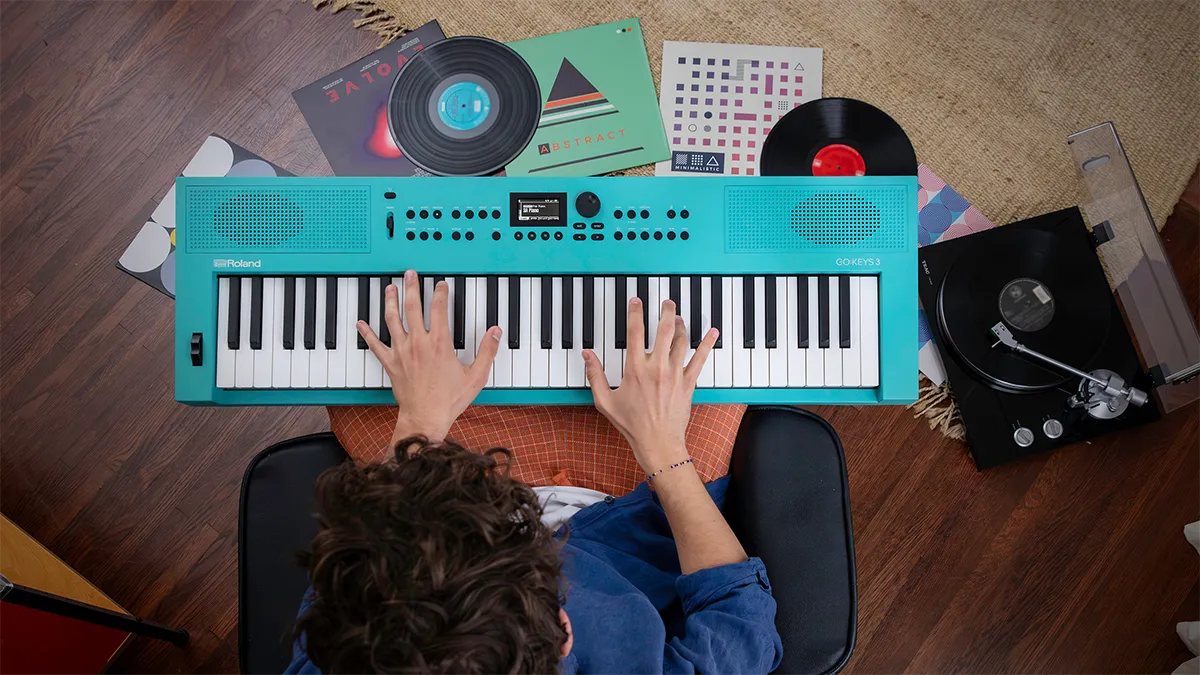
✅Buy if you want a truly portable option: This is one of the lightest pianos on this list, making it the best for portability.
❌Avoid if you want fully-weight keys: This Roland utilizes semi-weighted keys in an effort to keep the weight down. So, if you require fully-weighted keys, then look elsewhere.
The Roland GO:KEYS 3 is a compact, lightweight, and highly portable music creation keyboard that’s purpose-built for creativity on the go. Featuring 61 full-size keys with velocity sensitivity, the GO:KEYS 3 now delivers over 500 onboard sounds from Roland’s acclaimed sound library, including premium pianos, synthesizers, strings, guitars, and more.
The instrument offers fully wireless operation via battery power and Bluetooth, providing both audio streaming and wireless MIDI connectivity for seamless integration with music apps, DAWs, and other smart devices.
Build: The Roland GO:KEYS 3 is impressively lightweight, yet feels solid and well-constructed, ideal for newbies on the move. The compact chassis houses surprisingly powerful built-in speakers that deliver clear, punchy sound at any volume. Design touches like the easy-to-read interface and assignable control strips make it practical for both home and stage use. Bluetooth connectivity and battery operation round out a feature set that emphasises convenience and portability.
Playability: Moving on to playability, I’d say the 61 full-size, velocity-sensitive keys provide a satisfying and responsive playing experience, but are more suited to beginners than seasoned players. That said, the action is smooth and consistent.
Sound: With over 500 high-quality sounds, this tiny keyboard is absolutely loaded with tones, from realistic acoustic pianos and classic synths to lush strings, guitars, and modern electronic tones. The Loop Mix function remains a highlight, allowing instant layering of drums, bass, and chords. Wireless Bluetooth audio streaming also lets you jam along with your favorite tracks or backing tracks directly through the instrument
Best adult beginners

✅ Buy if you are looking for reliability: In our opinion, Yamaha makes some of the best quality musical instruments in the world. Whether it's a beginner keyboard or an electric guitar, Yamaha products are always reliable.
❌Avoid if you need lots of sounds: Unfortunately, the NP-15 doesn't come with as many sounds as some of the other keyboards on this list.
Very basically, the Piaggero series of Yamaha keyboards is a no-frills, lightweight, piano-style line that sounds fantastic and really looks the part, especially for adult beginners. These excellent beginner keyboards are compact and supremely portable, featuring built-in speakers, a velocity-sensitive keyboard, and sounds sampled from a Yamaha concert grand piano.
Build: From the moment you unbox the Piaggero, it’s clear Yamaha has prioritised durability and style. Despite being incredibly lightweight, the keyboard feels sturdy and reassuringly solid. Its minimalist design is accented by subtle touches, such as the soft red felt beneath the keys and a matte black finish, that give it a sophisticated, adult-friendly appearance well beyond its price point.
Playability: The Piaggero offers an approachable, enjoyable playing experience that’s perfectly suited for beginners and casual players. The velocity-sensitive keys feel natural under your fingers, and the built-in recorder is a helpful tool for tracking your improvement.
Sound: Though the selection of sounds is modest, each voice delivers impressive clarity, ideal for those focused on piano fundamentals over modern synth sounds. I’d say the NP-15’s sound engine produces a range of rich, authentic tones, including several detailed piano and electric piano voices.
Each sound has a sense of depth and nuance that stands out compared to other entry-level keyboards I’ve tried. The character leans toward refinement and maturity, making it an excellent fit for adults or older students who value realism over novelty.

“Like its predecessor, the NP-15 is a fantastic entry-level piano and an excellent instrument for those who want to play on the go. That said, it doesn't offer much more in the way of extra features when compared to the previous cheaper model.”
Read our full Yamaha NP-15 keyboard review
Intermediate keyboards
Next up, we have intermediate-level keyboards that up the ante in terms of playability and sound. The following options from Roland and Korg are ideal for those looking to move on from their first keyboard.
Bbest upgrade

✅ Buy if you are looking to upgrade: This is a powerful keyboard that’s loaded with Roland’s legendary sounds, auto-accompaniment, full-range stereo speakers and Bluetooth, making it the perfect second keyboard for established players.
❌ Avoid if you don’t need too many features: There’s a lot going on with this keyboard. If you are seeking simplicity, I’d stick with the Casio Casiotone CT-S1 or Yamaha NP-15.
Outgrown your first beginner keyboard? Well, this model from Roland goes beyond a basic entry-level keyboard, with fun and engaging features that make a seriously capable arranger ideal for intermediate players.
Build: As you’d expect from Roland, the E-X50 is very well constructed, with a sturdy build that can withstand even the most enthusiastic young players. It also includes some great extras, such as a built-in mic input with effects, and Bluetooth audio streaming so you can easily jam along to tracks straight from your smartphone.
Performance: Like all good arranger keyboards, the star of the show is the auto-accompaniment function, which allows you to generate full backing tracks that follow your lead and accompany your left-hand notes.
With a generous 300 preset styles ranging from rock, pop, and jazz to ballads, dance music, and traditional styles from various countries, there is a lot here to play around with.
Sound: The E-X50 boasts an array of professional Roland sounds, with a colossal 700 tones available – and thankfully, most of them are highly usable. While you might not frequently use a collection of bells or pan flutes, there are plenty of other sounds worth exploring, such as lush acoustic pianos, vibrant full-band sounds, and exciting synth tones.
“The Roland E-X50 is a good choice for beginners, offering creative features, strong connectivity, and a sturdy build. However, the keys feel a little stiff, and some sounds seem outdated for the price.”
Read our full Roland E-X50 arranger keyboard review
Best value

✅ Buy if you are looking for value for money: With so much on offer, this unit from Korg offers the most bang for your buck.
❌ Avoid if you want simple: There’s a lot going on with this keyboard. If you are seeking simplicity, I’d look elsewhere.
Looking for a budget-friendly workstation that punches above its weight? The Korg Kross 2 is a portable powerhouse packed with features for both stage and studio.
Build: The Kross 2 is refreshingly lightweight, tipping the scales at just over 3.8kg for the 61-key version. Its matte finish and sturdy plastic shell feel ready for life on the road, with robust, gig-friendly controls, and there’s even a convenient accessory compartment for spare batteries or cables. While it doesn’t quite scream premium, the buttons, knobs, and wheels all have a satisfying click and travel, making it a reliable companion for musicians who need to move fast between rehearsals and gigs.
Playability: Korg has nailed the essentials here. The synth-action keys have a springy, responsive feel that suits everything from synth leads to piano parts, although pianists used to weighted keys might want something beefier. The layout is intuitive, with quick-access category buttons and a streamlined interface that keeps things simple even during frantic live sets. Factor in the onboard arpeggiator and pads for triggering samples, and you’ve got hands-on control right at your fingertips.
Sound: Like most Korg models, sound is where the Kross 2 really shines. With over 1,000 presets, a deep effects section, and generous sampling capabilities, it’s a sound designer’s playground. From lush pads and sparkling pianos to gritty synth basses, the Kross 2 covers a ton of ground. The 16-track sequencer and user sample import mean you can truly carve out your own space sonically, whether you’re crafting beats, scoring a film, or just jamming with friends. For the money, it’s hard to beat the sheer versatility and punchy sound quality on offer here.
Professional keyboards
Lastly we have professional-grade keyboards for gigging musicians or studio fanatics looking for the best of the best. In this section we have both touring quality stage pianos and state-of-the-art workstations.
Best for gigging

✅ Buy if you want impressive sounds: From pianos to synths, and so much more, you’ll be hard-pressed to find better sounds at this price point.
❌ Avoid if you only need piano sounds: If you are on the hunt for a unit that only delivers acoustic piano sounds, then there are better and more affordable options out there.
If you’re after a stage piano that looks sharp and feels pro, the Roland V-Stage 88 is a top contender. It’s designed for serious gigging musicians who want authentic piano feel and killer sounds without hauling around a boat anchor.
Build: Roland’s V-Stage 88 is built for the road, with a tough but streamlined chassis that manages to look pretty classy onstage, well at least, I think so anyway. The panel is clean and well-organised, with just enough controls to keep things hands-on but never cluttered.
Despite its solid construction, the V-Stage is surprisingly portable for an 88-note board, weighing in around 22kg, and the quality of the faders, knobs, and buttons just oozes reliability.
Playability: The V-Stage 88 uses Roland’s acclaimed Progressive Hammer-Action mechanism, giving you a realistic response that’ll please even picky pianists. The action is smooth and graded, capturing the nuances of a real grand, while the semi-weighted 76-note sibling makes for a lighter, faster option, if that’s more your speed. The split and layer functions are a breeze to use, and there’s a handy one-touch Favourite system for instant patch recall – perfect for fast-paced setlists.
Sound: Roland’s V-Stage 88 comes loaded with a range of beautifully sampled acoustic pianos, electric pianos, and quality bread-and-butter sounds. The Piano Designer feature lets you tweak your tone to perfection, while the onboard effects give plenty of creative scope. The speakers are more than powerful enough for monitoring, but plug this into a PA and you’ll really hear it shine. Whether you’re after classic EPs, lush pads, or stadium-sized pianos, the V-Stage 88 delivers with trademark Roland polish.

"The V-Stage is an impressive product, which has taken a sideways look at the requirements of live players. Its total flexibility, coupled with its incredible ease of operation, make it a very appealing and great sounding live keyboard."
Read our full Roland V-Stage 88 review
Best arranger
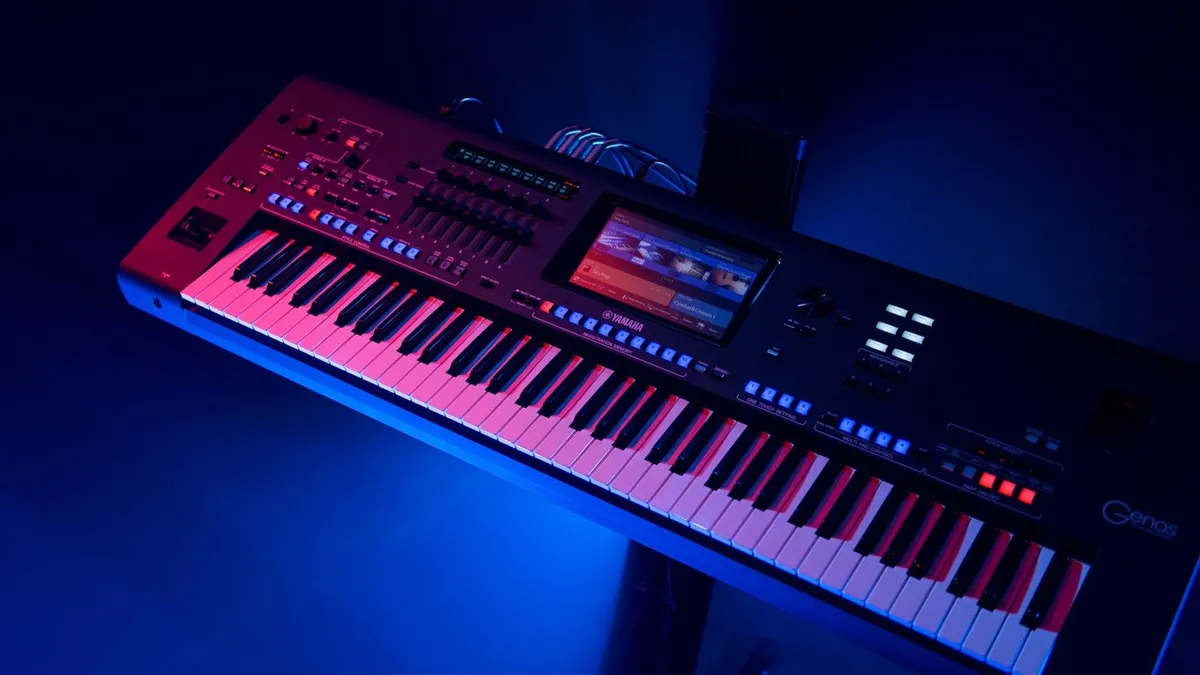
Yamaha’s successor to the well-loved Tyros line of high-end arranger keyboards, the Genos justifies its eye-watering price tag by sounding unlike any other keyboard on the market.
Build: One thing you’ll notice straight off: unlike most high-end keyboards, the Genos doesn’t come with built-in speakers. That means you’ll need to plug it into a PA, a dedicated speaker set, or just use studio headphones. This design choice keeps the build sleek and focused for pro setups, and the overall construction is premium, with a rock-solid feel and a top-tier finish that feels every bit as expensive as it looks.
Playability: The Genos is packed with advanced controls for serious musicians. Assignable knobs and sliders give you hands-on control for shaping your sound in real time, while the interface is streamlined enough to avoid menu-diving during a performance. Whether you’re triggering super articulation presets or exploring the voice harmony and vocoder functions, everything is easy to access and tweak on the fly. It’s truly designed for players who want to customise every aspect of their performance.
Sound: The sound engine is jaw-droppingly good, delivering incredibly realistic instrument voices and a huge variety of super articulation presets that add expressive nuance. Audio recording capabilities are built in, so you can capture your ideas straight from the keyboard. In short: if bells and whistles are your thing, the Genos is as feature-packed as they come, and you can absolutely hear the difference.
How to choose

So you’re in the market for a new electronic keyboard, but which type should you go for? The answer to this depends on your needs as a player. Home keyboards are great for newcomers in that they’re relatively inexpensive, lightweight and portable. They come with a range of sounds, onboard rhythm and backing band features, and often include a basic sequencer so that you can record a performance and jam over the top.
Workstation keyboards are more expensive as they’re designed to produce a full, studio-grade track without the need for a separate computer or DAW (digital audio workstation). These are the best electronic keyboards for studio or live performance scenarios, have advanced onboard sequencer capabilities, and are bristling with studio-quality sounds and professional features. Unsurprisingly, they have four-figure price tags to match.
Similarly, arranger keyboards are primarily aimed at performers who want to replicate a full band sound, making them the best electronic keyboards for those who want to perform as a ‘one-person-band’. Like home keyboards, arranger keyboards offer accompaniment styles that react to chord changes and other user interactions, but these tend to be way more flexible and sophisticated, featuring more styles than entry-level instruments.
Glossary
- Action: The mechanism inside the keyboard that controls how the keys respond when played, affecting feel and performance.
- Bluetooth: A wireless technology that allows the keyboard to connect to devices such as computers, tablets, or smartphones for data transfer or audio playback.
- Double-braced stand: A type of keyboard stand designed for greater stability and support, featuring two braces for added strength. Ideal for models with weighted keys.
- Keys: The individual levers on the keyboard that, when pressed, produce musical notes.
- Keybed: The base structure of the keyboard that houses the keys and action mechanism.
- MIDI (Musical Instrument Digital Interface): A standard for connecting electronic musical instruments and controlling various aspects of sound production.
- Pedals: Foot-operated controls that can modify the sound produced by the keyboard, such as sustaining notes.
- Polyphony: The number of notes that can be played simultaneously on a keyboard, important for complex chords and musical textures.
- Single-Braced Stand: A type of keyboard stand that is lightweight and portable, featuring a single brace for support, suitable for smaller keyboards.
- Sound Engine: The internal system responsible for generating sounds in a digital keyboard, determining the quality and variety of sounds produced.
- Transpose: The feature that allows players to shift the pitch of the keyboard up or down by a set interval.
- Touch Sensitivity: The keyboard's ability to respond to the pressure and speed of key presses, affecting volume and tone.
- Weighting: The degree of resistance to the press of the keys, which can simulate the feel of an acoustic piano.
FAQS

What’s the difference between an electronic keyboard and digital piano?
Aside from the types of keyboard listed above, the best digital pianos are electronic keyboards designed to replicate the sound and feel of an acoustic piano. As such, they don’t usually offer the same degree of tonal variety and breadth of features, such as auto accompaniment and preset styles, found on other electronic keyboards.
Most digital pianos have 88 weighted keys, so these are much bigger and heavier than the kind of portable keyboards listed in our guide to the best electronic keyboards. That’s why we’ve excluded keyboards that are marketed as digital pianos, since these are slightly different and are covered in a separate guide.
We go into more detail on the digital piano vs keyboard debate in this article.
What should I look for in an electronic keyboard?
If you’re now shopping for an electronic keyboard, it’s a good idea to acquaint yourself with the basic features, as well as the more pro-level features you’ll find on the more expensive models. Let’s take a look at these now, starting with the actual keys…
Keys
When it comes to the number of keys, we’ve made 61 keys the optimum criteria for our round-up of the best electronic keyboards. This five-octave span is the most common size for this type of keyboard, giving plenty of scope for two-handed playing.
In terms of key size, most of the instruments in our electronic keyboards guide employ the full-size piano key format. Full-size keys are usually the best type to learn on, as it means your skills will be easily transferable should you ever find yourself sitting in front of a regular piano.
Headphone socket
If you don’t want to bother anybody else while playing, a headphone socket is a must on your electronic keyboard. This means you can keep your musical noodling to yourself without annoying the neighbours.
Speaker output
Built-in speakers are an essential feature for this type of electronic keyboard. As a rule of thumb, the higher the power output of the amp that powers the speakers, the louder the sound. So if you're looking for a room-filling sound without having to plug into an external portable PA system, higher-powered speakers could be important for you.
If not, the average home keyboard comes with a pair of speakers each with an output of between 2-5W or so, which should be perfectly adequate for home use.
Velocity sensitivity
A velocity-sensitive electronic keyboard will respond dynamically to your playing, so that soft playing results in quiet notes and harder playing creates louder sounds. Without it, sounds stay at the same volume no matter how hard you play, so velocity sensitivity is vital if you want to add any degree of expressiveness to your playing.
Maximum polyphony
An electronic keyboard’s maximum polyphony is a measure of how many notes can occur at once without notes cutting off abruptly as you play. You may not think of this as an issue, only having a maximum of ten fingers in play at any time, but on keyboards such as these that feature sophisticated auto-accompaniment features, every sound the keyboard is making counts towards this number.
So that includes drum and percussion sounds, bass and auto chord voices, as well as anything you might happen to be playing on top! So the higher the maximum polyphony, the more complicated the arrangements that your keyboard will be capable of handling.
Rhythms / styles
Auto-accompaniment has come a long way from its cheesy, muzak-flavoured early days. Reaching untold levels of sophistication, today’s home keyboards now offer a crazy number of genres and styles, providing a number of different variations that work for different parts of a song, such as intro, ending and fill sections.
The greater the number of rhythms and styles on offer, the more versatile your ‘backing band in a box’ will be. Entry-level electronic keyboards can still deliver a healthy helping of cheese, but high-end arranger workstations can make you sound like a professional studio artist simply by lifting a finger.
Power source
Most of the keyboards on this list can be run on both mains and battery power, giving you the best of both worlds when it comes to portability and flexible choice of setup location. However, some can also be powered from your computer via a USB connection, something else to bear in mind if you ever want to use your keyboard as a MIDI controller with your Digital Audio Workstation (DAW).
Also, if you’re intending to rely solely on mains power, check that a compatible power adapter is included in the price, as they don’t always come with one in the box
Sound engine
The technology behind the sounds found in today’s home keyboards continues to improve apace, to the point where a good deal of what was ridiculously high-end tech five years ago has now filtered down to the more affordable end of the spectrum.
A case in point is Yamaha’s AWM (Advanced Wave Memory) sound generation technology. Once the preserve of their high-end digital pianos, AWM is now found in their E series range of budget home keyboards, but is showing its age a little compared to newer tech like Casio’s AiX system.
Sustain pedal input
An acoustic piano can feature up to three foot pedals, but only one of them is absolutely essential when starting out, and that’s the sustain or ‘damper’ pedal. For this reason, most keyboards now offer a sustain pedal input, in order to achieve a realistic acoustic piano sound, but often don’t include a compatible pedal in the price.
Auxiliary audio input
An audio input will enable you to plug an external sound source (such as an MP3 player or a smartphone connected to a music streaming service) into your electronic keyboard so that the sound of it will come out of the onboard speakers, and you can play along to your favourite songs.
Bluetooth Audio / MIDI
Some models of electronic keyboard now offer Bluetooth capability. Together with companion smartphone apps, Bluetooth enables you to stream music from your mobile device through the keyboard’s speakers as you play along. It also enables you to record MIDI data of your performance over Bluetooth into the companion app or a third-party DAW for evaluation and editing.
Audio interface
If you plan to do any kind of computer-based audio recording with your electronic keyboard, you’ll ultimately need a way of getting the sound from your keyboard into the computer. This is where an audio interface comes in, a box that sits between your instrument and computer and converts the sound your keyboard produces into a format of data that can be stored and played back by your DAW.
This usually means having to connect up an external box, but some electronic keyboards now feature USB audio interfaces built-in, negating the need for that extra box when connecting to a DAW-based system. While not essential, this kind of functionality does come in handy if you want to keep cable-related faff down to a minimum.
Educational features
A huge sector of the marketing demographic for these types of keyboards is education, as the vast majority of keyboard players start to learn as children. To that end, a lot of home keyboards are targeted mainly at beginners, and will offer some sort of onboard educational system, such as onboard songs to learn, illuminated keys that tell you what notes to play, built-in music lesson functions or bundled subscriptions to online piano lesson services.
Layer / Split
Other common features include extra keyboard modes such as layer or split. Layer mode layers two sounds together so they can be played simultaneously, while split mode enables two different sounds to be played from the upper and lower regions of the keyboard - useful for combining a bass part in the left hand with a piano or organ sound in the right, for example.
What size keyboard should I be looking for?
As previously mentioned, we’ve featured mainly 61 key ‘boards in this guide, mostly because five octaves provide an adequate range for most players. Generally speaking, they’ll be relatively compact too, which is an important consideration for many.
Other than the Yamaha Genos, all of the 61 key models measure less than a metre across. So, even if you’re a bit tight on space at home, hopefully you’ll still be able to find a suitable corner for your new musical box of tricks. If you’re a gigging musician, they’ll also fit comfortably in the boot/trunk of a hatchback or on the back seat of a small car.
Most weigh under 10kg (many less than 5kg), which also makes them easy to move from gig to gig or around the house.
A quick caveat. Pro players looking for more versatility will naturally demand more keys and may be happy trading compact size for more range. Inevitably, there is also a relationship between quality/robustness and weight. That’s not to say that some of the lighter keyboards featured here are poor quality, it’s just that if you’re living a life on the road you’ll need to ensure that your equipment is as fit for purpose as you are.
Do I need to buy a keyboard stand?
Every good keyboard deserves a great stand. This is not an area to skimp on, so buy a keyboard stand that’s sturdy, reliable and will glue your keyboard to the spot with limpet-like tenacity.
Stands come in all shapes and sizes from A-Frames to Z-Styles - check out our best keyboard stands buyer’s guide for the top picks. Inexpensive X-Stands are often bundled with keyboards, and they can be surprisingly good unless you’re a taller player.
Trust us, constantly knocking your knees against the stand’s legs will drive you to distraction - there are better options out there even if they will cost you a bit more.
Why you can trust us

With more than 17 years of experience, MusicRadar is the premier music-making website in the world. Run by musicians for musicians, we offer expertly written gear round-ups and high-quality, authoritative reviews by an extensive team of highly experienced industry professionals.
We also interview world-renowned musicians and stars about their creative processes and the nuts and bolts of their gear and technique. This gives fans an insight into the actual craft of music-making that no other music website can.
But that's not all. We also provide excellent tuition, from bite-sized tips to advanced techniques and guidance from recognised musicians.
As well as delivering high quality written reviews and features, we also produce a wealth of video content on YouTube. MusicRadarTV is where you'll find all of our access-all-areas interviews, hot gear demos and exclusive video lessons.
Below you'll find more information on the authors of this guide.
Meet the experts

Daryl is a Senior Deals Writer at MusicRadar and is responsible for writing and maintaining buyer's guides on the site as well as testing out products for reviews. Before writing for MusicRadar, Daryl worked for many years in music retail, helping musicians of all ages find the best gear for them. Whether it was a beginner's first keyboard or a top-of-the-range digital piano for the pros, Daryl was there to help steer players in the right direction.

Dave is an expert in all things keys, from beginner keyboards, to digital pianos, synths and beyond, and has been a music technology writer and product tester since 2007, contributing to the likes of Computer Music, iCreate, MusicRadar and Attack Magazine. Dave has also programmed and played keys on recordings by a range of world-renowned artists including George Michael, Kylie and Gary Barlow.

When Simon's childhood classical guitar teacher boasted he 'enjoyed a challenge', the poor man had no idea how much he'd underestimated the scale of the task ahead. Despite Simon's lack of talent, the experience did spark a lifelong passion for music. His classical guitar was discarded for an electric, then a room full of electrics before Simon discovered the joys of keys. Against all odds, Simon somehow managed to blag a career as a fashion journalist, but he's now more suitably employed writing for MusicRadar and Guitar World. When not writing or playing, he can be found terrifying himself on his mountain bike.
How we choose products

Here at MusicRadar, we are experts in our field, with many years of playing, creating and product testing between us. We live and breathe everything music gear related, and we draw on this knowledge and experience of using products in live, recording and rehearsal scenarios when selecting the products for our guides.
When choosing what we believe to be the best electronic keyboards available right now, we combine our hands-on experience, user reviews and testimonies and engage in lengthy discussions with our editorial colleagues to reach a consensus about the top products in any given category.
First and foremost, we are musicians, and we want other players to find the right product for them. So we take into careful consideration everything from budget to feature set, ease of use and durability to come up with a list of what we can safely say are the best electronic keyboards on the market right now.
Find out more about how we test music gear and services at MusicRadar.
Related buyer's guides
MusicRadar's got your back Our team of expert musicians and producers spends hours testing products to help you choose the best music-making gear for you. Find out more about how we test.
- Strike a chord with the best digital pianos for beginners
- Develop your skills with the best online piano lessons
- Explore our pick of the best Casio keyboards
- These are the best piano VSTs