
MusicRadar Verdict
A genuinely desk-friendly broadcast dynamic that sounds great and stays versatile. If you want USB convenience now and XLR flexibility later, the PodMic USB is a smart option.
Pros
- +
Does well at keeping room sound under control
- +
Dual connectivity opens up interesting possibilities
- +
Onboard processing is genuinely useful
Cons
- -
Can transmit desk rumble if using a stand
- -
Careful pushing the gain too hard…
MusicRadar's got your back Our team of expert musicians and producers spends hours testing products to help you choose the best music-making gear for you. Find out more about how we test.
Rode PodMic USB review: What is it?
The Rode PodMic USB is a broadcast-style dynamic microphone that tries to solve a very modern podcasting problem, namely wanting the tighter, room-forgiving sound of a dynamic, but with the convenience of USB. Rode’s answer is a dual-output mic with both XLR and USB-C, a built-in headphone output for zero-latency monitoring, and onboard APHEX processing you can control through Rode software. In other words, it can behave like a classic interface mic one day, then become a simple plug-and-play desk mic the next without changing your whole rig.
My test setup was a typical home studio desk: laptop with an external monitor, small nearfields on foam pads, and a regular wireless typing keyboard whose clicky keys always seem to find their way into voice recordings. The PodMic USB was tested using a boom arm clamped to the desk, angled slightly downward so I could work close without blocking the monitor, along with a separate mic stand. I ran it into a DAW for voiceover and sung takes, plus a few live calls in the middle of the week and a bit of acoustic guitar when I probably should have been working…
Rode PodMic USB review: Performance

If you already know your way around USB mics, the Rode PodMic USB immediately feels like it is built for the recurring, important parts of recording. It is a dynamic end-address mic with a tight cardioid pattern, and that combination is pretty established as the ideal pairing for untreated rooms. You can work closer than you would with a typical USB condenser, leaning into proximity effect for that thicker broadcast tone, and keeping more of the room out of the capture simply because the mic is not as eager to scoop up reflections and desk ambience. Rode’s own placement guidance backs this up too, with the mic happiest at close distance where speech stays present and confident.
In my temporary desk setup, good sounds arrived fast. Like, almost instantly. With the mic about 5-inches away, slightly off-axis, it gave me a firm low-mid foundation without turning consonants into a spitty mess. The voicing is warm and full-bodied, but there was enough clarity to keep intelligibility intact, which is exactly what you want for podcasts, narration and streaming. I tracked three common scenarios: a straight voiceover read at consistent distance, a more animated faux-YouTuber segment with bigger level swings, and a quick sung chorus where plosives and proximity can get unruly. Across those, the PodMic USB stayed composed as long as I treated it like a broadcast mic, meaning close placement and controlled angle rather than sitting back and hoping the mic could do it all.
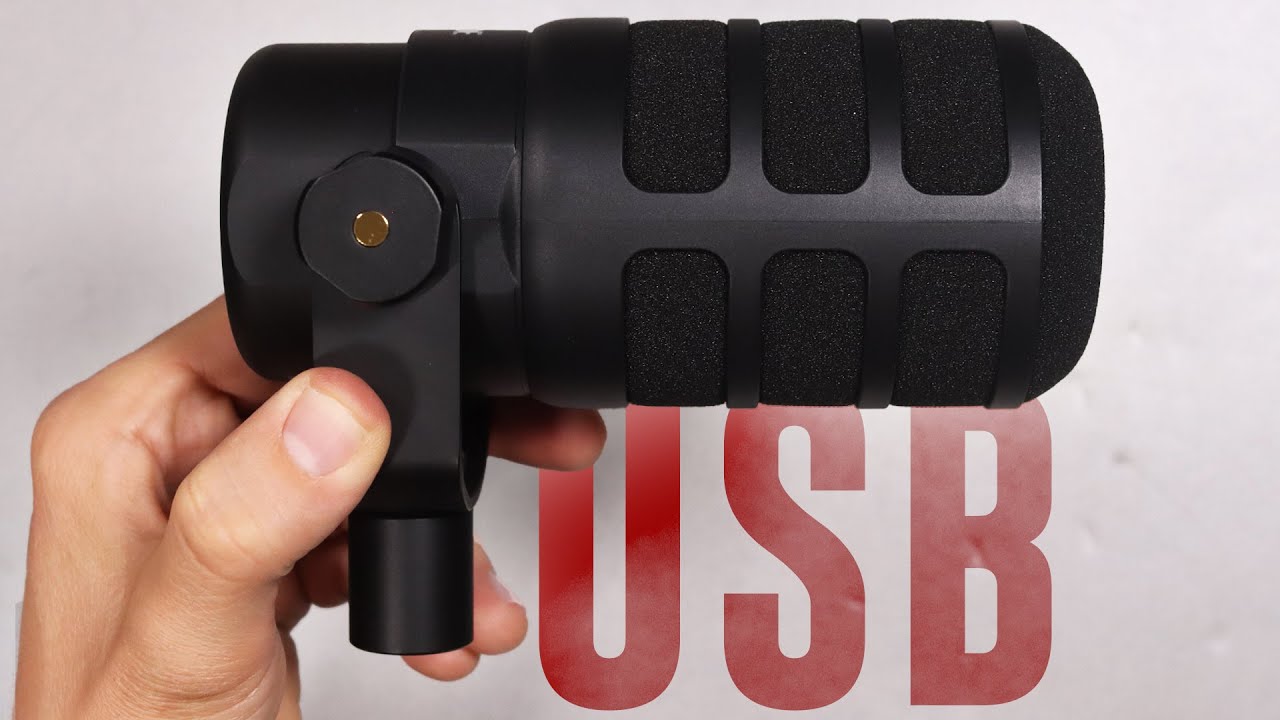
The physical design is a big part of why it works on a desk. The integrated swing mount makes positioning easy, and the mic is properly heavy, which helps it feel stable and planted once it’s in place. The flipside is that the weight and leverage really do ask for a solid arm and a decent clamp, especially if your desk has any wobble. As with any boom-mounted mic, you remain at the mercy of your overall desk stability - like a drunken ski lesson, any wobbles in the legs are going to come back to haunt you.
Rode builds in its Revolution Preamp design and pairs it with APHEX processing, and the feature set is aimed at getting a finished voice quickly.
On a lighter stand placed directly on the desk, the mic will tend to translate vibrations into low thumps. Rode includes internal measures to reduce vibration, but I definitely noticed desk-borne handling noise when the mic was stand-mounted on the same surface as my hands and keyboard. I saw the same behaviour in a controlled way by tapping the desktop and shifting my forearms. Moving it onto a boom arm reduced those knocks immediately because the desk stopped being part of the mic’s mechanical path.
The onboard USB side is where the PodMic USB begins to show its strength. Rode builds in its Revolution Preamp design and pairs it with APHEX processing, and the feature set is aimed at getting a finished voice quickly. You have access to the core tools that home studio users actually lean on for speech: a high-pass filter to lose excess rumble, a compressor for level control, a noise gate for pauses, and the APHEX-style enhancement that can add brightness and perceived weight - when used gently. Those options are spelled out in Rode’s documentation, and in practice they work best when you resist the temptation to overdo them. A light high-pass plus moderate compression was the sweet spot for me because it kept the mic sounding natural while still delivering consistency.
Monitoring is another practical win. The headphone output is designed for zero-latency listening, which means you can hear yourself without the annoying delay that can show up when you monitor through a computer buffer. That matters more than people admit, especially when you are trying to speak with natural pacing or record vocals where timing is everything.
Slightly less positive is noise or hiss that’s tied to gain staging or setup rather than the capsule itself. One example is hearing low level noise out of the box, then pushing processing or gain hard and hearing hiss as a result, sometimes even in the recorded signal. That kind of complaint comes up in the wild often enough that it is worth mentioning as a risk factor, not a certainty. In my testing, I only heard obvious noise when I forced extremes, like cranking monitoring volume unnecessarily high or stacking unnecessary gain in software after already boosting in-app. The sensible approach is to set the mic gain correctly, stay close to the grille, and use DSP as seasoning rather than a rescue act.

Another real-world quirk is firmware and connectivity behaviour. Rode’s own support guidance repeatedly points out that updates can fail through some USB hubs, and that direct connection is the safer route. The takeaway for buyers is simple: if you plan to use Rode Central or related apps, do your first setup plugged directly into the computer with a reliable cable, then confirm your settings before you build habits around it.
Against the obvious competitors, the PodMic USB has clear strengths. Compared with a Shure MV7, it’s closest competition, you are in similar territory sonically and conceptually, but the Rode leans hard into software-controlled APHEX processing and the dual XLR plus USB workflow, while Shure leans into its own app ecosystem and a very established broadcast heritage in dynamics. The MV7’s published response range is narrower than the PodMic USB’s headline bandwidth, but in practice both are voiced for speech, so it might come down to your own personal preference.
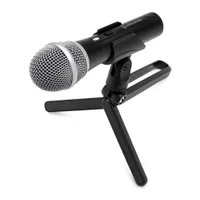
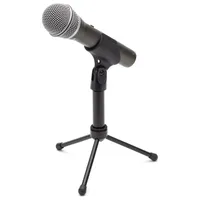
Compared with budget dual-output options like the Audio-Technica ATR2100x-USB and the Samson Q2U, the PodMic USB is less of an entry-level mic and more of a solid, sensible option you can grow with. Those mics are all excellent value and very capable, but the Rode is built like a studio tool, ships with a proper pop filter, and adds onboard processing that can save time when you are bouncing between streaming, calls and DAW work.
Where it outperforms a lot of desktop USB condensers is simply how forgiving it is. In a normal room, a dynamic like this lets you get closer, reduce room tone, and keep the voice anchored even when the environment is not perfect.
Rode PodMic USB review: Final verdict

The PodMic USB is for people who want a broadcast-leaning voice sound without turning their desk into a small-format studio every time they record. As a dynamic mic with a tight cardioid pattern and a close-working sweet spot, it rewards deliberate placement and gives you a more controlled capture than most condenser USB mics in the same kind of room. If your space is lively, your desk is noisy, or your workflow involves talking more than singing, that alone is a strong reason to look at it.
Its strongest selling point is versatility. You get XLR for traditional interface or mixer setups, USB-C for plug-and-play, a headphone output for zero-latency monitoring, and onboard processing tools that can take you from raw to finished faster when you are working across different apps. That is a very modern feature set, and it is implemented in a way that makes sense for home users who jump between a DAW, a streaming app, and everyday calls.
The cautions are mostly about setup and expectations. It is heavy enough that a flimsy stand can become part of the problem, and desk-borne vibration is a known annoyance if you mount it on the same surface you are typing on. Put it on a decent boom arm and most of that disappears.
The other caution is noise complaints that show up when users push gain or processing aggressively, or when USB power and firmware setup are not ideal. Treat it like a proper broadcast mic, stay close, update it sensibly with a direct connection, and it is far less likely to bite you.
If you are choosing one desktop mic to cover podcasting, streaming and clean home-studio voice capture, the PodMic USB makes a strong case because it stays practical while still feeling like it was more expensive than it actually is.
Rode PodMic USB review: Alternatives

Rode PodMic USB review: Hands-on demos
Podcastage
Dark Corner Studios

Nexgen
Rode PodMic USB review: Specifications
Type: |
Dynamic |
Polar pattern: |
Cardioid |
Frequency response: |
20Hz – 20kHz |
A/D conversion: |
24-bit/48kHz |
Dynamic range: |
97dB |
Max SPL: |
148dB |
Connectivity: |
USB-C, XLR, 3.5mm headphone output |
Onboard processing: |
High-pass filter, compressor, noise gate, APHEX processing via Rode apps |
Contact: |
