
MusicRadar Verdict
AKG’s new affordable studio mics look good, sound good and make a perfect choice for podcasters, streamers and music users
Pros
- +
Excellent finishing
- +
Amazing value
- +
Stylish large diaphragm designs
- +
Good specification
- +
Flexible dual diaphragm (C114)
Cons
- -
No on body filter or pad options
MusicRadar's got your back Our team of expert musicians and producers spends hours testing products to help you choose the best music-making gear for you. Find out more about how we test.
What is it?
AKG is responsible for some of the most popular and iconic microphones in recording history, and continues to manufacture classics such as the C414 condenser, alongside more affordable options such as the C3000. Its latest venture is the new C-Series. This offers their famous styling at an even more affordable price point, bringing AKG to an even wider user base.
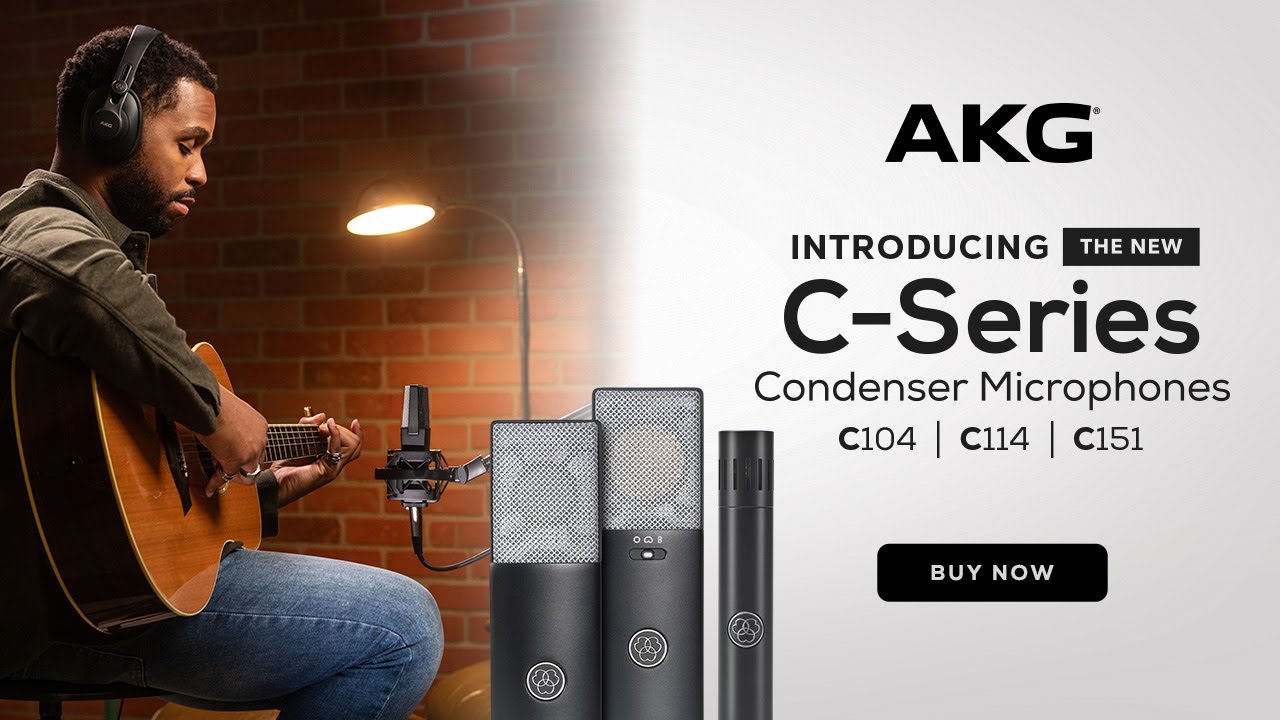
The range includes three studio condenser mics - two larger diaphragm side address models (C104 and C114) and one end address pencil style model (C151) - and we have all three up on the test bench. Key design features to note include mic bodies made from recycled metal and the use of recycled pulp and other sustainable materials for the retail box. Indeed, for all three mics, the retail box also doubles as the storage box, with no further storage pouch included. As you would expect from AKG, the finish of each mic is excellent, and particularly good for this price point.
From a technical perspective, each mic offers something different. The C151 is a traditional small diaphragm (16mm) cardioid condenser. Its good transient response and high SPL handling are ideal for close miking instruments, meanwhile its light weight and cardioid pattern mean a pair of C151s would suit XY stereo recording.
Next up, the C104 is also a fixed-pattern cardioid condenser, but this mic has a larger 22mm diaphragm in a side-address configuration. Ideal for vocals, speech and instrument recording, its low self noise make it perfect for critical recording tasks.
The C114 is the most expensive and most flexible of the three mics. It uses a large 26mm dual diaphragm capsule to deliver a choice of cardioid, omnidirectional and figure 8 pickup patterns.
All three mics are phantom-powered condensers using transformerless FET circuitry and have good self-noise figures. They also include dual-thread mic clips designed for both ⅜” and ⅝” threaded stands – a nice touch. The only slight frustration is that there are no on-body options, such as a low-cut filter.
Performance


C151
This is the simplest mic and comes with a regular low-profile mic clip. We found the sound to be reasonably bright in the top end and this is confirmed on the frequency chart, which indicates peaks just above 5kHz and 10khz. Less obvious from listening tests is the gradual low-frequency tail off, which starts around 300Hz.
The mic works very well for instruments and captures a balanced sound from an acoustic guitar, for example. Despite the slightly pushed top end, it also works well on percussion. Used right in close, it has a moderate proximity that enhances the low frequencies. It’s also quite sensitive to plosives and wind, so you might want to purchase a foam wind shield if required.


C104
The C104 and C114 are both visually reminiscent of the classic AKG C414 shape, and although that’s where the similarity pretty much ends, it’s great to see AKG recycling this styling.
Of all three mics, the C104 will likely attract the most interest, as large diaphragm condensers make a great choice for vocals or speech, and can also be used for individual instruments.
The mic is a bottom-mount design and comes with an AKG-branded custom stand mount. This offers no isolation, which is a bit of a shame. But beyond this minor gripe, once set up, the mic both looks and sounds very good. In typical AKG style, the on-axis grille is silver and the off-axis side black, making the setup quick and intuitive.
Sonically, the C104 has a reasonably forward upper mid sound that enhances articulation in speech, vocals and instruments. It’s also quite full in the lower mid frequencies, with a noticeable proximity as you get in close.
The on-axis grille offers decent protection from plosives, and although we wouldn’t recommend using it without a pop shield for close miking, a skilled voice artist may well not need one. All in all, the C104 is a great all-rounder offering fantastic value.


C114
The C114 comes with its own C-shaped bottom-mounted suspension cradle. The combination looks very slick, and we found the cradle provided very good isolation. As mentioned, this mic has a very different capsule from the C104, and also has different sonics. In cardioid mode, there’s some lift in the mid to high frequencies, but this is less obvious than the C104, delivering a more neutral sound.
In figure 8 mode, meanwhile, the on-axis sound has more presence in the upper mid frequencies. The 180-degree off-axis sound is also consistent, so you could easily use this as the side mic in a mid/side setup.
Finally, in omnidirectional mode, the C114 has more high-frequency ‘air’ and sounds good on axis with the two diaphragms. The off-axis performance is less linear, which is not unusual for dual diaphragm omnis, and we would happily use this as an ambient mic.
Verdict
All three mics are simple to use and decently spec’d, especially considering the price. Throw in quality construction and familiar AKG styling, and these should prove suitably popular with a wide range of users.
Hands-on demos
Alternatives
Specifications
C104
Type: |
Electret condenser |
Frequency Response: |
20Hz to 20kHz |
Capsule: |
22mm diaphragm |
Pickup Pattern: |
Cardioid |
Impedance: |
≤200Ohms |
Sensitivity: |
13.5mV/Pa |
Self Noise: |
14dB(A) SPL |
Max SPL: |
143dB SPL (0.5% THD) |
Phantom Power: |
48V +/- 4V |
Accessories: |
custom stand mount |
Size: |
158(l) x 47(w) x 35(d) mm |
Weight: |
375g |
Contact: |
C114
Type: |
True condenser |
Frequency Response: |
20Hz to 20kHz |
Capsule: |
26mm dual diaphragm |
Pickup Pattern: |
Cardioid, Omnidirectional, Figure 8 |
Impedance: |
≤200Ohms |
Sensitivity: |
13.5mV/Pa |
Self Noise: |
12dB(A) SPL |
Max SPL: |
145dB SPL (0.5% THD) |
Phantom Power: |
48V +/- 4V |
Accessories: |
custom shock mount |
Size: |
158(l) x 47(w) x 35(d) mm |
Weight: |
415g |
Contact: |
C151
Type: |
Electret condenser |
Frequency Response: |
20Hz to 20kHz |
Capsule: |
16mm diaphragm |
Pickup Pattern: |
Cardioid |
Impedance: |
≤200Ohms |
Sensitivity: |
11mV/Pa |
Self Noise: |
21dB(A) SPL |
Max SPL: |
147dB SPL (0.5% THD) |
Phantom Power: |
48V +/- 4V |
Accessories: |
custom clip |
Size: |
140(l) x 22(d) mm |
Weight: |
147g |
Contact: |
