MusicRadar Verdict
Blackstar Beam Solo can absolutely hang with the more established brands when it comes to its headphone amp offering. The modelling offers sumptuous guitar tones with plenty of variety and the addition of some useful features like recording via USB-C helps set it apart from others in the field. The build quality may not be the best, but it gets the important stuff spot on.
Pros
- +
Fantastic quality amp and effects modelling.
- +
Excellent selection of iconic amp and effects tones.
- +
Super intuitive ‘light beam’ display makes using it a breeze.
- +
Very cleanly presented companion app with nice practice features.
Cons
- -
Build quality isn’t as good as others, in particular the large jog wheel.
MusicRadar's got your back Our team of expert musicians and producers spends hours testing products to help you choose the best music-making gear for you. Find out more about how we test.
What is it?
A few short years ago, a headphone amp was something you used in a recording studio or in audiophile circles. Headphone amps for guitar are a different beast entirely though, and could well make a case for replacing the traditional practice amp entirely thanks to the advent of modern modelling tech. The Blackstar Beam Solo represents the latest entrant into an increasingly packed field, where nearly every major manufacturer is offering a practice-friendly product of their own.
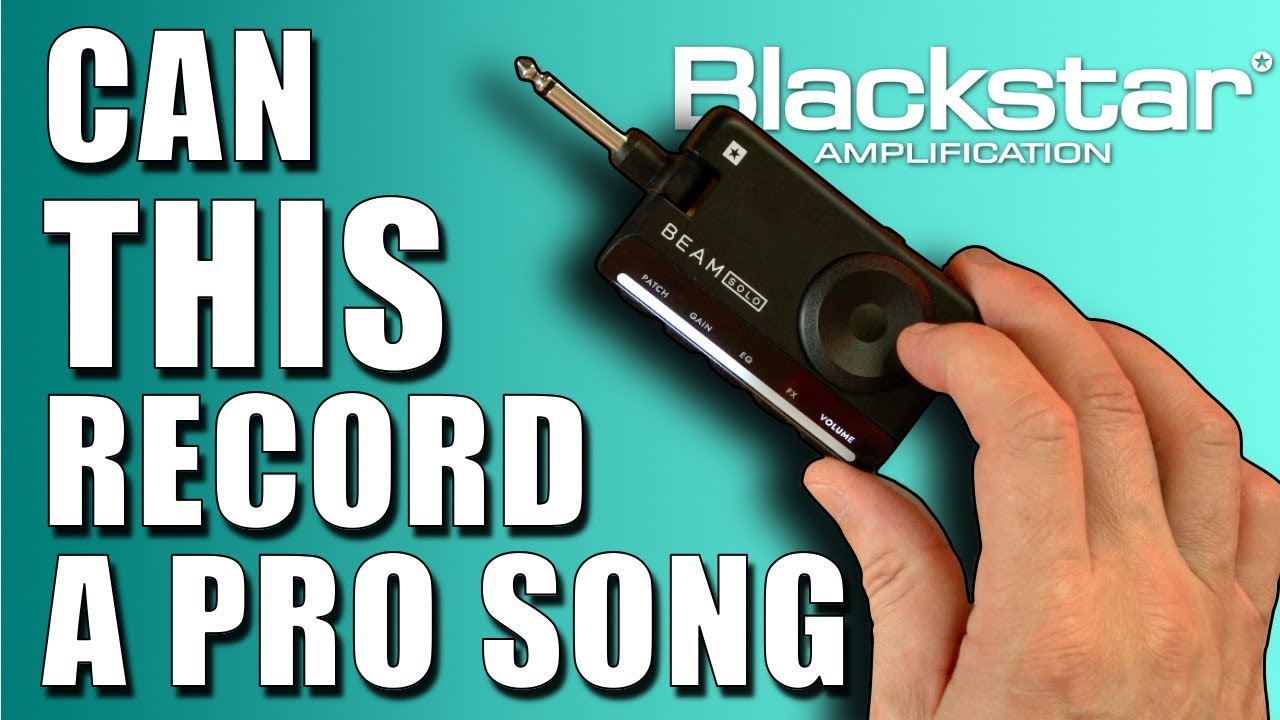
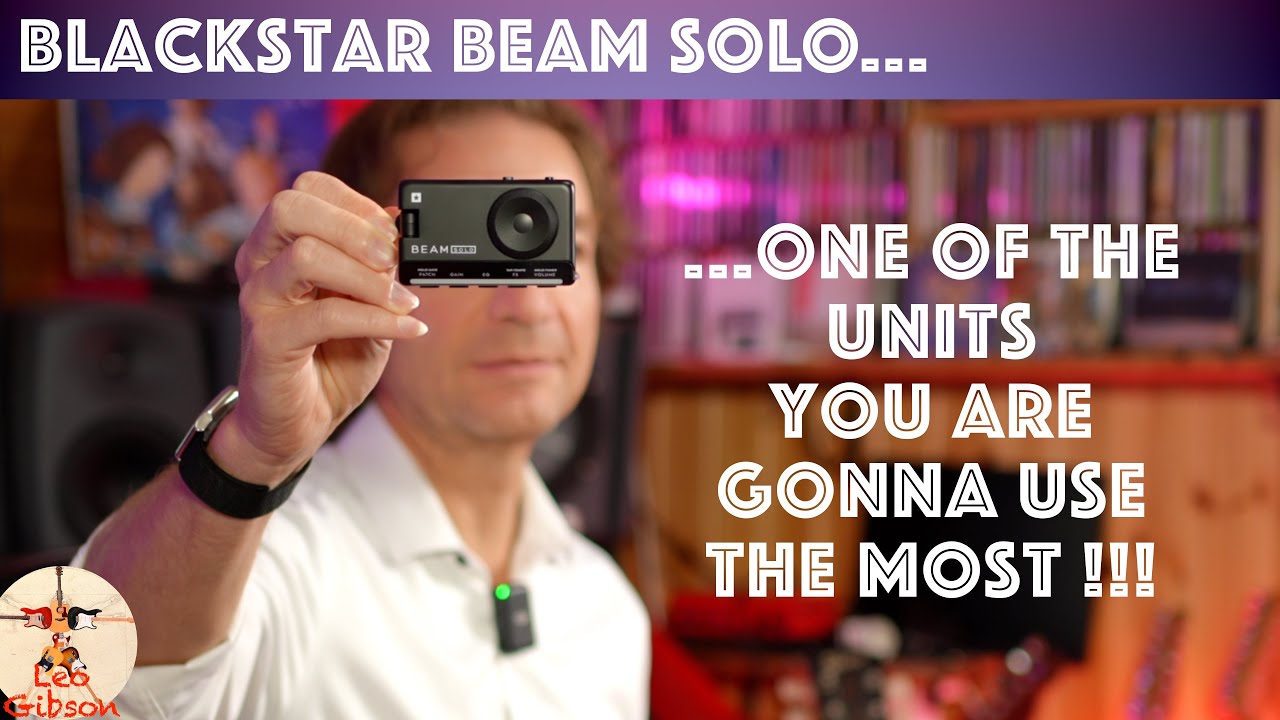
The Blackstar Beam Solo isn’t exactly pushing the boat out when it comes to design either. It looks very similar to offerings from Fender and Boss amongst many others, giving you a large rotary dial to control parameters alongside a selection of buttons for changing various functions. Bluetooth connectivity lets you jam along to music, and an online community is accessible via the web to provide custom tones.

Blackstar’s bigger competition has an ace in the hand in the form of small screens for displaying information, but that might not be the boon they think it is, thanks to the clever ‘light beam’ display that gives you various visual cues in order to aid usability - more on which later. It also offers the ability to record vocals alongside your guitar playing by using a headset microphone with its own preamp and reverb.
With so many manufacturers jumping into the world of guitar headphone amps, the Beam Solo has certainly got its work cut out to make a mark, but that’s no bad thing for us guitarists. The amount of choice we have for compact, silent practice is really incredible these days, and it appears we’ve now got another contender.
Specs

- Launch price: $129.99 | £119 | €139
- Type: Headphone amplifier
- Origin: China
- Channels: 5 presets
- Controls: Patch, gain, EQ, FX, volume, rotary control
- Connectivity: 1 x 1/4" (instrument), 1 x 1/8", 1 x USB-C
- Weight: 0.45kg (0.99lbs)
- Dimensions: 67 x 37.2 x 20.5mm
- Contact: Blackstar
Build quality

Build quality rating: ★★★½
I’ve tested quite a few different headphone amps for guitar, and the Beam Solo unfortunately falters a little bit in this department. Compared to offerings like the Mustang Micro Plus and Boss Katana Go, Beam Solo feels a bit cheap and plasticky. It’s more lightweight, but larger, although this doesn’t affect how the guitar feels when it’s plugged in, nor it’s ability to fit into multiple different guitars.
The output jack offers 270 degrees of rotation, and I tried it in a Strat, Tele, Jazzmaster, and a Gretsch semi-hollow without any problems. Unless you’ve got a really weird input jack like those you get on some Strandberg guitars, I can’t see there being any issues plugging the Beam Solo into yours.

The chassis itself is fairly solid despite the plasticky feel, but the large rotary knob on the front face, which more than resembles a speaker cone, feels quite flimsy under my thumb and forefinger. When I press down hard on it the rotation becomes jerky which affects how the knob moves, and there’s a lot of give in it, which doesn’t exactly reassure me it’s going to stand the test of time.
The five buttons on the side of the unit feel much more robust, albeit their rubbery texture means they’re not quite as tactile as those I’ve tried on the Mustang Micro and Katana Go. They click when you push hard to let you know they’ve engaged, and on the opposite side you have switches for turning the unit on and pairing via Bluetooth.
Usability

Usability rating: ★★★★½
Plugging the Beam Solo into my number one Telecaster, I start by navigating my way through the unit via the buttons and jog wheel. Just above where you press the buttons there is an LED light strip that illuminates the control labels to let you know where you are. The display adjusts depending on what you’re doing, with the volume function gradually filling from left to right to show you what volume level you’re at.
The gain function works very similarly to the volume one, filling as you turn it up, while the patch setting lights up five different increments to let you know which one you’ve engaged. The FX button can be used to set a tempo by pressing it in repeatedly, while the large jog wheel sets the mix level, giving some very nice control that doesn’t require me to access a phone app, a massive plus for me.
It’s incredibly intuitive and I don’t need to look at the manual to start finding my way around the unit and dialing in tones. You also get a basic tuner when you hold down the volume button, which uses the LED light strip to show you whether you’re note is flat or sharp. It doesn’t tell you what note you’re on however, so you’ll need it to already be in the ball park in order to get the correct note.

Heading to the Google Play Store I set about installing the Beam app on my Pixel 9 phone. Installation is lightning quick, as is connecting the Beam Solo to the app, but unfortunately it doesn’t stay connected for long. After no small rigamarole with the Blackstar tech team, we eventually work out that it’s due to having used an earlier version of the unit, which was causing an issue that was preventing it from staying connected.
The app is presented really nicely, with some excellent high-resolution graphics to display the amps and effects, and an overall very slick feel when tweaking settings or moving between menus. Much like the Positive Grid smart amps, you can set five hardware presets that can always be recalled regardless of whether you’re using the app, and download user-generated presets that cover a wide variety of sounds.
The signal chain runs along the bottom, with editable sections for pre-fx, amp, post-fx, cabrig, and music streaming. When in these menus you can interact with the different amp and effects settings by sliding a finger or tapping on the various switches, and it’s a similarly smooth feel here, so you can make fine changes with little difficulty.
There's also a bunch of backing tracks and lessons in the music streaming section of the app, and I have great fun jamming along with the Midnight Drive Rock Guitar one. Currently it's heavily weighted towards rock and blues, and I'd love to see Blackstar expand the choice here as they make for really great practice tools.
Sounds

Sounds rating: ★★★★★
Putting on my favourite studio headphones I start with the five presets that come as standard on the hardware. They go from pristine clean to all-out high-gain lead tones, so all the basic guitar tones are well covered here. With eleven guitar amps, one acoustic preamp, three bass amps, and thirty-six different effects, there’s plenty of choice too, whether you’re a fan of Blackstar amps or you want some classic guitar tones.
The tones are absolutely incredible too. Turning up the volume on my Telecaster I’m greeted by an incredibly articulate tone on the Super Clean preset. Delivered via a model of the St James 6L6 clean channel, it’s definitely giving tube amp from the 60s vibes with ultra clarity at the high end and some lovely depth and warmth on the lows.
The Artisan 30 is the next amp model, with the preset named Super Crunch. It’s actually a little too crunchy for my tastes, but disengaging the overdrive pedal from the pre-fx menu sorts it right out, delivering those classic Marshall crunch tones that pair perfectly with power chords and double stops.

Moving on to the High Gain Stack I get an appropriately chunky guitar tone. So chunky in fact, that I immediately have to reach for my baritone tuned to drop G# in order to get some properly heavy tones. There’s plenty of low-end heft here, with a very pleasing distortion that doesn’t suffer from the fizziness I’ve encountered on other amp models.
Of course, the Blackstar amp tones are the star of the show here, but if you want some different tone profiles, they are available. There’s a classic Fender clean amp, a modelled Marshall, Vox, Mesa, and a 5150, each of which has plenty of the characteristics that make them such iconic tones in the world of guitar. It means plenty of choice for the tone connoisseur, no matter what your preferred poison.
There’s a bucketload of effects to add to the mix, with plenty of choice when it comes to gain stages and fuzz pedals. I find myself particularly enjoying the reverbs though, despite the fact there are only three to choose from. You get a plate, hall, and spring algorithms, which covers the most popular guitar-specific sounds.
You can also set a room reverb via the cabrig section, setting the size of the room, how much of it you hear, and the overall width of the space. This gives me a very realistic amp in a room feel with my headphones on, which paired with excellent modelling quality means an incredibly immersive playing feel.
Verdict

With so many guitar headphone amps available nowadays, it’s especially difficult to stand out. The Blackstar Beam Solo does so much so well however, that it definitely makes itself a worthy competitor against some rather large brands in the space. Although it’s been released much later than others, this has allowed Blackstar to pack it with some very nifty features.
Side by side with the Mustang Micro and Katana Go, it definitely feels cheaper
The one place it doesn't cover itself in glory is the build quality. When holding it side by side with the Mustang Micro and Katana Go it definitely feels cheaper, lagging behind the more established competition. In particular the large encoder wheel feels as though it won’t stand up to much abuse. That said, the Beam Solo does get the most important thing right, which is how is sounds.
MusicRadar verdict: Blackstar Beam Solo can absolutely hang with the more established brands when it comes to its headphone amp offering. The modelling offers sumptuous guitar tones with plenty of variety and the addition of some useful features like recording via USB-C helps set it apart from others in the field. The build quality may not be the best, but it gets the important stuff spot on.
Test |
Results |
Score |
|---|---|---|
Build quality |
Overall solid, but some components feel flimsy. |
★★★½ |
Usability |
‘Light beam’ system is very intuitive to use. |
★★★★½ |
Sounds |
Stunning sound quality and plenty of choice. |
★★★★★ |
Overall |
Performs very well against more established competition. |
★★★★½ |
Also try
Hands-on videos
Leo Gibson
Jamie Slays

EytschPi42