MusicRadar Verdict
Morley and DOD’s WTF is a wild mashup that thrives on weirdness, combining what could be three run-of-the-mill effects into one stomp that is seriously fun to play with. The wah is seamless, the octave is beautifully glitchy, and while the fuzz is thin in solo, it transforms when stacked. It can feel a little cramped to operate, but it’s packed with character, and I can’t help but wonder what madness would ensue if Morley took a stab at combining more DOD classics in the Morley format.
Reasons to buy
- +
Switchless wah is seamless.
- +
Fun glitchy old-school octaver.
- +
All three effects can be run separately or together.
- +
Very well made.
Reasons to avoid
- -
Footswitches are a little cramped.
- -
The fuzz is pretty thin on its own.
MusicRadar's got your back Our team of expert musicians and producers spends hours testing products to help you choose the best music-making gear for you. Find out more about how we test.
What is it?
Pedal company partnerships are nothing new in the world of stompboxes. We’ve seen Boss and JHS team up for the much-hyped Angry Driver, Chase Bliss and Z-VEX unleash the gloriously unhinged Bliss Factory, a mad creation born from Reverb’s The Pedal Movie, and MXR help guitarists everywhere finally get hold of an Analog Man classic with the Duke of Tone. It's hard to predict just which companies will collaborate next, but the latest tag-team is something we didn’t see coming.
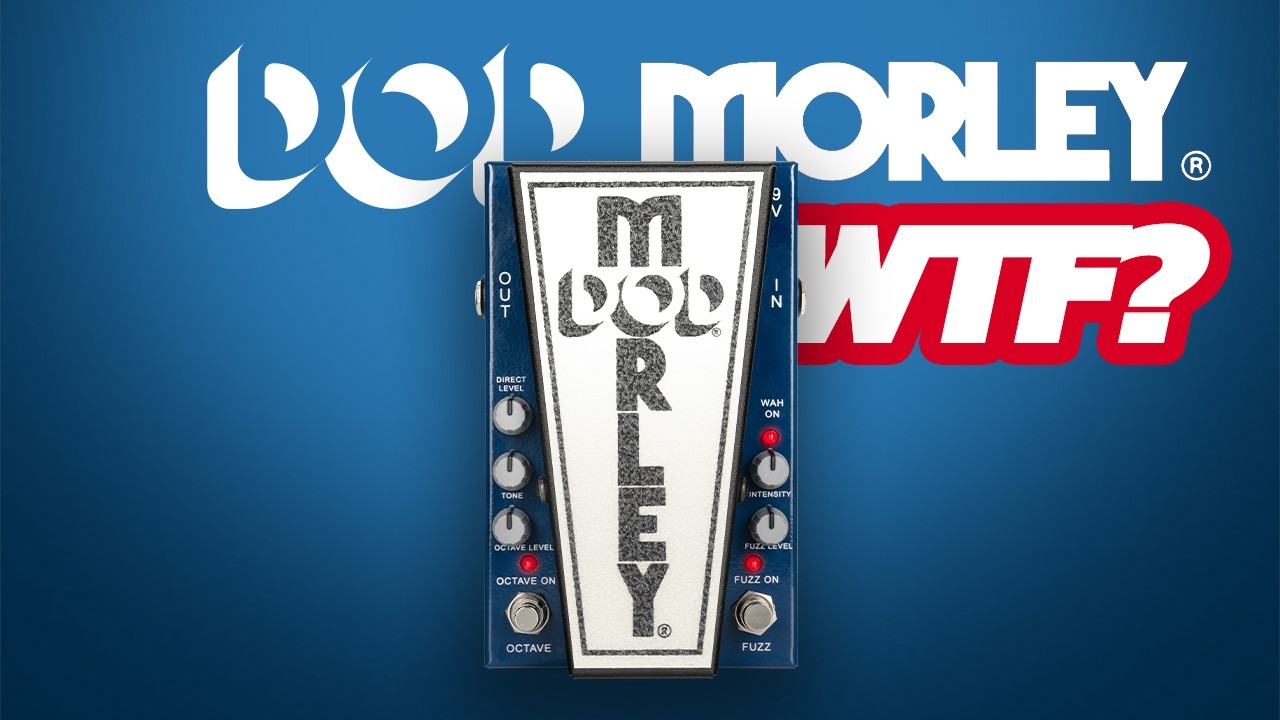
DOD and Morley have joined forces for the aptly named WTF, or Wah-ocTo-Fuzz. Combining three pedals in one, it’s a triple-threat that promises to be a sonic Swiss Army knife, packing a wah pedal, octave, and fuzz into one unapologetically wild box.
Built around the classic Morley wah chassis, the pedal, of course, features the Illinois-based firm’s tried-and-true Electro-Optical design, switchless operation, and a glow-in-the-dark treadle ready to spring into action the second your boot hits it.

For the fuzz, Morley brings its notorious Power Fuzz circuit, a ‘70s-inspired gain machine used by the likes of Metallica’s low-end master Cliff Burton. You get a Level knob for volume tweaks and an Intensity control to dial in as much filth as you see fit.
Octave duties are courtesy of DOD’s cult-classic FX35 Octoplus circuit. This monophonic sub-octave pedal, long-coveted since its discontinuation in ‘94, is all about thick, synthy, glitch-happy low end. It’s even rumoured to be the secret behind Alain Johannes’ massive detuned sound on Eleven’s Reach Out.
The WTF wraps everything up in a slick navy blue, cold-rolled steel enclosure, a nod to classic DOD styling, with standard 1/4” ins and outs, 9V power from a battery or pedalboard power supply, and buffered bypass.
Specs

- Launch price: $249.99 | £249.99 | €290.99
- Type: Wah, Octave and Fuzz
- Controls: Octave Level, Direct Level, Tone, Fuzz Level, Intensity
- Features: Combines Morley switchless wah with a DOD octaver, and classic Morley Fuzz.
- Connectivity: Input: One 1/4-inch, Output: One 1/4-inch, 9V power
- Bypass: Buffered
- Power: 9V, 30 mA.
- Dimensions: 6.84" x 4.25" x 4.10" (17.4 cm x 10.8 cm x 10.4 cm)
- Weight: 2.26 lbs (1.02 kg)
- Contact: Digitech
Build quality

Build quality rating: ★★★★½
It’s worth noting that this is not a light unit – it’s pretty chunky, and I certainly feel its presence on my board
If you’ve played a Morley pedal before, you’ll know they are built like a small tank, and the WTF is no different. The navy blue finish is a slick nod to DOD’s iconic look, and I think it looks pretty cool – not that I should be surprised, as the wah company has been making pedals since the ‘70s.
It’s worth noting that this is not a light unit – it’s pretty chunky thanks to the rolled-steel casing and triple-loaded circuitry, and I certainly feel its presence on my pedalboard.
I’d also say it’s a little on the tall side. If you’re used to standard-issue wahs, you’ll notice the extra height right away. It’s not a massive issue, really, but it can feel a little awkward at first, as the pedal sits at a different angle to that of a Cry Baby. On that, it's worth mentioning that this wah is mechanically sprung.
Therefore, the pedal returns to the heel-down position when you take your foot off the treadle. It also could present an additional size challenge if your pedalboard lives in a bag or case.
Now, while the treadle is a joy to operate, thanks to its very smooth travel, the two effect switches for the octave and fuzz sit a bit too close for comfort in my opinion – particularly if you’re rocking boots or have larger feet. It’s nothing I can’t get used to, especially with the help of pedal switch toppers but it does feel cramped at times.
Still, the switchless wah operation works like a charm. I made the switch to a switchless Cry Baby a number of years ago, and I can’t ever see myself going back. I just love that there’s no more toe-tapping to engage or disengage; I just step on the treadle, and away I go. It’s seamless and intuitive, letting you focus on your playing rather than your footwork. Plus it comes with the added benefit of not having a pot to wear-out or become scratchy through dust collection.
Usability and features

Usability and features rating: ★★★★☆
For being a three-in-one pedal, the WTF is pretty straightforward to operate, with pretty minimal controls
For being a three-in-one pedal, the WTF is pretty straightforward to operate, with somewhat minimal controls. Starting with the fuzz, there are only two controls for dialing it in – Level and Intensity – which let you adjust the volume and gain level. I do like simple pedals, but I can’t help but feel that a tone control would come in handy here. Fuzz by its very nature is bright, so being able to knock some of that fizzy top end back a touch would be very useful.
Moving over to the octave, and this time there are three controls – Octave Level, Tone, and Direct Level. This feels pretty much perfect and exactly the dials I want to see on an octaver. The Octave Level lets me dial in how prominent the low octave is, while the Direct Level preserves my clean, unaffected signal, and the tone controls the perfect amount of top-end.
The wah doesn’t muddy the waters with unnecessary extras, too. There are no controls for the wah itself, but the classic Morley treadle is adorned with a handy glow-in-the-dark strip, ensuring that finding your footing on a dark stage is never an issue.
Sounds

Sounds rating: ★★★★½
And now on to the sound. For testing, I opted for a Gibson Firebird and a Fender Telecaster going into a Fender Blues Jr amp, while drive duties were handled by the JHS AT+. I start by taking each of the effects on its own to get a true sense of what’s going on before I start combining them.
Okay, so if you’re aware of that classic Morley tone, you know exactly what I have here. It’s wide, throaty, and vocal, with a sweep that covers glassy funk to classic rock solos and everything in between – and it sounds killer in my opinion.
The electro-optical design keeps things smooth and hassle-free, making it a joy to ride whether I'm chopping rhythms or wailing on my basic clutch of blues pentatonic licks. All told, it’s a versatile wah that may not have any tone-shaping capabilities, but it doesn’t really need them – it’s a point-and-shoot wah that does exactly what you want it to.
The fuzz circuit, inspired by Morley’s Power Fuzz, is a raspy, unapologetic beast. To my ears, it’s a touch thin. Comparing it to the Big Muff that’s a staple on my 'board, the Morley lacks the bottom-end weight of the Electro-Harmonix and can sound a little brittle. That said, it certainly can cut right through a mix with its snarling highs and abundance of bite.

All in all, the effects here sound decent on their own, but as you’d expect, the real magic happens when you combine them together
Now, the octave circuit is where the WTF really shows its eccentric side. Borrowed from the FX35 Octoplus, it’s monophonic, analogue, and gloriously glitchy. As I play single-note riffs, I’m greeted with a satisfying sub-octave growl that wobbles with artefacts.
I’m used to the pure, clean octaves of the EHX POG, so this kind of old-school sound makes me want to experiment, pushing my riffs and solos into new, uncharted territory. If I play chords, the FX35 tends to freak out a bit and sound almost synthy, but, man, it's fun.
All in all, the effects here sound decent on their own, but as you’d expect, the real magic happens when you combine them together. Add the octaver to the fuzz, and suddenly it transforms into a monstrous wall of sound, thickening up and adding that depth it was lacking when soloed. For me, this is an instantly inspiring sound and one that just seemed to produce riffs out of nowhere. Throw in the wah, and you can almost create talk-box-like sounds.
Whether you’re looking for classic funk, synth-inspired doom, or just want to shake things up with something unpredictable, the WTF has you covered. It’s not for the faint of heart, but I must say, it's an absolute blast.
Verdict

So, where does the Morley x DOD WTF leave us? Quite honestly, it’s the kind of pedal that could only exist as a result of caution being thrown to the wind to create something a bit different, and honestly, I’m totally here for it. It wears its weirdness as a badge of honour, and that’s exactly why I love it.
The switchless wah is as smooth and intuitive as ever, and the fuzz, while a little thin in isolation, comes alive when paired with the octave, morphing into a glitchy, monstrous force that is ideal for riff inspiration. The octave circuit is pretty old school, and as such it’s gloriously imperfect, with that unmistakable analogue grit that modern players may not like.
I’m already dreaming about a Morley wah fused with the infamous DOD Grunge, and the washy swirl of the FX64 Ice Box chorus
Sure, the layout can be a bit cramped, and I’d still love a tone control on the fuzz, but these are small prices to pay for a pedal that delivers this much character and creative potential.
The build quality is classic Morley, and the DOD styling gives it a retro-cool edge that stands out on any board. What’s most exciting, though, is the precedent this sets. If Morley and DOD can resurrect the Octoplus in such wild fashion, what’s stopping them from diving even deeper into the DOD vault?
I’m already dreaming about a Morley wah fused with the infamous DOD Grunge, and the washy swirl of the FX64 Ice Box chorus. The possibilities are endless, and if the WTF is a sign of things to come, I can’t wait to see what these mad scientists cook up next.
MusicRadar verdict: Morley and DOD’s WTF is a wild mashup that thrives on weirdness; combining what could be three run-of-the-mill effects into one stomp that is seriously fun to play with. The wah is seamless, the octave is beautifully glitchy, and while the fuzz is thin in solo, it transforms when stacked. It can feel a little cramped to operate, but it’s packed with character, and I can’t help but wonder what madness would ensue if Morley took on the DOD and took a stab at combining more DOD classics in the Morley format.
Test |
Results |
Score |
|---|---|---|
Build quality |
Tank-tough and ready for abuse, but the switches are a little close for comfort. |
★★★★½ |
Usability and features |
Surprisingly intuitive for a triple-effect pedal, though a fuzz tone knob would be welcome. |
★★★★☆ |
Sounds |
Bursting with character that’s glitchy, gritty, and inspiring, especially when stacking effects. |
★★★★½ |
Overall |
Not perfect, but a creative powerhouse that makes you want to play and that’s the most important thing, right? |
★★★★½ |
Also try
Hands-on videos
DigiTech