





MusicRadar Verdict
For me, the new BB535 Cry Baby nails that iconic '90s wah attitude with a killer range of tones that will make anyone understand the wah boom of the 90s, but the indicator LEDs, while certainly practical, feel awkwardly placed, especially if you have large feet.
Reasons to buy
- +
Wildly versatile.
- +
Impressive build.
- +
Contains the original inductor.
Reasons to avoid
- -
The indicator lights are hard to see past your foot.
- -
Takes up a fair amount of pedalboard real estate.
MusicRadar's got your back Our team of expert musicians and producers spends hours testing products to help you choose the best music-making gear for you. Find out more about how we test.
What is it?
When you think of the humble wah pedal, maybe your mind flashes to the late '60s and early '70s, with the guitar heroes of yesteryear adding that trademark wacka-wacka to lead and rhythm parts, but it could be argued that the ‘90s were just as heavy with wah use, with this expressive stomp having something of a renaissance. That percussive quack made way to a weeping lead tone that now had more attitude, more aggression, and a hell of a lot more gain.
From Kirk Hammett’s wah-drenched Black Album leads to Jerry Cantrell’s searing, vocal-like phrasing, Tom Morello’s riotous riffage, and of course, Slash’s sweet harmonic minor licks, the wah pedal was most definitely back in the ‘90s, and it meant business.
This is where the original Cry Baby 535Q comes in. Dunlop launched this beast in 1994, aiming it squarely at the guitar-slingers who rekindled interest in the Cry Baby, dragging it kicking and screaming into the grunge era. This could be considered the first commercially available 'modded' wah, sporting a frequency selector, a built-in boost, and a custom inductor tuned for a more throaty tone. While the original had four voice modes, by 1999 it had expanded to six, adding two more vintage options to the mix and making it Dunlop’s most versatile wah to date.
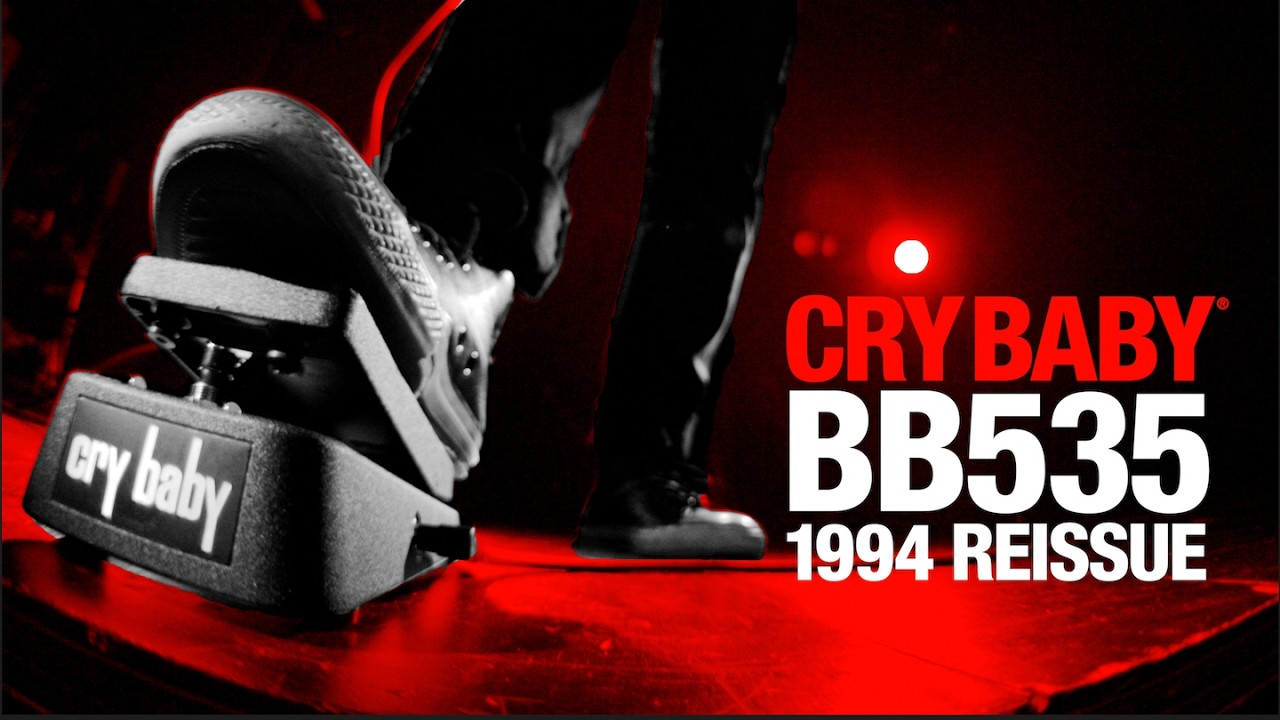
It is this 1999 version that Dunlop has decided to relaunch in 2026. Painstakingly recreating the original’s circuit, it even features the proper inductor supplied by the original manufacturer – meaning it should sound like a vintage example.
The only real departure from the original ‘99 model is that you now have on/off LEDs located at the top of the pedal for both the wah and boost, meaning you now know at a glance if you’ve forgotten to turn it off after your solo.
Specs

- Launch price: $229 | £234 | €269
- Type: Wah
- Controls: Boost Gain, Wah Range Selector
- Features: Six wah tones in one pedal, with built-in boost of up to 12dB
- Connectivity: 1/4" input and output
- Bypass: Buffered
- Power: 9V, 12mA
- Dimensions: 11" (L) x 5.1" (W) x 3.5" (H)
- Weight: 4.12 lbs
- Contact: Dunlop
Build quality

Build quality rating: ★★★★☆
The treadle sweep is beautifully smooth and stable, with just enough resistance to feel precise
If you’ve played any Dunlop wah in recent years, you’ll know exactly what to expect here. This pedal is big, unapologetically hefty, and pretty rock-solid.
I’ve had my fair share of Cry Babys over the years, and honestly, my pedalboard feels a little naked without one. My journey started with the basic, but dependable GCB95, before I graduated to the more versatile 535Q, and eventually, I took the plunge on the Slash signature model. The Slash wah was my go-to for a long time, though its weight and monstrous size eventually wore me down. That’s when I downsized to the Mini 535Q Auto, and I honestly haven’t looked back since.
Coming back to a full-size wah like the BB535 after years of using a mini is a bit of a shock. This thing feels huge on your 'board, and the oversized mode selector knob sticking out certainly doesn’t do it any favours. That said, there’s a reassuring quality to the build. The treadle sweep is beautifully smooth and stable, with just enough resistance to feel precise – it’s even stiff enough to stay put if you want to fumble your way through Money For Nothing. The six-position switch has a tactile and satisfying click, and the mini boost control is easy to access and tweak on the fly.

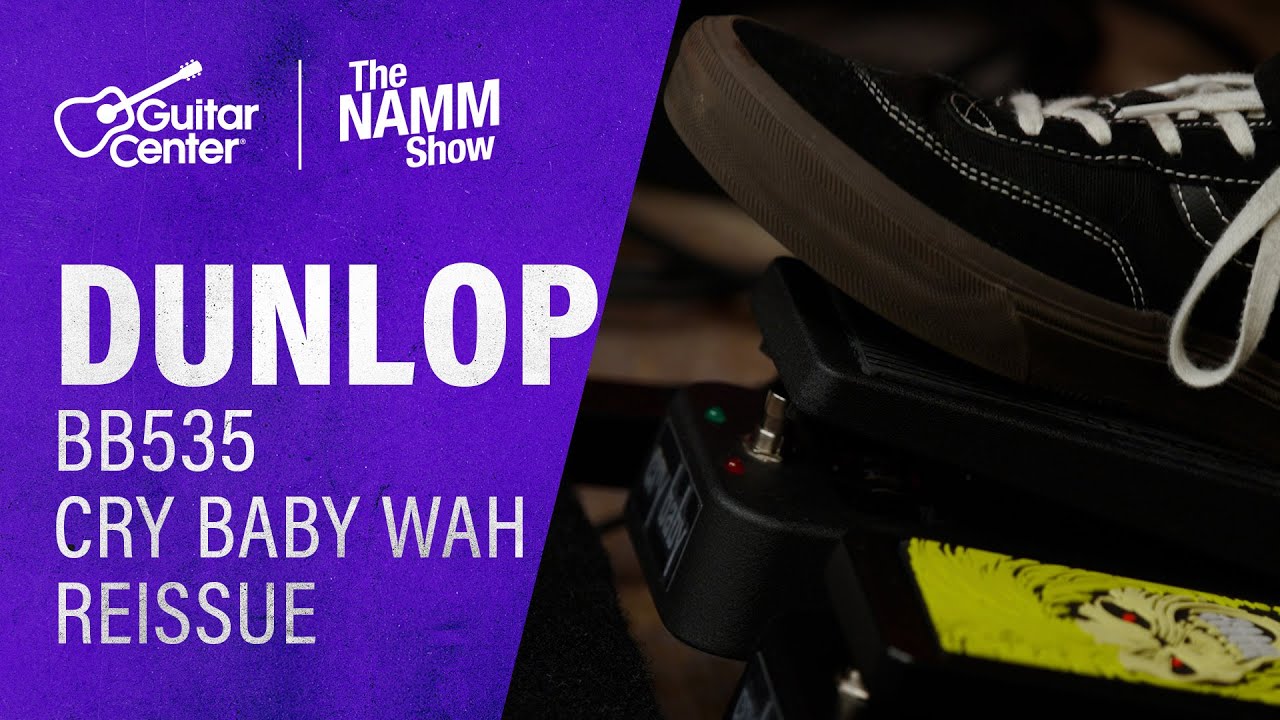
If I have one gripe with the BB535’s build, it’s the position of the on/off LED lights. They’re tucked away right at the tip of the pedal, ever-so-slightly obscured by the treadle. On paper, this seems logical enough, and it’s hardly the first Cry Baby to put them there, but in practice, your foot can block the view, making it tricky to check your status mid-song.
To be fair, I will concede that there’s not really a perfect place for these indicator LEDs on a classic wah pedal format. Both the Slash and Buddy Guy models have them on the side, which I personally prefer, while Dimebag and Akira Takasaki went for the heel-end placement. No matter where Dunlop puts these lights, someone’s bound to find fault; we all have our opinions after all, and what works for one won’t necessarily work for another. When I use a wah, my toes tend to hang over the edge, so this placement just doesn’t work for me.
Ultimately, though, it doesn’t detract from the BB535’s overall build quality. At the end of the day, this pedal is tightly constructed and expertly put together.
Usability and features

Usability and features rating: ★★★★½
With a simple twist, you can jump from a bright, vintage-style quack to a deep, throaty growl and so much more
Wah pedals are pretty simple by nature, and thankfully, the new BB535 is no different. Now, while the unit may be loaded with a wealth of features, most of which are found on other Cry Baby pedals, it still manages to keep a very intuitive layout.
The BB535 offers six distinct wah voicings, courtesy of a chunky side-mounted rotary switch. This is the heart of what makes the BB535 such a versatile beast. With a simple twist, you can jump from a bright, vintage-style quack to a deep, throaty growl and so much more.
Whether you’re chasing the glassy top end of classic funk or the mid-heavy snarl of ‘90s alt-rock, this pedal has you covered. I do wish there were small numbers or markings around the dial so you could see your setting at a glance, though. This would be especially helpful in the heat of a gig. However, the dial is easy to adjust, and thanks to the thick rubber padding of the control, I could even adjust it with my foot, meaning I didn’t have to constantly bend down to make changes.
The footswitch is easy to engage without feeling stiff or unpredictable, and the pedal’s action is smooth across the entire sweep, just how a good wah should feel.
The onboard boost is another highlight. I’ve always loved the boost switch on these pedals. To me, it’s very easy to push on and off, perfectly placed for heel operation, letting you kick in up to +12dB of gain when you need to cut through the mix. Engaging it feels pretty seamless, and the boost circuit, taken from the beloved MXR Micro Amp, sounds transparent and musical, and complements the wah sounds really well.
Sounds

Sounds rating: ★★★★★
There’s a lot of sonic ground covered in this pedal
For this review, I plugged in my trusty Gibson Explorer and ran it into a Jet City JC-100 head with its matching 2x12 cab. That amp’s Soldano-designed circuit seemed like the perfect pairing for this ‘90s throwback stomp. I dialled in a healthy dose of gain, with the mids slightly scooped to give those wah frequencies a little more room to breathe, and set about putting the Cry Baby through its paces.
First things first, this is a wildly versatile pedal. Each position gives you a totally different character, and frankly, it’s hard to find a "bad" setting.
I kicked things off with the boost disengaged, wanting to hear the pedal in its purest form. Even without any extra push, the BB535 delivers a wide range of voices. The first position, which has a frequency range of 444 to 2117 Hz, is all about that classic, percussive ‘wacka-wacka’ sound. It’s funky and pretty expressive, but you do lose a fair bit of your low-end. The second position moves the frequency band down a little, cutting a little of the sharp highs, and introduces more mids, at 385 to 1888 Hz. Notching over to the third position, and we’re into classic Cry Baby territory, at 300 to 1468 Hz. This is the closest setting to the quintessential Cry Baby tone, for me. The sound is nasal, mid-forward, but not too bright, and ideal for classic rock solos and beyond.
The fourth setting quickly became my favourite. At 248 to 1217 Hz, it feels slightly rounder, more vocal-like, and fuller in general. It’s perfect for those Jerry Cantrell detuned riffs, when you don’t want to lose too much bass.
Fifth position is where things start to get really throaty and aggressive, at 214 to 1050 Hz, the highs are noticeably notched out, and the low-mids are fat and full-on; you can really hear that “wow” sound when you sweep through the full range of the treadle. Lastly, we have the sixth position, which at 173 to 847 Hz is the deepest and tubbiest of the six.
What really surprised me was just how musical every mode is. I can genuinely see a use for all of them. There’s a lot of sonic ground covered in this pedal.
With the boost engaged, the pedal takes on a whole new personality. That extra 12dB of gain doesn’t just make you louder, it adds meat and presence, making your solos pop out of the mix without getting brittle or boxy. It’s especially fun with big, saturated amp settings.
Verdict

Dunlop’s BB535 Cry Baby is a love letter to the 90s alt-rock revolution and to the players who brought the wah back to the forefront. As expected from Dunlop, this pedal is hefty, solid, and ready for a lifetime of stomping. The build is robust, with a sweep that feels reassuringly smooth and tactile. Okay, the slightly obscured LEDs are a bit of a bug barer for me, but even that can’t overshadow just how road-ready and well-crafted this thing is.
Six distinct wah voices mean you can cover every classic era of wah from snappy funk and vintage rock to the snarling, mid-heavy tones that defined the ‘90s. Every mode is genuinely usable, and the frequency ranges are voiced so thoughtfully that you’ll struggle to find a setting that doesn’t bring something unique out of your playing, and the addition of a built-in boost is the icing on the cake, giving solos extra muscle.
If you’re after a pedal that delivers classic Cry Baby attitude with plenty of versatility, this is the one.
MusicRadar's verdict: For me, the new BB535 Cry Baby nails that iconic '90s wah attitude with a killer range of tones that will make anyone understand the wah boom of the 90s, but the indicator LEDs, while certainly practical, feel awkwardly placed, especially if you have large feet.
Test |
Results |
Score |
|---|---|---|
Build quality |
The BB535 Cry Baby is solidly built, with a hefty, premium feel and smooth, reassuring treadle action – pity the LEDs are in an awkward place. |
★★★★☆ |
Usability and features |
Despite its many features, the BB535 remains intuitive and user-friendly, with easily accessible controls. |
★★★★½ |
Sounds |
The BB535 offers a wide range of expressive, musical wah tones across all six modes, with each voicing bringing unique character and versatility. |
★★★★★ |
Overall |
The BB535 Cry Baby delivers classic Cry Baby attitude with impressive build, versatility, and tone, making it an excellent choice for players seeking both authentic ’90s tones. |
★★★★½ |
Also try
Hands-on videos
Jim Dunlop USA
Guitar Center
- Best wah pedals: Simply the top wah-wahs for your pedalboard
