





MusicRadar Verdict
The performance modes are this pedal’s unique feature and will hold an appeal for some players. But beyond the razzamatazz let’s not lose sight of the fact that, at its heart, the Drag is a decent BBD analogue delay pedal with plenty of cool modulation variation.
Reasons to buy
- +
Compact size with connectivity in the right place.
- +
Solid analogue delay sound.
- +
Filter (EQ) knob.
- +
Adjustable modulation.
Reasons to avoid
- -
Setting up via the Curve knob and coloured LEDs is confusing.
- -
Tap tempo is only available with an added FS3X footswitch.
MusicRadar's got your back Our team of expert musicians and producers spends hours testing products to help you choose the best music-making gear for you. Find out more about how we test.
What is it?
Analogue delay pedals continue to be a popular choice for guitar players due to its ability to blend so well with guitar tone.
The latest iteration to hit our pages is the Drag from DOD, a brand that has previous form in the area with its Rubberneck pedal, which featured footswitchable performance features, including an eponymous control that gives a momentarily octave-up or -down pitch shift of the repeats.
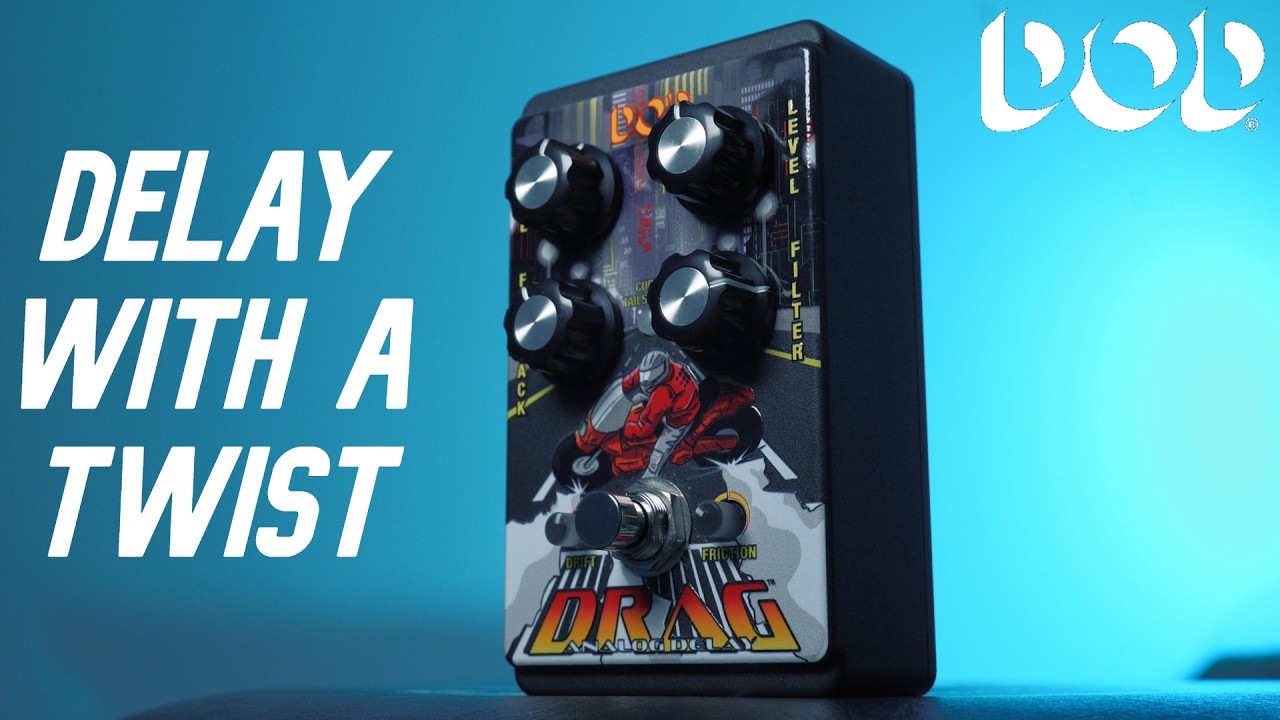
Performance features seem to be what the Drag is all about and DOD has themed these after anime motorcycle manoeuvres, particularly the Akira-style Slide where a red motorcycle skids to a smoking, sideways halt (hence the pedal’s artwork).
Specs

- Price: $219 | £199 | €229
- Origin: China
- Type: Analogue delay pedal
- Controls: Time, Level, Feedback, Filter, Curve Tails, Drift, Friction
- Features: Delay and time stretching
- Connectivity: Input, Output, Power, FS3X jack
- Bypass: True and Buffered/Tails (switchable)
- Power: 9V DC centre-negative 120mA
- Dimensions: 121 x 71 x 38 mm
- Weight: 10.58oz/0.30kg
- Contact: Digitech
Usability and sounds

These effects – triggered by a footswitch-hold and adjusted with the Friction knob – can be the aforementioned Rubberneck, plus the SlideStop for a pitched-down effect, and Evade, which is meant to emulate a skidding sound.

The repeats are typically analogue in that they degrade organically and are voiced with enough top-end for them to cut through as needed
Putting those effects aside for one minute, the pedal functions as a standard delay from basic doubling and slapback up to longer delays of 750ms. Alongside adjustable delay Time, Level and Feedback, there’s crucially a Filter knob to set the EQ of the repeats – roll it back to subdue the top-end.
The repeats are typically analogue in that they degrade organically and are voiced with enough top-end for them to cut through as needed, but the Filter control can really darken them up for a pleasant mushiness as they blend in.
You can add modulation to the repeats with the Drift knob. There’s a choice of four curves (Sine, Reverse Saw, Square, Random) with variation from a slight chorusing to a full-on wobble.
Verdict
Verdict: ★★★★½
If you like momentary off-the-wall effects, these will be right up your street
While tweaking the four main knobs isn’t a chore, setting up the modulation and modes can be a faff as you keep track of LED colours to see where you are, but you can throw in a range of pitch-shift curveballs if desired.
If you like momentary off-the-wall effects, these will be right up your street, although you’ll still have to twist the Feedback knob by hand for a runaway oscillation effect unless you add the FS3X footswitch, which will also give you tap tempo.
MusicRadar verdict: The performance modes are this pedal’s unique feature and will hold an appeal for some players. But beyond the razzamatazz let’s not lose sight of the fact that, at its heart, the Drag is a decent BBD analogue delay pedal with plenty of cool modulation variation.
Hands-on videos
DigiTech
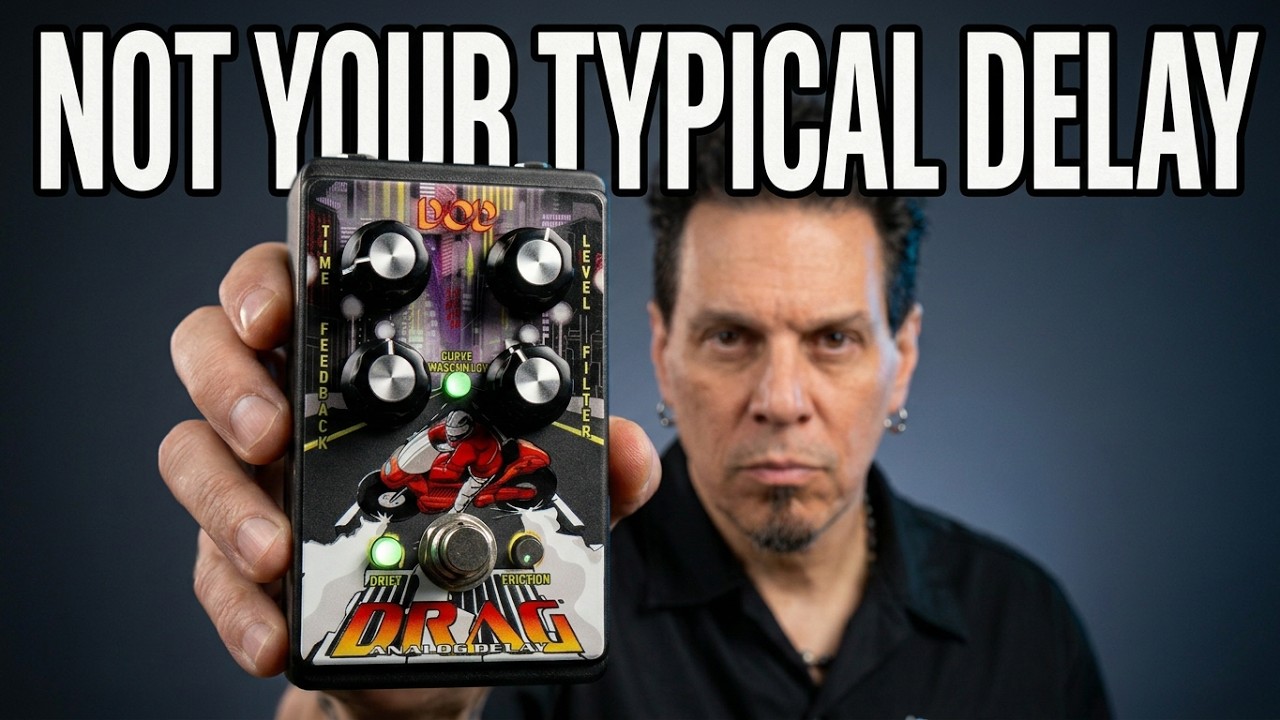
60 Cycle Hum
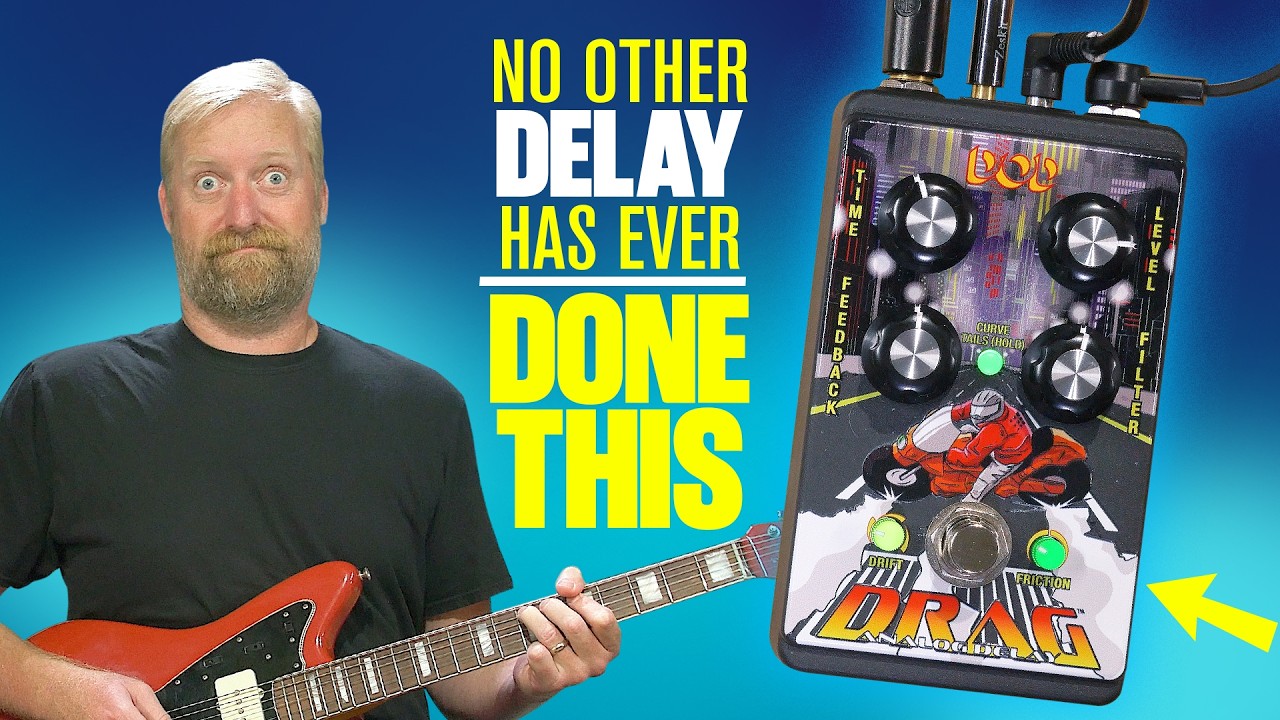
Cameron Cooper
- "If the WTF is a sign of things to come, I can’t wait to see what these mad scientists cook up next": Morley x DOD Wah-OcTo-Fuzz review
- This article first appeared in Guitarist. Subscribe and save
