MusicRadar Verdict
With the modern metal sphere full of garish noises, Tallon Electric has given players a whole new way to get weird and nasty. Surprisingly versatile, easy to use, and capable of reinvigorating boring riffs, for chugs, breakdowns, creepy leads and squealing chaos, look no further.
Reasons to buy
- +
Boasts sounds that no other pedal or plugin can make.
- +
The funnest way to make your riffs sound more hellish.
- +
Surprisingly versatile.
- +
Easy to use.
Reasons to avoid
- -
Best used with a MIDI controller or with automation.
- -
Not too great for non-metal players.
MusicRadar's got your back Our team of expert musicians and producers spends hours testing products to help you choose the best music-making gear for you. Find out more about how we test.
What is it?
When Tallon Electric collaborated with Australian metalcore band, Alpha Wolf, to bring the Noise pedal to life in 2024, huge swathes of the modern metal guitar community lost their mind. The contemporary landscape of the genre is littered with weird, glitching and pitch-shifted noises, with everyone from Gojira and Spiritbox to Carbomb and Thrown leading and leaning into the trend. Noise promised it on tap.
At £73/$79, the plugin version certainly brings its uniquely brutal sensibilities to within reach of far more players
However, launching at $245 / £196, it wasn’t the cheapest or most accessible, especially when factoring in shipping costs from Australia (approx £38/$12.95 for UK and US buyers, respectively). So, at £73/$79, the plugin version certainly brings its uniquely brutal sensibilities to within reach of far more players.
With such a tradition-skewing pedal, answering “what is it?” is a lot harder than another Klon-inspired overdrive pedal, but essentially the Noise is an octave pedal that weaves in pitch shifting and modulation abilities for sounds that are decidedly horrid – as if they were conjured from the Necronomicon or some centuries-old witch’s curse. Since launching, it has become Tallon Electric’s most popular pedal.
The pedal it is perhaps most comparable to is the DigiTech Ricochet, but the USP here is that it does more than just pitch-shifting alone, dialling up the nightmare factor even further via the other features which weave into the mix. But is it a nightmare manifest, or a dream for how hellish it can make my guitar tone? Read on to find out…
Specs

- Launch price: £73/$79/€73
- Type: Pitch-shifter plugin with modulation
- Format: Windows and PC
- OS requirements: Windows 7 or later, macOS 10.13 or later, Intel or Apple Silicon
- Features: +1 and +2 octave footswitches, controls for Panic, Chaos, Speed, and Rise
- CONTACT: Tallon Electric
Usability

Once loaded onto my DAW, I’m greeted with an activation screen, followed by an optional plugin tour, which takes me through each of its controls at my own pace. It can also be replayed via the settings menu at the bottom left-hand corner of the plugin’s interface. Given the uniqueness of the effect, I wouldn’t recommend skipping it.
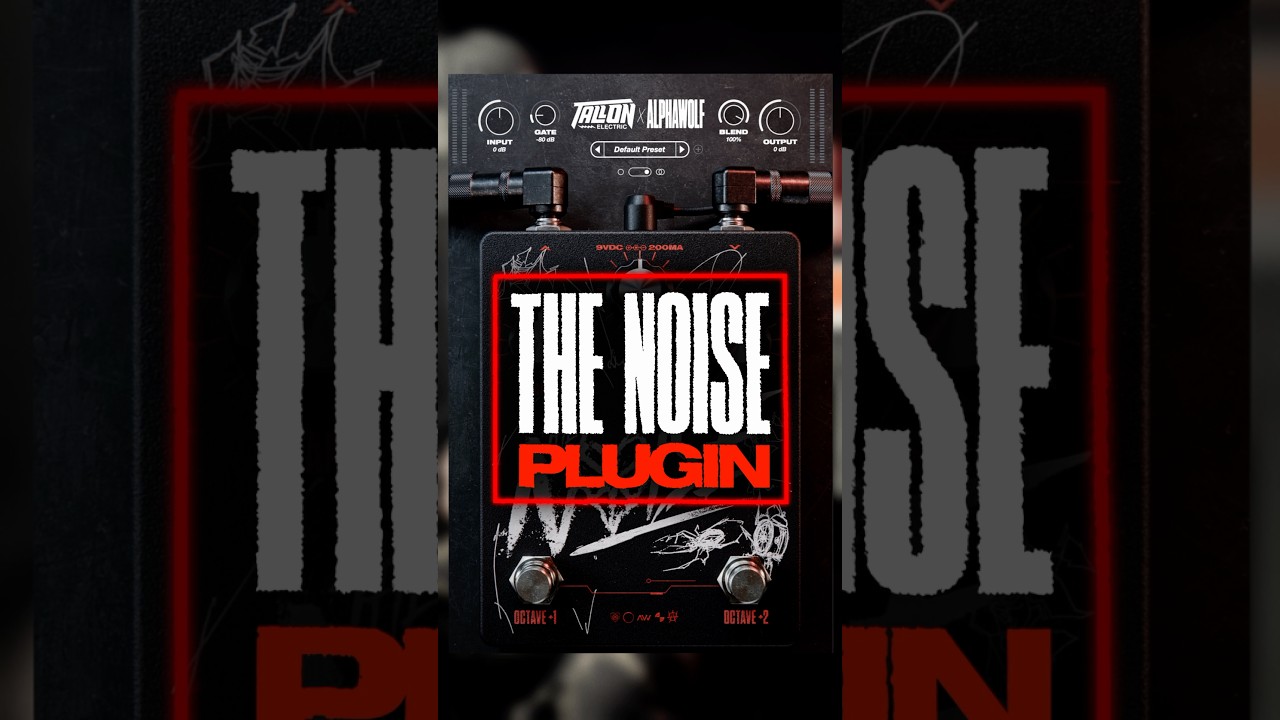
Above the pedal itself are In/Output dials for gain-staging, a Noise Gate, and a Blend dial for dictating how much dry signal bleeds through the chaos. There's also ample space for saving presets, and it can run in stereo or mono when running it on a bus. All this will feel very familiar to most.
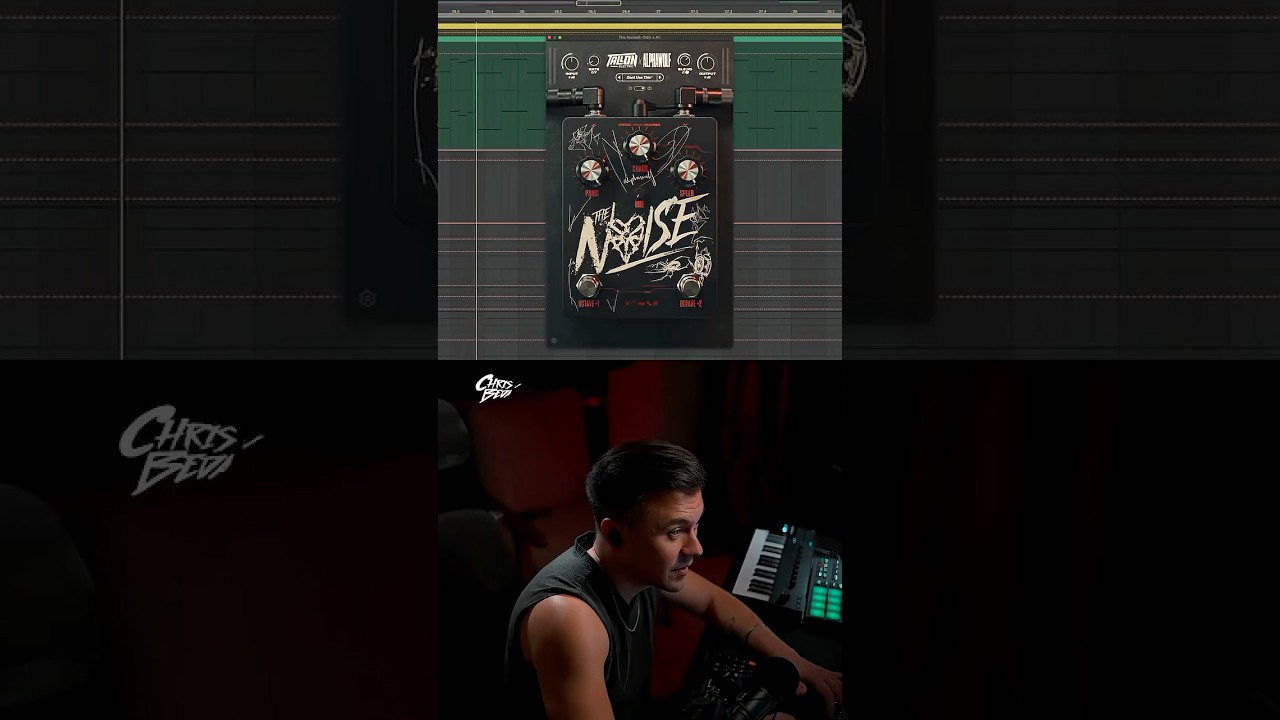
Over to the pedal, I have Octave +1 and +2 footswitches to play with, and four dials. Panic detunes the signal for devilish dissonance, Chaos introduces random pitch movement away from the center frequency to give it a real unpredictable and untamed nature, and Speed applies all-pass feedback and amplitude modulation to the mix. Lastly, a Rise dial sets the length of time needed to achieve the full pitch adjustment of the effect, venturing from instant to creepy, horror film-like swells at the other extreme, with the time maxing out at 1.5 seconds.
Given the uniqueness of the effect, I wouldn’t recommend skipping the tour
This pedal is very much designed to be used in sporadic circumstances, it’s a momentary effect far more than it is an always-on like, say a compressor or overdrive. So, the two footswitches are set to momentary be default and are intended to be used with MIDI, which can be accessed via right clicking on the specific dial and/or footswitch and activating MIDI learn. The footswitches can be swapped to latching mode too so once clicked, it stays on or off., bypassing the Rise feature.
The presets are all set to momentary by default, meaning I either have to switch to latching mode every time I check out a new preset, or click on the footswitches to hear that preset in action. It’s a minor annoyance that slows the perusing process down a little, especially when first getting acquainted with the pedal, as I always make a point of learning from the provided presets to help reverse engineer my own settings. It packs nine presets by default, which isn’t too many, but it’s more than enough to give a taste of insanity this thing has on tap.

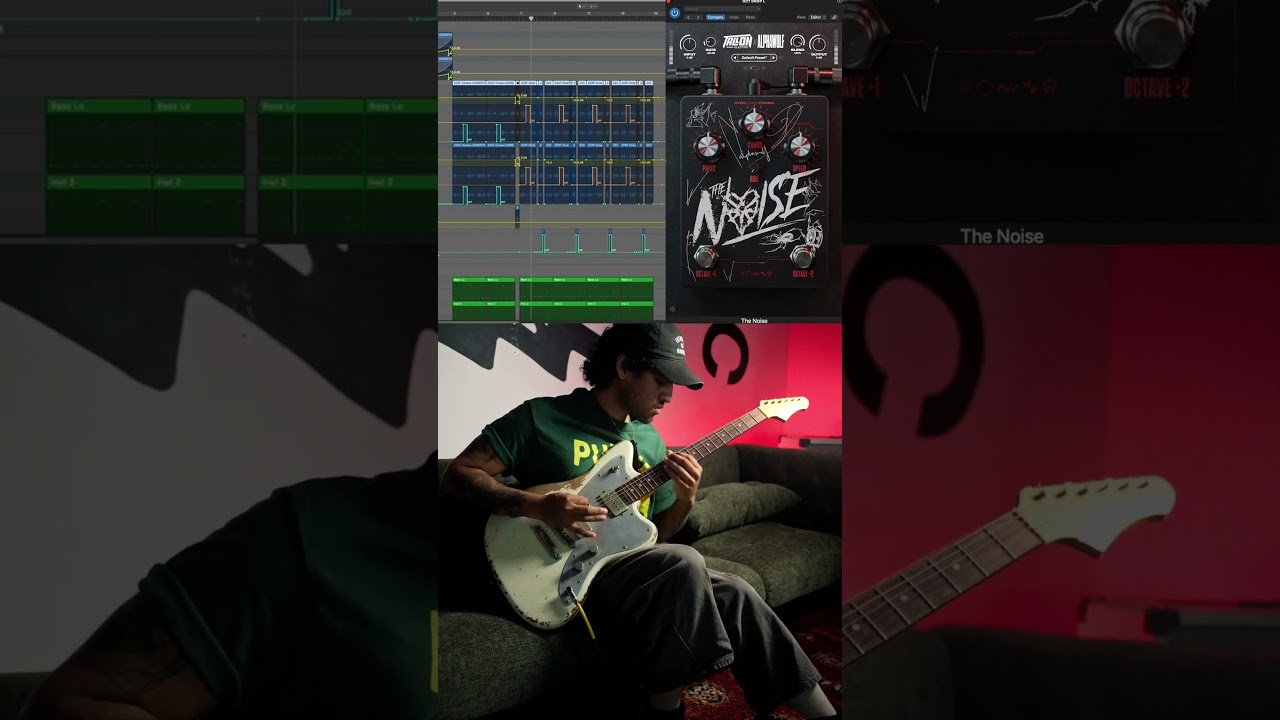
Still, the Noise plugin is very much geared up to be used in conjunction with MIDI automation or a MIDI controller, whereby, in momentary mode, I can select either footswitch and draw in when I want the effect to be active within a riff. Again, the idea is for it to be sprinkled throughout a riff, and for various parameters to keep on changing as it progresses.
It does mean that there’s a sense of reliance on either automation or a tangible MIDI controller or expression pedal, which allows me to play the plugin like I would the pedal itself. That too would make scrolling through presets a much easier process.
From a purely sonic level, the automation helps get the most out of the plugin, having it belch and squeal on demand – however I need it – but for a fuller experience, being able to control it with a controller is far more enjoyable, especially during the creative process.
The plugin is far more effective when you go to town with its parameters; go big or go home. It’s a pedal that should constantly be moving about like a Xenomorph on the USCSS Nostromo.
The Noise plugin is very much geared up to be used in conjunction with MIDI automation
Tallon Electric has designed the Noise pedal’s MIDI Learn to be simple to use, with parameters glowing red when activated. How easy this is to do for users depends on their proficiency with their DAW, but I had no issues at all, and my production skills are far from top tier. Yes, it’s a little more labour-intensive than your usual plugin in that regard, but don’t let that put you off, as diving into automation truly unlocks the pedal’s full potential, and it’s a small learning curve.
Sounds

As much as the pedal can unleash absolutely absurd hellfire into a modern metal environment, it is way more versatile than it might first appear. But, given how unlike any other pedal this plugin actually is, it does take some creative thinking to find my voice with it.
Starting tamely, I was very happy to find that the plugin can be subtle. With the main three dials set moderately at around 7 o'clock, with Octave +1 on Latch and therefore bypassing the Rise dial, it very much acts as a slightly creepier take on the traditional octaver effect; it's Korn's warbly lead tones on tap and one occasion where latching mode is warranted. I quite like the Blend being set at around 50% here so that the dry guitar still has plenty of cut, but with enough oddities to elevate the part.
Adding some reverb and delay (provided elsewhere) and pulling the Blend back to around 15% is also a lot of fun. This sees the screeching weirdness of the effect merging with the reverb tail and it sounds like a cosmic-but-majestic apocalypse with tapping leads. This setting also works with clean amps, giving haunted carnival or slightly-broken-chorus vibes.

One go-to setting players tend to gravitate towards puts the three main dials at noon, and using Octave +2 to inject a little extra intrigue and pops of colour into their riffs. What's great about this approach is that it can dramatically reinvigorate boring riffs. Got a basic idea but can't figure out how to spice it up? Record and start randomly applying automation cues. Let the chaos commence.
It can dramatically reinvigorate boring riffs
When not playing with an expression pedal to hand, the lack of physical interaction with a pedal that is really begging to be stomped on like an angry toddler demanding McDonald's for tea is a letdown. But there’s a flipside, as I find myself retrospectively adding the plugin to random phrases of my riffs, seeing what happens. It produces results I may not have achieved otherwise.
Another setting I've come to really enjoy is with the Panic at around 3 o'clock, and the Chaos and Speed controls pulled right back, with the Octave +1 footswitch engaged. It sounds equal parts heavenly and threatening with a thick, octaver-meets-harmoniser vibe. It is particularly great when engaged for sustained notes after some meaty chugs. It's the kind of sound I'd imagine Loathe falling in love with. Slowly bend the note for even more evil results.
Elsewhere, the Rise feature is a fantastic option in lieu of having an expressive footswitch, and those who love Tom Morello and hip-hop-infused riffs might find a lot of joy in setting Panic to 1 o'clock, Chaos to 11, and Speed to 3 with a quick rise adding an extra rhythmic element to groove-oriented riffs. The more time I spend with it, the more ways I find to make it bark and squawk. Its controls are limited, but the possibilities are not.

However, as a staunch advocate for octaver pedals that have -1 and -2 options, I feel the Noise would really open itself up to unbridled chaos if the direction of pitch shifting travel went both ways, rather than solely up. I might just be a freak of nature in craving this feature, but it does feel like a missed opportunity nevertheless. It does sound pretty gnarly adding some octave down effects by other means, but from my experiences, those effects are best placed before the Noise in the signal chain.

Also, I was expecting to get quite a lot of digital glitchiness from the pitch shifting elements of the pedal. With the DigiTech Whammy and Ricochet, those artefacts have become a big part of its appeal, which is why, in my opinion, the cleanliness of the Boss XS-100 lost its way. But Tallon Electric has made its shifts surprisingly clean and gotten away with it. Perhaps that’s because of how much chaos is bottled into this pedal by default.
If I was to sum up the sounds of the Noise plugin in two words it would be: beautifully disgusting. The pedal isn’t designed to make nice sounds, and absolutely nails the brief in taking such a unique – and pleasantly sculptable – pedal and turning it into a digital, brutality-ready weapon. I’ve had a lot of fun with it.
Verdict

There are plenty of ways to attack this pedal, but I don’t, in all honesty, see it finding much value for players outside of the modern metal realm. That’s okay, because Tallon Electric knows its target audience, and for any metal riffer that wants truly nasty sounds in one convenient plugin, the Noise is an absolute humdinger – the pedal translates to the digital realm with staggering aplomb.
What I really like is that, because it’s so unique, it drags me out of my comfort zone and sends my imagination into overdrive. There’s a lot of inspiration to be found here.
Sure, an octave-down option would have been nice, and the fact it forces you to either partner it with an expression pedal/MIDI controller or tap into MIDI automation will put some people off, but there’s also a lot of merit to be found in stepping away from my usual writing and recording methods; it encourages me to shake things up.
MusicRadar verdict: With the modern metal sphere full of garish noises, Tallon Electric has given players a whole new way to get weird and nasty. Surprisingly versatile, easy to use, and capable of reinvigorating boring riffs, for chugs, breakdowns, creepy leads and squealing chaos, look no further.
Hands-on videos
Tallon Electric
222feral
Chris Bedan