MusicRadar Verdict
Despite quite literally being half the pedal the Seabee Harmochorus is, the Beetronics Seabee Lite is a great chorus pedal that treads its own path. The arrhythmic modulation helps it stand on its own versus the more traditional vintage chorus pedals, but it still has enough flexibility to play both roles. Having presets unobscured by MIDI is a real winner, while MIDI and expression connectivity make it a very flexible addition to a pedalboard indeed.
Reasons to buy
- +
Can do everything from subtle to wobbly chaos.
- +
Capable of a wide variety of modulation tones.
- +
50/50 wet or full-wet mix options make it super flexible.
- +
Footswitch hold unlocks dual ramp effects.
Reasons to avoid
- -
You’ll need to read the manual to get the most out of it.
- -
Removes all of the pitch-shifting modulation of the Seabee Harmochorus.
MusicRadar's got your back Our team of expert musicians and producers spends hours testing products to help you choose the best music-making gear for you. Find out more about how we test.
What is it?
Although it feels like it's only really broken onto the scene in the past few years, Beetronics have been going for at least a decade. The brand has only really broken into the mainstream in the past few years, with a distinctive look that stands out a mile from all the other pedals in a heaving marketplace. Today’s review fodder, the Beetronics Seabee Lite, represents a different path for the brand, simplifying an existing pedal down to something more user-friendly.
The chorus pedal that preceded this one was all busy fascia, haphazardly named controls, and hidden secondary functions. There’s a case that the full-fat Seabee Harmochorus was, at times, a lesson in form over function. The Seabee Lite is looking to change that, delivering a much more usable interface that will appeal to more traditional pedal users.

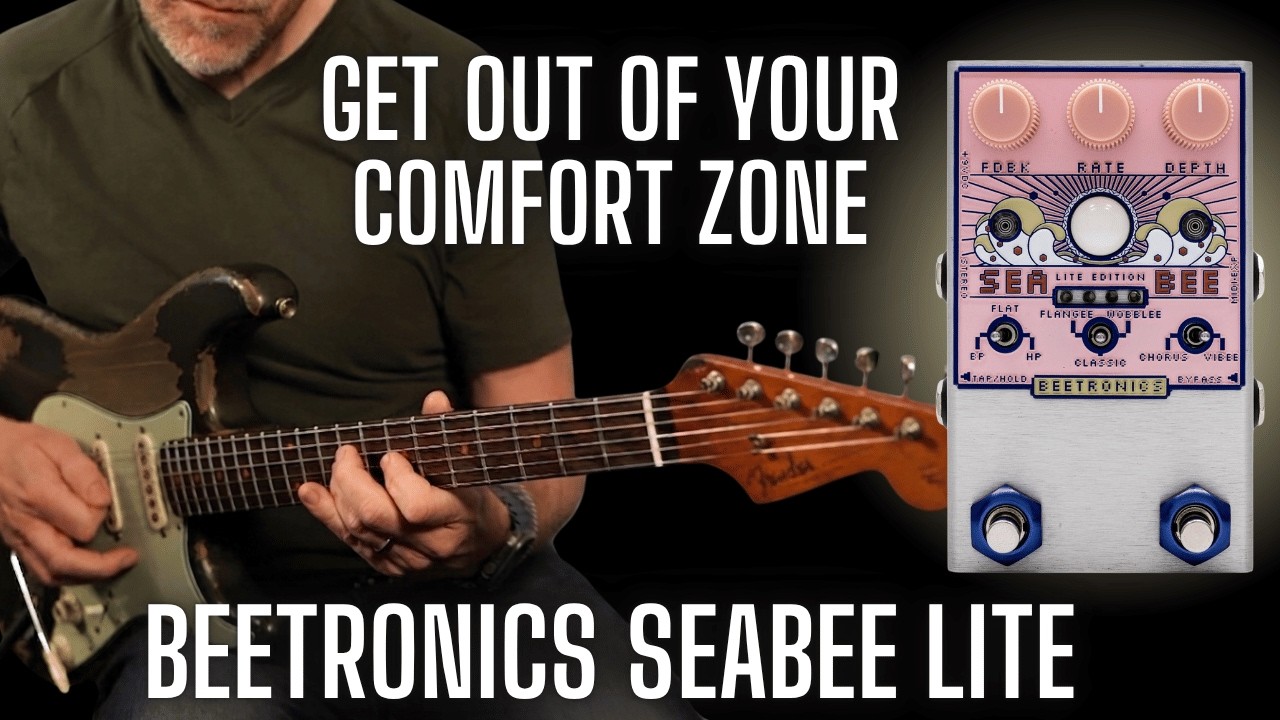
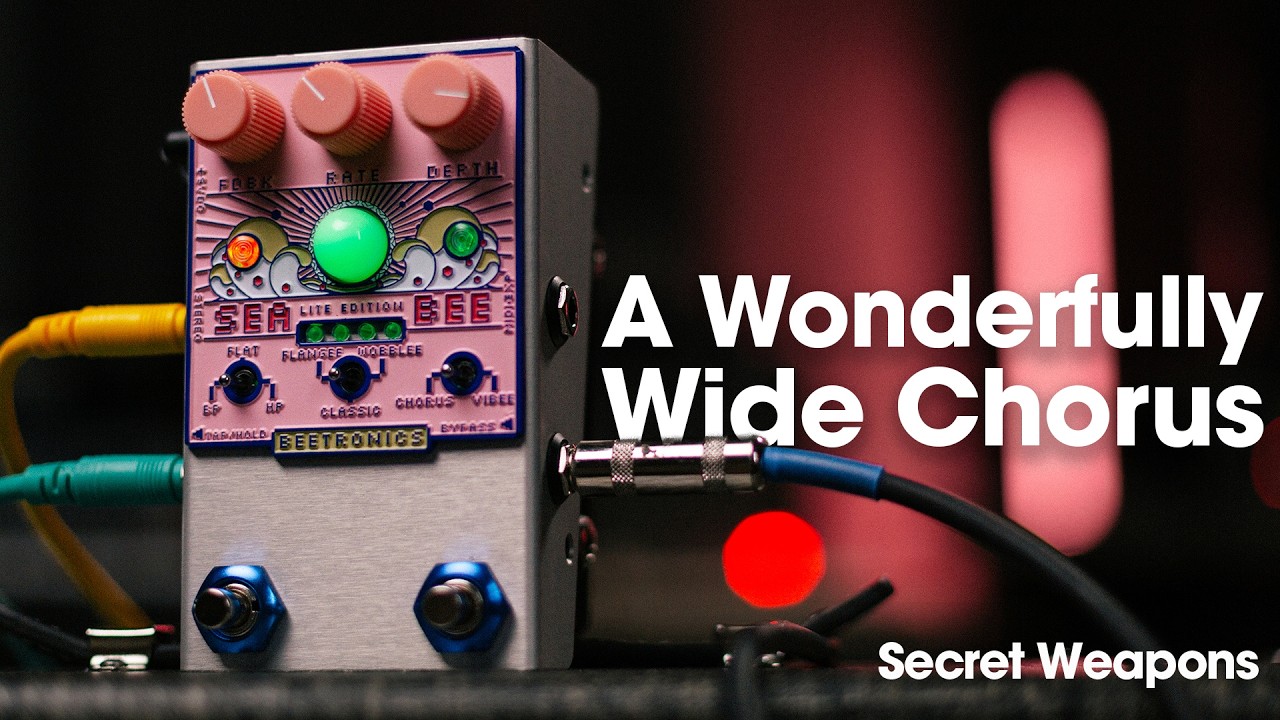
The pedal has essentially been split in half, with all of the ‘Harmochorus’ functions gone. No arp, mod, or dual modes, and no chord-based arpeggios. The three dual purpose three main knobs on the Harmochorus are still three, but they’re now just single functions that will be familiar to most modulation users. Feedback, rate, and depth give control over the modulation you set with the switches below.
These also still number three, but have been simplified. The left switch is an EQ with flat, bandpass, and high-pass filters. The middle switch changes the modes from classic, ‘flangee’, and ‘wobblee’. The last switch moves between chorus and ‘vibee’ modes. All done to match the simpler knobs and fewer features.
The two footswitches have been repurposed, too. The left switch controls tap tempo, and when you hold it down ramps the rate upwards. The right switch bypasses the pedal when you click it, and sets the depth to maximum when you hold it down. Pressing both together lets you select savable presets. It’s capable of stereo output and has a 1/4-inch connection for MIDI or an expression pedal.
Specs

- Launch price: $249 | £229 | €259
- Type: Analogue BBD chorus/vibrato pedal
- Controls: Feedback, Rate, Depth, Mix; mode selector (Classic / Flangee / Wobblee); Chorus/Vibee toggle; Filter toggle
- Features: 16 onboard presets, tap tempo, MIDI control, depth-boost function on held footswitch
- Connectivity: MIDI, expression pedal input, stereo outputs
- Bypass: Buffered
- Power: 9V DC, centre-negative, 250mA
- Dimensions: 140 x 84 x 64mm (5.5 x 3.3 x 2.5")
- Weight: 0.4kg (0.9lb)
- Options: Available in Cream and Pink Violet finishes
- Contact: Beetronics
Build quality

Build quality rating: ★★★★★
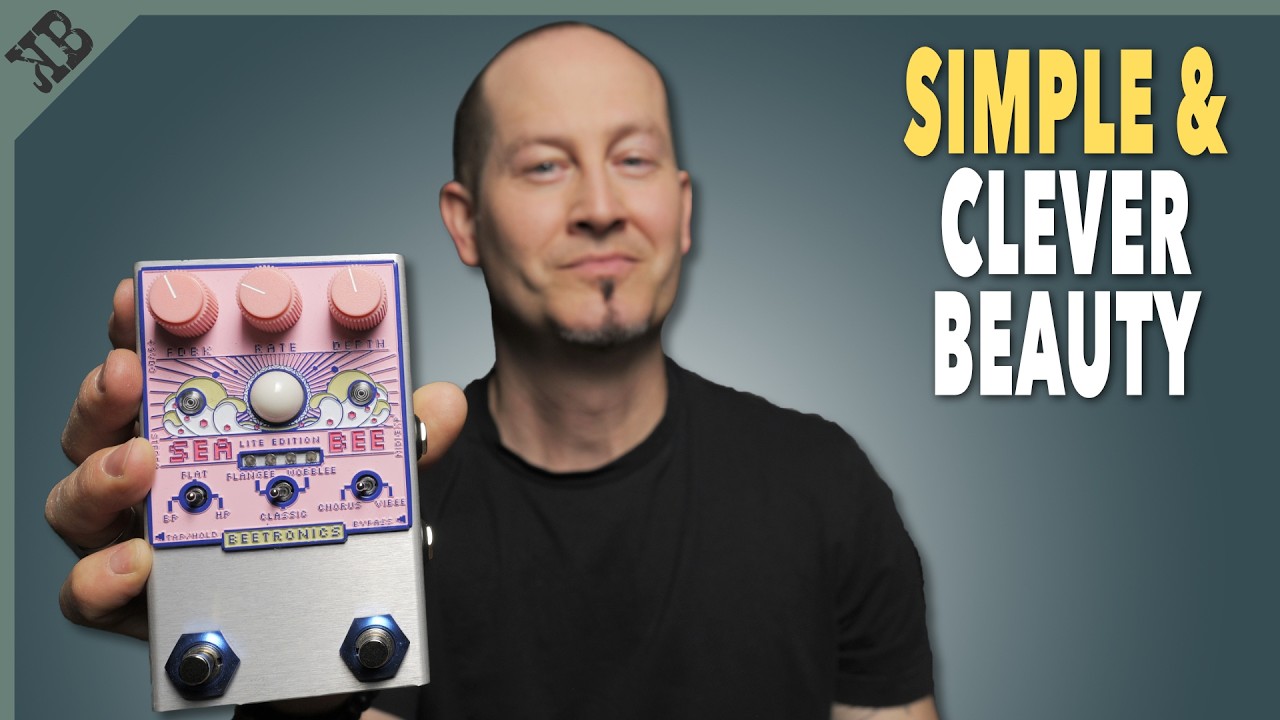
As is a Beetronics calling card, the Seabee Lite is certainly distinctive-looking, with the sage green knobs and low-resolution text labels. The colours are actually fairly muted by typical Beetronics fare, with the control panel featuring a plastic cover on its top third while the rest of the pedal is pure chrome. It’s actually quite different to the other pedals in the range, but I don’t mind it.

The chassis is wedge-shaped and feels very durable in my hands. It doesn’t weigh much at just shy of half a kilo, but it definitely feels like it can put up with abuse. The footswitches are solid, with huge hex nuts attaching them to the front face of the pedal. They’re soft-click due to the multi-function operation. The knobs offer a very firm travel and feel well attached to the pedal front. The switches are quite small and fiddly, but flick into place solidly enough.
Usability and features

Usability and features rating: ★★★★½
If you’ve ever used a modulation pedal before, you’re not likely to need a manual for most of the features here. I begin my testing alongside some other pedals I’m reviewing, running the Seabee Lite second in the chain after a boutique fuzz, and before an Eventide multi-effects pedal.
I was initially confused by the labels near the jack inputs. The left label reads ‘tap/hold’ which made me think it was an expression output. On closer inspection, the small arrow makes it clearer, and I realise this writing is for the footswitch below rather than the 1/4-inch output. It’s a small niggle, but the label being so far away from the thing it controls means it’s not immediately obvious what it does.
With that hurdle navigated, I have no issues getting stuck into the pedal's controls, and I’m soon crafting sounds unfettered. I love having preset compatibility not hidden behind MIDI, especially in a pedal where so many different sounds are available. It’s not crystal clear that this is available, though, and I only discover it once I start perusing the brightly coloured and engaging manual.

The pedal ships with eight factory presets and eight blank presets, but it’s possible to overwrite any preset on the pedal
It’s accessible by pressing the two footswitches together, and it gives you a generous four banks with four presets each. A two-second press of both footswitches accesses presets; then I can tap each footswitch to move left or right between the presets, then hit both footswitches again to engage. It’s also possible to set a favourite preset which loads every time you turn the pedal on.
To help you remember which preset is which, the line of four LEDs changes colour depending on which bank you’ve got engaged. These light up red, yellow, orange, and green so you know what bank you’re on. The pedal ships with eight factory presets and eight blank presets, but it’s possible to overwrite any preset on the pedal.
MIDI is accessed via the same multi-jack that you plug the expression pedal into. It needs to be engaged via the global pedal settings, and once that’s done, you can sync it to a MIDI clock, or control any of the parameters on the front face of the pedal.
Sounds

Sounds rating: ★★★★½
I start my testing on the clean channel of my Orange Rocker 32 tube amp and my trusty Telecaster with all the pedal settings at 12, EQ off, Classic mode engaged, and the third switch set to chorus. Unsurprisingly, it’s a classic chorus sound I get in return. Turning down the rate gives that watery Come As You Are tone, and it’s got a nice warble to it that thickens up the tone and adds some movement.
Turning up the knobs gives a very seasick sound, and here I realise it’s a mix of wet and dry tones rather than an outright colored setting. To my ear, it sounds pretty much a 50/50 mix. To get it wetter, flicking the third switch from chorus to Vibee unlocks a fully wet mode, making the modulation sound much more intense and obvious.

Changing to Wobblee mode, things get a little more chaotic. It doesn’t bounce around as evenly as the classic setting, making it super fun for more out-there tone hunters. It makes my tone feel off-balance, bouncing around in ways that I don’t expect. The Seabee Lite can get really extreme when I push the settings, delivering some truly wild sounds.
The dual footswitches are really handy for live players
Moving to Flangee, turning the rate down and the feedback up gives that classic metallic flange sound. It’s not quite as even as a traditional flanger; there’s a little offset to the rhythm of it that means it doesn’t quite land where you’d expect, but it’s the closest to a traditional flanger sound I can get. On the 50/50 chorus mode, it’s quite subtle even when I add a drive pedal to the front of the amp, but switching to vibee makes it much more pronounced.
The dual footswitches are really handy for live players. The ability to ramp the rate or depth at will makes for a great way to end your songs or certain passages with a spiralling craziness. The left footswitch does the rate setting, echoed in the two flashing LEDs on the front of the pedal. The right switch maxes out the depth, great for hitting a note then stomping on to let some auditory carnage ensue.
Verdict

If you’re looking for a chorus pedal that can get weird, the Beetronics Seabee Lite pedal is a great option. There are some traditional tones available here, but honestly, that would be a waste of its potential. From wacky laser beam noises to nausea-inducing modulation effects, this pedal delivers a lot of different tones despite being simplified from its forebear.
If you want a simple chorus pedal, I’d look elsewhere
There’s a lot of functionality here, not all of it immediately clear just by looking at the fascia. If you want a simple chorus pedal, I’d look elsewhere, but for those who like to tweak and don’t mind some manual diving, this pedal is a great shout. The manual is extremely clear, and there’s a lot of functionality to unlock from the pedal that goes beneath the surface-level control.
MusicRadar verdict: Despite quite literally being half the pedal the Seabee Harmochorus is, the Beetronics Seabee Lite is a great chorus pedal that treads its own path. The arrhythmic modulation helps it stand on its own versus the more traditional vintage chorus pedals, but it still has enough flexibility to play both roles. Having presets unobscured by MIDI is a real winner, while MIDI and expression connectivity make it a very flexible addition to a pedalboard indeed.
Test |
Results |
Score |
|---|---|---|
Build quality |
Very well put together and a great-looking pedal. |
★★★★★ |
Usability and features |
Easy enough to use, but deeper functionality requires the manual. |
★★★★½ |
Sounds |
Capable of classic chorus sounds and more extreme stuff. |
★★★★½ |
Overall |
A chorus pedal for those who want unusual textures. |
★★★★½ |
Also try
Hands-on videos
Secret Weapons
Kris Barocsi
The Studio Rats