MusicRadar Verdict
With some of the best-quality effects algorithms I’ve ever heard in a compact form factor, the Eventide H9 Harmonizer Gen 2 is an incredibly versatile bit of kit. I’ve tested a lot of multi-effects pedals, and the sounds here are a real standout. You will need to dig in to get the best out of it, but the level of tweakability is huge, and although aimed at guitarists, it can do the job on any instrument you can think of.
Pros
- +
Any effect you could ask for in supreme studio quality.
- +
Huge depth of tweaking to perfectly match the source.
- +
Companion app is easy to use and Bluetooth connectivity is incoming.
- +
Small enough to fit into even the busiest pedalboard or studio space.
Cons
- -
The connections panel is very tightly packed together.
- -
For guitarists, there are other units that do more in the more traditional tonal realms for a similar price.
MusicRadar's got your back Our team of expert musicians and producers spends hours testing products to help you choose the best music-making gear for you. Find out more about how we test.
What is it?
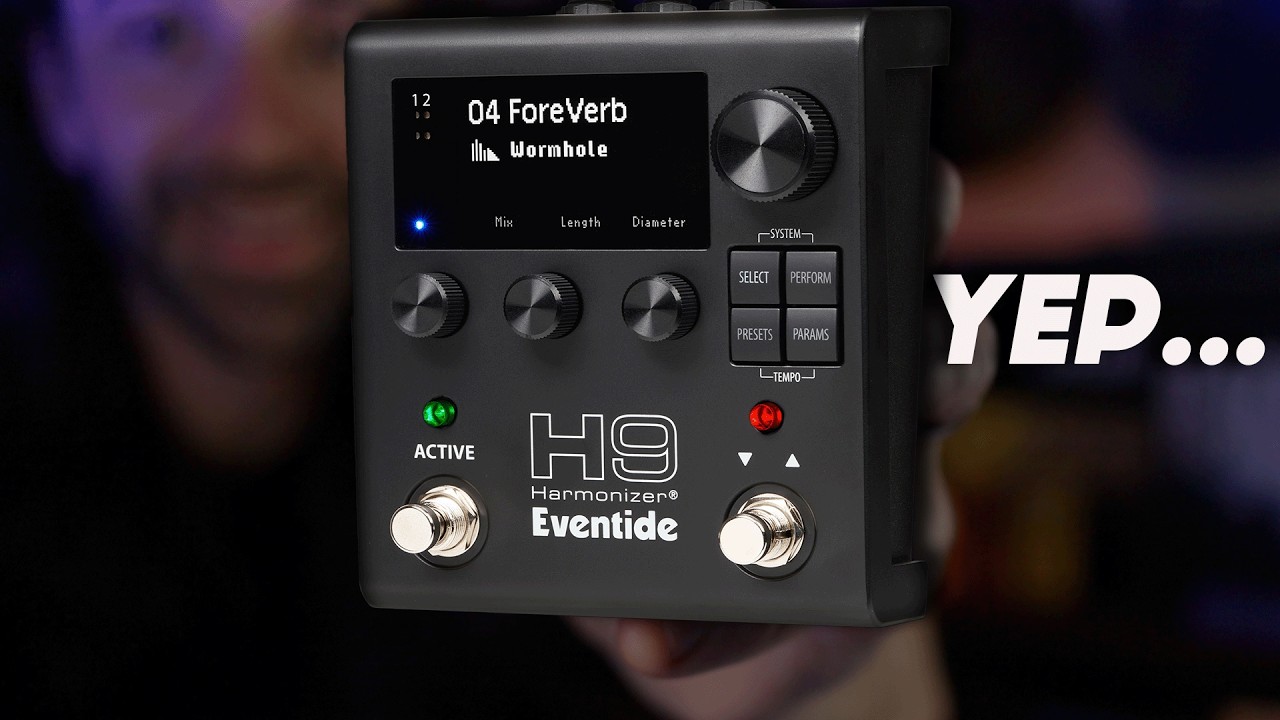
In the studio world, Eventide is a famous name for its rack-mount gear. The Eventide H9 Harmonizer Gen 2 takes all of those world-famous algorithms and shrinks them down into a teeny tiny form factor that you can take on the go, whether you’re a producer working remotely or a guitarist who wants top-quality effects on your pedalboard.
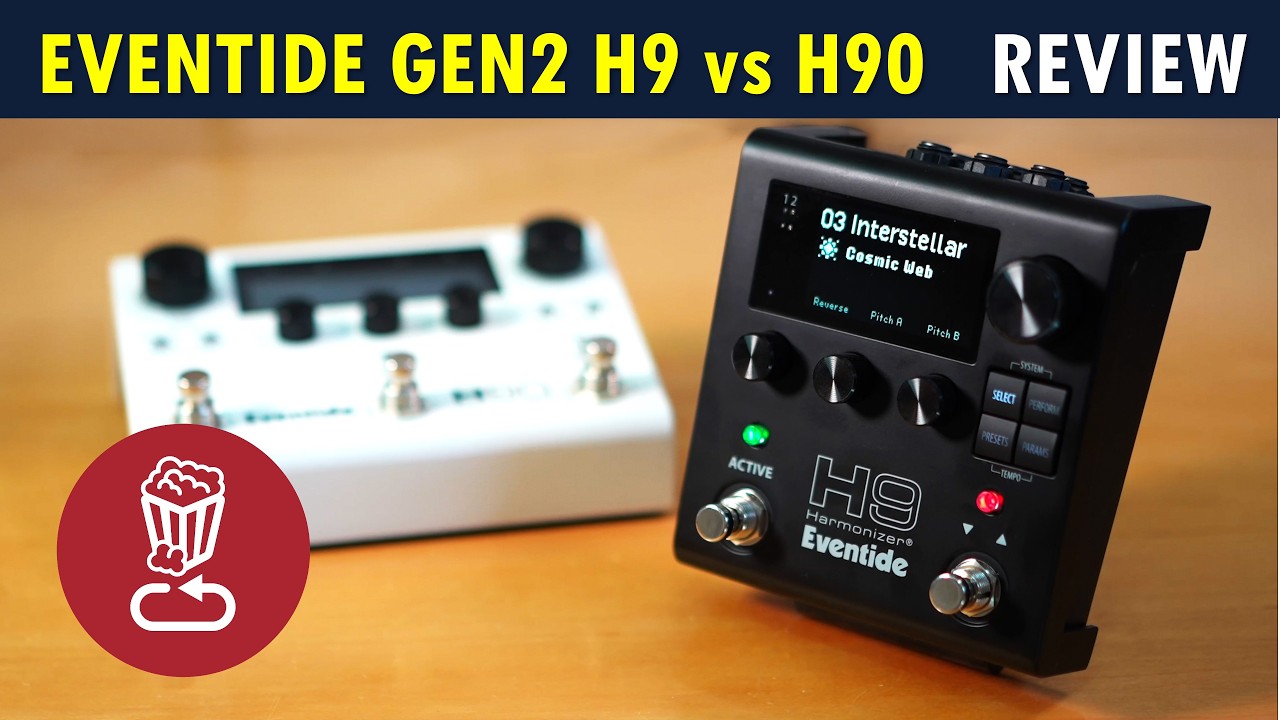
The question I asked myself immediately upon receiving the H9 Gen 2 was: why would I pick this versus a used H9 Max or splurging on a H90? For the former, the H9 Gen 2 blows the H9 Max away when it comes to specs. It has all of the same effects as the H9 Max, as well as the same effects as those found on the H90. It doesn’t run two at the same time, though, so you’ll need to spend a lot more on the H90 to add that to your arsenal.

The H9 Gen 2 also has far more presets than the H9 Max, with over 1,000 available. The Gen 2 also features the same ARM processor as the H90, which is the same one found in the H9000 rack unit. The screen has been upgraded from the 6-character LED version, and the micro-USB is now modernised with a USB-C connector. It’s also got a separate expression pedal and control jacks for added flexibility.
There are multiple power options available, so although it comes with a 12V, 1A power supply in the box, you can use a pedalboard power supply at 9V, 400mA if you’re board-mounting it. It’s got stereo ins and outs, which make it usable with a wide variety of instruments, and it solves one of the big problems of the H9 Max with the addition of spillover.
Specs

- Launch price: $599 | £599 | €694
- Type: Multi-effects pedal
- Controls: 4 knobs, 4 button pads for menu navigation, 2 programmable footswitches, 2 contextual LED buttons
- Features: 74 algorithms spanning the complete H90 and H9 Max libraries, 1,000+ factory presets, SIFT polyphonic pitch-shifting, built-in tuner, Select/Bank/Perform modes, full parameter control with no companion app required
- Connectivity: 2x 1/4" TS inputs, 2x 1/4" TS outputs, USB-C (Eventide Control app), 5-pin MIDI I/O, expression pedal input, aux switch input, Bluetooth (Mac/iPad, via Eventide Control)
- Bypass: Flexible wet/dry and pre/post routing; footswitches control preset/bypass
- Power: 9-12V DC, 300 mA @ 12V / 400 mA @ 9V, 12V 1A power supply (included)
- Dimensions: 133 x 127 x 69mm (5.25 x 5 x 2.7 inches)
- Weight: 0.6 kg (23.36 lbs)
- Options: Harmonizer+ Suite vocal processing available with Mixing Link (sold separately)
- Contact: Eventide
Build quality

Build quality rating: ★★★★½
As far as multi-effects pedals go, the Eventide H9 Gen 2 is comparatively small. It’s just shy of two Boss stompboxes side by side, and not quite as tall. It means it will fit on a pedalboard pretty easily, and ditto if you’re using it on a studio desk. It's just north of half a kilo, making it about the same weight as the aforementioned Boss stompbox, and is wedge-shaped for easy stomping.
One thing I noticed when plugging it in is that the ins and outs are very close together. It means you’ll need a bunch of straight guitar cables or some very slimline patch cables in order to use the stereo configurations. I had to go hunting in my box of spares to find a combination that would fit together.

The front of the chassis is constructed from hard plastic, while the underside is made of metal. It doesn’t come with rubber feet, so it can be installed straight onto a pedalboard without having to remove anything.
The knobs all provide a firm, smooth travel, doubling as buttons when I press them in. The master encoder is stepped, giving me some tactile feedback when I turn it. There are four additional buttons that offer quiet operation, firm when pressed down without any audible clicking. Overall, it feels very robust, but the contextual LED lights that double as buttons feel a touch flimsy.
Usability and features

Usability and features rating: ★★★★½
While this surface-level navigation is easy enough for me to decipher, getting deeper than that requires some research
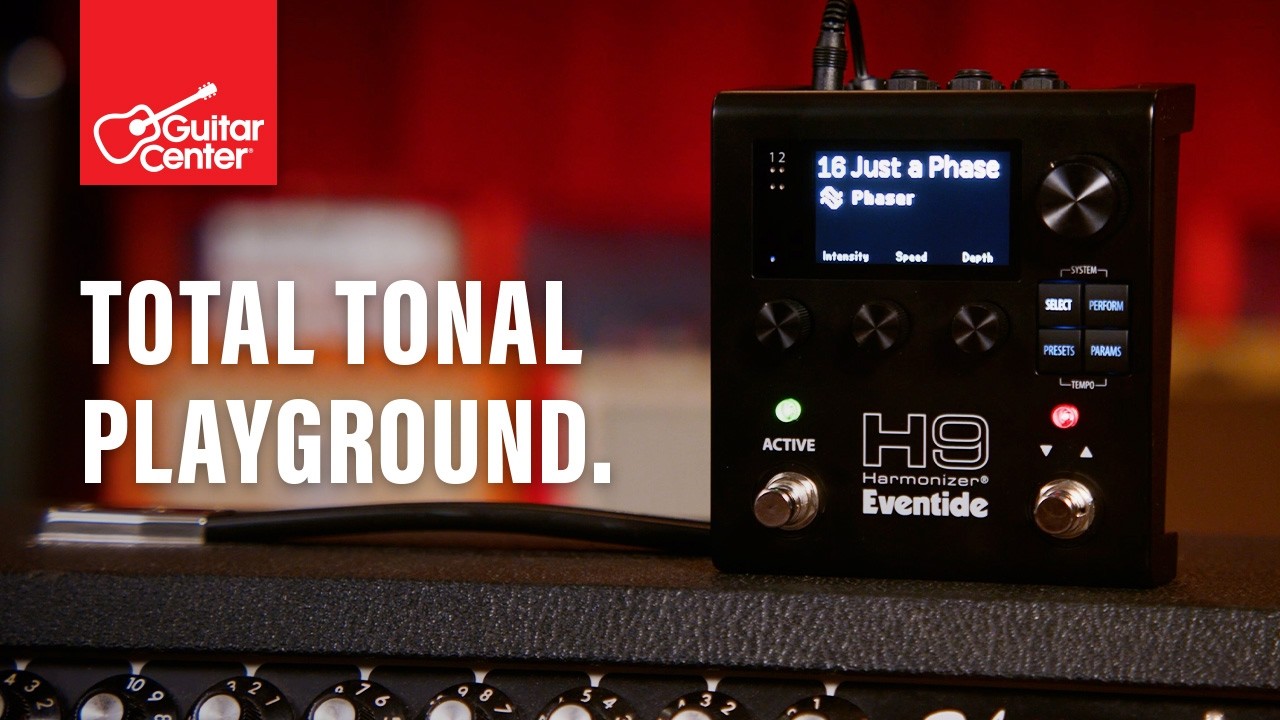
I demo the H9 Gen 2 alongside my Universal Audio audio interface and my number one Telecaster as the other end. On the surface, navigating the pedal is fairly simple. The large encoder selects presets, and a push in is required to confirm my selection. The three knobs below the screen have parameters already assigned, while the left footswitch changes presets in one direction, with the right footswitch engaging the effect.
While this surface-level navigation is easy enough for me to decipher, getting deeper than that requires some research. The LED button on the right changes colour without any discernible change, while the left-hand one does the same functionality as the footswitch, engaging or disengaging the effect. The four buttons are fairly self-explanatory, but I cave, and eventually grab the manual from the Eventide site.
It turns out the LED switch that was changing colour is to change the direction of preset scrolling. When it’s red, it moves upwards. When it’s blue, it moves downwards. The ‘Params’ button allows for deeper editing of the presets, unlocking the full set of controls to tweak the sounds, while global settings and tempo settings are accessed by pressing the Select and Perform buttons together.

The Perform button allows me to change what the footswitches do, and it can be set up however I want it. This could be assigning tap tempo or changing between momentary and latching operation. There’s also ‘HotSwitches’ which let me sculpt multiple parameter changes at the push of a button. This could be timings, effects changes, mix amount, or any combination of the multitude of parameters available for each effect.
To be totally honest, when getting into this level of depth, I’d much rather do this in software than with the hardware controls. The Eventide Control App works much better for the deeper level stuff, and I find having it open on my laptop is a much better workflow for changing the presets to my liking or creating fresh sounds.
It is, however, quite noisy with this setup. With the pedal connected via USB-C to my MacBook, as well as feeding stereo outs into my interface connected via Thunderbolt to my MacBook, there is a fair bit of noticeable interference, particularly when played clean. It's bordering on unusable, and I end up recording takes after disconnecting the pedal via USB-C to get a clean take.

I love the ability to set a tempo for each preset individually, and create fresh banks of user presets
There’s a cure in the works for this, as Eventide will update the H9 Gen 2 with Bluetooth in the near future. This means you’ll have the ability to use the companion app on your phone or wirelessly with a compatible laptop, negating the need for a cable connection.
The app itself is really great, though. I love the ability to set a tempo for each preset individually, and create fresh banks of user presets. Handily, it asks me if I want to save changes if I click off the preset I’m working on, which was much appreciated when I’d spent half an hour getting a sound exactly how I wanted it without committing the changes.
There’s a massive amount of depth of tweaking available, too. I can set LFO rates from 1/64th all the way to a full 16 bars. These timings can be set differently on either side for stereo effects, making the depth on offer really incredible. There are far too many settings to go into here, but rest assured that for both guitar players who love tweaking and studio users who require depth, there’s enough on offer to ensure complete control of the final result.
Sounds

Sounds rating: ★★★★★
For the sound testing portion of my review, I begin with the H910 algorithm. It’s a recreation of the famed studio rack unit, and although the sound is subtle, it’s one of those things that I immediately notice once switched off. It was famously used by Eddie Van Halen, and as I play some of my favourite guitar licks, it's easy to see why, as it transforms my guitar tone into a fuller and fatter version of itself.
It’s a similar sound to the MicroPitch effect, with its slightly offset tunings that make it sound like multiple instruments at the same time. It’s super effective at thickening up the tone of a single guitar, like a chorus pedal but with a level of control that far surpasses any single stompbox I’ve come across.

For those who want to add some space to their sounds, the Blackhole reverb algorithm is perfect when paired with some moody chord work. It’s brilliant at adding a sense of space to the sound without drowning it out completely, and easy to see why it got its own reverb pedal as I start playing lead guitar with more complex runs.
Moving onto some pitch effects, I test the Polyphony algorithm. It tracks incredibly well set to fifths by default, and doesn’t seem to mind how complex the piece I play is. The accuracy is really incredible, and even when bending my guitar strings, it manages to stay in tune.
There are far too many effects to go into great detail here, but alongside the wacky tones there’s plenty of more purposeful effects like overdrive, fuzz, flanger, phaser, as well as shorter room reverbs. You also get a great selection of delay effects with huge customisation on offer, making this a pedal that can work in pretty much any genre.
Verdict

I love that the Eventide H9 Harmonizer Gen 2 is a multi-FX in the traditional sense
This pedal bucks the trend of recent multi-effects pedals that like to offer a do-it-all solution with amp and effects modelling, but I love that the Eventide H9 Harmonizer Gen 2 is a multi-FX in the traditional sense. It delivers incredible quality sounds without the added complication of amp and cab models, doing its one job very well indeed.
It’s not the easiest to use, admittedly. The surface-level stuff is accessible, but as soon as you get beneath that, you’ll need to head for the manual and be prepared to spend some time getting to know it. Those with the patience to do this will be greatly rewarded, though, as there’s a huge amount of depth on offer.
It’s not cheap either, but the quality of the sounds makes it totally worth it for me. If you’re a power user, then you’re likely better off spending more on the H90 and opening up the dual effects chains, but for guitar players this will be more than enough to replace a multitude of pedals on their existing ‘boards.
MusicRadar verdict: With some of the best quality effects algorithms I’ve ever heard in a compact form factor, the Eventide H9 Harmonizer Gen 2 is an incredibly versatile bit of kit. I’ve tested a lot of multi-effects pedals, and the sounds here are a real standout. You will need to dig in to get the best out of it, but the level of tweakability is huge, and although aimed at guitarists, it can do the job on any instrument you can think of.
Test |
Results |
Score |
|---|---|---|
Build quality |
Solidly built, but the connectors are very close together. |
★★★★½ |
Usability and features |
Easy enough on the surface, but it’s much better with the app. |
★★★★½ |
Sounds |
Some of the best quality effect algorithms I’ve ever laid ears on. |
★★★★★ |
Overall |
A massive variety of effects that will fit on any pedalboard or in any studio. |
★★★★½ |
Also try
Hands-on videos
Loopop
Guitar Center
Leon Todd