MusicRadar Verdict
If you’re looking for a practice amp that lets you put down your smartphone, the Boss Katana-25 isn’t the amp you’re looking for. If you want a huge range of great-quality sounds in a compact chassis that sounds way bigger than it looks, then this might just be the ideal practice partner. Ideal for beginner guitarists, Boss’ halfway house between a full amp and a desktop variant delivers a great playing platform for bedroom guitar players.
Reasons to buy
- +
Phenomenal selection of amp tones.
- +
A full suite of classic Boss effects.
- +
Delivers a surprisingly full low end.
- +
Lightweight but sturdily built.
Reasons to avoid
- -
App is required to get the most out of it.
- -
Hands-on control isn’t the best.
- -
I found the presets to be treble-heavy.
MusicRadar's got your back Our team of expert musicians and producers spends hours testing products to help you choose the best music-making gear for you. Find out more about how we test.
What is it?
Sitting somewhere between the Katana-50 and the Katana-Mini X, the Boss Katana-25 pitches itself as the ultimate home practice amp. Building on the ever-popular Katana platform, Boss has got an interesting amp on its hands, as this model isn’t quite small enough to be a desktop guitar amp, while anyone who wants to gig will be better off with at least the Katana-50 Gen 3.
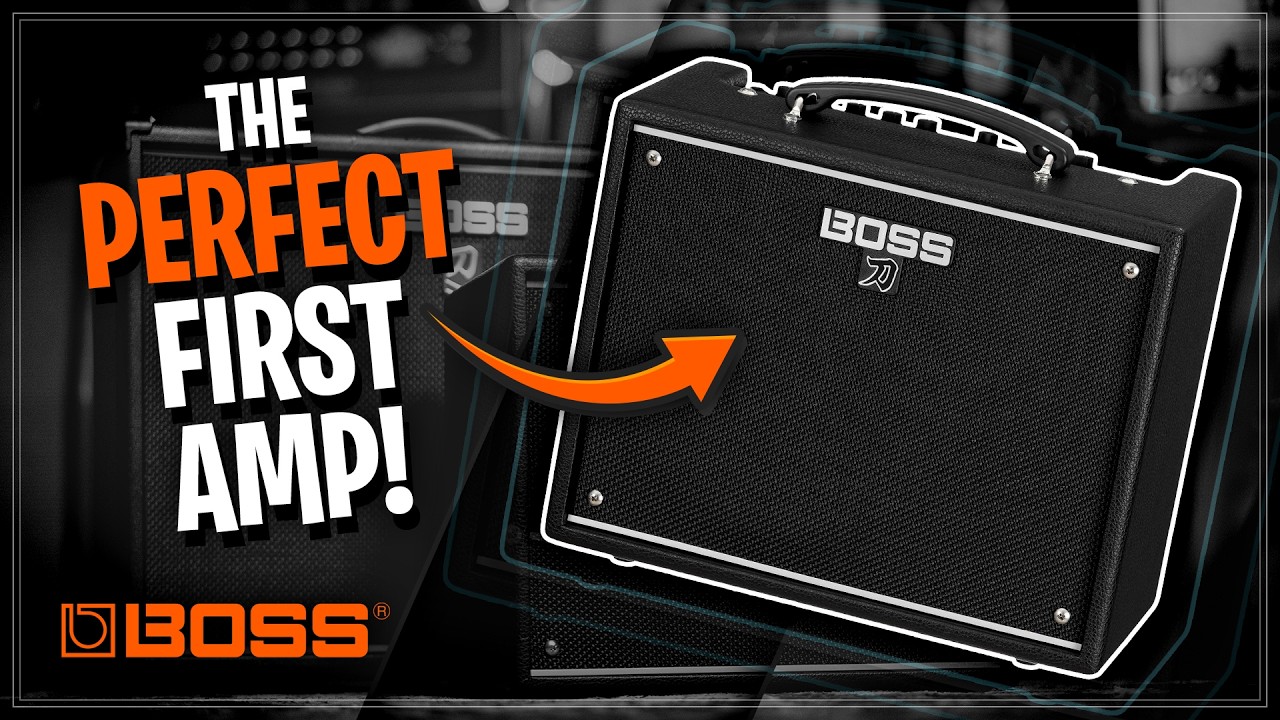
The Katana-25 features an 8-inch speaker housed in an open-back cabinet, with a design that looks pretty much exactly the same as any other amp in the lineup aesthetically. There are quite a few differences overall, though, and the control panel on the top is noticeably slimmed down versus the full-size Katana-50.

Controls for gain, volume, bass, middle, and treble line the left-hand portion of the top panel, and a new tone-setting encoder with a push-button function. Either side of that is an effects switch and a tap tempo. After that, there’s a small switch for the two power options: 25W and 0.5W, plus a master volume.
In an interesting change from the bigger 50- and 100-watt models, Bluetooth connectivity is built into the amp and doesn’t require the purchase of a separate adapter. In a new development from Boss, you can use an app on your phone for tone creation, jamming to backing tracks, and audio streaming, bringing it in line with competitor products from Positive Grid, Blackstar, and others.
Connectivity is a simple affair, with a single 1/4-inch input for the guitar, a 1/4-inch footswitch or expression pedal connection, a 1/8-inch output for headphones or recording out, and a USB-C connector for plugging it into your laptop or PC.
Specs

- Launch price: $ | £ | €
- Type: Digital modelling combo
- Origin: Thailand
- Output: 25W, switchable to 0.5W
- Speaker: Custom 8-inch speaker
- Channels: 6 (amp types)
- Controls: Gain, volume, bass, middle, treble, effects, tap, tone setting select/edit, power control, master volume
- Connectivity: 1/4 input, 1/8 headphones, USB-C, Bluetooth (audio streaming and app control)
- Footswitch: Optional. Compatible with FS-5L, FS-6, FS-7, FV-500H/L, EV-30, Roland EV-5, EV-1-WL, FS-1-WL
- Weight: 4.8kg / 10 lb 10 oz
- Dimensions: 360 x 180 x 310mm
- Contact: Boss
Build quality

Build quality rating: ★★★★★
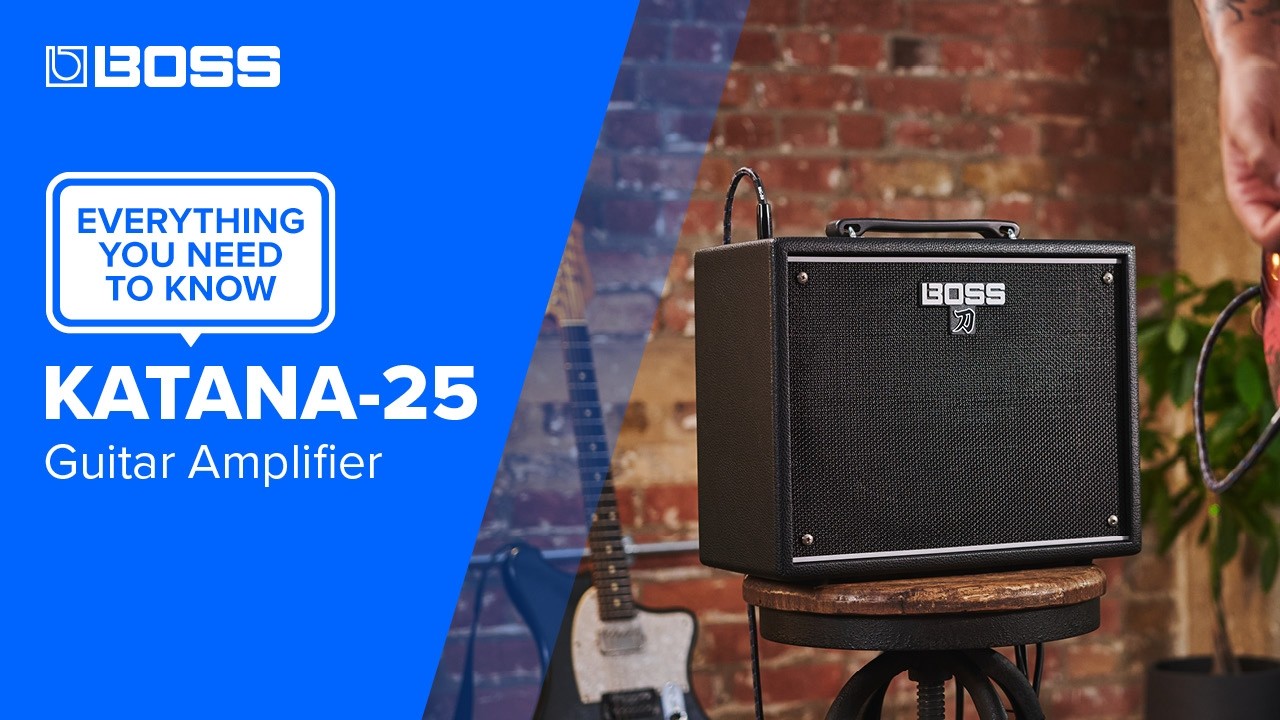
While it’s not quite desktop amp-sized, it is pretty small. It’s lightweight, too, making it an easy one-handed lift as I pull it out of the box. It looks very much part of the Katana lineup, with the four chrome screws in the front grille and the silver piping at the top and bottom.
The hard plastic handle isn’t what I’d call comfortable on the face of it, but the amp is so light that it doesn’t make all that much difference. It’s rounded in the right places to make it comfortable enough to carry around, secured to the top of the chassis with two very sturdy-feeling metal brackets. The vinyl covering of the open-back cabinet gives it a durable feel, and I don’t doubt it will deal handily with being knocked around a bit.

The speaker is mounted off-centre in the cabinet, screwed to a front-facing piece of wood with a circular hole cut into it to allow the sound through. On the top panel, all of the controls have a nice and sturdy feel to them, whether flicking switches, pressing buttons, or turning knobs. Overall, it’s a solid-feeling cabinet that will easily handle home use.
Usability and features

Usability and features rating: ★★★★☆
One of the hallmarks of the Katana series is its simple usability and physical controls, and that’s something that’s carried over to this model. It’s got a good selection of controls on the top panel, but as I start to get stuck into it, it becomes clear why this type of bedroom amp has been largely usurped by those that use companion apps. It’s annoying having to reach over to the amp to change a preset or make an adjustment if you’re not already standing up with your guitar on a strap.
With a Sire S7 S-type plugged in, when I put it on my desktop, it’s too high up to see the controls on the top panel. With it on the floor, I have to keep bending down to reach it and change presets. It’s also blasting at my feet rather than my ears, meaning more volume is needed. This could be solved with a footswitch, but alas, these are sold separately.

The screen is tiny. It’s only really good for displaying patch names and the onboard tuner. When I press the effects button to get rid of the tremolo on a preset, it’s displayed small and pretty difficult to decipher. There’s no way to just turn an effect block off that I can discern. Instead, I have to roll the encoder all the way back to zero to remove an effect from the chain.
There’s no adding effects via the unit either; you’re stuck with the five blocks of the chosen preset. It’s easy enough to adjust the amp EQ controls, but when adjusting presets there’s no marker to say what setting the control was on when I first started tweaking it. This makes it difficult to roll back the settings to where they were, or understand how much I’m changing the core tone.

The good news is that pairing and controlling the amp from its Tone Studio app is a doddle - I tested it on an iPhone, which discovered the amp immediately.
The Tone Studio app has been redesigned to offer a single app for multiple Katana amps, when you connect, any Katana in the immediate vicinity with its Bluetooth enabled shows up in the app, you tap its icon on the screen and you're connected.
Inside you can scroll through all the available effect and amp blocks, assign your chosen effects to them, switch them on and off by tapping, and you get expanded controls for each too. It's a nice, linear layout and makes building tones really quick and easy. When you're done, you can name and save them to one of the user slots.
But it only really starts there, because one of the big features is the Session function. This allows you to search and watch YouTube videos direct from the app.
You can build a library of videos (lessons, for example) and come back to them next time you want to practice. But Boss has also created a number of soundalike playalong tracks. These come with tab for you to learn, plus they'll automatically switch your sounds to reflect which part of the song you're playing. You can add your own markers, as well as looping sections of the track and adjusting the speed until you're comfortable playing along.
There's a bigger graphic representation of the tuner too, which while perhaps a 'given' is still nice to have, and makes tuning quicker and less fiddly.
Sounds

Sounds rating: ★★★★½
With it set to 0.5W mode, we’re very much in bedroom-friendly territory. With the master volume at the halfway point, I’ve got enough volume to be heard over the attack of the raw guitar strings without being offensive to others in my home. It still reacts like a non-modelling amp, backing off with the volume control and picking dynamics as you might expect at full volume.
I cycle through the settings, and the amp models sound just as good to my ear here as they do on the full-size Katana. As a bit of a metalhead, I find myself on the ‘brown’ amp tone a lot, enjoying its midrange punch and controlled low end. The clean amps are great as well, and the range of six cpre models plus their variations is plenty to cover pretty much any style of music you could imagine.
I end up really loving the ‘pushed’ setting as well. It’s like a hot-rodded clean amp that reacts beautifully to my picking dynamics, staying clean when I pick gently and breaking up when I dig in, no matter what the volume is set to. The crunch tone does what it says on the tin, and I particularly enjoy the ‘Texas’ preset with its huge low end.

Although you wouldn’t know it from the presets on the face of it, the effects are of that typical Boss quality. There’s just a handful of the presets that really show this off, so I have to dive into deeper editing to really put them through their paces. As anyone who knows Boss knows, the company's reverbs and delays are simply superb, and that’s true of the Katana-25. It’s the same with the modulation effects, which sound wonderful with a healthy dose of the mix value turned up.
Turning it to max power mode and cranking the volume three-quarters of the way, it’s certainly loud enough to earn you some noise complaints. It’s really bright as well, which is perhaps a voicing decision of the presets to make it sound good at lower volumes. I find myself instantly reaching for the tone knob of my S-type to cut it back some.
In the low end, of course there’s not as much heft as a bigger amp. That said, I find myself surprised by how good it sounds when I play my baritone guitar through it. The chuggy stuff sounds great, even if it’s lacking a little of that chest punch I get through my full-size guitar amp. For bedroom metal players, you won’t find it lacking here.
I can understand why Boss ended up with quite a treble-heavy amp. Putting it in a closed-back cabinet would’ve likely made it boxy-sounding, and with the current design there’s none of that present, which is a welcome change for a small guitar amp. I don’t doubt that the room spread plays a role here as well with the open back, allowing it to sound much louder than its size would with a closed back design.
Verdict

The Boss Katana-25 feels like a return to the classic practice amp format, albeit with a digital twist. It’s too big to sit on a desktop, but too quiet to hang with a drummer like its larger and more powerful Katana cousins. Like popular options from Positive Grid, Blackstar, and Fender, it delivers a huge wealth of tones that can cover any and every style, making it a great option for first-timers.
It also manages to overcome the classic small amp boxiness with an open-back cabinet
It’s incredibly lightweight and quite small, yet despite that, it delivers room-filling sound. It also manages to overcome the classic small amp boxiness with an open-back cabinet and surprisingly full-range sound. I was very impressed with the low-end response in particular, but I did find that the presets were voiced a little too treble-heavy for my taste.
The actual hands-on control isn’t as nice as what I’ve found from using the Katana-50 Gen 3. Without an Amp Type knob and that minuscule screen, its formula of presets delivers good core sounds, but gets let down by the tweaking aspect. The app fixes this issue, and is a joy to use with plenty of features to keep you coming back (aside from being fairly reliant on it). So, be prepared to fire-up your Bluetooth connection when you plug in.
MusicRadar verdict: If you’re looking for a practice amp that lets you put down your smartphone, the Boss Katana-25 isn’t the amp you’re looking for. If you want a huge range of great-quality sounds in a compact chassis that sounds way bigger than it looks, then this might just be the ideal practice partner. Ideal for beginner guitarists, Boss’ halfway house between a full amp and a desktop variant delivers a great playing platform for bedroom guitar players.
Test |
Results |
Score |
|---|---|---|
Build quality |
Lightweight and very well put together |
★★★★★ |
Usability and features |
Delivers plenty of tones but relies on its app |
★★★★☆ |
Sounds |
Surprisingly large-sounding with a nice low end, treble-heavy presets |
★★★★½ |
Overall |
An ideal option for beginner and bedroom guitarists to learn and grow with |
★★★★½ |
Also try

Hands-on videos
Boss
Guitar Guitar