


For guitarists, one of life’s simple pleasures is an excessively loud amplifier and a screaming guitar. The two go hand in hand. However, most of us find it difficult to crank an amplifier to our heart’s content, particularly at home. Enter the best desktop guitar amps. These compact little beauties give lacklustre practice amps a run for their money and, thanks to advances in amp modelling technology, many can even replicate the sweet saturation and dynamic response that make valve amps so addictive to play.
Desktop amps are designed to sit on a desk without taking up too much space, whereas traditional practice amps are often larger and built around bigger speakers for more room-filling sound. There are plenty of similarities, too. Most come with built-in effects, often feature wireless connectivity, and are primarily designed for home use. The majority rely on digital modelling or solid-state technology, as this makes it much easier to pack powerful tones into a compact format compared to valve designs.
Having played guitar for over two decades, I’ve spent plenty of time with different practice amps. Working in a guitar store for around 10 years also gave me hands-on experience with models I might not have otherwise picked up. On top of that, the wider MusicRadar team has reviewed a range of desktop amps, some of which feature in this guide.
One of my favourites is the Blackstar Beam Mini. This compact amp opens up a world of tones when paired with a smartphone and its surprisingly loud for its size. If you’re after something more straightforward, the Laney Lionheart Mini keeps things refreshingly simple.
You'll find these below, along with a comprehensive FAQ section and a glossary highlighting key terms you'll come across when looking for a new desktop amp.
Best overall
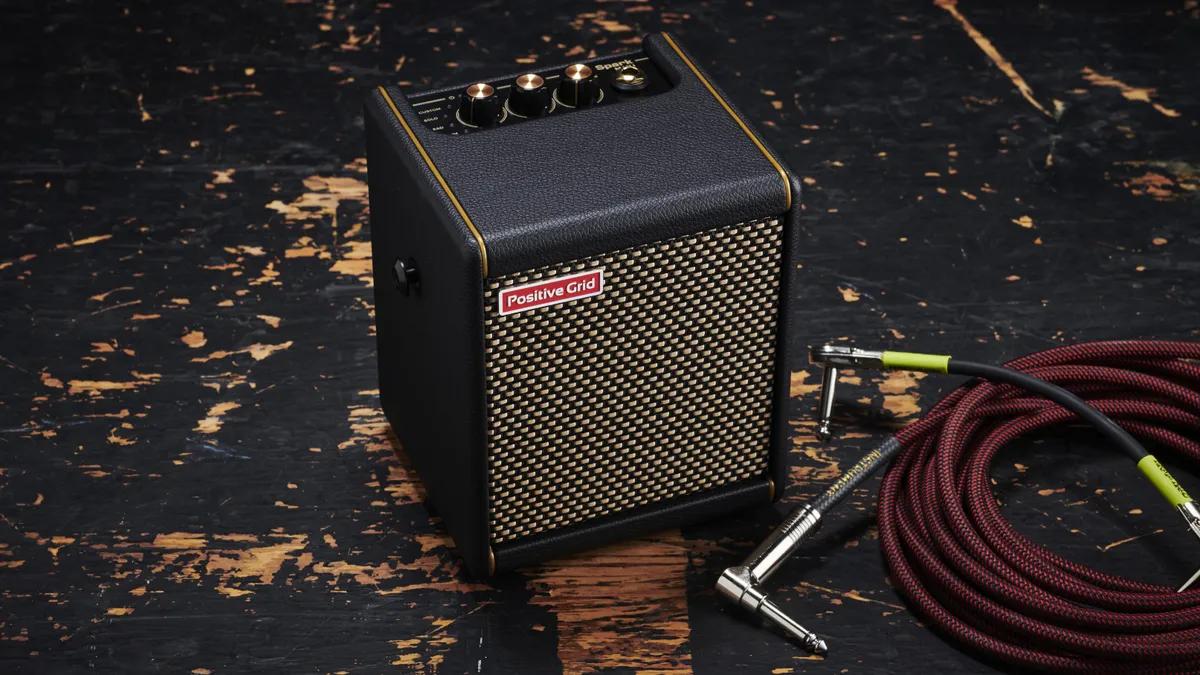
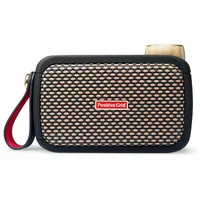
The Spark Mini is for the guitarist who enjoys tone shaping through modern software. The Spark app provides a huge amount of flexibility and, if you're comfortable using a smartphone as part of your setup, you'll find plenty to explore. For an amp of its size, it will also appease players who don't want to sacrifice sound quality or solid build quality in pursuit of portability.
✅ Buy if you’re a modern player who likes tone editing: The Spark app opens up a cornucopia of sounds and this will suit players who appreciate digging into software to achieve their tones.
❌ Avoid if you’d prefer something simpler: For some, guitar playing provides a moment away from a screen. Those looking for traditional simplicity may find this disengaging.
The lowdown: It can feel like everywhere you turn, you see a Positive Grid amp, but there is a legitimate reason why these smart amps keep popping up on "best" lists around the internet, they rock! Since bursting onto the scene in 2022, the Spark Mini has led the way in packaging up a plethora of amp tones and effects into a pint-sized package, largely through the brand's very popular Spark app.
Build Quality: Positive Grid established a new status quo with the release of their Positive Grid Spark 40, which seamlessly blended their guitar VST technology with a powerful practice amp. The Spark Mini follows along the same lines as its big brother but instead opts for a more streamlined enclosure and battery power. The amp makes great use of handsome black textured vinyl, complemented by a brown grille cloth that gives it a premium look and feel. For such a compact unit, it's exceptionally well put together and feels like it could survive a knock or two, making it ideal for players who plan to take it out and about.
Features: It's when you pair the Mini with the Spark app that it truly comes to life. You'll gain access to thousands of tones and effects, as well as intelligent practice tools such as Smart Jam that can completely change the way you rehearse. This AI-powered feature listens to your playing and generates complementary bass and drum parts to accompany you in real time. Considering how heavily the Spark Mini relies on app integration, it's no surprise that Bluetooth connectivity is included, while the USB-C connection transforms the amp into a capable audio interface for recording directly to your computer.
Sound: With 33 amp models and 43 effects on tap, the Spark Mini makes just about any guitar tone imaginable achievable. From noise gates and compressors to modulation and distortion, it's an Aladdin's cave of sounds. Sure, it relies heavily on smartphone integration, but you can save four of your favourite tones directly to the onboard preset slots for quick access. Better still, the Mini backs up its impressive tonal flexibility with surprising volume. With 10 watts of power and a pair of 2-inch speakers running in stereo, this little amp can really pack a punch. Its passive radiator helps improve projection, while there's a respectable amount of low-end response for something so compact.

"I think you get what you pay for here; it's a fantastic sounding mini modelling amp with an app experience that widens the scope for players of all levels to improve their playing and explore sounds."
Read our full Positive Grid Spark Mini review
Best wireless

The THR30II is for guitarists who want the freedom of wireless playing, and with 30 watts of power on tap, it also suits players who like to crank the volume from time to time.
✅ Buy if you want freedom from guitar cables: With a built-in wireless receiver, you can liberate your playing from physical cables allowing exploration around your room.
❌ Avoid if you want something smaller: The THR is a little longer than others on the list and it may not fit everyone’s desk space.
The lowdown: Yamaha's THR30II is designed to be more than just a desktop amp; it's also a powerful Bluetooth speaker that can be enjoyed by non-guitarists just as much as players. Yamaha explains that THR is an abbreviation of 'third', referring to the 'third' location where guitarists typically play: not in the studio, not on stage, but at home. Everything about this range is geared towards desktop use, and it shows.
Build Quality: Under the hood is a rechargeable battery, meaning you can sling the THR in a backpack and play your dulcet tones almost anywhere you choose. Although it's still compact and portable, it's more elongated than some of the squarer options in this guide, so it's worth measuring your desk space before committing. To borrow a well-worn phrase, the THR exhibits that ever-reliable Yamaha build quality. It feels robust and durable, with plenty of attention paid to the finer details. The metal grille is a particularly nice touch. Not only does it provide excellent speaker protection, but it also gives the amp a distinctive aesthetic that helps it stand apart from the competition.
Features: Another ace up the sleeve of the THR30II is the built-in wireless receiver, which means you can play guitar anywhere in the house without being tied to one spot – not to mention it keeps unsightly guitar cables out of your living room. It’s worth noting that the THR30II works with either the Line 6 Relay G10T or G10TII transmitter, but these are sold separately.
Not to be outdone by modern competitors, Yamaha also offers the THR Remote editor/librarian app. This allows for far deeper sound shaping than you’d typically expect from a traditional amplifier, with access to patch editing, compressors, noise gates and more. On the connectivity side, there’s a USB-B output for hooking up to your computer for recording, while the built-in tuner feels like an old-school but still very welcome addition.
Sound: The THR is a pretty great Bluetooth speaker, but how does it hold up as an electric guitar amp? Well, in short, it’s fantastic. Making use of Yamaha’s Extended Stereo Technology, it delivers an incredibly spacious sound that larger amps would struggle to match. With three banks of five amp models, this compact desktop amp covers a huge amount of ground - from pristine cleans to bluesy breakup, hard-hitting rock tones to full-on high-gain saturation.
"The functionality adds up to a superb desktop amp for practice, recording and small gigs that builds on the quality foundations of the original THR."
Read our full Yamaha THR30II review
Most versatile

The Beam Mini is for guitarists who want one compact device to cover almost everything. Whether you're practising at home, recording ideas, streaming backing tracks or diving into thousands of Neural Amp Model captures, this is an incredibly versatile all-rounder that's built with modern players in mind.
✅ Buy if you want a desktop amp that'll do it all: From delivering killer guitar tones with access to thousands of sounds, to doubling as an audio interface and Bluetooth speaker, the Beam Mini is one of the most capable desktop amps on the market.
❌ Avoid if you prefer a plug-in-and-play experience: The Beam Mini is at its best when paired with the app, so players who prefer to avoid app-based editing may find it a little more involved than simpler alternatives.
The lowdown: The newest addition to the desktop amp world is the Blackstar Beam Mini. The Beam has been in Blackstar’s range since 2015, so it’s not a newcomer, but the Mini has taken everything we love about the original and packed in just about every feature you could want from a desktop amplifier. Blackstar would get away with calling this thing the Blackstar ‘Kitchen Sink’ with the amount of features on offer.
Build Quality: The Beam Mini is a lightweight desktop amp, much like many others on this list. However, there are a few unique additions. The Speed Dial, a large multifunction selector knob, allows for precise adjustments, while the Light Beam display is a creative touch that shows you exactly which parameter you're changing and by how much.
Inside, you'll find two full-range drivers and dual passive radiators. Many competing desktop amps make do with a single passive radiator, so the extra low-end presence here is immediately noticeable. Around the back, you'll find a USB-C connection for recording and connecting to a computer, alongside a headphone output for quieter practice sessions. The input is side-mounted, however, which can be a little awkward in tighter workspaces.
Features: The star of the show with the Beam Mini is its ability to support Neural Amp Model captures. This gives you access to around 200,000 tones, profiles and amp setups through the community-driven Tone3000 platform. That's an eye-watering number of sounds at your fingertips. Not only is this impressive for a desktop amp, it would be impressive for a full-sized amplifier costing considerably more.
With an eye on the future, Blackstar has also announced that the Beam Mini will integrate Moises AI stem separation from August 2026. This technology can isolate individual instruments within a song, allowing you to remove or reduce the original guitar part and play along as the lead guitarist yourself. For practice, it's an incredibly useful tool that could prove genuinely game-changing for some players.
The Beam Mini's feature set doesn't stop there. You also get Blackstar's famous ISF control for moving between American and British-inspired amp voices, Bluetooth audio streaming, IP66 weather resistance, compatibility with electric, acoustic and bass guitars, plus up to 18 hours of battery life. It's an incredibly versatile package and one of the most feature-packed desktop amps currently available.
Sound: Considering the price, the Beam Mini sounds absolutely killer. Blackstar has managed to achieve what most manufacturers strive for when designing a desktop amp: making it sound far bigger than it actually is. The dual passive radiators do a lot of the heavy lifting, producing a generous amount of low-end response that help the Beam Mini sound far fuller than its compact dimensions suggest. It's also more than loud enough for home practice.
New to the Beam Mini is Blackstar's In The Room technology, which aims to recreate the experience of hearing an amplifier in the room rather than through a close-mic'd speaker cabinet. The result is an impressively natural sound with the low-mid presence and depth you'd typically associate with a much larger amplifier. Blackstar has truly knocked it out of the park with the Beam Mini, delivering one of the most versatile and best-sounding desktop amps currently available.
Best for beginners

The Laney Lionheart Mini is aimed at guitarists who are new to the instrument. Its simple control layout keeps things approachable, while the low price removes any real barrier to entry. You can also expand its tonal range further down the line using smartphone apps like Tonebridge.
✅ Buy if you’re just starting out: With simple controls and a very attractive price point, this is an ideal choice for beginner guitarists.
❌ Avoid if you want more volume: With a 3-inch speaker and 3 watts of power, there are louder options available if you need more headroom.
The lowdown: Birmingham-based amplifier brand Laney, best known for its Lionheart series, has turned its attention to guitar players looking for a desktop take on an iconic amp. The Lionheart Mini is a great choice for beginners for two reasons: ease of use and affordability. Coming in at a knockdown price, the barrier to entry is incredibly low. With a simple three-knob layout, it’s not overwhelming, and when you’re ready to explore more tones and control, you can connect a smartphone and use apps like Tonebridge to experiment.
Build Quality: Before I get into the sound of Laney's Lionheart Mini, I'll take a moment to appreciate how good this little amp looks. Obviously modelled after its much larger counterpart, this amp nails the retro vibe of the original with its navy exterior and beige grille. I think this little guy would brighten up any desk. It’s also very compact, weighing just 0.75kg, making it about as lightweight as they come. At 175mm in length, it’s ideal for players who aren’t blessed with much desk space.
Features: What makes the Laney stand out from the likes of the Blackstar Fly or Fender's Mini Twin is the addition of the Laney Smartphone Insert. This smart feature allows you to connect your amp to the likes of Ultimate Guitar's Tonebridge app to access a stockpile of effects and amp models. The Lionheart actually comes with a 3-month subscription to Tonebridge, so you can give it a test drive for free. It’s also powered by six AA batteries. While some players may be disappointed that it isn’t rechargeable, at this price that’s perhaps not too surprising.
Sound: The Lionheart Mini features a dual-channel setup, with both a clean and overdrive sound available at the push of a button, while all the tone-shaping capabilities are accessed via a solitary dial. This works much like the tone control on a distortion pedal and you even get a rather authentic tape-style digital delay that will add a little depth to your sound.
Best value

The NUX Mighty Air is ideal for guitarists who want as many modern desktop amp features as possible for as little money as possible. The combination of software and hardware on offer makes it feel like it could justify a higher price, yet it remains very affordable.
✅ Buy if you’re a bargain hunter: With a wireless transmitter, Bluetooth, app connectivity and a rechargeable battery for not a lot of cash, the Mighty Air offers serious value for money.
❌ Avoid if you want a more premium build: Its feature set is impressive, but there are more robust-feeling desktop amps available if you need extra build heft.
The lowdown: NUX has quickly established themselves as a formidable force in the budget gear arena, and the Mighty Air proves why - with so much on offer for a little over $/£100, this amp is the definition of value for money. Combining a wireless stereo desktop amp with a Bluetooth speaker, the Mighty Air is exactly the unit you've been looking for if you're trying to keep costs down without compromising on tone or features.
Build Quality: NUX has blown me away with the amount of typically expensive build features they've crammed into the Mighty Air. Take the rechargeable lithium battery; this built-in battery gives you 18 hours of play time. Or the NUX wireless transmitter that it comes with, allowing you to ditch the guitar cables. Not to mention the dual 2-inch custom speakers accompanied by a passive bass radiator, providing great bass response and dispersions for an amplifier its size.
Features: It seems most amplifiers have a dedicated app these days, and the Mighty Air is no different. Once connected, you'll gain access to a wealth of digital amp models, impulse responses and stompbox-style effects, all via a very user-friendly interface. Now, with the firmware V2 update, NUX has introduced the TASC-HD white-box algorithm, improving the dynamic response and feel of the amp models inspired by classic Fender, Marshall and Vox designs.
Sound: The dual speakers deliver true stereo sound, which adds real spaciousness to your tone. A passive bass radiator also brings a surprising amount of low end for an amp this size. The impulse response cabinets are the real highlight here, giving the Mighty Air more depth and realism than many other desktop amps, and it’s a brilliant touch from NUX. At 10 watts, it offers plenty of volume for home practice, while the headphone output is ideal for late-night sessions.
Best budget
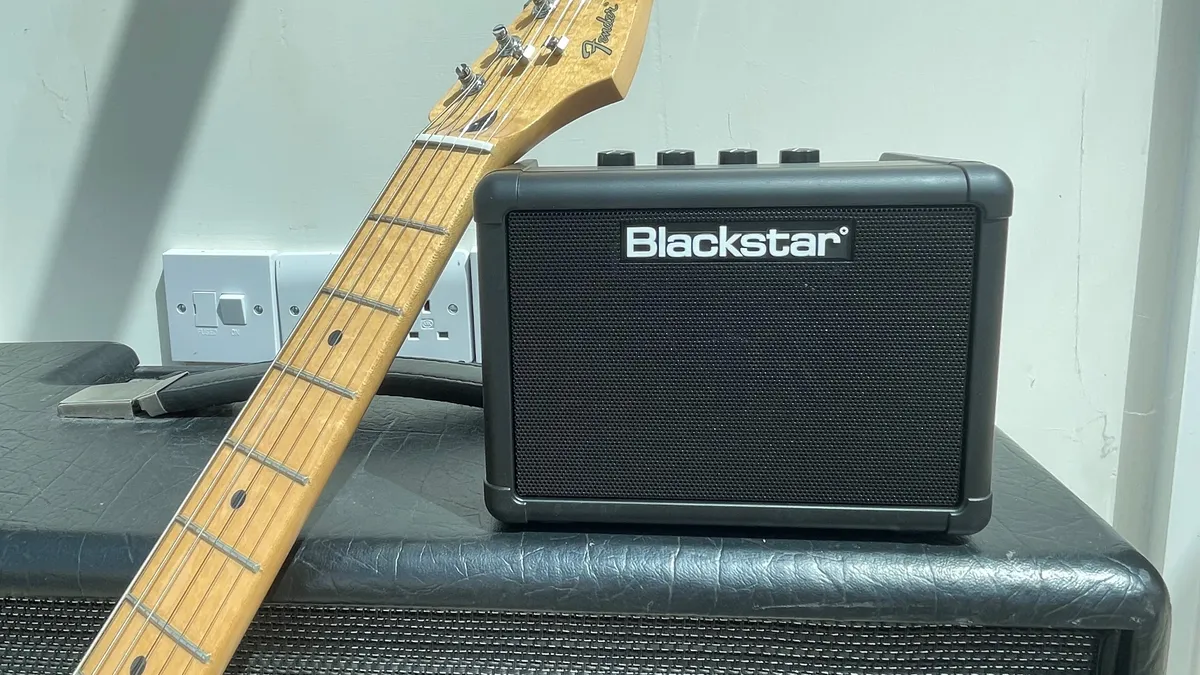
The Blackstar Fly 3 is ideal for players who already own a larger amplifier and want a simple, affordable practice solution for home use. It won't overwhelm you with features, but its great overdrive tones and compact size make it an excellent second amp.
✅ Buy if you're looking for a desktop companion to your main amp: If your usual amp is too loud or impractical for home use, the Fly 3 offers a cost-effective way to keep practising without sacrificing enjoyable guitar tones.
❌ Avoid if you're after lots of features: The Fly 3 focuses on simplicity and sound quality rather than app connectivity, amp modelling and extensive effects.
The lowdown: This mighty little 3-watt monster is on the desks of guitarists of all abilities across the world thanks to its crisp sound, fun delay and very attractive price tag. It may not have the Bluetooth capabilities of others on this list, but it more than makes up for it with its superb overdrive tone and expandability.
Build Quality: The Blackstar Fly 3 comes in a myriad of different colour and style options from bright neon units to Day Of The Dead-themed motifs and even a Def Leppard option! The plastic chassis isn’t exactly the most robust material on this list, but it does help keep things very lightweight, as does the single, 3-inch speaker found inside. Overall, it’s one of the most compact desktop amps around – it could even fit in your pocket... if they are deep enough.
Features: The Fly 3 can be turned into a true stereo rig, with the addition of the Fly 103 extension speaker, which is perfect for streaming music or even has a set of portable PC monitors. Like all Blackstar amps, the Fly includes the patented Infinite Shape Feature which enables you to quickly and easily change the timbre of the amp by just adjusting this dial.
Sound: Being the smallest amplifier Blackstar has ever produced, you might expect a thin and underwhelming sound, but the Fly 3 is anything but. Blackstar has cleverly opted for a closed-back enclosure, helping to squeeze a little extra bass response from the compact cabinet. When you're dealing with an amp this small, every little bit helps. Like any great Blackstar amplifier, the overdrive channel sounds killer, with plenty of bite and character. Although it uses a single 3-inch speaker, you can achieve stereo sound by adding the Fly 103 extension cabinet, which opens up the sound considerably. In my opinion, it's well worth the investment.

"If you’re in the market for a tiny amp to sit on your desktop or bookshelf, or need a portable guitar practice solution, then the Fly 3 from Blackstar should be right up the top of your list. It has an impressive kick – and with built in delay and the potential to add an extension cab, it’ll keep on surprising you for some time yet."
Read our full Blackstar Fly 3 review
Also consider
How to choose a desktop amp
When selecting the best desktop guitar amp, there are a few specifics you should keep in mind. Nowadays, there are plenty of options on the market, so working through the key features and thinking about what you actually want and need is the best way to end up with a product that suits your playing style. I worked in a guitar shop for the best part of a decade, and these are the features I always told guitarists to consider:
Volume: How loud do you want your desktop guitar amp to be? Is this an amp purely for practising at home where low volume is fine, or do you want something more versatile that can handle jamming with friends when required? Desktop amps typically range from around 3W to 50W, so deciding how much headroom and volume you need will help narrow down your options.
Amp models: How many amp models does the amplifier come with? Does it give you all the tone options you’re likely to use? Some desktop guitar amps, like the Blackstar Beam Mini, offer access to hundreds of thousands of tones via app-based systems, which may be exactly what you’re after. On the other hand, the Orange Crush Mini offers a single core voice for those who prefer minimalism and ease of use. At the end of the day, we choose guitar amps to help us realise the sound in our head, and desktop amps are no exception.
Features and connectivity: If you’re interested in modern guitar technology, you’ll likely want Bluetooth, audio interface capabilities, app-based control and built-in effects. Many desktop guitar amps, including several in our list, offer access to these features. If you think you’ll make use of them now, or simply want to future-proof your choice in case you do later on, it’s worth considering these added extras.
Size and weight: Lastly, consider the size of the amplifier. If you have a smaller space, something like the Positive Grid Spark Mini will do the trick. Is the amp you’re considering compact enough not to get in the way of your desk space? If you’ve got a bit more room to play with, the Vox Adio Air GT will give you a bit more volume and dispersion. And if portability is important, a lighter-weight option will naturally suit you better than a bulkier alternative.
FAQ

What's the difference between desktop and practice amps?
The main difference is size and design intent. A desktop amplifier offers a lightweight, compact solution compared to regular practice amplifiers, which are often larger, more cumbersome and fitted with bigger speakers. Desktop amps are designed to comfortably sit on your desk at home without taking up too much space or feeling bulky.
You can also travel with them easily, as their compact size means many will fit into a backpack with no fuss. Some are battery powered for added portability, and certain modern options even add extras like Bluetooth connectivity and water or dust resistance, making them even more flexible for home use and beyond.
Can I use a desktop amp with pedals?
Yes, in fact, they often work really well together. In my experience, modulation and time-based effects like delay, reverb and chorus tend to suit desktop amps particularly well, as they don’t push the small speakers as hard.
Because desktop amps usually use smaller speakers, they can start to break up or distort quite quickly, which means high-gain pedals like fuzz or heavy distortion can sometimes sound a bit harsh or fizzy at higher volumes. That said, every amp reacts differently, and part of the fun is experimenting to find what works best with your setup.
Do desktop guitar amps sound good for recording?
The best results you'll get recording with a desktop amp is when it has a direct USB recording output. Many modern desktop amps feature USB-C connectivity, allowing you to record directly into your computer without needing extra gear. Pair that with built-in cab simulations, amp models and impulse responses and you can achieve surprisingly fantastic guitar tones straight out of the box.
If you're planning on mic’ing up the amp instead, desktop amps can be a little more limiting. Their speakers are typically much smaller than those found in traditional guitar amplifiers, resulting in a more focused sound and fewer options when it comes to microphone placement. That said, for home recording, many desktop amps are more than capable of delivering excellent results, especially when using their direct recording features. It just depends on your recording preference.
Are desktop amps good for beginners?
Desktop amplifiers are fantastic for beginners. They typically come loaded with amp tones and effects that allow new players to experiment with sounds they may not have encountered before. Their compact size also makes them ideal for practising at home, as they perform very well at lower volumes. Let's face it, learning guitar involves a lot of repetition, and being able to play the intro to The Number Of The Beast over and over again tends to go down much better with your housemates when it's at a sensible volume.
Many desktop amps also include useful features such as Bluetooth connectivity, headphone outputs and built-in practice tools, making them even more beginner-friendly. Their portability is another major advantage. A beginner can easily take a desktop amp to a guitar lesson, a friend's house or even the office for a quick practice session without any hassle.
Can you use headphones with a desktop guitar amp?
Most of the time, yes. As long as your desktop amp has a headphone output, you'll be able to play silently with a pair of headphones no problem at all. Since desktop amps are primarily designed for home use, most models come equipped with a dedicated headphone jack as standard.
When it comes to wireless headphones, things can be a little trickier. Bluetooth introduces a small amount of latency, meaning there can be a noticeable delay between playing a note and hearing it through your headphones. For that reason, most guitar gear, including desktop amps, is designed to work with wired headphones rather than Bluetooth models. If silent practice is important to you, I'd always recommend checking that your chosen amp has a headphone output before buying, although it's now a very common feature on modern desktop amplifiers.
How loud are desktop guitar amps?
Despite their compact size, desktop amps can get pretty loud. For example, the Vox Adio Air GT packs 50 watts of power, making it more than capable of filling a room and easily loud enough for home use. At this sort of volume, you'll also be able to jam with other guitarists without many issues.
That said, most desktop amps aren't designed to compete with a drummer or replace a dedicated gigging amp. While some of the more powerful options can hold their own in certain situations, they'll likely drown out in a full band environment without PA support.
Of course, there are smaller and quieter options out there if that's too much heat, but don't write off desktop amps if you're after a bit of volume. Many are far louder than their size would suggest.
What wattage should a desktop guitar amp have?
I always suggest starting with your intended use. If you're primarily playing at home, anything between 3W and 10W will do the job just fine. Amps closer to the 10-watt mark will generally offer more headroom and volume when you need it, while smaller 3W models are better suited to quieter practice sessions. If you'd like to jam with friends or simply want a bit more volume on tap, then a desktop amp in the 30W to 50W range may be a better fit. Models such as the Yamaha THR30II and Vox Adio Air GT can produce an impressive amount of volume for their size.
It's also worth keeping in mind that wattage isn't everything. Speaker size and cabinet design can have just as much impact on how loud an amp feels in the room. Ultimately, there isn't a right or wrong answer, only what's most suitable for your playing environment and needs.
Glossary
Aux input: A 3.5mm input that allows connection to an audio playback device. Great for playing along to backing tracks through the amplifier, or generally listening to music when you aren’t playing guitar.
Built-in effects: Guitar effects that are built into the amplifier itself, as opposed to being loaded through an app.
Channels: Refers to the different signal paths found on a guitar amplifier, typically used to switch between clean and distorted sounds.
Digital modelling: A type of amplifier technology that uses software algorithms to recreate guitar amplifier tones, instead of traditional valves or analogue circuits.
Distortion: An effect that clips your guitar’s signal to produce a fuzzy, aggressive tone, typically used in heavier styles of music.
EQ: The control section on an amplifier that allows you to boost or cut bass, mid and treble frequencies in your tone.
Headphone output: An output on an amplifier that allows you to connect headphones so you can hear the amp tone privately instead of through the speaker.
Impulse responses (IRs): A digital snapshot designed to replicate the sound of a specific speaker cabinet in a particular environment, including microphone placement.
Latency: The delay between striking a note on your guitar and hearing it through the amplifier or system.
Modulation: Effects such as chorus, phaser and flanger that manipulate the audio signal to create movement and texture, often through pitch or time-based variation.
Solid-state amplifier: A type of guitar amplifier that uses transistors and circuitry to boost your guitar signal, rather than valves.
Valve (tube) amp: A traditional type of amplifier that uses valves (vacuum tubes) to amplify your signal. They are typically warm sounding and very dynamic in response.
Wattage: The power rating of your amplifier. Although there are other factors to consider, it gives an indication of how loud the amplifier will be, with higher wattage generally meaning more headroom and volume.
How we choose the best desktop amps
Here at MusicRadar, we are experts in our field, with many years of playing, creating and product testing between us. We live and breathe everything music gear related, and we draw on this knowledge and experience of using products in live, recording and rehearsal scenarios when selecting the products for our guides.
When choosing what we believe to be the best desktop amps available right now, we combine our hands-on experience, user reviews and testimonies and engage in lengthy discussions with our editorial colleagues to reach a consensus about the top products in any given category.
First and foremost, we are musicians, and we want other players to find the right product for them. So we take into careful consideration everything from budget to feature set, ease of use and durability to come up with a list of what we can safely say are the best bass drum pedals on the market right now.
Find out more about how we test music gear and services at MusicRadar.
Meet the experts

Ross has been a music lover and guitar player since the age of 8. He has spent the five years since graduating from university working in music retail, selling guitars, amps and more. Ross is particularly interested in electric guitars, pedals and amplifiers and his current rig includes a trusty 2009 American Standard Stratocaster and Vox AC30S1 with a few Walrus Audio and Way Huge pedals in between.

Daryl is a Senior Deals Writer at MusicRadar, and is responsible for writing and maintaining buyer's guides on the site as well as testing out products for reviews. Before writing for MusicRadar, Daryl worked for many years in music retail, helping musicians of all ages find the best gear for them.
Daryl also has a passion for live sound, having worked professionally as a sound engineer in a number of venues around Scotland and holds a first-class Bachelor's degree in Creative Sound Production from the University of Abertay. He's worked for various bands, as well as his fair share of pantomimes, dance shows, opera and has operated the sound for some of the country's top comedians, including Alan Carr, Ed Byrne and James Acaster, among others.
Latest updates
02/07/26: The guide has been rebuilt and rewritten from the ground up, with all product entries now split into distinctive sections to make it easier to find the info you're looking for. Expert verdict panels have also been included where applicable, and each entry now has breakout boxes explaining the pros and cons and what type of player each amp would suit. A new How To Choose section now features, alongside a glossary explaining the key terms, and a brand new FAQ section. Finally, we've added a Meet The Experts section so you can learn more about the guide's authors.
Read more
MusicRadar's got your back Our team of expert musicians and producers spends hours testing products to help you choose the best music-making gear for you. Find out more about how we test.
- These are the best budget guitar amps under $500/£500
- Practice more with the best guitar amp headphones
- Kick off your playing career with the best beginner guitar amps
- These are the best guitars for beginners
- Explore the best cheap electric guitars
