MusicRadar Verdict
Gibson’s new baritone is a welcome addition to the ever-expanding Victory line. It takes the offset body shape in an exciting, heavy direction, pairing fabulous playability with exceptional pickups that love low tunings. If you're looking for a serious, studio-ready riff monster, keep an eye on this one.
Reasons to buy
- +
Extremely articulate, high-output pickups.
- +
Impressive build quality and serious good looks.
- +
Comfy compound radius fretboard.
Reasons to avoid
- -
On the heavier side.
- -
Minor finish checking at the nut on the review sample.
MusicRadar's got your back Our team of expert musicians and producers spends hours testing products to help you choose the best music-making gear for you. Find out more about how we test.
What is it?
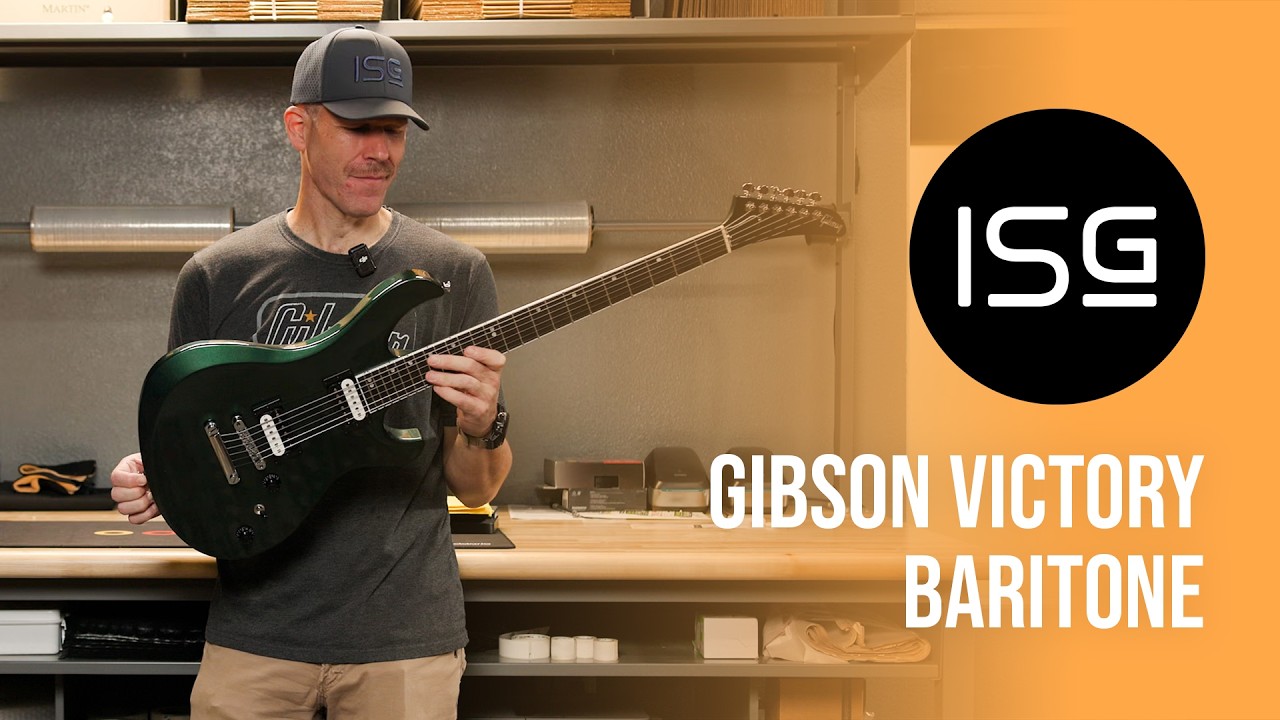
So, it’s been two years since Gibson reintroduced the guitar-playing world to this once-forgotten ‘80s relic, and in that time the Nashville guitar giant has gone all-in on the model. We’ve had a satin-finished option loaded with Dirty Fingers pickups, an eye-catching figured-top version and even a shred-friendly take with a Floyd Rose.
The latest baritone version looks to take the concept of the Gibson Victory to a whole new level, stretching its neck to an impressive 28”, and dropping the tuning to the riff-tastic B!
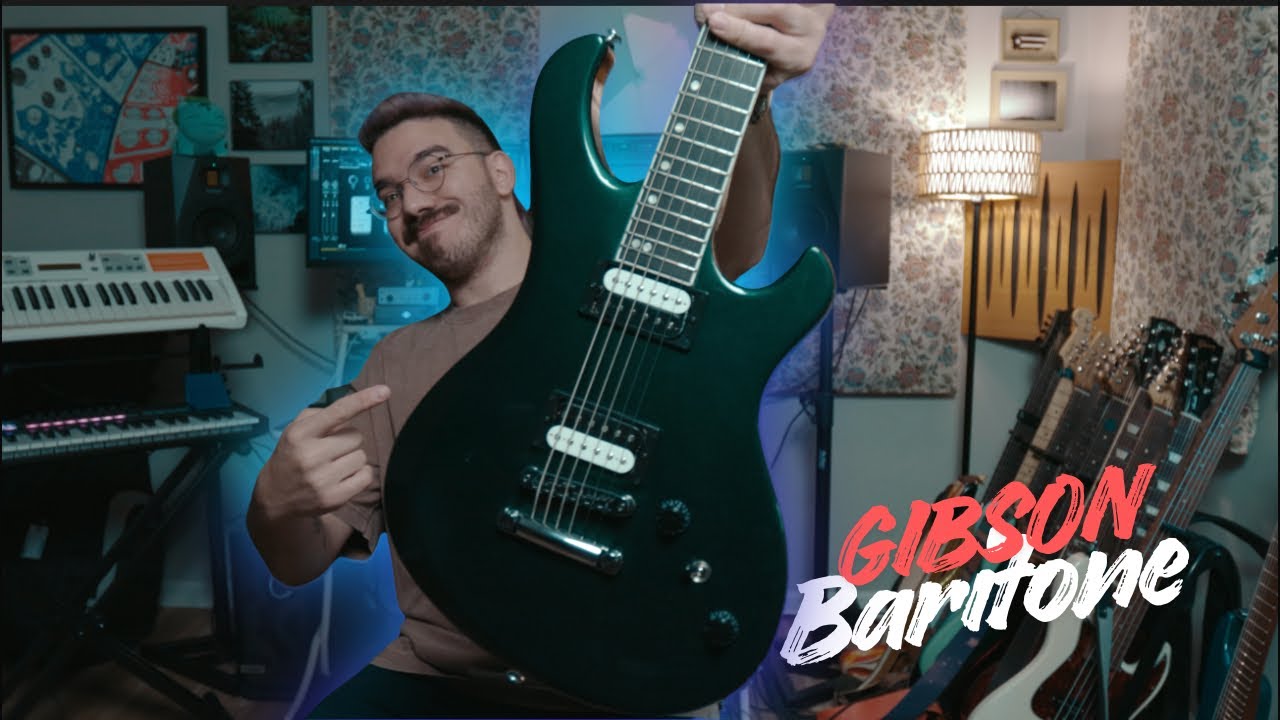
As expected, the new Victory Baritone features the same double-cutaway mahogany body as the previous iterations. And like its predecessors, the now elongated neck features a rounded C profile and is topped with a compound radius ebony board that shifts from 10 to 16”. It also has 24 medium jumbo frets, acrylic dot inlays, that iconic Explorer-style hockey stick headstock, a Graph Tech nut, and Grover Mini-Rotomatic tuners.
The eagle-eyed among you will probably have spotted that one massive difference between this new version and the previous models is the lack of a pickguard. This means the electronics are installed from the rear, so there's now a back cavity to house pots and such.

Also new for the baritone are Gibson’s latest pickups. The ELEV8 humbucker pickups use Alnico 8 magnets and custom-gauge wire, which Gibson says “delivers powerful, focused tones without sacrificing articulation, clarity, or dynamic control”, something we’ll put to the test later.
Again, like the standard Victory models, we have a plethora of tone-shaping options with a push/pull volume for coil-splitting and a push/pull tone for inner/outer coil selection.
With it being tuned a 4th lower than a standard electric guitar, it comes strung with .013-.062” strings and comes in a sleek all-black Gibson hard case.
Gibson is positioning the Victory as its metal-centric model, so a baritone version feels like a very natural evolution, but how does this quirky Gibson oddball stand up to the long-scale treatment? Well, let’s find out.
Specs

- Launch price: $2,499 / £2,149 / €2,499
- Made: USA
- Type: Six-string baritone electric guitar
- Body: Mahogany
- Neck: Mahogany / Rounded "C" profile
- Fingerboard: Ebony, 10"–16" compound radius
- Scale length: 28" / 711.2 mm
- Nut/width: Graph Tech / 43.05 mm (1.695")
- Frets: 24, Medium Jumbo, nickel silver
- Hardware: Grover Mini-Rotomatic tuners, Nashville Tune-O-Matic bridge with aluminium Stop Bar tailpiece, chrome finish (no tremolo)
- String spacing at bridge: 52 mm
- Electrics: 2x Gibson ELEV8 Humbuckers (Alnico 8 magnets); Master Volume (with push/pull coil-split), Master Tone (with push/pull inner/outer coil select), 3-way toggle switch
- Weight: 8.2 lb
- Left-handed options: No
- Finishes: Graphite Metallic, British Racing Green
- Cases: Included (Gibson USA Hardshell Case)
- Contact: Gibson
Build quality

Build quality rating: ★★★★½
After testing and hands-on reviewing several different Victory models over the last couple of years, I must admit I’m really coming around to the shape and visual choices Gibson is making with this range. The body feels both retro enough to be Gibson, but undeniably modern at the same time. It certainly offers a refreshing break from the usual sea of double-cut metal guitars and standard single-cuts out there.
Taking away the pickguard is a nice touch. It makes the guitar feel sleeker and more modern. I like it. I’m a fan of the Graphite Metallic finish on this model, too. It looks stunning in person. I want Gibson to offer an Explorer in this exact finish immediately!
When I first lift the instrument out of its hardshell case, I notice it has some heft. It definitely sits on the heavier side, weighing in at 8.2 lbs. That said, thanks to the offset body shape, the weight feels pretty well distributed across the strap when standing. Thankfully, it’s heavy but not unwieldy.

On closer inspection, this is a seriously solid, well-built instrument. The gloss nitrocellulose finish is cleanly applied across nearly the whole guitar. The fretwork is equally impressive, with every fret edge neatly rounded alongside the jet-black ebony board. Notably, there are no fret-nibs here. Instead of the small piece of binding that covers the fret edges on most other Gibson guitars, this Victory's frets are bare at the edges. So there are no rogue bits of plastic to catch your high E string mid-shred.
Honestly, the only minor cosmetic issue I spotted on my review sample was a tiny, almost invisible hairline lacquer check near the nut. It’s the kind of thing that sometimes happens with thin nitro finishes, and in this case, it’s strictly cosmetic and nothing to worry about long-term. Beyond that solitary flaw, the build here is top-tier.
Playability

Playability rating: ★★★★½
Despite the longer 28-inch scale length and extended neck, the Victory Baritone feels remarkably easy to navigate from the very first minute I plug it in. Long-scale guitars can sometimes feel awkward, forcing your fret hand to stretch unnaturally across the lower frets. Thankfully, Gibson’s Rounded C mahogany neck profile keeps things comfortable for me. It fills my hand nicely without feeling too thick, and it genuinely feels like a normal Gibson, albeit, a much longer one.
I’ve noted in previous reviews that I like it when Gibson opts for a compound radius, and I’m happy to see it on this model. Starting with a rounder 10-inch radius at the nut and flattening to a slick 16-inch radius by the dusty end, it feels very natural to me. Honestly, it’s not something you notice straight away, and that’s a good thing.
Low-register open chords and complex baritone voicings stay clean and tight down near the headstock, and as you move up the neck toward the body joint, the flatter surface allows for smooth lead work – that is, if the thought of bending a wound G string doesn’t creep you out.

While a 28-inch baritone is naturally geared toward thick, low-end rhythm playing rather than soaring high-register lead solos, the overall vibe of this instrument is modern, fast, and perhaps surprisingly versatile. The deep lower cutaway and contoured neck heel give me full access up to the 24th fret, so I can easily hit higher notes if I fancy.
I will say, the factory setup out of the box was spot-on for B-standard tuning, at 1.5mm on the low E. The string action was set low enough to make playing easy, without being so low that I am scared to dig in.
All told, it’s a good-feeling guitar, and if you’re new to the wonderful world of baritones, then this could be a great gateway into long-scale guitars, as it genuinely feels pretty natural to hold.
Sounds

Sounds rating: ★★★★★
This thing absolutely punches! I just so happened to be tracking a heavy new single for my band in my little home studio when this guitar arrived for review, so I immediately plug it straight into my rig to test it under real recording conditions.
I was completely blown away by how punchy and balanced these new ELEV8 humbuckers sound. Baritone guitars can often sound flubby and, well, a bit much. The ELEV8 pickups are most definitely not flubby.
They sound thick, tight, and very powerful. The low-end response remains incredibly focused and punchy, holding its ground effortlessly even when I drop the tuning further down to A.

There’s an immense amount of output and gain on tap here, thanks to those Alnico 8 magnets, but what really sets these pickups apart is their high-definition clarity in the upper frequencies. They sound almost HD, with plenty of top end and clarity. Fast palm-muted metal riffs sound punchy and immediate, with a satisfying low-frequency thump. This may very well be the most modern-sounding Gibson ever.
Engaging the push/pull coil-splitting options opens up a versatile clutch of secondary tones. Splitting the high-output ELEV8 humbuckers down to single coils yields snappy, glassy cleans that sound fantastic with a heavy dose of surfy verb.
Switching between the inner and outer coil combinations using the tone pot offers further tonal tweaking, making it a very handy guitar to have in the studio.
Verdict

I’m a big Gibson fan, and I love a Les Paul or SG as much as the next guy, but it’s great to see Gibson leaning into contemporary models and giving players something entirely new, rather than just a dressed-up classic.
By taking the reintroduced double-cutaway platform and giving it the long-scale treatment, Gibson has produced a serious, studio-ready riff machine that feels surprisingly natural in the hand despite its lengthy 28-inch neck.
Sound-wise, the new ELEV8 humbuckers are just fantastic. Thanks to their Alnico 8 magnets, these high-output pickups deliver incredible low-end punch and high-definition clarity without ever sounding flabby or tubby. Even when dropped down to A-tuning, fast palm-muted riffs remain tight, focused, and articulate. Add coil-splitting for glassy, single-coil cleans, and you get an exceptionally versatile guitar that feels made for the studio.
The Victory Baritone is easily the most 'modern' offering from Gibson in recent memory, and I can’t wait to see what’s next – maybe an 8-string is on the cards?
MusicRadar verdict: Gibson’s new baritone is a welcome addition to the ever-expanding Victory line. It takes the offset body shape in an exciting, heavy direction, pairing fabulous playability with exceptional pickups that excel at low tunings. If you're looking for a serious, studio-ready riff machine, keep an eye on this one.
Test |
Results |
Score |
|---|---|---|
Build quality |
Sleek body, beautiful finish, and solid hardware, with only one very small cosmetic lacquer check at the nut. |
★★★★½ |
Playability |
Smooth compound-radius board and a neck profile that makes the 28” scale length surprisingly easy to handle. It is a little heavy though. |
★★★★½ |
Sounds |
The ELEV8 humbuckers deliver punchy, clear, and articulate modern high-gain tone without losing low-end clarity. |
★★★★★ |
Overall |
A fabulously modern baritone built for metal and so much more. |
★★★★½ |
Also try
Hands-on videos
Franko Torres Music
Interstellar Guitars