MusicRadar Verdict
A rugged, easy-playing, and surprisingly heavy (both tonally and weight-wise) rock and metal guitar, the Sire Larry Carlton X1 offers a lot for a low price. Ideal for beginner players chasing heavier sounds, it provides an affordable launch pad into the wild world of electric guitar playing.
Pros
- +
Easy to play and built to be forgiving to newbies.
- +
Great pickups for rock and metal, and decent for cleans.
- +
It has a coil split.
Cons
- -
It’s pretty heavy.
- -
Test model had some tuning stability issues.
- -
The back springs on this test model have a tendency to rattle.
MusicRadar's got your back Our team of expert musicians and producers spends hours testing products to help you choose the best music-making gear for you. Find out more about how we test.
What is it?
Sire might not be the most glamorous name in the guitar market, but when jazz legend and long-time Gibson endorser Larry Carlton ended his relationship with the firm to team up with Sire, it proved a match made in heaven. Together, they recreated the Gibson ES-335 he used to track hits with Steely Dan and Joni Mitchell, and kick-start a relationship that is showing no signs of slowing down.
Carlton believes that the Sire guitars he helps produce can stand up to anything in Fender’s Squier line, and with models like this priced similarly, it’s easy to see why he’s made such a comparison. The X1, in turn, is less jazz rock and far more heavy metal, with a subtly pointed visage for its mahogany body, twin Sire Basic humbuckers with a push/pull coil split, and a two-point tremolo bridge with whammy bar ensuring it’s dressed for the job.

This end of the Sire line may be aimed largely at beginner players, but the collaboration also appeals to modern players looking to expand their collection, be it as an affordable backup, a runaround, or perhaps even as a modding platform. And all the baked-in specs could lend it to that. There’s a C-shaped hard maple neck and rosewood fingerboard with rolled edges and a 14”, serving up a generous 24 frets.
For $299, there, on paper at least, it looks decent value. Players may not look overly kindly on the concept of a jazz great adding his name to a metal-leaning S-type, and for others, the low price point might not instill a lot of confidence, but I'm diving in here with an open mind.
Specs

- Price: $299 | £249 | €283
- Made: Indonesia
- Type: Six-string electric guitar
- Body: Indonesian Mahogany
- Neck: Hard maple, C-shape
- Fingerboard material/radius: Rosewood with rolled edges, 14"
- Scale length: 25.5” / 647.7mm
- Nut/width: PPS (Plastic), 43mm
- Frets: 2.7 mm Medium Jumbo
- Hardware: Sire Basic tremolo, Sire Basic diecast tuners, whammy bar
- String spacing at bridge: 157mm
- Electrics: Sire Basic humbuckers, 1x Volume, 1x Tone control with push/pull split coil, and three-way pickup switch
- Weight: lb/kg: 9.2lb / 4.2kg
- Left-handed options: No
- Finishes: Satin Dark Navy, Satin Black, Satin Charcoal Metallic, Satin White
- Case: None
- Contact: Sire
Build quality

Build quality rating: ★★★½
Unfortunately, the guitar hadn’t been out of the box for more than five minutes when the switch tip came clean off – it clearly hadn’t been glued in. But thankfully, that didn’t wholly foreshadow what was to come.
This review example's mahogany body is Les Paul-level weighty, which is a mark against its beginner-friendliness, but otherwise, the build quality is fairly high. The neck is nicely finished, and, while not being anorexically thin, isn’t Les Paul-fat, either, with its contours and fret access as good as I could have hoped for considering its price.
That being said, there are times when the guitar reminds me that it’s right at the budget end, with its tuners and plastic nut making tuning stability average at best during testing, and the bridge can have an almost slap-back delay-type quality to it, especially when I really dig in as the springs in the back rattle like a freight train. It’s a little off-putting.
The weight does at least counter any potential neck dive issues, and the coil split is a really pleasant surprise at this price point to help get the most out of its pickups (more on those below). If this is to be a beginner’s guitar, it’ll teach players about the differences between single-coil-esque and humbucking pickup sounds.

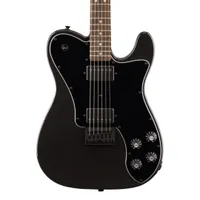
Charvel’s new budget Tele disappointed me with its heavy gloss finish. Those finishes, to my eye, are not only a magnet for dust, but also scream “I’m cheap,” and so the Charcoal Metallic Satin finish here is more aesthetically pleasing to me. It feels premium, and while some may feel it’s a little bland, I think it looks really smart. Plus, there’s a Dark Navy Satin colourway option for those who want something a little more eye-catching.
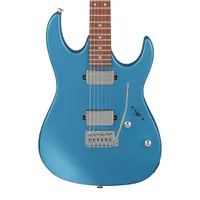
The Charvel and a cluster of Harley Benton models benefit from the new-standard heel-mounted truss rod wheel, but the Sire and most others at this price – we’re talking the Squier Affinity series, Ibanez Gios, and the Jackson JS Series Dinky JS11 – have the more traditional headstock access point, beneath a cover. That makes it unfair to deduct a point, and so, considering the relative buttons Sire wants for it, it is an impressively assembled $300 axe.
Playability

Playability rating: ★★★★☆
My focus here is on ease of playing, considering that, at its price point, most players picking it up will be relatively inexperienced. In that regard, everything feels like a happy medium: the Goldilocks build?
The C-shape hard maple neck feels smooth, with a roundness to it that’s comfortable on the hands, without being too fat, and therefore a guitar I have to fight, or too thin, which arguably could give beginners a skewed introduction to guitar builds. It feels like the perfect starting point, and if anything, feels more like a traditional Fender neck than anything else.
The finish is pretty sleek, too. I’m not a fan of gloss necks as I find they can have a bit of friction, but it’s not so smooth that it makes me feel like Bambi on ice all the same. The rolled edges (Sire calls it "Edgeless") are a great aid, too. It feels like it’s built to hold a newbie’s hand; to be their noble steed rather than a wild horse they need to tame.
Fret access, up to the 18th fret, is plentiful, but it does become a bit of a stretch reaching those highest frets as the neck heel starts to become obstructive.
Its contours are pretty minimal, but the arm carve does make it a more comfortable player, while the weight of the guitar remains a sticking point. I know it's on me, and it starts to feel extra heavy during longer sessions.
In all, its playability is positively vanilla. Nothing is too lacking or too extreme; I can play fast on it without it feeling like I’m in a tug of war, and it never feels like I’m wading through treacle. It’s billed as a rock/metal guitar, but its design doesn’t lean too heavily into that. It plays like a solid all-rounder, which is ideal for a beginner’s platform.
Sounds

Sounds rating: ★★★★☆
There isn’t that brittleness I’m used to from cheaper guitars
First off, the pickups pack way more heat than I expected. The cynic in me always sees affordable guitars offering “high output” humbuckers and doesn’t believe it; they’re usually rather meek and mild. This isn’t the case, and even going through a clean 1960s Fender Showman amp model, there isn’t that brittleness I’m used to from cheaper guitars.
The mahogany body and rosewood 'board do a fair amount of lifting here, resulting in a slightly darker, more bass-forward tone that makes it sound far meatier, and reinforces its status as a rock and metal guitar. Stick it through a fairly high-gain amp – I paired it with everything from Neural DSP: Archetype Gojira’s hot amp to Quad Cortex amp models of a 5150, JCM800, and a Victory Kraken – and the balance between searing heat and robustness is pretty easy to strike.
Personally, I like quite a warm and fat tone, but one that still bears its teeth. This achieved that in minutes. I never have to get too specific with amp settings to cover up any glaring weaknesses.

There aren’t many sharp edges; the neck pickup is rounded out to make it forgiving for beginners trying their hand at lead phrases
There aren’t many sharp edges to the guitar’s voice, with the neck pickup especially rounding out to make it forgiving for beginners trying their hand at lead phrases and sweep picking, stopping the clean tones from getting too nasally. Crucially, when it comes to chugging through some power chords, there’s a grunt and a grind to it that will satisfy many newbie players. Everything seems tailored to building confidence in lesser-skilled players, while still having worth in the hands of more advanced shredders. It’s a smart move.
The coil split certainly takes a little of the body out of the tone, but it sounds more like a lesser-quality humbucker than a snappy single coil. Still, it’s a surprise addition for the price point, and I’ve found myself engaging it plenty of times. It isn’t show-stopping, but it certainly has its uses to aid dynamic shifts.
The pickups are also really quiet, even when going through a pretty hot signal, which is another pleasing and beginner-friendly aspect, but their high output does hurt how dynamic they are. For newer players, I think this is more of a positive than a negative; even scuffed notes come out with a degree of confidence, but the attack response isn’t overly expressive or dynamic.
Verdict

The budget market, thanks in part to Harley Benton’s constant waves of progress and everything the Indonesian Cort factory is churning out at speed, is getting more and more expansive. For the beginner player – and for the parents who want to buy their child their first instrument – the current timeline means options are plentiful. Yet, despite the competition, the Sire Larry Carlton X1 puts itself proudly in the firing line.
Its price is pretty mind-blowing considering the quality of what’s offered; it’s never a fight to get a tune out of it, its pickups are voiced to be forthright and forgiving in equal measure, and I also think it’s a real looker. The subtle bottom spike is a nice touch. It looks like it means business and offers something just left of centre.
It has the looks and the goods to make it a memorable and beloved first guitar
I can imagine a 10-year-old opening this up on their birthday or Christmas, and despite the possible drawback of it not being a big-name brand, being pretty happy. It has the looks and the goods to make it a memorable and beloved present and/or first guitar.
The rattling springs and the sheer weight of the thing do impact its overall score, but I’m thoroughly impressed with it – this is a guitar that can stand up against Squiers, Harley Bentons, and even budget-end Jascksons and Ibanez guitars.
Music Radar’s Verdict: A rugged, easy-playing, and surprisingly heavy (both tonally and weight-wise) rock and metal guitar, the Sire Larry Carlton X1 offers a lot for a low price. Ideal for beginner players chasing heavier sounds, it provides an affordable launch pad into the wild world of electric guitar playing.
Test |
Results |
Score |
|---|---|---|
Build quality |
It's weightiness, switch tip and rattling springs let down an otherwise solid build |
★★★½ |
Playability |
A relatively easy player, ideal for a safe entry point into playing for many |
★★★★☆ |
Sounds |
Hot pickups and pleasingly versatile make it fit for its rock/metal billing |
★★★★☆ |
Overall |
A very viable beginner's guitar with the price and value for money meeting at a good crossroads |
★★★★☆ |
Also try
Hands-on videos
Andertons