


It all started in 1967, when Stuart Epps was a fresh-out-of-school office boy working at Dick James Music, earning £6 a week and running errands to Paul McCartney’s house. It was there that he first met a young songwriter named Reg Dwight. “We never called him Elton,” Epps recalls. “It was always just Reg.”
That chance encounter set the course for one of British music’s most remarkable careers. Epps cut acetates of Beatles material, toured America as Elton John’s personal assistant and, back in England, helped producer Gus Dudgeon build a one-million-pound studio at The Mill in Cookham, Berkshire.

It was there that Epps engineered Chris Rea’s early albums and later worked with George Harrison and Bill Wyman after Jimmy Page took over the studio in 1980. Epps stayed on as manager, working on Led Zeppelin’s Coda and the Death Wish II soundtrack, before producing an album for American heavy metal band Twisted Sister.
The story doesn’t end there, as Epps then took over Wheeler End Studios from the hastily departed Alvin Lee. Sessions with Oasis, Robbie Williams and Paul Weller followed and, today, after more than five decades, we catch up with Epps and settle in for a long chat about his astonishing career. It all culminates with Epps Records, where the hunt continues for the next Elton John.
But the story begins back in the mid-1960s…
MusicRadar: Like many who started in the recording industry, you began as a runner. But, it was as a runner for The Beatles’ publisher Dick James Music. Did you have any specific ambitions?
Stuart Epps: “I wanted to be a pop singer/songwriter in a band, but when I was 14 my mate Clive Franks, who later became Elton John’s out-front engineer, became the office boy at Dick James Music. He used to come back with all these amazing stories about how he took the Sergeant Pepper album to the printers or had to pop round Paul McCartney’s house.
“We hated him because his job seemed so incredible. Anyway, he got promoted so Dick James was looking for a new ‘office boy’ and I was very bored at school and went for an interview at 71-75 New Oxford Street and got the job.
“On the first day, I turned up in a three-piece suit and thought I was going to have my own office, but soon found out that I was actually the runner - the lowest of the low. I had to get the sandwiches and clean out the toilets, but as much as the job was belittling, being in London at that time, especially around Denmark Street, was pretty amazing.”

MR: Runners often performed that role for six or seven years. How long did it take you to become a disc cutter?
SE: “I was lucky that it only took about nine months. So now I’m working in this amazing copying room right next to the studio in charge of the disc cutting and copying. This was 1968 and there was no such thing as cassettes. If you wanted a copy of whatever was going on in the studio, most people would take home acetate discs, and I was in charge of the cutting lathe.
“What I didn’t mention is that one of the guys I met straight away was called Reginald Kenneth Dwight, who, as we know, became Elton John. He was in the studio making demos and as soon as he finished one I used to have to cut a disc for him.
“Looking back, they were extremely exciting times because I immediately became mates with Reg and, apart from anything else, when he played songs at the piano I thought, ‘That’s it I’m giving up. There’s no way I can do that.’”
MR: How long did you spend disc cutting?
SE: “Maybe a year and a half, but it was an amazing place to work because it was a hub for people to come and hang out. Because Dick James was the Beatles’ publisher, we actually got The White Album before it was released, and I remember calling everyone on the intercom saying, ‘You’ve got to come down - I’ve got a tape of the new Beatles album!’
“Elton came down with his producer Caleb Quaye and as many people as we could get in there. So we sat listening to The White Album for the first time, which was incredible.”
MR: How did you become involved in Elton’s early career?
SE: “When I first joined, Reg was in the studio with Caleb and they started making records. Those recordings actually became an album that was a bit far out, but we loved it. Caleb smoked a lot of dope. Elton didn’t, and the music was all a bit ‘hippie, hippie’, but they were great tracks. Then a guy started working at Dick James called Steve Brown, and he immediately wanted to hear this guy who’d by now changed his name to Elton John.
“I played them the album, but Steve wasn’t impressed – he thought it was a bit poppy. At that time, Elton wasn’t really an artist. So Steve asked Elton and Bernie Taupin if they had anything else and they began to work on what became Elton’s first album, Empty Sky.
“At the start, no one was interested in Elton at all and it was quite hard graft getting people to play his stuff on the radio, which is why you’ve never heard of Empty Sky and no one bought it. But then Elton wrote some amazing semi-classical songs on the piano. Steve, who’d produced Empty Sky, thought they were brilliant, so we went to Olympic Studios to start working on them but decided that they needed a better producer.
“We went to see a string arranger called Paul Buckmaster, who’d worked on David Bowie’s Space Oddity. While they’re talking, Paul asked whether they’d found anyone to produce the album and said, ‘You ought to get Gus Dudgeon’. So Gus got involved – a very eccentric public school character, and they started putting together what most people think was the first Elton John album.
“Everything about it was perfect and I was now involved in everything to do with Elton’s career because we formed a label called DJM and I started working in the office as assistant to the head of the label.”

MR: It sounds like you were getting blown around into different roles. Were you still conflicted about your path in the industry?
SE: “I didn’t even know there was a path; it’s only when you look back that you realise quite how amazing it was. Remember, I was only 17 - just a kid really, but now I was organising press receptions for Elton and all these other bands.
“The singer-songwriter had just been invented, and that’s how we saw this new guy, ‘Elton John’. Whatever the journey was, I was 110% into it and didn’t even think it was a job. It felt crazy that I was actually getting paid to be honest, especially as Elton was still getting nowhere with the public.”
MR: What changed that?
SE: “Dick James decided as a last-ditch effort to send Elton to America. Gigs were booked, and one particular gig was at the Troubadour in LA, which I didn’t go to because I had to stay behind and look after the office. Elton’s now got a three-piece band and when he performed at the Troubadour, the place went bananas – partly because he used to sing in an American accent and a lot of his songs were about cowboys and the Midwest.
“Looking at the album sleeve, it’s very sedate and he sounds like this very sedate English folk guy doing a bit of classical, but when he went to the Troubadour he launched into this whole rock and roll medley at the end of the set and started jumping on the piano. He knew that moment was do-or-die and that he had to get the audience going otherwise he’s dead.
“Anyway, I was then asked to go with Elton on a three-month tour of America as his assistant. I hadn’t even been to America, let alone on a tour, so I turn up at the airport with my mate Elton and his band and before long I’m seeing him playing at these 2,000-seater theatre venues and he’s going down a storm. All we wanted was for him to be successful, so it was an amazing time to see his career start to take off.”
MR: When you returned from the US, your role seemed to change once more. You started producing the folk-pop duo Birds of a Feather?
SE: “You’re absolutely right. Gus Dudgeon was an incredible guy to look up to, and being a bit of a frustrated musician myself, I liked the idea of being a producer. I was only 18 and met these two crazy girls called Birds of a Feather. The idea was to make an album with them, so we picked out a load of songs and ended up at Trident, which was an expensive studio.
“When I arrived, Steve Brown was sat in the producer seat, and I thought, ‘If he doesn’t get out of that f***ing chair’. Anyway, just before we were about to start, he gets out and I jumped in. We had Elton John down below on the piano with a phenomenal band and I’m loving the whole situation.”
MR: We read that Rick Wakeman was also part of those sessions?
SE: “He might well have been because he definitely played on Elton’s records. You see, even in those days, everyone had to earn a living. Although Elton was making records for Dick James, he was actually a top session musician going from one three-hour session to another and making pretty good money. Rick Wakeman was also a session musician, and a guy called Jimmy Page, although I hadn’t come across him yet.
“At that point, I still don’t think Elton had even had a hit, because the songs we did from that first album didn’t get released for months. We used to go out and eat curries, but to me he was still Reg because he hadn’t fully changed his name yet.”
MR: Elton grew a reputation for being a diva. Was he always like that?
SE: “People often say, ‘I bet he’s just like everyone else’. Well, absolutely not. That’s why everyone on the planet has heard of Elton John but they haven’t heard of you. It’s not just about his piano playing or songwriting; he’s a complicated and, in some respects, outrageous and eccentric personality.
“I might have certain qualities like that, but if I’ve got to sing on stage I fall to pieces. I shouldn’t say it really, but whenever I hear someone and think, ‘Blimey, what an amazing voice or song’, I’m also thinking, 'What’s the catch?' And then you find that they’re so shy they can’t possibly go on stage or don’t even want anyone to hear their songs.
“But Elton rose above everyone else in that respect. He looked the opposite of a rock star, but what he wanted to become was all in his head, and he was passionate and brave enough to go forward and do it.”
MR: Do any specific moments stand out?
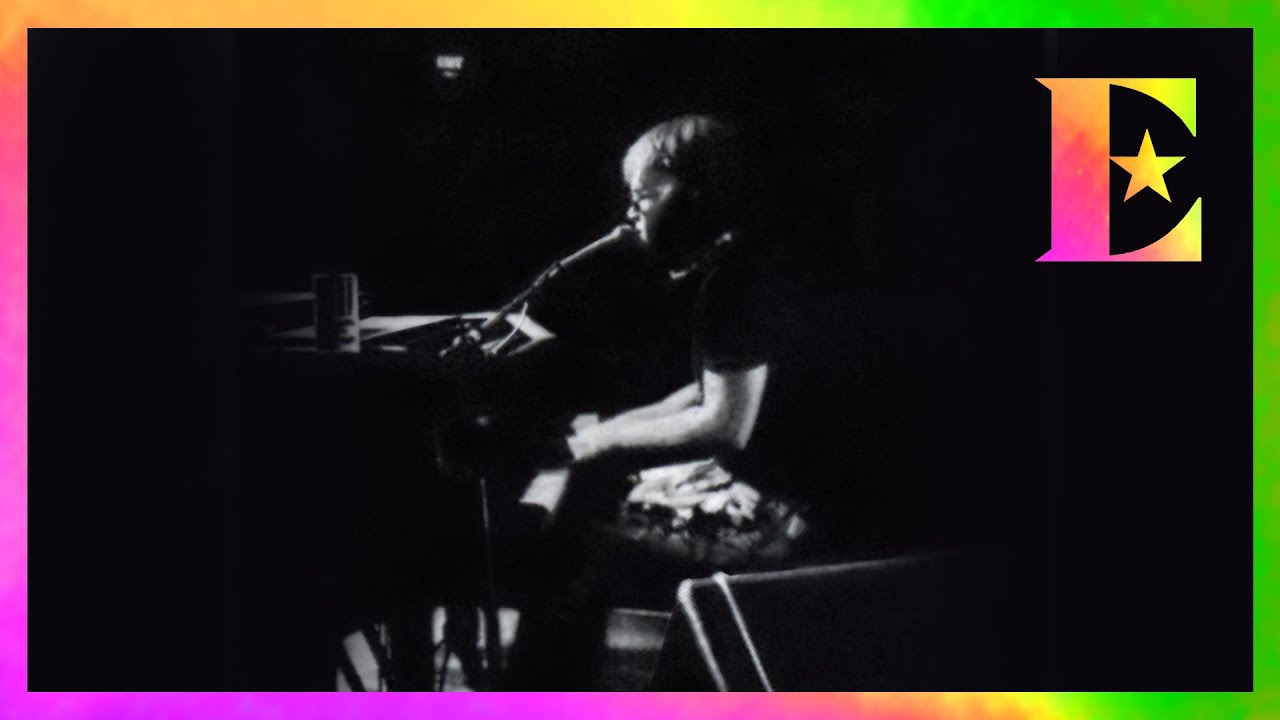
SE: “One quick story is that when he came back from his first American tour, I organised a gig at the Revolution Club in London. I’m sitting there, and he’s playing Your Song, and then at the end, he suddenly turns into this maniac rock and roll geezer.
“He kicks the stool, gets up and starts dancing around the stage playing a tambourine. I couldn’t bear to look and thought ‘Bloody hell, this is embarrassing, he’s going to totally blow it here’, but the audience started going bananas. They loved seeing him make a bit of a fool of himself. It worked, and that was the beginning of his stage performance and wearing outrageous clothes.”
MR: How did you end up working as head engineer at Gus Dudgeon’s state-of-the-art studio, The Mill?
SE: “We’d formed Rocket Records and I was the first person to put the office together. Elton’s famous by now and has got his own plane called ‘The Starship’, and he’s playing at stadiums, not theatres. Anyway, we’re having a week off in Hawaii and I met this beautiful lady in Maui who actually lived in an ice cream van. I thought this is the place for me - I’m going to leave the music business and live this exotic life.
“So I went back to England and started telling people I’m leaving when Gus said: ‘That’s a shame because I’m going to build a studio in a village called Cookham, and it’s going to be phenomenal’. I knew that if Gus is involved, it’s going to be something else. It was only supposed to take six months and £100,000 to build, but it took two years and a million pounds, and that was back in 1974!
“So I thought, ‘Hawaii girl and retire?’ or ‘go to Cookham and start a studio?’. By now, I’m 23, so I moved to Cookham and was involved in putting that studio together. When it was finished, it was unbelievable. Gus had pretty much designed the desk himself, but the studio wasn’t just the best technology-wise, the whole building had thick piled carpet and beautiful wood everywhere.
“The engineer was an amazing guy called Phil Dunn, who normally mixed Elton’s albums. Talk about old-school - he literally used to wear a three-piece suit with a dickie bow. As soon as he was out of the engineer’s chair, I’d be in it because working with Gus was incredible.”
MR: What artists did you engineer at The Mill and how did your role evolve there?
SE: “One of the first was a band called Voyager that was very Queen-like, but the next person that came in was a young guy called Chris Rea, and Chris and I got on very well. Gus produced his first album, but when it came to doing the second, I said to him, ‘Come on – Phil Dunn’s a great guy, but he’s never here. I want to be the engineer now.’
“It was bloody hard work to be honest, because Gus was a complete workaholic and never wanted to go home. I was spending 18 hours in the studio because I was pretty much running it. Anyway, this lasted for five years, until The Mill got into financial problems and Gus had to sell it.
“Lots of people came to look and one guy in particular wanted to buy it. His name was Jimmy Page from a band called Led Zeppelin.
“Somehow, I just kept going from one amazing situation to another. It was sad that Gus had to sell, but now I’m running it for Jimmy and I was looking forward to that, but after a few months John Bonham was sadly found dead in Jimmy’s house.
“Jimmy was completely distraught and I didn’t see him for a while, but he eventually came in and said that he wanted to do a tribute album to John, which became the final Led Zeppelin album, Coda.
“Working on that was an amazing experience, and I then spent around five years working with Jimmy, which was definitely the best period for me at The Mill because a lot of Jimmy’s mates would come and work there: Bill Wyman, Mick Fleetwood, George Harrison. In some respects, I still can’t believe I actually worked with those guys.”
MR: George Harrison’s debut solo album was the first time that a Beatles member had embarked on a solo career. Did he make a deliberate effort to disassociate himself from the Beatles sound?
SE: “Absolutely he did. We all know the history. George was the third member behind Lennon and McCartney, so he’d be lucky to get one or two songs on an album, but he was always a songwriter and couldn’t wait to do his solo stuff.
“I was a complete Beatles fanatic and had obviously looked into everything to do with them, but I didn’t talk to George about it. He was absolutely brilliant and so easy to talk to, but in my head I’m thinking, ‘I’m f***ing talking to George Harrison’.
“All I wanted to do was try to be normal and not f**k things up, but he never mentioned The Beatles. He was there to do the music for a film he’d made called Shanghai Surprise and later came in to mix a live album that he’d made with Eric Clapton.”

MR: You’ve mentioned that Chris Rea could be quite difficult to work with. When working with high-profile artists, do you need to be as much a diplomat as an engineer or producer?
SE: “A psychologist really, but Chris was totally unknown when I met him. He was signed by Magnet Records, and the owner was Michael Levy, who’s now Lord Levy. He was a bit like Dick James – an entrepreneur. He liked Chris’s songs so he signed him up, but no one really thought much about Chris’s voice.
“I remember him saying to Chris, ‘We’ve got to change your name - we can’t have Chris Rea. So, because Chris was half-Italian and his parents were into ice cream, Michael said, 'You’re very good-looking, you have blonde hair and you’re going to be huge. I’ve got the name for you: Benny Santini.
“To be honest, Chris looked like a Benny Santini, but he was a pretty down-to-earth guy from Middlesbrough and he just said ‘You know what you can do with that, mate’. That’s why Chris’s first album was called Whatever Happened to Benny Santini.
“But even before I met Chris, I can remember seeing a five-inch, yellow EMI box with about four of his songs on it and I thought they were bloody great. When Chris arrived, he was down to earth and we got on instantly. I showed him around Cookham, put him in a hotel, started on his first album and did all the backing vocals.”
MR: Did you think Chris had the potential of someone like Elton?
SE: “Working with Chris is the closest thing to when I met Elton really. He was the full package and we had a hit record off that first album called Fool (If You Think It’s Over). I don’t know why, but Gus used to call Chris ‘Grizzy’ and on one of the first songs Chris had to do the line: ‘I read you like a book.’ So Chris is singing ‘I read you like a booook’ and Gus immediately says, ‘No, no, no, Grizzy, it’s book.’ And Chris said, ‘Yeah, I said booook.’
“Like Elton, Chris had a complete idea of how he wanted everything to be, but he was split between wanting to be rich and famous and not wanting to play the game. He didn’t even want to play live and certainly wasn’t going to wear glitzy clothes. Chris hated that side of the business, but he liked sports cars, multi-million-pound houses and holidays in Hawaii.
“He was always saying how amazing Middlesbrough was, but in the end he couldn’t wait to get away. As soon as he moved to Cookham, which is this pretty, posh village, he never went back, but I did actually get him and Elton together to do a duet called If You Were Me, which is something I’m rather proud of.”
MR: Looking through the catalogue of artists you’ve worked with, one can’t help but wonder how you went from working with Elton and Chris to Twisted Sister?
SE: “I’m glad you picked up on them because I was starting to think, ‘Who’s the weirdest band I’ve worked with?’ and it would probably be them. When Jimmy Page owned the studio, the guy who ran Atlantic Records was called Phil Carson. I swear this is true, but there was a ring at the doorbell at The Mill one day and there’s this bunch of loonies there that frightened the life out of me.
“One’s got blonde hair down to the floor, they’re all yapping away in American accents and they’re going, ‘Stu, Stu, let us in’ and start running around the studio. So I phoned Phil and said, ‘A bunch of nutters have just turned up saying Phil Carson told us to come down and I’m producing their album.’ He said, ‘That’s right, Stuart. They’re going to be huge and they’re called Twisted Sister’.
“Anyway, I got back in there and thought I’d better hear some of what they’d been doing. They put on a track called ‘Heavy Metal’ and it was f***ing awful - the worst thing I’d ever heard. It wasn’t really music; it was like people trying to play music in a very noisy manner, which isn’t a bad description of heavy rock.
“Then they put this cassette on and I actually thought it sounded a bit like The Who’s My Generation. Just as I was getting into it, they stopped the tape and said ‘We haven’t finished it yet’, but I liked the track and could imagine it being a pop single. Anyway, the track was called I Am (I’m Me) and I started doing an album with these crazy, but great guys.
“I used to take Dee Snider down Cookham High Street, and he looked outrageous, but I was used to that because Elton looked fairly abnormal when we were on tour. The single was a hit and they were on Top of the Pops.
“If I wasn’t in the audience, I probably would have thrown the TV out the window, but I loved working with them and subsequently made a lot of money from it. Their image was all bravado though. Dee Snider doesn’t drink, doesn’t smoke and has been with the same woman his whole life - it was all a show!”

MR: During the 90s, you turned Alvin Lee’s Wheeler End into a commercial studio and worked with the likes of Oasis, Robbie Williams and Paul Weller. Was it different owning your own studio?
SE: “We’re moving on quite a bit now, but Chris Rea had bought The Mill and was murder to work with.
“He was very insecure because he’d never done a session in his life, and he was also ruthless. He kicked me out, so I had all this equipment and needed to go somewhere. Wheeler End was being sold at the time and only up the road, but when I went to look at the room it was absolutely amazing.
“The story was Alvin Lee had fled his wife and left everything like a non-eaten sandwich. There were guitars and mics all over the place and it was like finding a treasure trove. So I did a deal with her, ripped out the desk and spent a lot of money making it into a commercial studio. It was beautiful, and I lived there in a little village near Marlow, but now I was paying rent and had to make money.
“First, I started ringing all my friends: Gus Dudgeon, Steve Brown - and I somehow became friends with a guy who’d worked with the Beatles, John Leckie. So I’m sitting there one day, around the time of ‘90s Britpop, when I get this call saying ‘This is the Oasis office here; Noel Gallagher wants to book some time.’ Despite knowing they were the main British pop band, I’d not even heard Oasis, but I thought, ‘Here we go; this is it!’
“So Noel turns up with every guitar and amp I’ve ever seen and, to be honest, he’s not very friendly. He wouldn’t look me in the face, but we started on what became Standing on the Shoulder of Giants, and the guitarist he brought in was actually a mate of mine, Paul Stacey. Things were going all right, but after a few days Noel says we’re packing it all up because Liam’s found out we’re here and he’ll trash the place.
“Before they pack up, Liam arrives, and straight away he’s totally brilliant. He’s looking round, and says, ‘It looks like Jimi Hendrix’s bedroom in here’. He wasn’t drunk, he was just friendly and totally straight, and then Noel plays what he’d been doing and they’re loving it and getting on.
“At the time, I felt a bit of the power that the two have. I also took Liam to the pub, which was a bit weird because he only needed to have a couple of red wines and he was away. But he was brilliant, the project went well and I also had Robbie Williams come down via a friend of mine, Chris Briggs, and he was quite a character.”

MR: In what way were this new breed of artists different from those you’d worked with previously?
SE: “Both Oasis and Robbie follow that same crazy eccentric pattern. Not necessarily in Noel’s case, because he probably wouldn’t want to go near you on a night out, but the other two were very charismatic. Liam is one of the best singers I’ve ever heard and Robbie, who’d not long been out of rehab, was more into his lyrics than anything else. He’d be halfway through doing a vocal, and go, ‘Hang on a minute, hang on a minute,’ and start writing a new line.
“I could do a book about him, because he liked to take the piss out of himself. I remember once he was looking at himself preparing for a show of some sort where he was dancing with Tom Jones, and he said, ‘Look at Tom Jones. He looks f***ing great, doesn’t he? When I look at myself, I look like Norman Wisdom’.
“But he was already one of the biggest artists on the planet and Robbie kept talking about Elton, saying ‘What would Elton have done here?’ or ‘What’s Elton doing?’, so I said ‘Do you want to talk to him?’ So I’ve got Elton on the phone to Robbie and I actually thought they’d have made a great writing partnership, but that never happened.
“Robbie was like an actor trying to get better every time he saw or heard himself. He drives himself mad and it’s incredible that he’s still alive. He used to sing out of tune a little bit, so as soon as he left the studio they’d bring in all this tuning equipment because they’d never want him to know that they were tuning his voice.”
MR: You worked with Take That’s Mark Owen at Wheeler End too?
SE: “Mark came to Wheeler End and we got on very well. I sang on his solo albums and loved working with him, but he didn’t have that belief as a solo artist and wasn’t prepared to go out on a limb. The record companies pretty much told him it was s**t, but when he was doing the new stuff I loved it. Mark was more introverted and less commercial but he had a good voice.”
MR: Throughout your career, you’ve obviously overseen the evolution from analogue to digital recording. Has anything been lost in that transition?
SE: “When I was at The Mill working for Jimmy Page, Gus Dudgeon hadn’t produced an album for a long time, but he’d heard about digital recording and was given another chance to produce Elton. So Gus decided that it was going to be the best album Elton had ever made and he was going to do it digitally. So we hired a digital 24-track Sony machine for about three grand a week and had our maintenance guy build an A/B box so you could flip from one machine to another.
“To start with, we recorded the drums and got this box to listen to the bass drum from the analogue on track two and heard a bit of bleed-through from the snare and a bit of hiss and noise. Then we flipped to the digital and there was nothing - no crosstalk, no hiss, just this f***ing great bass drum sound.
“There was absolutely no doubt that digital sounded better to us, so we embarked on Ice on Fire using this brand new digital technology, but one thing we definitely noticed is that there was something different between the digital and analogue when we double-tracked. It turned out that analogue phasing gives the double track a sound that you don’t get with digital where the two signals don’t seem to mix.
“We were also doing something with Kiki Dee and when we soloed her vocal the digital was so clean that we started hearing mouth noises that we really didn’t want to hear. Digital distortion is also horrible, whereas analogue can be pretty effective, especially in rock music. But, unless you’ve got all the money in the world, there are so many benefits from working digitally that outweigh using analogue.”

MR: So tell us about Epps Records, which you began in 2021?
SE: “Today, everyone’s got home studios, so there’s no point trying to get new artists to book Abbey Road. Rather than fight that, I thought why not have artists send me what they’re doing at home, because although recording is not difficult, mixing isn’t easy.
“People from all over the world started sending me WAV files for me to mix and it became a great business working with all these different artists who I hardly ever get to meet or talk to. Then they would say ‘Now what?’ which wasn’t really my problem, but I thought I’d create my own label and sort out the distribution. I called it Epps Records – it took me ages to think of that title!”
MR: How have you found distribution in such a fractured industry?
SE: “I only release stuff if I’ve had something to do with the production. Mastering is another conversation because youngsters often don’t know the difference between the two and it makes a huge difference. I go through TuneCore distribution and work with a company called DEUCE that gets radio promotion, which is an extra benefit to artists who wouldn’t release anything themselves or try to get with a major.
“The best thing that could happen is if a major picks up on something, which obviously wouldn’t be great from my point of view, but I can get stuff out there and if something’s great there’s a chance that something might happen, which is no different to the old days really.”
MR: Do you find that, due to reality TV, artists are too preoccupied with notions of fame rather than the product?
SE: “None of the artists I’ve worked with in the past that became incredibly rich and successful did it for the money. They did it because they couldn’t do anything else and had a passion for it. Sometimes, I have to explain to 50- or 60-year-olds that most people start this off when they’re learning to walk; and you’re not exactly worried about money then.
“Programmes like The X-Factor are to blame because these bands and singers come on a bit bedraggled and two weeks later they sound like Robbie Williams and think, ‘That was easy.’ Then they think they’re going to make loads of money, until they realise you don’t make any money from downloads.”
MR: As someone who’s pretty much seen it all, is AI going to be a tool or much more than that?
SE: “Because I’m a songwriter and can play instruments, I’ve been writing from lyrics that some guy had written, some of which turned out as country-type songs. I was doing the track, but couldn’t get that twang in my voice. Fortunately, my brother-in-law has been digging in with AI and said, ‘Look what you can do with this!’
“He gives it to AI and comes back with exactly the same song and vocal melody, but the voice is one of the best country voices I’ve ever heard. It’s actually got some atmosphere. So I gave it to the writer, and he was almost in tears because that’s his song come to life, you know?
“In the old days, people like Kiki Dee or Dusty Springfield would get asked to do sessions for a songwriter, and I was involved in some of those. Now they just bung it into AI, you pay peanuts and it doesn’t just come back with a voice; it comes back with the best voice you’ve ever heard.
“Obviously, if AI’s taking people’s jobs away, that’s not good, but it’s not like there aren’t going to be singers anymore. When they invented drum machines, drummers thought that’s the end of us, but all it did was to get rid of the shit ones. There might not quite be so many of them, but drummers still exist today.”
More anecdotes from Stuart’s incredible career can be found on his website. For more information about Epps Records, click here.