


The early ’70s was the golden age of progressive rock, defined by classic albums such as Foxtrot by Genesis, Aqualung by Jethro Tull and The Dark Side Of The Moon by Pink Floyd. One quintessential prog album that oozed kudos was Close To The Edge by Yes.
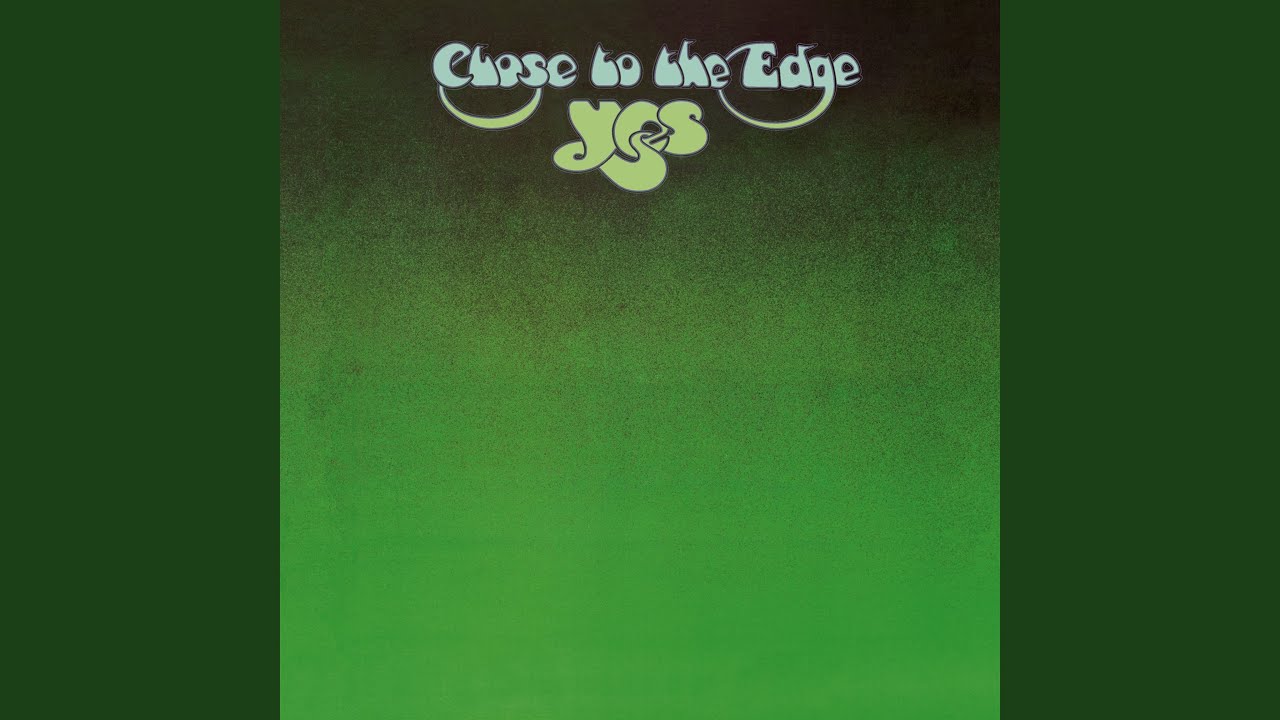
Released in September 1972, Close To The Edge featured a strikingly surreal green gatefold sleeve, designed by Roger Dean. The music was a masterclass of symphonic rock, anchored by its sprawling 18-minute title track, which filled the whole of side one.
This title track and the Close To The Edge album from which it came would become the peak of Yes’s prog rock achievements, encompassing elements of classical music, psychedelic rock, pop and jazz.
The five-piece London-based band began focusing on the album towards the close of 1971, by which time they had four albums under their belts. Earlier that year, they had fired keyboardist and founding member Tony Kaye. They replaced him with studio session ace Rick Wakeman, whose many credits included playing on David Bowie’s 1971 album Hunky Dory, most notably on the songs Life On Mars and Changes.
Wakeman’s versatility gave Yes orchestral and choral textures that breathed life into the new material they were writing for the album Close To The Edge.
The title track consisted of four movements, akin to a classical piece of music. These were. I: The Solid Time Of Change, II: Total Mass Retain, III: I Get Up, I Get Down and IV: Seasons Of Man.
The song was written by singer Jon Anderson and guitarist Steve Howe. In an interview with Classic Rock in 2025, Howe said it started life as a repository for numerous half-formed ideas.
“You tend to have plenty of ideas and sketches which don’t necessarily have a home, so you pitch them in,” said Howe. “Jon and I worked like that all the time. One of my songs had the line, ‘Close to the edge, down by a river’, which actually referred to where I was living at the time, next to the Thames.”
Anderson seized on this phrase, which aligned with the core inspiration for the song – the Hindu/Buddhist mysticism of Herman Hesse’s 1922 book Siddhartha, which he had been reading at the time.
“The river leads you to the ocean; all paths lead you to the divine,” he said. “So the idea was that, as human beings, we’re close to the edge of realisation.”
Anderson said he was listening to a lot of classical music while touring, which fed into the song. He was particularly taken by Sibelius’s Symphony No 5.
He explained: “It’s got a very wild first movement, a gentle second, and the third movement is very majestic. I thought the band could get into performing with that sort of musical positioning.”

Jazz was also a prime inspiration on the song, particularly in the first movement, The Solid Time Of Change. The Mahavishnu Orchestra were name-checked as a band that Yes admired. “It was that way-out jazz side of things we were drawing on," Steve Howe told Classic Rock.
Lyrically, Anderson melded natural imagery with spiritual and philosophical themes of transformation and life’s cycles.
“The lyrics, ‘Season witch could call you from the depths of your disgrace’, I realised what I was singing was all about the idea that your higher self will always save you if you keep your heart in the right place,” Anderson told Songfacts.
Advision studios in Fitzrovia, central London was the facility chosen by the band to record the Close To The Edge album. Eddie Offord was the producer and work began in April 1972. The title track was the album’s centrepiece and was meticulously assembled through a section-by-section arrangement process.
The four-movement suite begins with the sound of running water, wind chimes and birds chirping. This was compiled on a loop tape assembled from nature recordings collected by Jon Anderson
“When we did the loop tape, it must have been forty-foot long,” Rick Wakeman recalled on Songfacts. “It went all around the room, just to get all the birds and things you hear at the beginning. Then it took us two days to get the loop going.”
It was a torturous process at times. As Wakeman said: “We’d think of ideas... then wonder, ‘How on Earth can we do this?’”
The tape loop of nature sounds that opens the first movement swells to a crescendo before the whole band kicks in at 0:57. It’s a jagged and menacing passage in 12/8 time, dominated by Steve Howe’s whirlwind guitar lines that traverse four octaves. This is underpinned by a low gritty bass growl on the Minimoog from Wakeman.

For all its bucolic inspiration the track is edgy and discordant at times. At 1:20, a drum fill from Bill Bruford propels the whole band into a cacophonous wig-out. Ascending overdriven bass lines from Chris Squire push dramatically through the mix. There’s a real bounce to Squire’s restless bass lines, dipping and diving in and around Bruford’s impeccably fluid groove. Howe’s stabbing guitar attacks are intense and frenetic, from slurpy low twisting phrases to rapid-fire high-end percussive attacks.
Two minutes in, the track pauses for a split-second of harmony vocal before the sonic onslaught continues. Around the three-minute mark the song transitions into a more steady and orthodox melodic template. It’s spacious and woozy and by 3:40, there are some tasteful harmony lines from Howe and Squire.
It’s not until the four minute mark that Jon Anderson’s vocals enter. “A seasoned witch could call you from the depths of your disgrace/And rearrange your liver to the solid mental grace.”
By then the song is shifting into something spacious and sophisticated. Bruford’s drumming is exemplary and Squire’s bass lines meld in-the-pocket precision with graceful and dynamic swoops and slides.
The second movement, Total Mass Refrain, was constructed from an early Howe song called Black Leather Gloves, from his pre-Yes band Bodast. There are some impressive pushes and stabs from Bruford and Squire, and the latter’s bass sound is thick and squelchy. Wakeman’s keyboard prowess meanwhile is omnipresent, from the rich, swirling Hammond C-3 to the powerful and punchy Minimoog.
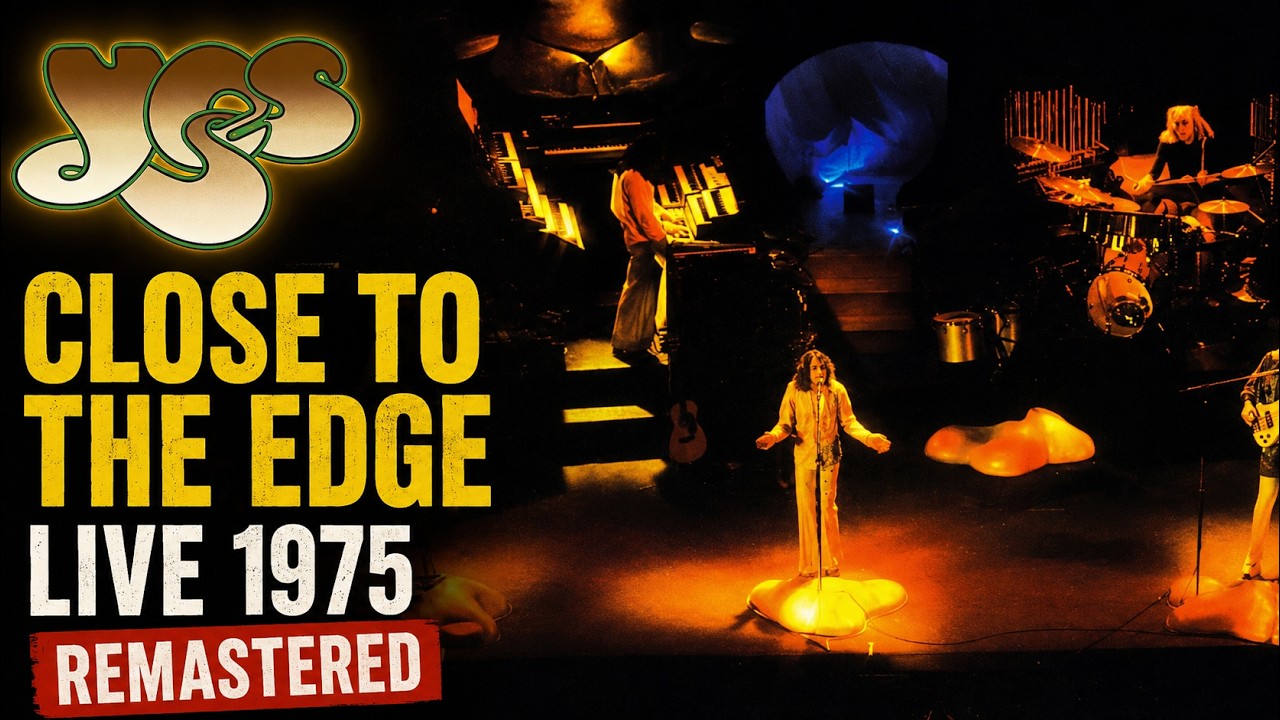
The third movement, I Get Up, I Get Down started life as a humble love song by Howe, to which Anderson added a melody of his own. This movement begins with a spacey and ethereal atmosphere, featuring only soft organ and lonely, echoey squalls of sound.
Anderson’s dreamy vocals are swamped in echo and underpinned by gently rhythmic backing vocals from Steve Howe and Chris Squire.
“We have the ‘I get up, I get down’ part before it goes into a beautiful ocean of energy,” said Anderson on the Yes website. “You've gone through nearly 10 minutes of music that’s very well put-together, but then you want to let go of it. You relax a little bit.”
Around 12 minutes into the song, Rick Wakeman begins the main theme of the third movement, which he recorded on the pipe organ of the St Giles-without-Cripplegate church in the City of London.
“The technology couldn’t do what I wanted it to do,” Wakeman told Sid Smith of Classic Rock in 2025. “So it was a matter of recording the organ separately, then ‘floating’ it into the track from quarter-inch tape. A long and very fiddly process, but absolutely worth it.”
The organ brings a majestic feel to the song. Almost 14 minutes in, Wakeman launches into a Minimoog solo, which serves as a shimmering bridge into the song’s fourth and final movement, The Seasons Of Man.
And then the whole song just flies. Thundering drums and swooping overdriven bass drive the song forward into its finale. There is some stunningly dextrous playing on the Hammond by Wakeman, blisteringly fast phrasings delivered with complete aplomb.
By the 16 minute mark, Wakeman’s playing is complemented by the sizzling bass work of Chris Squire, always serving the song yet infusing it with real excitement at the same time.
17 minutes in and the song has been elevated to a triumphal and enigmatic peak, before returning, full cycle, to the sounds of the chirping birds and running water where it all began.
“That big end section is that place where it’s like we’d climbed the mountain,” said Anderson in Classic Rock. “You get there and you sit back and take in the view. My head was spinning every time I listened to it or sang it.”
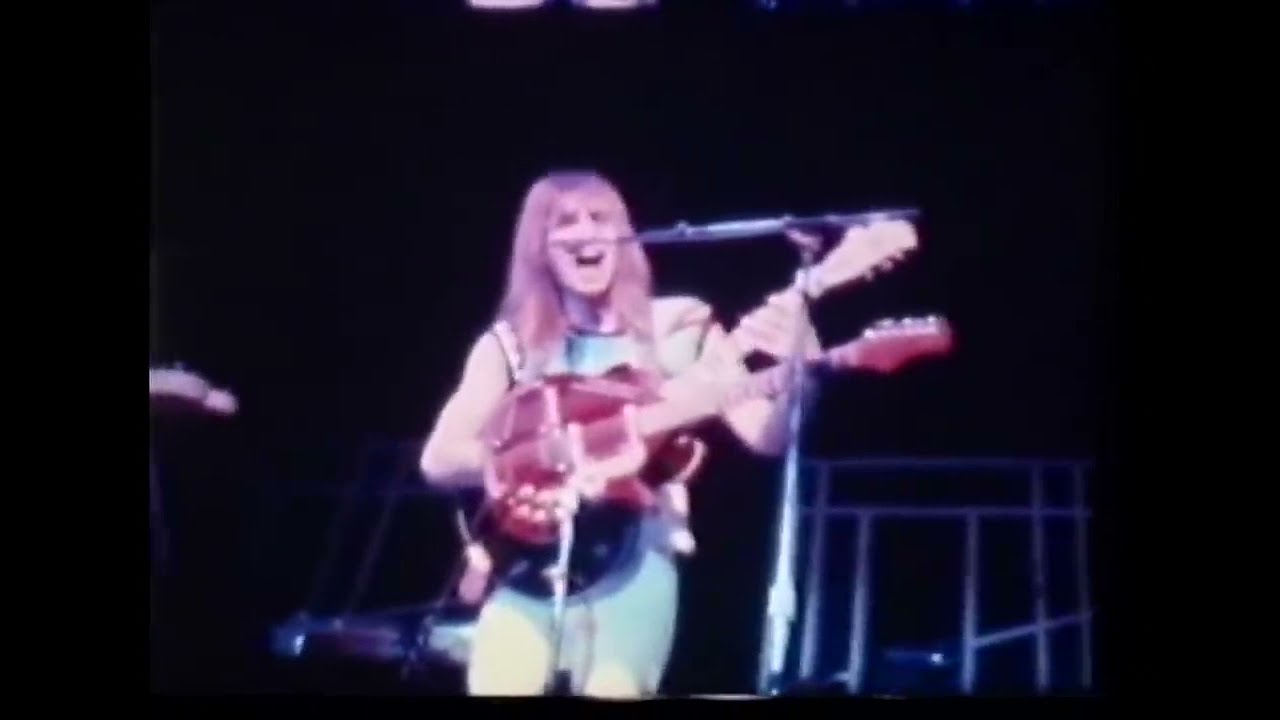
Close To The Edge was released on the album of the same name on 8 September 1972. The song and the album were highly acclaimed by most critics. Chris Welch of Melody Maker described the title track as a masterclass in progressive structure that successfully translated the band’s intense live energy into a cohesive, symphonic studio piece.
Listening to the song Close To The Edge almost 55 years after it was created, it’s striking how it holds up. The lyrics are lofty and obtuse, and the music is undoubtedly self indulgent – but it takes you to the edges of what is melodically palatable and does so with daring and sophistication.
There is a boldness and an edge to this performance that has endured over the decades, as critic Dave Thompson suggested in a contemporary review in AllMusic.
“Cruelly, of course, one could suggest that a little self-editing would not have gone amiss – the song’s soaring chorus notwithstanding, few of the song’s individual elements are especially memorable. But that maybe was not the point. Rather, Close To The Edge is a major accomplishment in itself, to be appreciated as a sprawling whole – and saying more for Yes’s brilliance across one side of vinyl than their next album, Tales From Topographic Oceans, managed across four.”
