


“When Covid came, I couldn’t understand what was going on or what we were facing,” says producer and DJ Oriol Riverola. Best known to the electronic music world as John Talabot, Oriol released a new album under the alias OR in October.
“I remember playing Balearic music on a beach at a festival in Italy as restrictions started, people began dancing, but the police came and stopped the music.”
Oriol is recalling the creative backdrop to latest project Music for Empty Stadiums. With Covid lockdown in place across the world, including his home city of Barcelona, the Catalan producer/DJ was forced to face up to the existential threat of his creative life being wiped out. Without a studio to work in and only a limited sound palette to hand, Oriol instead turned to crafting electronic sketches with only the tools that were available to him.
“I recorded almost 70 tracks in two months during that crazy period,” he says. “Beforehand, I’d been in the process of building a studio and that had to stop, a family member died and everything felt like it was this huge mess.”
“Covid was the first time I was put in a situation where I wasn’t sure if I could continue with music, which is what I love doing. I was told to reinvent myself, but I’m a musician and a performer and have been doing this for 20 years. It’s not that easy to change everything in just a few months.”
Oriol has been a powerful creative force within leftfield electronic music since he started recording under the name of John Talabot towards the end of the ‘00s. Picked up by the Young label – also home to The xx, Sampha and SBTRKT – he released his debut track My Old School in 2010, followed by his first EP, Families.
It felt like electronic music went from being a celebrated culture to a problem
He also launched his own Hivern Discs label while unveiling his breakthrough debut album, fIN in 2012 on Permanent Vacation. As a DJ, Oriol is also much in demand, playing many of the world’s most cutting-edge festivals including Dekmantel and Sónar alongside contributing a memorable instalment in the celebrated DJ-Kicks mix series. When the world shut down due to the pandemic in 2020, he was left wondering where to channel his creative energy.
“It felt like electronic music went from being a celebrated culture to a problem, where we might end up with people getting sick through our events,” he says. “We weren’t sure how long the pandemic would last, whether raves would have to be ambient raves, or what kind of music we should play.”

Before the restrictions came into force, Oriol ordered a new computer but it never reached him. Under lockdown, he was forced to record ideas at home with the limited amount of older equipment he had.
“The gear was the first version of an old commercial VST called ANA, developed by Sonic Academy, which I was using for a lot of other music I composed for commercials and other projects,” he says. “The second version was completely different, so I was just using the first version on an old computer.”
“What I liked about it was that the ADSR envelopes allowed me to create super short, sharp notes, which I used a lot on the LP.”
“I also used many Max for Live sequencers including the Mono Sequencer, as well as others mostly made by unknown developers, with different concepts and ideas around sequencing.”

Oriol left the ideas in his Dropbox folder, then when the restrictions started to ease turned his head towards other projects. He produced music for other artists alongside working with singer Maria Arnal on the polyphonic sound composition AIR (also known as ARIA) for the Venice Biennale. It was only when Nic Tasker at London-based label AD93 contacted him that he revisited the music he’d made during those darker days.
“Nic asked me for some music for an NTS show he was doing about music made in the pandemic,” Oriol explains. “I sent him some tracks, he was really into them as they sounded so unexpected. He asked if I had more and I shared them with him, and became convinced I needed to make an album to tell this story – so Nic gave me the space to make this 90-minute record.”
Oriol studied scriptwriting when he was younger, and it was this sense of lending his music a narrative that came into play on OR.
“Storytelling is always so important in my music, whether it be in my DJ sets or my albums,” he says. “I enjoy putting music in a context and giving it an intention - and explaining what I’m feeling or want to say. It’s easier for me to do this with an album than a three-track EP where there’s less time to share my ideas.”
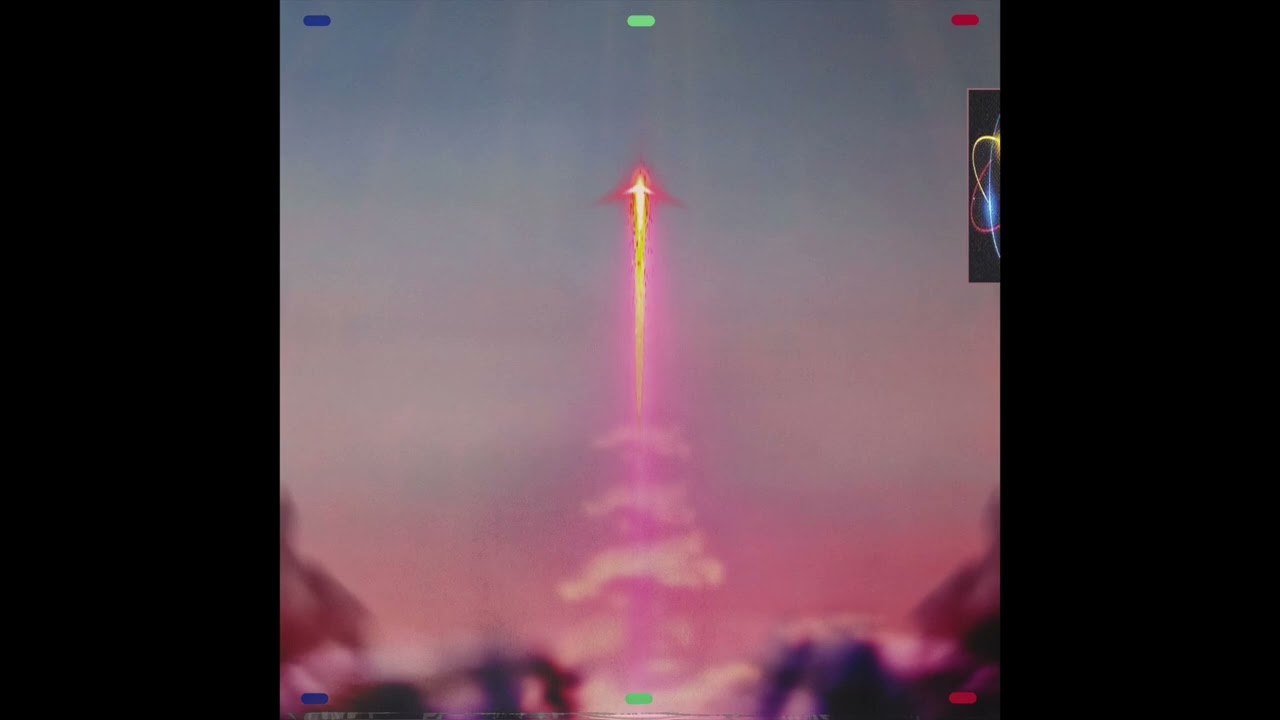
Music for Empty Stadiums evolves in intensity from first track The Cortisol Arena to closer Serotonin Bliss Blues, the songs sequenced in the order that they were written. Polyrhythms, ambient shades and electronic textures run right through the 17 tracks which cleverly convey musical energy and adrenaline without any drums or percussion.
“I found it hard to revisit the music and I could only do one track a week, so we had 20 weeks to go through all of it,” Oriol says. “I remember the feeling I was having at the time I made them, the tracks were almost like photographs capturing how I was and how the music came out of this situation”.
The process of putting the music together took place over several months as Oriol travelled between Barcelona, Mallorca and Tokyo. It was in the latter that he found some creative clarity on how the songs he’d crafted could sit together.
“I became creatively blocked so I decided to go to Tokyo as I remembered finding it really inspiring on past visits,” he says. “Just walking around, looking at architecture or gardens, I was inspired by the dedication that has gone into much of what makes the city. Dedication is what I needed to finish my album.”
It took us nine months and 193 renders to find the balance, panning and dynamics I wanted
The record took eight months to master, with Oriol’s ambitions for the tracks to have the dynamics and intensity of an orchestra. “It took us nine months and 193 renders to find the balance, panning and dynamics I wanted,” he explains. “I wanted it to be treated more like a score than an electronic LP, so it could be overwhelming and stressful, but sonically a bit easier and more accessible.”
“I wanted it to be an exercise in sonic escapism, but also an exercise in intensity. I took inspiration from a video of the London Symphony Orchestra playing Ravel’s Boléro, which is a super interesting and modern piece of music. I loved how all the instruments were being played super low at the beginning, but then growing to their maximum level of intensity. I wanted to try to have higher and lower melodies crossing each other in their intensity, almost like an aria or opera piece.”
“Sometimes compression kills this dynamic relationship between melodies, and I really wanted to use this more symphonic idea when approaching the mix.”

For Oriol, there was an urgent need to make this project, then draw a line under it. As a creative, he feels this is the closest he’s ever got to fully realising his ambitions for an album.
“Usually there is a point where you lose the story or some parts don’t work within a record, but this is the closest I’ve got to realising my vision with a project,” he explains. “My mix engineer Tommy Wallwork and mastering engineer Yves Roussel managed to accomplish my main intentions perfectly – better than I had imagined.”
The title of the project provides a stark snapshot of what life was like under the Covid-19 lockdown, inspired by a photo taken by Oriol’s uncle.
“I found this photo taken during the pandemic from this amazing theatre in Barcelona called El Liceu where they performed an opera to an audience of plants,” he explains. “I found it to be this incredibly strong image of nature taking back control and music being played for it, not us.”
Oriol categorises his work into two different kinds of project: some are compilations of tracks that document a specific period of time, and others stem from creative limitations.
“In 2021, I made this album as Koraal where I just used one synth and one pedal,” he explains. “I find restrictions to be creatively interesting – they make you explore what you have in front of you really deeply.”
If you only have one piece of gear, then the elements are easier to mix
“If you only have one piece of gear, then the elements are easier to mix too. I mainly used the Clavia Nord Micro Modular hardware synth module on the Koraal record as I liked its musical identity. Nowadays, you can have so many things, it’s really hard to make music – how do you start? I think it’s overwhelming.”
This approach extends into Oriol’s advice for aspiring producers too. He believes that anyone at the beginning of their music production journey should get to know a single synth or piece of hardware as well as possible before adding anything additional to their workflow.
“If you take your sounds from the same machine, then there is a high chance that you are able to mix it and make it sound good, it also works well in terms of layering each element,” he states.
As Oriol prepares to unveil the album, he’s now looking at how to bring it to life as a live show with visuals, while keeping busy on other production work.
“It’s always an interesting chapter of the album to translate it and adapt it for the stage but this one is especially so,” he says. “It’s something I made on my own as a way to get through this weird situation. Now I’m looking at trying to work out how to bring this as a live performance for an audience. But at least now we can do music for full stadiums now.”
