


Today marks 23 years since Joe Strummer departed this earth at the absurdly early age of just 50. Go back another 23 years and there is another notable Clash anniversary this month, that of arguably their greatest moment: London Calling.
Released on the cusp of the decade – December 1979 in the UK, January 1980 in the US – London Calling saw The Clash leave punk behind and establish themselves as a rock n’ roll band who could draw in influences from across the board – soul, jazz, reggae (obviously) and funk.
Their outlook had been broadened by their first US tour early in 1979 and this is turn fed into the music, which perhaps for the first time sounds unburdened. If their self titled debut had been the sound of dissatisfied London youth, then London Calling showcases the Clash as young men who are more at ease with themselves (though not necessarily the world).
And yet before the band started recording it, they were at a low ebb. They were manager-less – Bernie Rhodes had been sacked late in 1978 – and had returned to grey old London. “After being fawned over in America, there is a sense of being a fish out of water,” Clash road manager Johnny Green remembered in Pat Gilbert’s band biography Passion Is A Fashion. “There is alienation and disorientation.” It would be Green who secured a rehearsal studio in Pimlico, Vanilla, where work on the next album would begin.
“All I could remember is writing and rehearsing and recording it,” said Joe Strummer in Don Letts’ documentary about the making of the album, The Last Testament. “A real intensity of effort. Our only recreation was playing 5-a-side football. We’d play football til we dropped and then started playing music. It was a good limbering up thing. But we didn’t do these things by thought, it was an accident.”
The physical activity not only loosened the group up, it bonded them. “I think we came into our own at that time,” Mick Jones told Pat Gilbert. “We’d experienced a lot, had our ups and downs, and that colours your music. All those experiences go into the record you make. We were boys before, now we were men.”
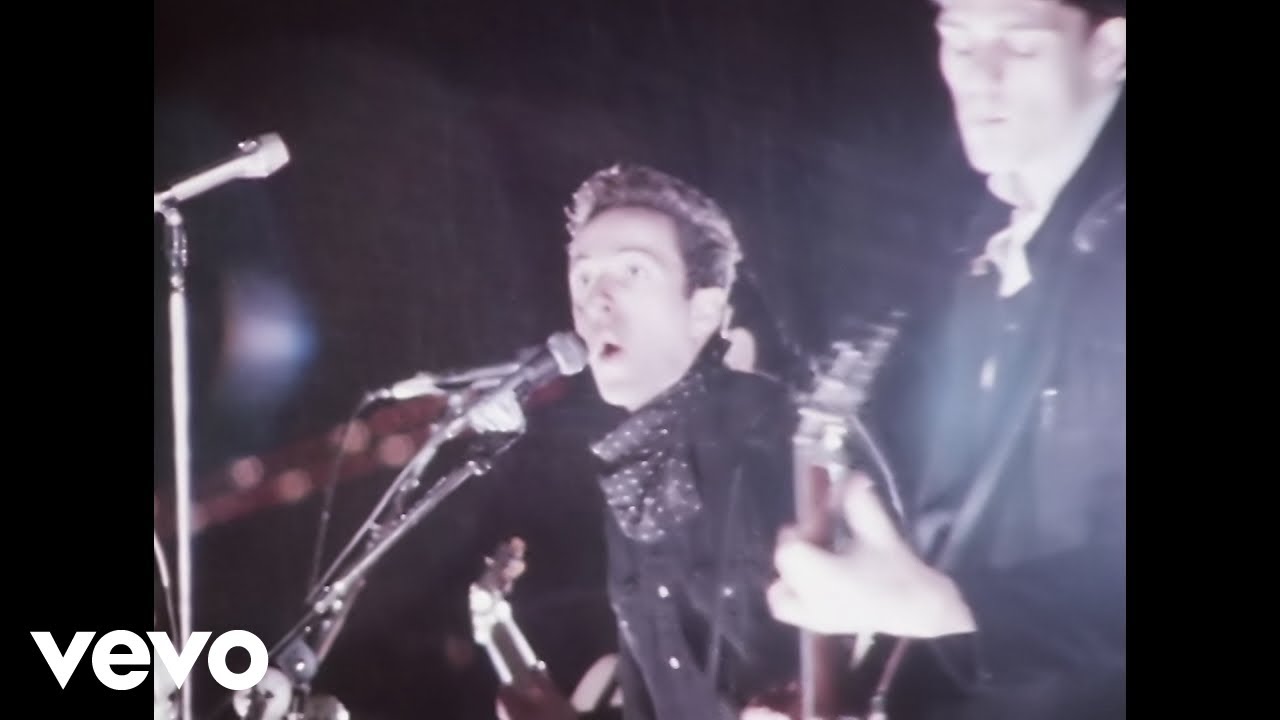
The band decided that they wanted Guy Stevens to produce the album. To say Stevens was a maverick would be an understatement. A producer, DJ and tastemaker, in the 1960s Stevens had been a pivotal figure in British music, but by 1979 was clearly on the slide – he’d been to prison for drugs offences and was an alcoholic.
He also had an unconventional production style, which involved creating the right ‘vibe’ in the studio, often by physical means. At one point, while recording a Mott The Hoople album, Stevens had dressed up as a highwayman and set fire to the studio.
Stevens had crossed paths with the Clash before – he’d produced the demos for a prospective signing to Polydor back in October 1976 – but it was thought that the material they’d worked up would benefit from some of the manic energy Stevens could bring to proceedings.
“He used to believe that his job was to get the maximum amount of emotion on record,” Engineer Bill Price said of Stevens. “His chosen technique for doing this was by a process of direct psychic injection and this used to take place at the time of performing the master.” Starting work on the album at Wessex Studios, the band soon had to acclimatise to Steven’s unusual modus operandi.
So ladders were thrown, chairs were thrown. Stevens had a habit of jumping up and down while The Clash were recording. On one occasion, Stevens wrestled Price under the mixing desk, so incensed was he that the engineer was adjusting the bass. It all made for an electric atmosphere.
“When we were mixing, he used to get so excited that I used to have to hold him down with one hand and try and carry on the manual mix on the desk with the other.” Then there was the time he saw Strummer working out a new song on the piano.
“He was like Noel Coward, with a bottle of wine to one side of him,” remembers Price. “Guy walks in, tries to get his attention. Joe tried to ignore him and carried on playing the riff. So Guy picks up the bottle of wine and pours it across the piano’s keyboard and Joe’s hand. It cost £6000 worth of damage to a Bossendorf.”
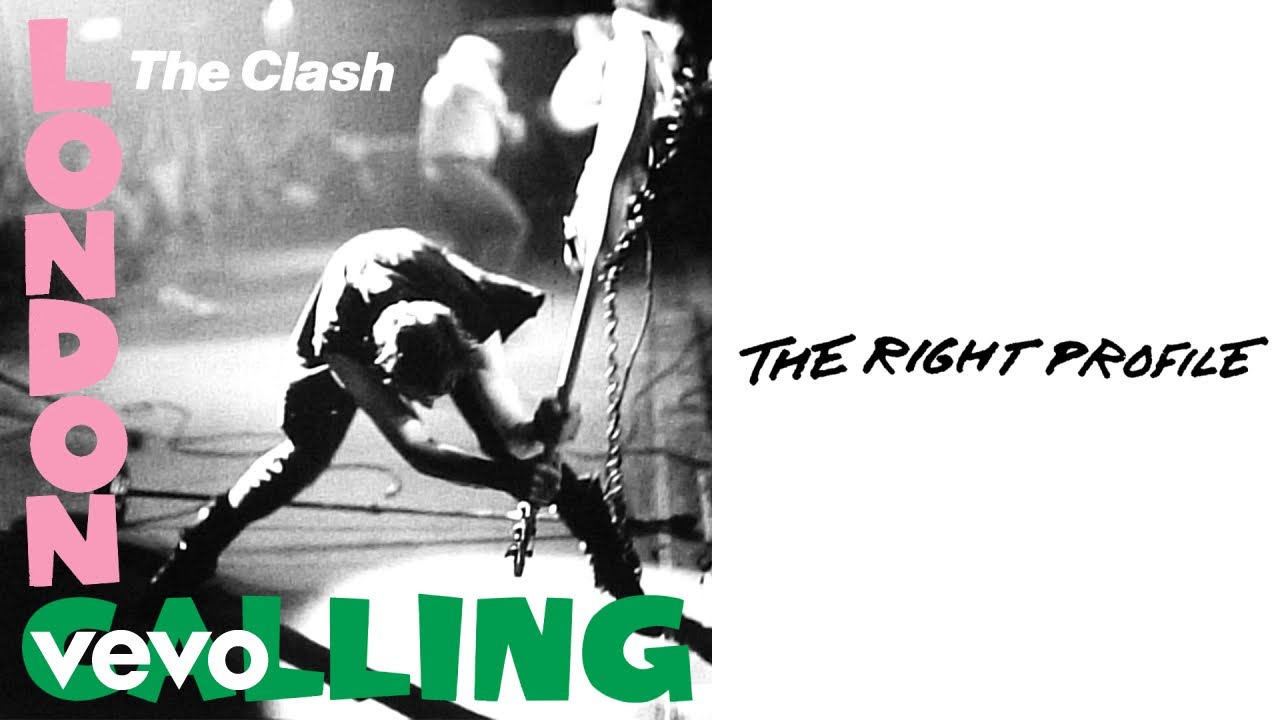
All this madness seemed to inspire the Clash. New material poured out of Strummer and Jones. Stevens had lent Strummer a biography of tortured Hollywood legend Montgomery Clift, which quickly produced to The Right Profile. The singer also came up with Spanish Bombs, which linked the then-current Basque separatist struggle to the Spanish Civil War.
The ‘anything goes’ atmosphere led the band to try out some covers – the reggae hit Revolution Rock was given a Clash makeover and The Rulers’ Wrong ‘Em Boyo and Vince Taylor’s Brand New Cadillac were all recorded. They even attempted a reggae version of Bob Dylan’s The Man In Me. Already, the new record was a long way from punk.
In the end, The Clash became adept at working around their erratic producer. As the work became more technical, Mick Jones came into his own. “On The Card Cheat it had a bit of Phil Spector in there,” the guitarist told Don Letts in The Last Testament. “We recorded the whole track twice. So we recorded everything and then we overdubbed everything, again. So we played along with the track and that’s how it sounds so big and Phil Spector-ish.”
“There was a natural shift towards Mick being in control,” Johnny Green noted in Passion Is A Fashion. “He kind of eased into the role of producer when it came to the more technical stuff. He had a relationship with Bill (Price) that worked really well.”
Meanwhile, Paul Simonon had been working on a reggae-ish tune with lyrics that transposed the story of Ivan, the Jimmy Cliff character in The Harder They Come to the streets of South London. Encouraged by his bandmates, the bassist stepped up to the mic and delivered his first lead vocal on Guns Of Brixton. “The mystery of writing songs had become a bit clearer to me,” he told Pat Gilbert. “I penned my first tune, which was a big moment for me.”

During late August the overdubbing process continued. Graham Parker and The Rumours’ horn section were added to the tracks like The Right Profile and Revolution Rock, and Micky Gallagher, the keyboard player with the Blockheads came in to embellish tracks like Clampdown with his Hammond B-3.
The band had by now amassed enough material for a double album – not the sort of thing punk rockers were known for, really. However, they convinced CBS to put it out for the budget price of £5 – a magnanimous gesture to their fans, as well as a way to slip the shackles of punk orthodoxy.
With most of the album in the bag, the band went off in early September for a seven week US tour. It was here, at the Palladium in New York, in that London Calling’s cover shot was captured by Pennie Smith. It was an odd gig - a seated venue: not conducive to a Clash show. “Paul looked dodgy all night,” Smith recalled on The Last Testament. “I just kept my eyes in really. He didn’t look happy. He started smashing the head end on the deck. He started coming towards me, I started backing off – hence it’s out of focus. I just kept shooting.”
The genius was to apply the pink and green lettering from the first Elvis album. By drawing a direct link to the king of rock n’ roll it underlined what the album was: a modern addition to a lineage that went back 25 years. “The Elvis record was the first rock n’ roll record by a white artist,” says Kosmo Vinyl. “This is the last rock n’ roll record. Elvis is holding the guitar up and playing it, I see us as (smashing it) - the very last blow.”
Except London Calling didn’t destroy rock n’ roll, any more than Never Mind The Bollocks had two years previously. Instead, it gave the form a new lease of life, not least in America. Whereas the Pistols were forbidding, The Clash presented a far more welcoming, easily-understandable face of the new style. London Calling, with its nods to soul, jazz, R’ n B and classic rock n’ roll, seemed to fit snugly into a long-established tradition.
It gave The Clash a new lease of life too. Across the board, it drew positive reviews. NME declared that “this is the one”, whilst the New York Times described the music as “superior”, saying may just be that “increasingly rare phenomenon, an album prized for its seriousness even as it reaches out to the millions.” Rolling Stone’s Tom Carson described the Clash as “the greatest rock n’ roll band in the world.” A decade later, they would declare the album the best of the 1980s.
As the decade dawned, it made them the coolest band on Planet Earth. Though there would be great Clash records to come, none would be as consistent, swaggering or as big-hearted as London Calling.
