
It has been an amazing couple of weeks for Iron Maiden. First, the heavy metal legends’ 1983 anthem The Trooper featured in the Stranger Things finale. And now another Maiden classic is the soundtrack to the climax of the horror movie 28 Years Later: The Bone Temple.
The song in question is The Number Of The Beast, the title track from the band’s breakthrough third album, released in 1982.
In 28 Years Later: The Bone Temple, the song plays as lead actor Ralph Fiennes dances on a pile of human bones while wearing very little.
After The Trooper featured in Stranger Things, the song had a 252% rise in streaming numbers, and The Number Of The Beast is likely to repeat that success.
It is, of course, one of the most important songs in Maiden’s career – a cornerstone of the first album the band recorded with singer Bruce Dickinson, who recalled in a 2011 interview with Classic Rock: “What happened with The Number Of The Beast was beyond all our wildest dreams.”
Dickinson joined Maiden in late 1981 after fronting Samson, a rival band that also rose out of the New Wave Of British Heavy Metal.
He replaced Paul Di’Anno, who had been fired by Maiden for losing his voice on tour due to excessive partying.
“I knew that I had joined a great band,” Dickinson recalled. “I also knew I could make it even better. In Samson I’d created this big, operatic-type voice. And I had a vision: my voice glued on to Maiden equals something much bigger.”
For Steve Harris, Maiden’s bassist and leader, Dickinson was a perfect fit, a singer who could scream like Deep Purple’s Ian Gillan. And what they created together with The Number Of The Beast was one of the greatest heavy metal albums of all time.
“We knew when were making the album that it was special,” Dickinson said. “And you can hear that excitement on the record.”
Four songs from this album, all written by Steve Harris alone, would become classics: Run To The Hills, a galloping blood-and-thunder anthem in which tales of the Wild West were told from the perspective of the native Americans; Children Of The Damned, a weighty, sinister piece evoking Dio-era Black Sabbath; Hallowed Be Thy Name, a death-at-the-gallows epic; and The Number Of The Beast itself, a pulsating track in which the protagonist is confronted with visions of Satan.
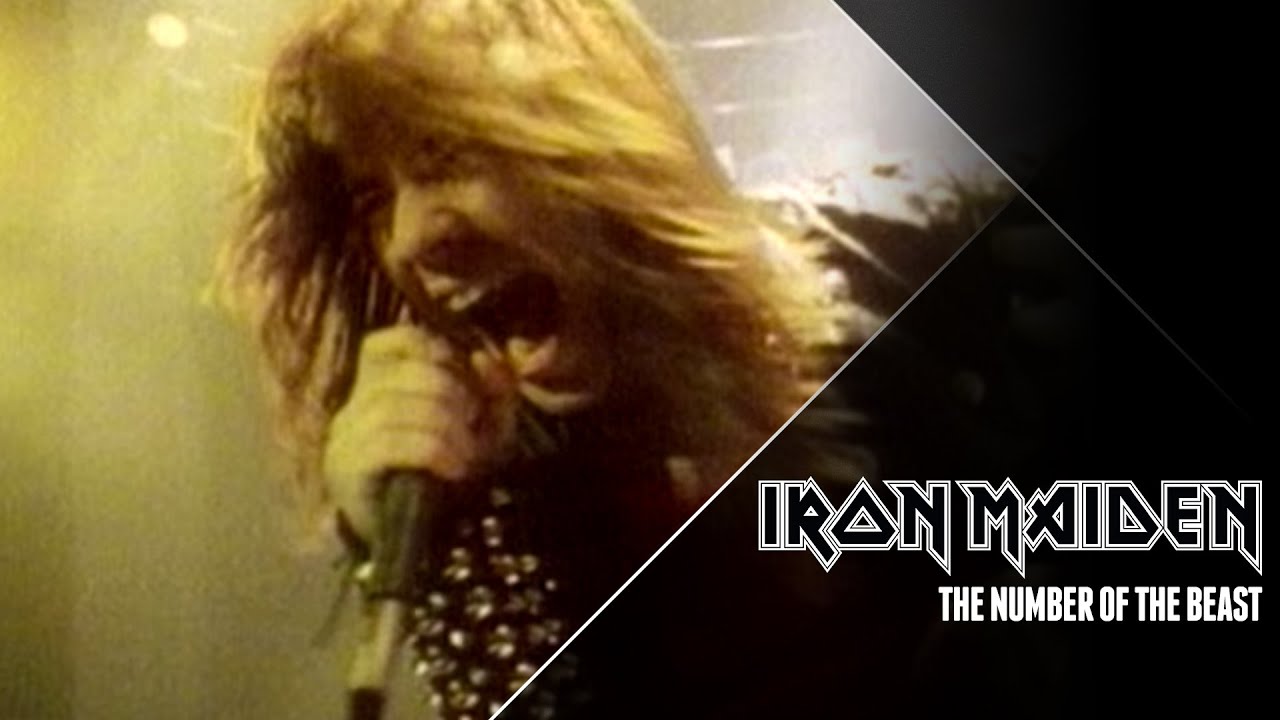
The song’s lyrics were inspired by a nightmare Steve Harris had after watching horror classic Damien: The Omen II.
This subject matter also created huge controversy in the US, but as Dickinson said in 2005: “It gave us loads of publicity. The kids who did want to buy our records were like, ‘Oh cool! The religious right are burning their records! I better buy half a dozen!’”
Dickinson’s vocal performance on the track is extraordinary, but came after multiple takes ordered by producer Martin Birch.
The song’s spoken-word intro, quoting the Book of Revelation, was read by actor Barry Clayton after the band’s original choice, Vincent Price, had demanded a fee of £25,000 – only £3000 less than the entire recording budget for the album!
Maiden manager Rod Smallwood revealed to Classic Rock: “We had no record company advance whatsoever. So the total investment in that album was 28 grand, and in the first six months it sold 1.5 million.”
Before the album’s release on 22 March 1982, Martin Birch had told them: “This is going to be a big, big album. It will transform your career.”
A month later the album made No.1 in the UK. “It just exploded!” Dickinson said.
To celebrate the album hitting No.1, the band went to the famous Marquee club in London to celebrate – where Steve Harris had to ask Rod Smallwood for extra cash to buy drinks for their friends. Until that moment, the band members had been on wages of £60 per week. With a No.1 album to their name, Smallwood gave them a raise to £100 a week.
It was when they returned home from a long world tour at the end of 1982 they received their first big paycheck. All of the band members bought houses. Bruce Dickinson put down a 50 per cent deposit on a place in the posh London district of Chiswick.
But after a few days at home, his mood had taken an unexpected turn.
“To be honest, I was actually quite depressed,” he said. “I was in a great band, I’ve got a number one album, I’ve just done a world tour… What do I do with the rest of my life?”
