
The 1980s was a period of radical reinvention and Eric Clapton wanted a piece of it. This was the former Yardbird, the graduate of John Mayall’s seminal Bluesbreakers, a dyed-in-the-wool blues purist and ‘70s rock survivor, and yet by 1985 he was playing a Roland guitar synth on a song produced by Phil Collins.
Clapton had not given up on blues guitar but he was becoming more open to new sounds and ideas. No one put a gun to his head and told him to play guitar synth on Never Make You Cry – this was Phil Collins producing, not Phil Spector. But Collins was having an influence. He was giving Clapton’s sound a contemporary glow-up for 1985 studio album Behind The Sun – and at the time, nothing was more contemporary than the electronic keyboard and synthesizer.
Clapton was also open to all this. He was open to direction. Clapton understood what Warner Bros could do for him. So when they told him to drop the track Heaven Is One Step Away from Behind The Sun and record a trio of tracks written by Jerry Lynn Williams, he was always going to entertain that suggestion.
Clapton always spoke kindly of Williams, the Texan songwriter who also supplied material for BB King, Bonnie Raitt and Robert Plant. He couldn't fault the label's logic. Nonetheless, looking back, the notes he got from the higher-uppers at Warner Bros stung.
“In hindsight, it’s worked out to everyone’s satisfaction. I had a lot of resentment at the time, and I still harbour a little bit,” Clapton told Guitar World in 1988. “[But] they have the best distribution and best promotion in the world, so if I want to get my music out, and it’s not too much of a hardship to play ball with them, I’m quite happy to do it.”
When it was time to record a follow-up to Behind The Sun, Clapton had found a new band, with Collins on drums and Nathan East on bass guitar, he had a formidable rhythm section. Greg Phillinganes was hired to play keys.
![Eric Clapton - It's In The Way That You Use It | The Color of Money OST [1986] - 1080p - YouTube](https://img.youtube.com/vi/nk2Sh9Xn5HU/maxresdefault.jpg)
Clapton’s next record would be titled August. Martin Scorsese can take some credit for the opening track, It’s In The Way That You Use It. He got Clapton and Robbie Robertson to co-write it for The Color Of Money soundtrack, where it made its debut.
It’s In The Way That You Use It was an outlier on August. Clapton and longstanding collaborator Tom Dowd produced it, and it was recorded with a different cast of players. The remaining tracks would fall under Collins’ auspices, and it would present us with a very different side to Slowhand.
Here his Fender Stratocaster waded through the splash of gated reverbs and expensive compression, and all the various studio tricks that Collins had perfected. Clapton had new toys of his own. He was playing prototypes of his signature Strat that would debut at NAMM 1987. It had the Lace Sensor pickups and the TBX mid-boost circuit. There was one in Pewter, as seen on the cover of the single It’s In The Way That You Use It, and one in Torino Red.
August had its box-office collaboration. Tina Turner guested on Tearing Us Apart, a bombastic power-soul workout that spoke to Clapton’s marital problems. It also had some serious session talent on horns, with jazz session ace Michael Brecker on saxophone and Randy Brecker on trumpet.
Collins gets the credit for all this futurism and yet August's most out-there moment takes us back to the burgeoning electronic music scene of late ‘70s Tokyo: if the blues had Robert Johnson then synth-pop and techno had Ryuichi Sakamoto of Yellow Magic Orchestra (YMO).
Remarkably, Clapton would bring these worlds together, via Quincy Jones and Michael Jackson.
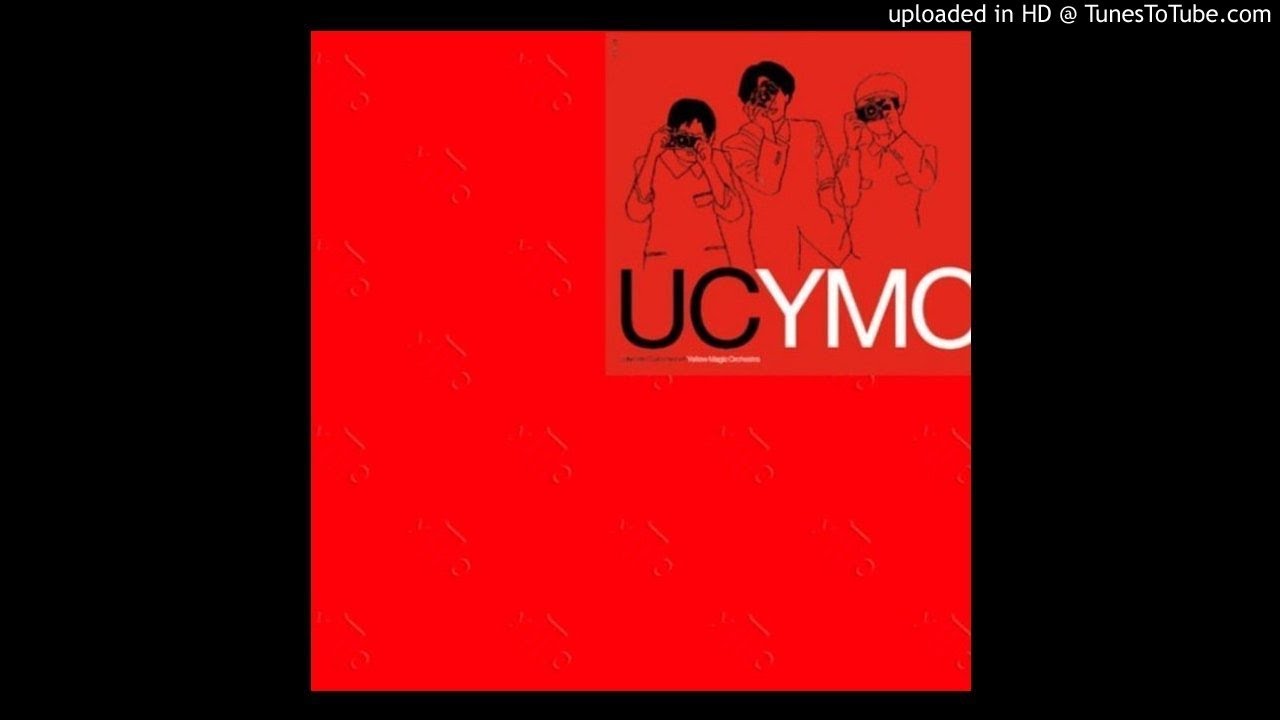
Sakamoto originally wrote Behind The Mask for a Seiko TV commercial but that synth motif was too good waste on selling watches. YMO commissioned British lyricist Chris Mosdell to write English lyrics for it and rerecorded it for their 1979 sophomore album Solid State Survivor. The sounds YMO were putting together were revolutionary, siring a whole new scene – and a new era of experimentation.
I go to Michael’s house and that’s when we got our own private world premiere of Billie Jean, Beat It, and Startin’ Somethin’
Greg Phillinganes
Quincy Jones was the kind of man who would be interested in such developments. On a trip to Japan, he met with Kuni Murai, the president of YMO's label, Alfa Records, who suggested Behind The Mask might be a good fit for Michael Jackson.
Jackson was interested. He was writing for Thriller, and Behind The Mask captured his imagination – only the arrangement needed punching up. Jackson rewrote the lyrics, too. Mosdell's lyrics were inspired by WB Yeats and a traditional Japanese wooden Noh mask, and how that related to society. Jackson had something more intimate in mind and rewrote Behind The Mask as a love song.
Speaking to Guy Pratt and Gary Kemp on their Rockonteurs podcast, Phillinganes – who would play on Thriller – says he’ll never forget when he first heard Behind The Mask.
“For some strange reason – I have no idea why but I am so thankful he did – Quincy had me join him and [songwriter] Rod Temperton to go to Michael’s house to listen to demos,” recalls Phillinganes. “I go to Michael’s house and that’s when we got our own private world premiere of Billie Jean, Beat It, and [Wanna Be] Startin’ Somethin’ – we heard those demos, and then we heard several other ones, including what he added to Ryuichi’s track. He added the melody and the lyrics. The first time I heard it was at Michael’s house. [sings] ‘Who do you love?’ He did all that stuff.”
Without hearing the music I cannot judge if 100 per cent of writer’s share is fair or not, so we refused it
Ryuichi Sakamoto
It was to no avail. Jackson’s management reached out to YMO’s management and to Mosdell to thrash out a deal. The song’s copyright issues were a sticking point. That Jackson had rewritten the song, embellishing not only the lyrics but the music, too, meant that both Mosdell and Sakomoto’s parties would need to be satisfied.
Sakamoto recalls it being a negotiation made tougher by the fact he hadn’t heard the revised version.
“That track was going to be on the Thriller album, so we got a letter from Michael’s office and it said, ‘We covered your song Behind The Mask and we’re going to put it on the new album and we need 100 per cent of the writer’s share,’” said Sakamoto during a Red Bull Music Academy Lecture. “We wanted to listen to what the music was like. Without hearing the music I cannot judge if 100 per cent of writer’s share is fair or not, so we refused it.”

Sakamoto sounded a note of regret that at this. After all, Thriller did go onto enjoy some commercial success. An agreement over royalties might have been life-changing. “If we said ‘yes,’ probably I would have ten different houses all over the world,” he said.
I had great, high hopes for it, because I thought, ‘This is a slam dunk.’ First of all, it’s co-written by Michael Jackson. It’s got funk. It’s got electronica. It’s got pop. It’s everything!
Jackson had demoed Behind The Mask but that is as far as he was going to take it. Phillinganes loved the song. He was working on his second solo album, Pulse, and knowing that there was some doubt over including Behind The Mask on Thriller, he asked Jackson if he could use it instead. “He went, ‘Yeah, okay.’ He sent it to me, and I recreated that, and put it on my record,” said Phillinganes.
Behind The Mask was duly released on Pulse, then as a single the following year. Phillinganes thought this was going to be the track that made him a star. It was an obvious choice for a single.
“I had great, high hopes for it, because I thought, ‘This is a slam dunk.’ First of all, it’s co-written by Michael Jackson. It’s got all the elements. It’s got funk. It’s got electronica. It’s got pop. It’s everything!’” he said. “It’s the complete package, right? So I basically can’t lose. Well, I did.”
Phillinganes’ version of Behind The Mask made a dent in the dance and R&B/hip-hop charts but little else. He wasn’t all that disappointed, though. He got to make a video for it, and for a short while it was on MTV, and there was just enough juice behind it for Phillinganes to perform it on American Bandstand with Dick Clark – a bucket-list item that Phillinganes could now tick off.
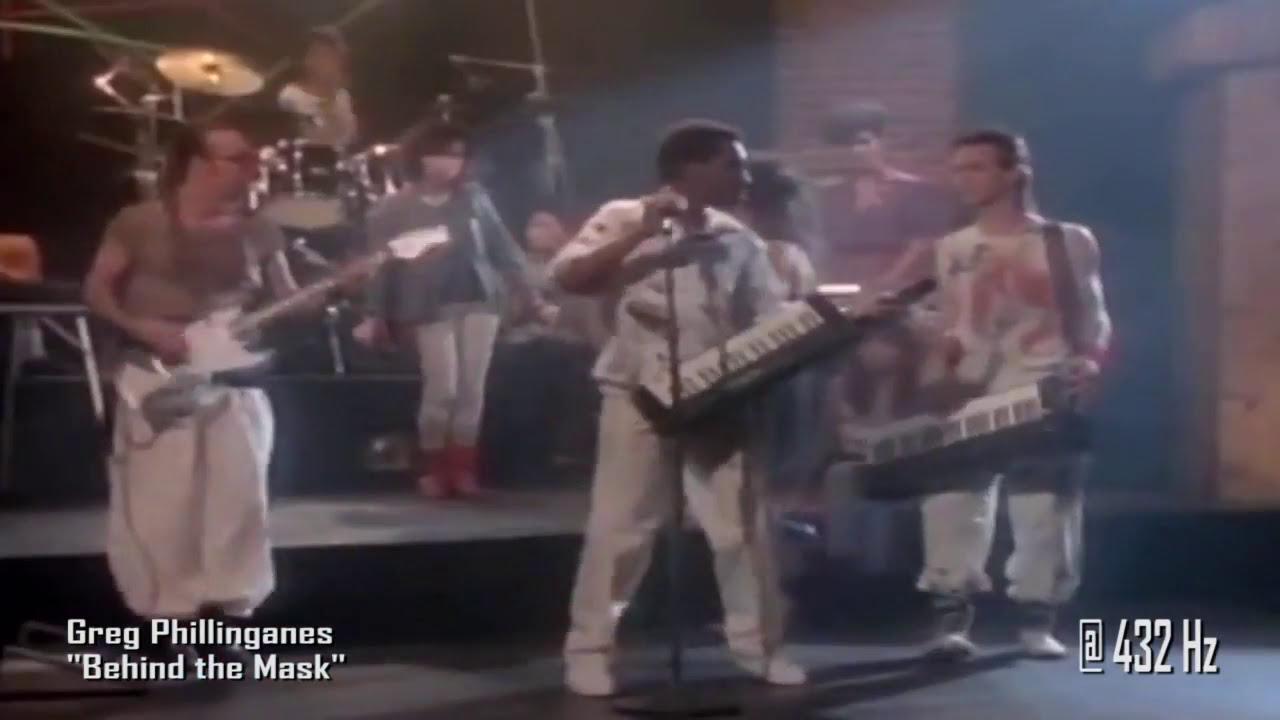
This is where Clapton enters the song’s story. Some accounts have Phillinganes presenting Clapton with the track, but he remembers it differently. Clapton had liked what Phillinganes’ did with Michael Jackson’s arrangement of this seminal Japanese synth-pop classic. It was his idea. And Phillinganes was more than happy with that. “I thought, ‘Oh, this is cool.’ It was kind of a double full-circle moment,” he said.
The response from critics and fans was mixed. Not everyone appreciated what Clapton was going for on August. Those who looked upon Clapton as this mythical cultural sherpa guiding them through the history of blues were aghast. This was not Elmore James or Robert Johnson.
But for Clapton, Behind The Mask was transformative. He had spent much of the ‘70s in retreat, his addiction to heroin and alcohol diminishing him to the point of nullification, as though he wanted to erase himself. As the ‘80s dawned, Clapton seemed defeated, until rehab and the release of 1983's Money And Cigarettes got him back on his feet.
Even if he had yet to outrun his demons by the time August was released, Clapton was nonetheless confronting them. He would enter rehab for the final time in ’87.
He was looking better, too. A good tailor helped. The Clapton of the ‘80s was a man of sharp suits, and Phillinganes was more than happy to be Crockett to Clapton’s Tubbs: “I wore them well, baby! [Laughs] Because Eric didn’t play around, man. He was Versace and Armani, and we followed suit, baby. We came out like gangsters!”
Behind The Mask would enjoy a second life. Ryuichi Sakamoto would rerecord it and release it in 1987, and Michael Jackson's version would eventually see the light of day when his 1982 recording was bundled with the 2010 posthumous compilation Michael. The Human League covered it in 1993. Orbital remixed it.
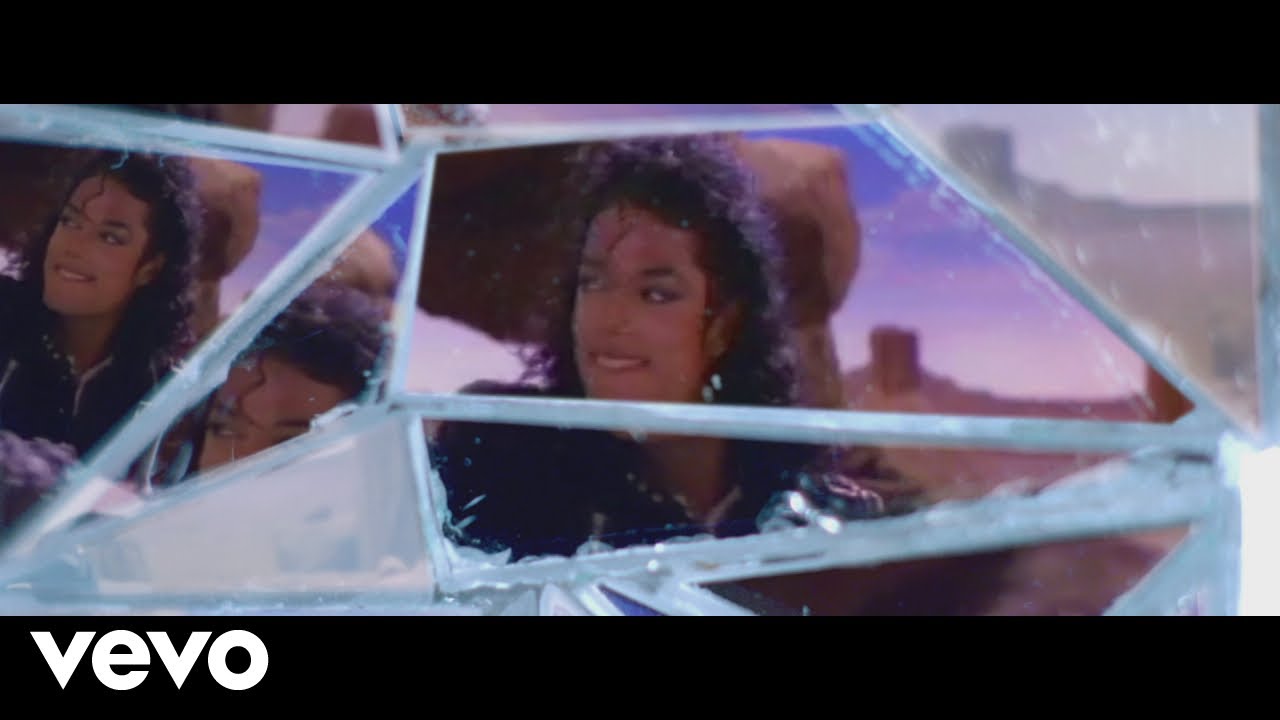
Clapton addressed August's critics in an interview with Rolling Stone. The complaints focused on Collins' contribution, that he was the album's real auteur. And it's true to an extent. Collins’ input is all over the record; the studio sheen is all his, and also co-wrote Hold On. But that, argued Clapton, was what collaboration is all about.
“I don’t like to compete musically. If you put me onstage with another guitar player and he starts showing off, I won’t compete. I’ll let him go,” he said. “When it’s my turn, I’ll play what I’m going to play anyway. That’s how it is in the studio. At the end of the day, people will say that Behind The Sun and August are really Phil Collins records. Fine, if that’s all they can hear, they’re not listening properly.”

There were plenty of people who were listening properly. If Clapton had lost some of the Bluesbreakers superfans along the way, there was a new generation of players who were just discovering him through records like August – and especially its successor, Journeyman, which Phillinganes described as “the pinnacle” of Clapton’s renaissance era. John Mayer would surely agree to that.
But more importantly, Clapton had rediscovered himself. It took Behind The Mask to get his game face back.
