


Back in July, Chase Bliss announced that it would be discontinuing Chompi, the cute and colourful sampler launched in 2023 by manufacturer Chompi Club, a company that Chase Bliss acquired in 2025.
Though Chase Bliss has confirmed that no more units will be manufactured, the boutique effects pedal manufacturer says that it is "not abandoning" the sampler entirely, and will continue to provide support to Chompi owners.
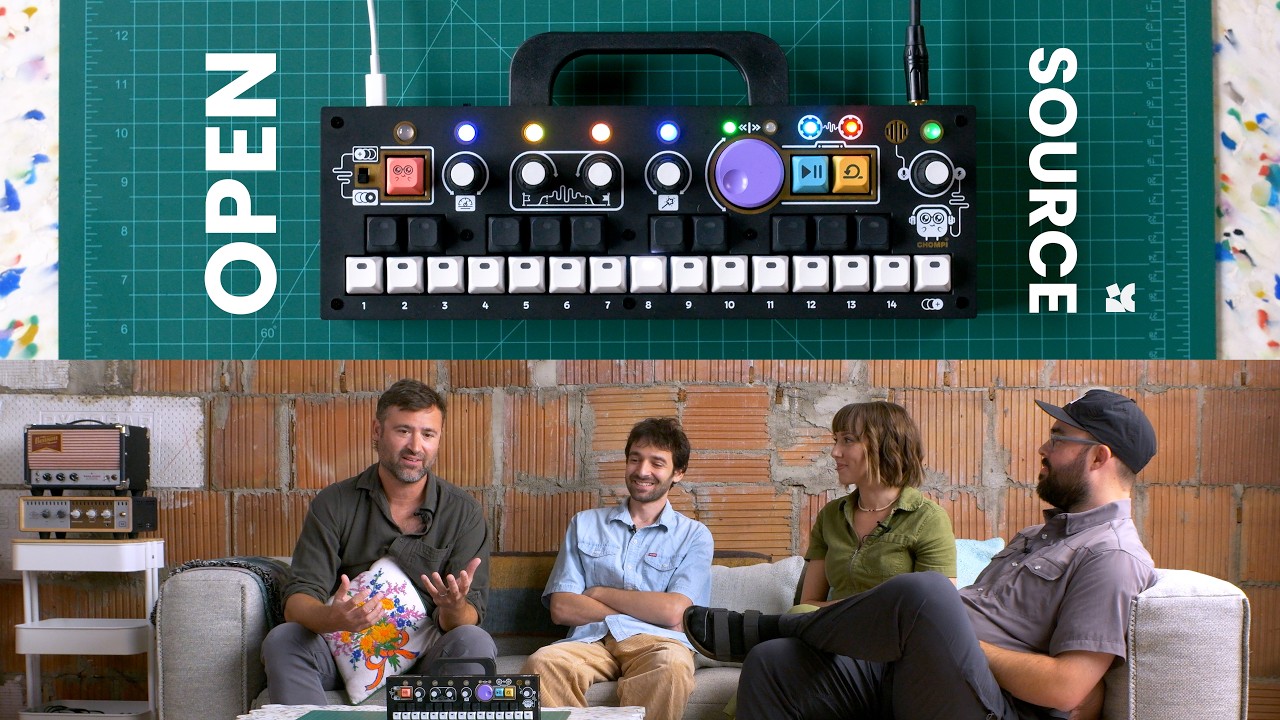
What's more, Chase Bliss announced last week that it would be making the original source files for Chompi's firmware and hardware available to the community under an open-source MIT license.
This means that owners of the sampler can now customize its firmware or design their own from scratch: Chase Bliss has just released an alternative beta firmware that turns Chompi into an 8-voice wavetable synth. It also gives those that missed out on purchasing Chompi the opportunity to build their own DIY version. (Chase Bliss won't be offering customer support for any open source or DIY projects, though.)
Though Chompi's retirement will have come as a disappointment to many fans of this adorable little sampler, this sunset release essentially hands the keys to the instrument over to the DIY community, allowing Chompi to live on and evolve through the imagination of third-party developers.
It's only been a few days since Chompi went open-source, but someone has already developed a desktop port of the sampler's firmware and released it for free. Available as a VST3/AU/AAX plugin, Temecula DSP's Nibbi brings the Chompi experience to your DAW, doing almost everything Chompi can do and more.
Temecula DSP has adapted the source code for both of Chompi's firmwares (Tape and Tempo) which can be switched between instantly. Tape Mode is a seven-voice sampler with three effects and a looper: drag in a sample or record audio via Nibbi's input in your DAW to turn a sound into a playable instrument. You can spread a single sample across the keys chromatically or build a kit of one-shots across five sample banks. The looper is a lot of fun too, with tape-style varispeed and manual scrubbing, overdubbing and resampling on offer.

The Tempo Mode takes a different tack that's more suited to rhythmic pattern creation, giving you two eight-voice sampler engines, one for chromatic playing and another for sample-slicing. Each engine gets its own pattern generator, which is essentially a multi-mode arpeggiator with probability, rests and randomization, and there are some interesting granular effects onboard as well.
Nibbi also gives you a few conveniences that Chompi didn't: the ability to instantly switch between firmwares, for instance, along with drag-and-drop sample import and waveform and envelope previews. Also, if you hit the S950 button, the interface is reskinned in the style of Akai's classic 12-bit rackmount sampler, adding an S950-style low-pass filter and variable sample rate control.
Of course, half the fun of Chompi was the tactile, toy-like experience of playing with the hardware's mechanical keyboard switches and jog wheel. A plugin port is never going to recreate that, but Nibbi does a respectable job of translating Chompi's playful, stripped-back workflow into a DAW context – and did we mention it's free?
Temecula DSP's Nibbi is available now for macOS and Windows in VST3/AU/AAX formats. Head over to the Temecula DSP website to find out more.
