MusicRadar Verdict
A once-elusive boutique boost circuit reimagined for a wider audience without losing the attitude that made players chase it in the first place. The Freq switch and independent EQ give it more personality than its straightforward layout suggests, and the Drive control alone covers everything from a subtle clean boost to something that starts nudging up against fuzz.
Reasons to buy
- +
Hard-to-find boutique circuit that's been nearly impossible to buy new, now built to spec and priced to move.
- +
Bass, Treble and a 3-way Freq switch offer genuine tone-shaping tools.
- +
Drive range stretches from transparent to gnarly.
- +
Rugged, true-bypass build.
Reasons to avoid
- -
Everything here is fixed under the hood with no internal DIP switches or trim pots to fine tune.
- -
The Freq switch jumps between three fixed voicings rather than sweeping continuously.
MusicRadar's got your back Our team of expert musicians and producers spends hours testing products to help you choose the best music-making gear for you. Find out more about how we test.
What is it?
Dirty Boy built its reputation largely through word of mouth. Founder Alex Saraceno began by building one-off circuits for his son, guitarist Blues Saraceno, and over the years Dirty Boy pedals found their way onto the boards of players including Phil X, John Frusciante and George Pajon Jr.
Under current owner Danny Gomez, the company has continued its small-batch, handmade approach, with original hand wired Dirty Boy pedals typically selling for around $349.
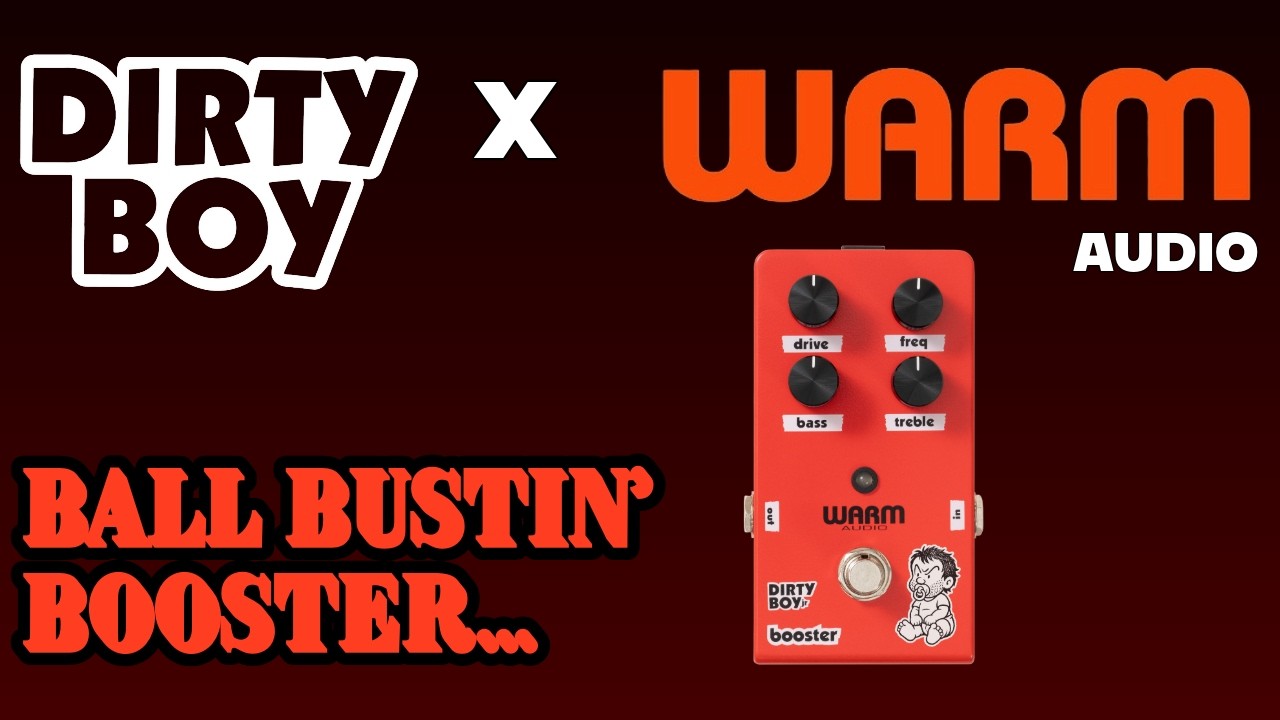
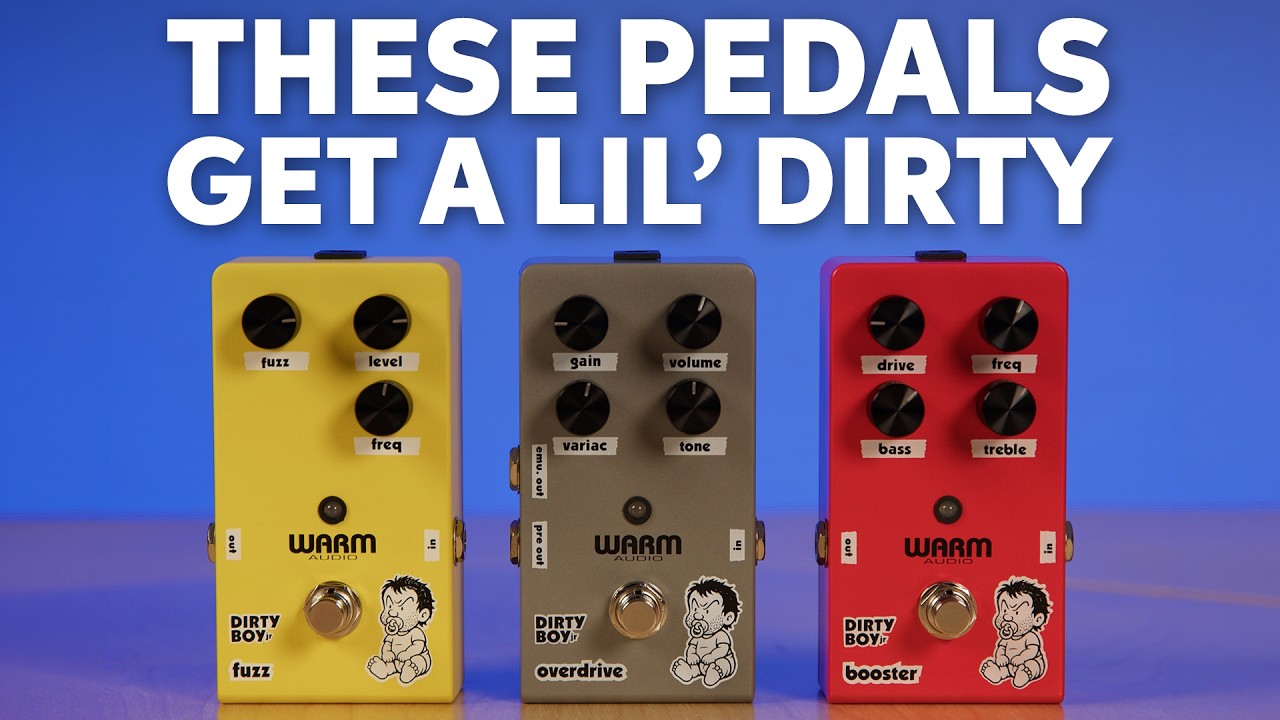
The Jr. Booster is one of three pedals in Warm Audio’s collaboration with Dirty Boy, including a Fuzz and an Overdrive. For the Booster, Warm Audio revisited the Dirty Boy Ball Buster circuit, originally designed to push the front end of vintage-style Marshall, Hiwatt and Vox valve amps.
Warm Audio describes the Jr. Booster as capable of moving from clean boost into natural compression, overdrive and heavier saturation as the Drive control is increased. Bass and Treble controls provide additional tone shaping, while the three-position Freq switch changes the pedal’s low-frequency response.
At $169, the Jr. Booster enters a market that ranges from straightforward clean boost pedals such as the TC Electronic Spark Mini to pedals including the Xotic EP Booster and Benson Germanium Boost.

Its combination of Drive, independent Bass and Treble controls and three selectable frequency settings places it among boost pedals designed to offer additional tone shaping beyond a simple level increase.
Specs

- Price: $169 | £169 | €189
- Type: Boost pedal
- Controls: Drive, Treble, Bass, 3-position (Low/Mid/High) Freq switch
- Features: All-analog boost circuit derived from the Dirty Boy "Ball Buster" design; up to 10dB of clean gain before natural compression and breakup take over; responsive to pick dynamics and guitar volume
- Connectivity: 1/4" instrument input, 1/4" amp output.
- Bypass: True bypass
- Power: 9V DC, centre-negative power supply (not included). Warm Audio has not published a current draw (mA) figure for this pedal at time of writing
- Dimensions: 51 x 65 x 122mm (W x H x D)
- Weight: 9.6oz / 0.27kg
- Contact: Warm Audio
Build quality
Build quality rating: ★★★★½
Pick up the Jr. Booster and it feels a lot more substantial than you might expect at this price.
The die-cast enclosure has that reassuring, slightly overbuilt feel you want from something that’s going to live on a pedalboard, get stepped on every night, and probably take a few knocks along the way.
The knobs have enough resistance that they’re not going to move every time you brush against them, and the three-way Freq switch clicks firmly into place instead of feeling loose or flimsy. The on/off foot switch gives you a good, solid click with just the right amount of force required to engage it.

Warm Audio also did a nice job with the presentation. The red-on-black graphics keep the Dirty Boy look intact without making the pedal feel like a cheap tribute act, and the top-mounted LED is bright enough to see on a dark stage.
It doesn’t feel like a hand-wired boutique pedal but that’s not really the point. For $169, the Jr. Booster feels solid, well finished, and built like a tank.
Usability and features

Usability and features rating: ★★★★☆
With four clearly labeled controls including a three-way Freq switch, getting around the Jr. Booster is about as easy as it gets. Drive sets how hard you're pushing the front end, Treble and Bass shape what's left over, and none of it requires a manual to understand.
Compare that to the Xotic EP Booster, which hides its frequency-shaping options behind internal DIP switches - handy once you've found a setting but it can get annoying every time you want to experiment on the fly.

The Freq switch changes how much low end the pedal feeds into the amp with three tiers. High tightens things up and sharpens the attack, Mid gives the most balanced response, while Low adds noticeable weight and thickness. It’s a simple control, but the differences between the three settings are easy to hear.
I ran the Jr. Booster with both a Gibson Les Paul and a Fender Stratocaster into a Fender ’62 Deluxe Vintage Reissue, with the amp set for a warm edge-of-breakup tone. That proved to be a great setup for hearing how the pedal pushed the front end.
Sounds

Sounds rating: ★★★★☆
With the Freq switch set to Mid position and Drive barely past nine o'clock, the Jr. Booster does what a boost is supposed to do: it makes the amp louder without announcing itself. Note definition holds up well, the amp's character stays intact and there's none of the thin, brittle edge that cheaper clean boosts can add to the top end. Notes are noticeably fatter with more feel under your fingers.
The Low setting added some extra body to the Strat, while High helped keep the Les Paul from getting too thick as the amp started to compress. Mid ended up being my favorite and where I spent most of my time. The three Freq settings give you enough control to shape how the pedal hits the amp without turning it into a full-blown EQ pedal.
Push the Drive toward noon and a soft compression creeps in that tightens up palm mutes and adds real push to single-note lines without sounding like a distortion pedal. This is the zone the Ball Buster built its reputation on where your tone feels more alive. Less like a pedal switching on and more like my amp simply waking up.

Past 2 o'clock, the natural compression transitions to a gritty, slightly ragged breakup that easily gets you into that cranked British half-stack space. Switching the Freq control to High keeps the low end from turning to mush at these higher Drive settings.
Separate Bass and Treble controls allowed me to fine-tune the low end and top-end presence without changing the basic character of the pedal. I found both EQ controls very musical which made it easy to compensate for the differences between the two guitars.
With the Drive dimed, the Jr. Booster edges right up against fuzz pedal tones; thick and saturated but still articulate enough that single notes never dissolve into mush. It starts polite but then gets loud, dirty and nasty enough to pick a fight with fuzz.
Verdict
Boost pedals rarely get reviewed with much enthusiasm, mostly because most of them do one predictable thing well and nothing else.
It's built around a genuinely distinctive circuit with real gain range on tap, not just a volume knob in a box
The Dirty Boy Jr. Booster earns more attention than that: it's built around a genuinely distinctive circuit with real gain range on tap, not just a volume knob in a box, and the Freq switch gives it more personality than most boost pedals.
Players who want continuously variable EQ will still gravitate toward something like the JHS Clover, and Dirty Boy purists will always hold out for a hand-wired original. But at $169, this is the most affordable route yet into a circuit that's spent years being talked about more than it's actually been heard.
Judged on its own merits, it's an easy pedal to recommend, and a genuinely hard one to find much fault with. The Jr. Booster is proof that "just a boost pedal" can still be worth the conversation.
MusicRadar verdict: A once-elusive boutique boost circuit reimagined for a wider audience without losing the attitude that made players chase it in the first place. The Freq switch and independent EQ give it more personality than its straightforward layout suggests, and the Drive control alone covers everything from a subtle clean boost to something that starts nudging up against fuzz.
Test |
Results |
Score |
|---|---|---|
Build quality |
Overbuilt for the price, with knobs and a switch made to be used hard. |
★★★★½ |
Usability and features |
Straightforward controls make it easy to use, while the Freq switch adds useful tonal flexibility. |
★★★★☆ |
Sounds |
A believable vintage-British boost voice that scales smoothly from invisible to nearly-fuzz. |
★★★★☆ |
Overall |
A hard-to-find cult circuit, rebuilt without losing what made players chase it in the first place. |
★★★★☆ |
Also try
Hands-on videos
Warm Audio

Sweetwater
Darner Werner