MusicRadar Verdict
If you need the most amp-like reverb that money can buy, and don't need the features of the larger White Whale, then the Junior is an excellent, compact option. It sounds fantastic, it's versatile, and it's mostly well behaved when stacked with other gain pedals on your board.
Reasons to buy
- +
Excellent spring reverb.
- +
Convincing amp-like tremolo.
- +
Compact size.
Reasons to avoid
- -
Amp stage doesn't play nicely with every drive pedal.
MusicRadar's got your back Our team of expert musicians and producers spends hours testing products to help you choose the best music-making gear for you. Find out more about how we test.
What is it?
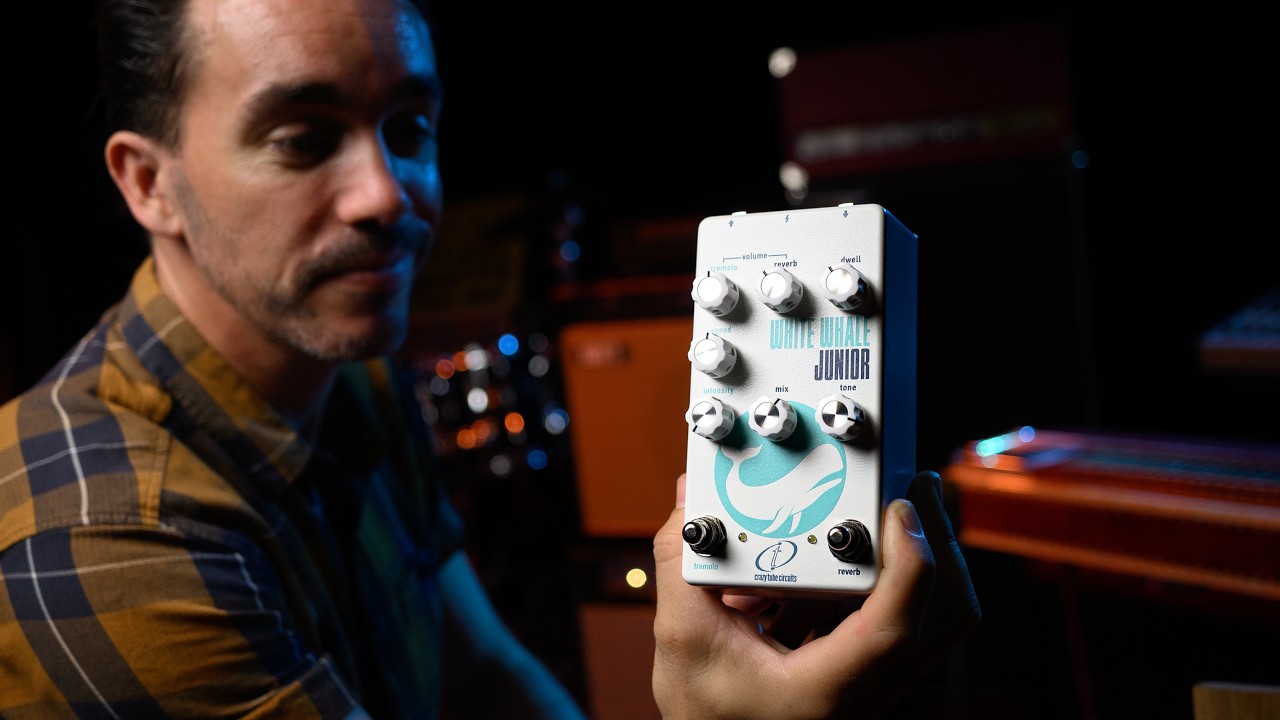
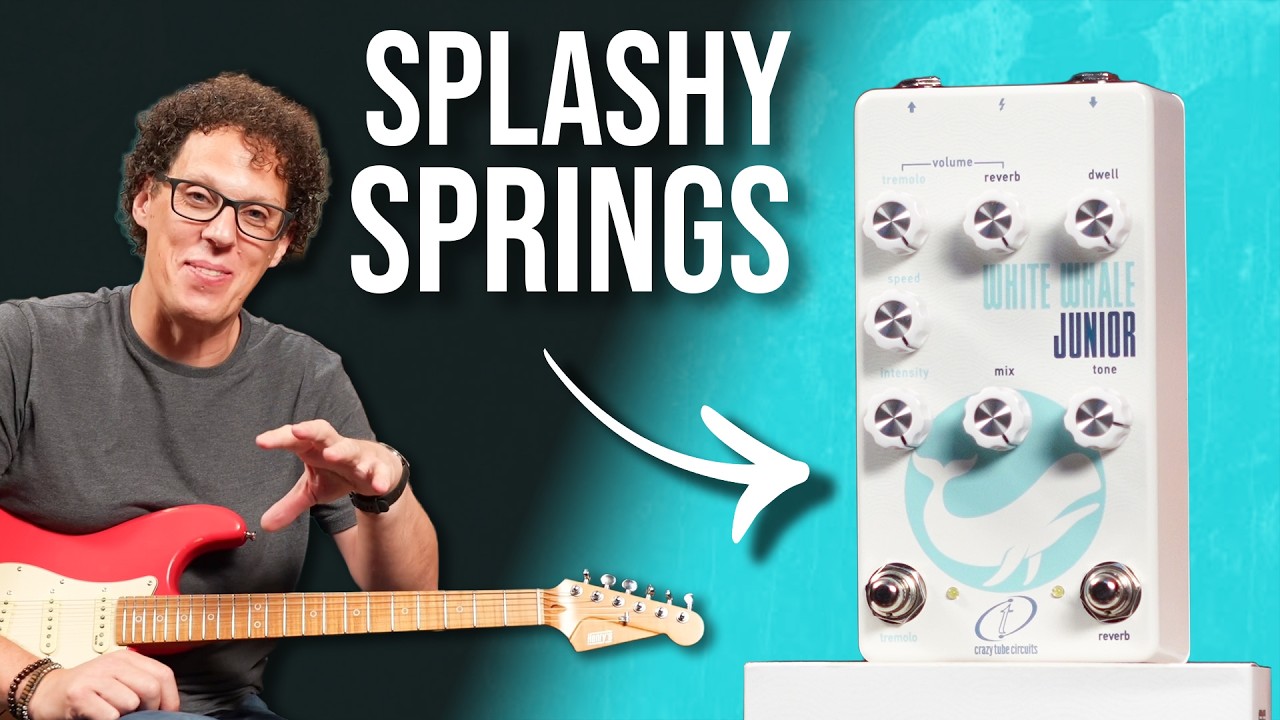
The White Whale Junior is a compact, amp-like tremolo and reverb pedal. It's true bypass and all-analogue, but its true selling point is that it uses real springs.
The result is a very authentic replication of vintage amp reverb and tremolo, in a pedalboard-friendly form-factor.

Specs

- Price: $349 | £259| €299
- Type: Analogue amp-like spring reverb/tremolo
- Controls: Dwell, Tone, Mix, Volume, Speed, Intensity, Volume, Independent footswitches
- Features: Reverb, Tremolo pedals
- Connectivity: Input, Output, Power
- Bypass: True relay
- Power: 9V DC Centre-negative, 110mA
- Dimensions: 154 x 68 x 83 mm
- Weight: 490g
- Contact: Crazy Tube Circuits
Build quality

Build quality rating: ★★★★★
The White Whale Junior aims to deliver a true amp-style spring reverb and tremolo in a compact enclosure. To do this, no corners have been cut – there's real springs inside the oversized enclosure. You can confirm this by giving the unit a gentle kick to hear the spring 'splash.'
This is something I can't wait to check out, popping off the back and eyeballing three real springs and a neat off-board wiring job. However, as noted in the manual, these springs and the fly leads are fragile, so it's not a good idea to do this at home!

Inside and out everything is sensibly laid out and feels sturdy. The true-bypass switches are soft-click relays, which is a nice touch.
Usability and features

Usability and features rating: ★★★★½
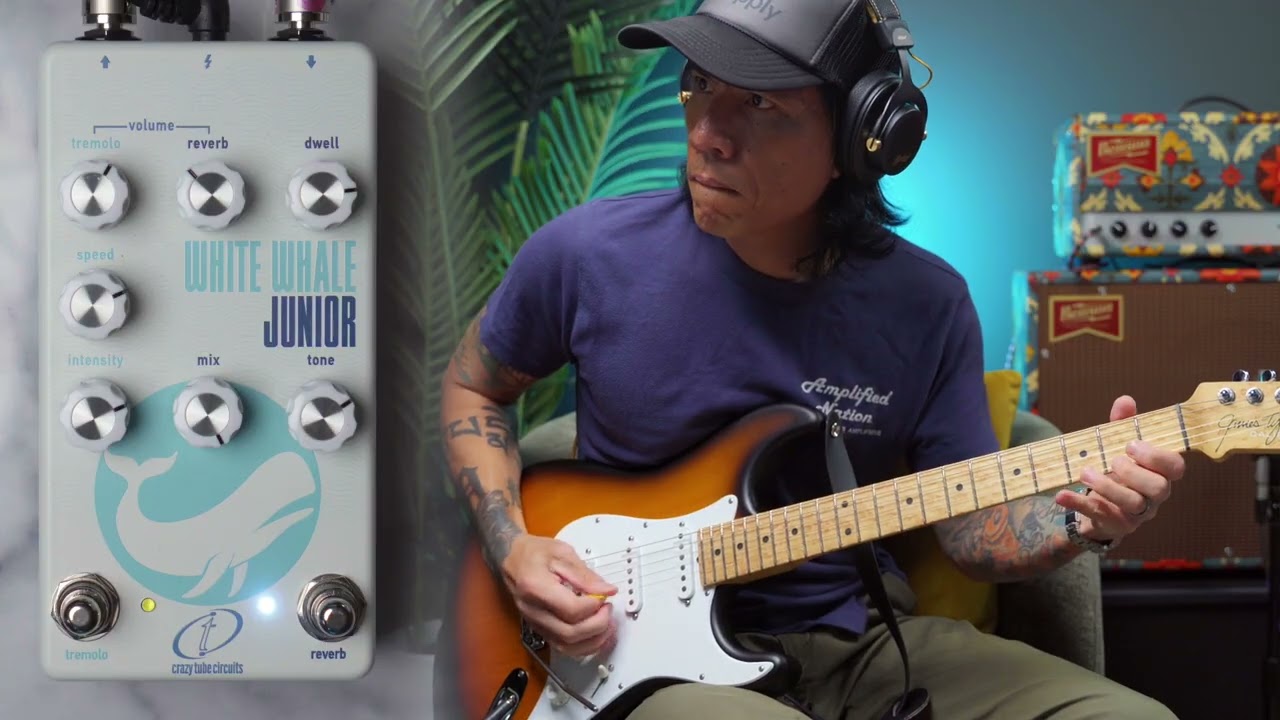
The pedal has seven straightforward controls. The reverb and tremolo sections have their own footswitches, and the effects are easy enough to dial in.
Compared to the larger White Whale, there's no harmonic trem mode, and the Dwell times are streamlined to a single pot. Still, this all makes for an intuitive set up, assuming you didn't need those features.

The only complexity comes from the reverb, as it has its own Volume and Blend controls. As this section contains an amplifier stage, finding unity volume is crucial.
The amp stage can result in level issues when paired with any pedals in front of the White Whale, which is likely to be at the end of your chain.
Sounds

Sounds rating: ★★★★★
With a clean guitar, the White Whale delivers characterful reverb and tremolo tones, but it really starts to come alive once there's a bit of dirt. The amp stage in the pedal can be used for boosting, but it has a dark voicing.
The Tone control affects the reverb, which can result in a more brittle sound when the Tone is up. Consequently it makes more sense to brighten up the gain blocks in front, and set a more neutral tone on the White Whale.
Placing a Rangemaster-style boost in front (Crazy Tube Circuits' own Triptychon, in fact) yields excellent results. Conversely, a Roland Space Echo-derived discrete op-amp preamp proves less satisfying due to its darker tone. Moving on to drives, the pedal interacts differently with the drives I throw at it.

Although there are no concerns, it does result in a fuzzier, darker tone. The Smallsound/Bigsound Mini JFet drive needs a fair bit of tweaking, while the Hamstead Odyssey runs prematurely to feedback. Though, it must be said, I do run that pedal quite hot.
At higher gain settings, the White Whale's voicing is less of an issue, since the overall sound is so complex. Turning again to the Triptychon to stack several gain blocks together, Rangemaster, Fuzz Face and drive modes running in series results in a searing lead tone, with the reverb eventually guiding the guitar into very musical feedback.
The tremolo, meanwhile, has no quirks, in a good way. I prefer the quick, choppy tremolo, but it can go all the way down to slow throbbing, with a depth from fully open or closed to quite subtle.
Verdict

For all that the White Whale gets right in bringing classic 50s and 60s tones to the modern pedalboard, it's still very much aimed at surf players.
For all that the White Whale gets right in bringing classic 50s and 60s tones to the modern pedalboard, it's still very much aimed at surf players
Players from many genres might be after a spring reverb, especially one that sounds this good, but room, hall and ambient reverbs are the go-to for many players and genres. This makes the White Whale a more niche prospect.
MusicRadar verdict: If you need the most amp-like reverb that money can buy, and don't need the features of the larger White Whale, then the Junior is an excellent, compact option. It sounds fantastic, it's versatile, and it's mostly well behaved when stacked with other gain pedals on your board.
Test |
Results |
Score |
|---|---|---|
Build quality |
A feat of engineering, it's even got real springs and is in a robust housing. |
★★★★★ |
Usability and features |
Easy enough to use, with a stripped-down control surface compared to its larger sibling. |
★★★★½ |
Sounds |
Impeccable. |
★★★★★ |
Overall |
The original White Whale might have more features but this more compact take is hard to argue with. |
★★★★★ |
Also try
Hands-on videos
The Guitar Geek
R.J. Ronquilo
Tone Factory