


The song was written and recorded by British glam rockers Arrows in 1975 – but it was the Joan Jett version released as a single seven years later that turned I Love Rock ’N’ Roll into the world-conquering hit it’s known as today.
It served as the opening title track from Jett’s second studio full-length, which ended up being the most commercially successful album of her career.
As fate would have it, Jett was touring the UK in 1976 as guitarist/vocalist in all-girl band The Runaways when she saw Arrows performing the song on their weekly television show.
This led to the Runaways learning how to play the song the following year, though ultimately they didn’t release it as they had already covered a track with a similar name – The Velvet Underground’s Rock & Roll.
For Jett, I Love Rock ’N’ Roll became a mission statement.
She told Rolling Stone: “I think people have to understand that rock ’n’ roll is not just rock ’n’ roll. It’s more than that. It can be a message sender. It is something that is powerful and strong. And it is something that can be used to fight, people have injustices, and you can declare them and fight for it.”
She continued: “I think rock ’n’ roll is a brash sort of medium, so you’re allowed to say what you want and what you mean.”
These words are deeply insightful into the mind of someone who acted as a trailblazer for female musicians in the music industry.
Instead of playing up to the gender stereotypes being normalised at that time, she chose to express herself unconditionally – raw and uncut – in the process redefining the very definition of what it means to be feminine and helping carve out space for women in male-dominated circles.
She has been referred to as the Godmother Of Punk, the original Riot Grrrl and the Queen Of Noise – the latter being a reference to The Runaways’ second album Queens Of Noise.
“There’s nothing more threatening than a girl with a guitar,” she famously stated back in 1999.
Following the breakup of The Runaways, Jett recorded her first rendition of I Love Rock ’N’ Roll in 1979 with guitarist Steve Jones and drummer Paul Cook from the Sex Pistols, released on vinyl as a B-side to her single You Don’t Own Me.
But the definitive version of the track came into fruition two years later with Jett’s new band The Blackhearts, recorded at Kingdom Sound Studio in Long Island with producers Kenny Laguna and Ritchie Cordell.
As it turns out, The Rolling Stones were partly responsible for the song being written in the first place.
Arrows singer Alan Merrill revealed in 2009: “That was a knee-jerk response to The Rolling Stones’ It’s Only Rock ’N’ Roll. I remember watching it on Top Of The Pops. I’d met Mick Jagger socially a few times, and I knew he was hanging around with Prince Rupert Lowenstein and people like that – jet-setters.”
He went on to describe the song as “an apology to those jet-set princes and princesses” – a way of saying to the stuffy aristocracy of that time that there’s nothing wrong about loving loud music.
So when it came to writing his own version of that kind of track, he certainly did a good job with it.
“You have to write a three-chord song with a lick that people remember, and it has to build,” Merrill explained. “So I had the chorus, which to me sounded like a hit. And I thought, ‘I’ll do something really unusual. I’ll write it that this is a song separate from the verse.’
“So the actual chorus is something that’s coming out of a jukebox, and the two kids in the disco who are flirting are hearing this song that’s a hit. It felt like The Twilight Zone.”
Joan Jett And The Blackhearts’ version of I Love Rock ’N’ Roll starts with eight dramatic snare hits before its iconic riff comes in – based around E, A and B power chords which are commonly followed by a quarter note bend on the third fret of the low E-string. This means the note travels from G to somewhere in between G and G#.
The album liner notes state that Joan Jett performed lead vocals and rhythm guitar while Ricky Byrd was responsible for lead guitar and backing vocals, joined by fellow Blackhearts Gary Ryan on bass and Lee Crystal on drums.
During the verse sections, there’s a lower riff being performed by Jett that is matched an octave up by Byrd using the first position pentatonic shape up at the twelfth fret. Jett’s part is performed using completely fretted notes, while Byrd adds a degree of fluidity by incorporating bends.
It was this version of Love Rock ’N’ Roll that ended up topping the Billboard Hot 100 for seven weeks. It also made No 1 in Canada, Australia, the Netherlands, Sweden, New Zealand and South Africa, and peaked at No 4 in the UK charts.
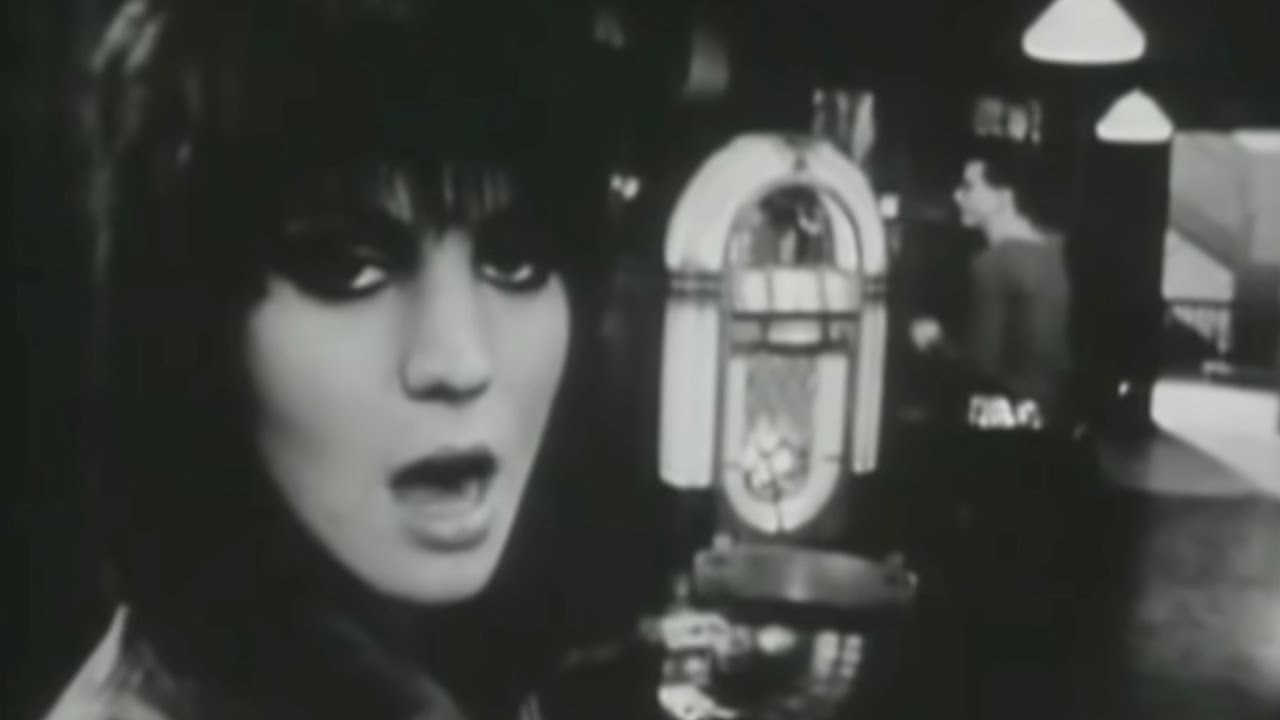
When Jett appeared on Australian music television show Countdown in 1982, she confessed that “not many people get to be involved with an anthem in their life” and “if people want to call the song an anthem, I think it’s wonderful, I think it’s great”.
She admitted: “I know everyone says it sounds silly – I love rock ’n’ roll. But that is what I feel. I love rock ’n’ roll. I love to go out and perform in front of people. The whole band does. And that, I think, is the secret.”
