


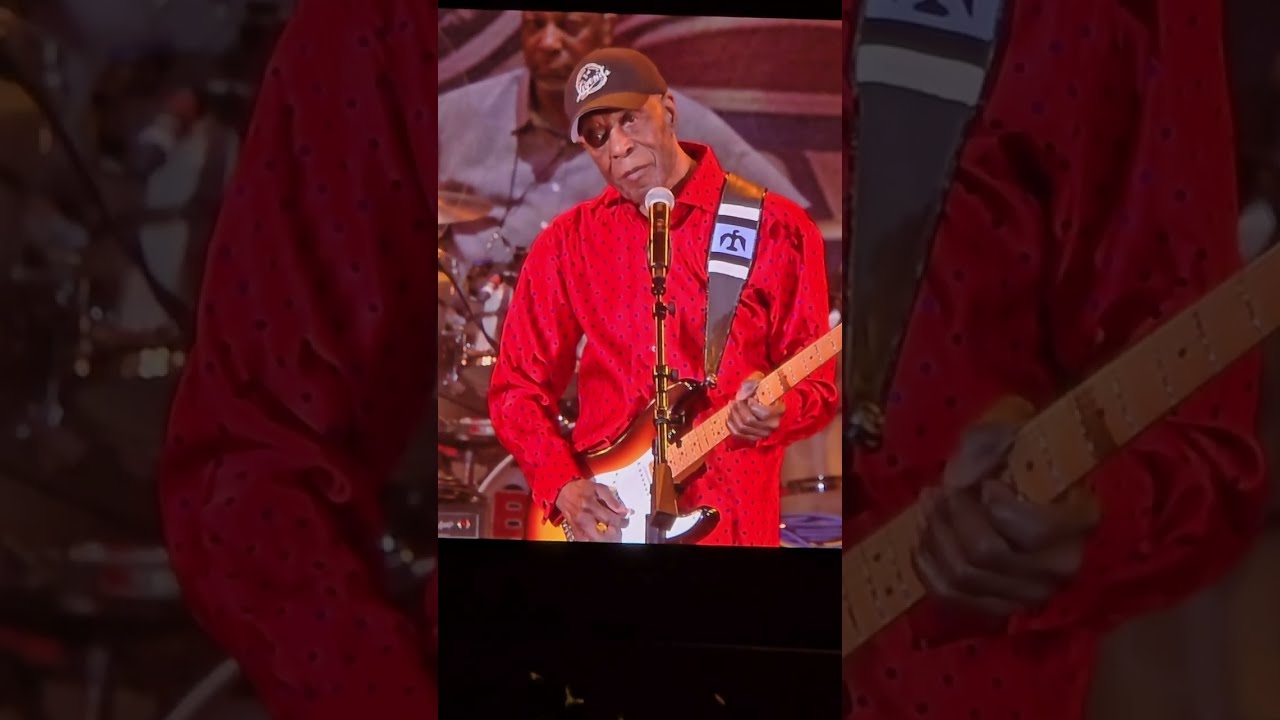
The best blues guitarists are storytellers by trade. What is the blues if not an act of storytelling? The world’s greatest living bluesman, Buddy Guy, now 90 years young, has got his share of them.
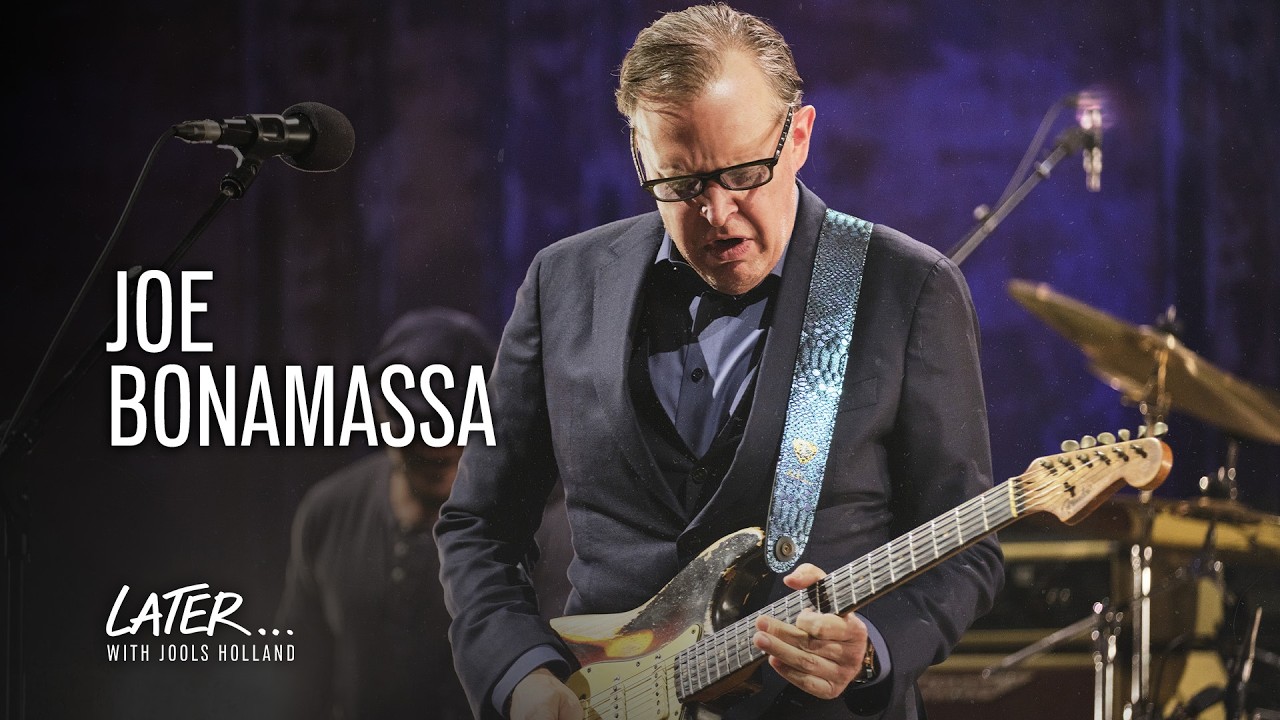
Joe Bonamassa can testify to that. Bonamassa is on the horn with MusicRadar to discuss the release of his Tone Master ‘59 Twin-Amp, the culmination of his digital awakening. The tube amps aren’t going anywhere, he assures us, but night after night the consistency of this digital Twin won him over. We’re also talking Eric Clapton, whom he was scheduled to share a stage with at Crossroads Guitar Festival.
But with Buddy Guy’s 90th birthday celebration concert looming, the conversation turned to Guy. Bonamassa had just jammed with him at the Hollywood Bowl, where he played alongside Christone ‘Kingfish’ Ingram and Guy’s son, Greg. Bonamassa says Buddy Guy is sounding better than ever – and he should know. The pair go way back to when the Mayor of Nerdville was just cutting his teeth as a teenage blues prodigy.
“I first met Buddy Guy when I was 13 years old. I still have the poster. And I have to say, the show at the Hollywood Bowl is probably in my top five Buddy Guy shows that I’ve ever seen. He’s still excellent. I mean, on point, the playing was great.”
Buddy Guy might also be one of the old-school blues cats who has been won over by digital amps. Bonamassa says there was a Tone Master in Guy’s rig, too.
“His tone is awesome,” continues Bonamassa. “By the way, speaking of digital amps, I think I saw a digital Bassman up there. [Laughs] And it sounds great. He sounds great. He’s singing great. He’s the last man standing, and God bless him for it.”
And for the record, at 90, he is still as sharp as a tack. Buddy Guy remembers everything. Catching up with Guy had been on Bonamassa’s mind ever since he picked up a 1966 Fender Stratocaster in a Charcoal Frost finish. This guitar came with one heck of a story.
“I purchased Lefty Dizz’s Stratocaster,” says Bonamassa. “Lefty was a Chicago blues legend, and a friend of Buddy’s, and passed away in 1993. And there’s pictures of Lefty playing this 1966 bound-neck Charcoal Frost Strat. So, I get the guitar – maybe last year, I think – and it went to Joe Glaser’s shop, and it really needed frets. It needed a lot of work; Lefty beat the hell out of it.”
As one of Nashville’s top luthiers, Glaser was the man to get the Lefty Dizz Strat ready for the stage again.
But Bonamassa caught wind of some scuttlebutt about this guitar and its vintage provenance. It’s the kind of detail that keeps him collecting them.
Bonamassa will tell you that he doesn’t collect guitars for the sake of it. What really excites him about a vintage instrument is the life it has lived, the story it could tell.

This is how the most famous electric guitars at Nerdville have become household names, such as Lazarus, the 1959 Gibson Les Paul Standard that Bonamassa found while eating meatballs in an Italian restaurant in LA, when an “almost Candy Apple Red husk of a guitar” appeared out of its case.
It was a Les Paul all right, but what year? It wasn’t a ’58. He sent it to the late Kim LaFleur of Historic Makeovers for a restoration and it was reborn a ‘Burst.
Bonamassa’s guitars have stories. The 1941 Martin 000-45 that had been in a woman’s family for three generations was another one. She sold it, saved her house, and Bonamassa got one heck of an acoustic guitar.
Well, Bonamassa got more than he bargained for when he bought the Lefty Dizz Strat.
“Earlier this year, there were rumours going around the Chicago blues scene that it was Buddy’s that Lefty took and never gave back,” explains Bonamassa.
Bonamassa thought this was a great opportunity to right a wrong, to return this “borrowed” Stratocaster to its original owner. Besides, it was the great man’s birthday. What a gift that would be. Bonamassa wanted confirmation. Was this really Buddy Guy’s guitar? There couldn’t have been that many ’66 Strats with bound fingerboards and Charcoal Frost paint jobs kicking around Chicago.
“I know Buddy’s tour manager, and we were talking about amps or something,” says Bonamassa. “I was on the phone with him, and I said, ‘Hey, I gotta ask you, the elephant in the room, the Lefty Dizz.’ And he goes, ‘Yeah?’ I go, ‘Is it his?’ He goes, ‘Yup.’ I go, ‘Does he want it back?’ He goes, ‘No!’”
Lefty Dizz and Buddy Guy had a lot in common. Both were born to be showmen. Dizz was born in Arkansas.
He goes into about 30 minutes about how Lefty took the guitar. He never saw it again. He beat it up
As his name suggests he was a southpaw, but he would just play the right-handed guitar upside down.
Dizz came up with the likes of Lacy Gibson and Earl Hooker, but got his big break playing in Junior Wells’ band. He was the kind of player you had to see live to fully appreciate. The question is: why didn’t Guy wan’t the guitar back? Well, the man himself grabbed Bonamassa backstage and explained what went down.
“I see Buddy at the Hollywood Bowl,” says Bonamassa. “He goes, ‘Sit down, young man. I have a story to tell. I’ve been waiting two years to see you. And he goes into about 30 minutes about how Lefty took the guitar. He never saw it again. He beat it up. He goes, ‘Man, he really beat it up. I can’t believe it! It was brand new when I had it, 1970.’”
Bonamassa still wanted to give Buddy Guy this Strat. By all rights, that’s where it belongs. He makes his case.
“I’m like, ‘Buddy, do you want it back? I’ll bring it. We’re celebrating your birthday. I could just give it to you,’” says Bonamassa. “And he goes, ‘No, no, it’s all… He beat it up! I haven’t seen that guitar since I went to Lefty’s funeral in 1993, and it was sitting on his casket!’”
What do you say to that? That’s a mic drop. Bonamassa still hasn’t engineered a way of getting that guitar back to him, and to be fair, Guy is not wrong. Lefty Dizz played that Strat into the ground.
People would pay the Fender Custom Shop a lot of money for that kind of finish, but Guy was less impressed. Bonamassa says Guy's memory is like a vault. Well, this was one conversation that Bonamassa will never forget either.
“I’m like, ‘I wish I had a recording of this.’ You know what I mean? But I’m of the generation of not everything needs to be taped,” he says. “But just to have him tell me a guitar story that detailed… You know, I’ll probably end up just giving it to him. He doesn’t want it back, but we’ll do something. They have a guitar display case at [Buddy’s club] Legends. Maybe I’ll just say, ‘Hey, just stick it in there.’”
In other Joe Bonamassa news, the blues superstar has just announced a UK/Europe tour for 2027, kicking off on October 19 in Katowice, Poland, with three UK dates in Bournemouth, Birmingham and Glasgow. Pre-sale is open now.
See the official Joe Bonamassa site for dates and ticket details.
